
The Intersection of AI and Divination: Ethical Considerations
The convergence of artificial intelligence (AI) and ancient divination practices marks a fascinating, yet complex, frontier. As AI technologies become increasingly sophisticated, their application extends beyond traditional data analysis into realms once exclusively governed by human intuition, symbolism, and spiritual interpretation. This intersection raises profound questions about ethics, authenticity, and the very nature of foresight. Understanding this evolving landscape requires a careful examination of both the potential benefits and the inherent risks involved when algorithms attempt to navigate the nuanced world of divination.
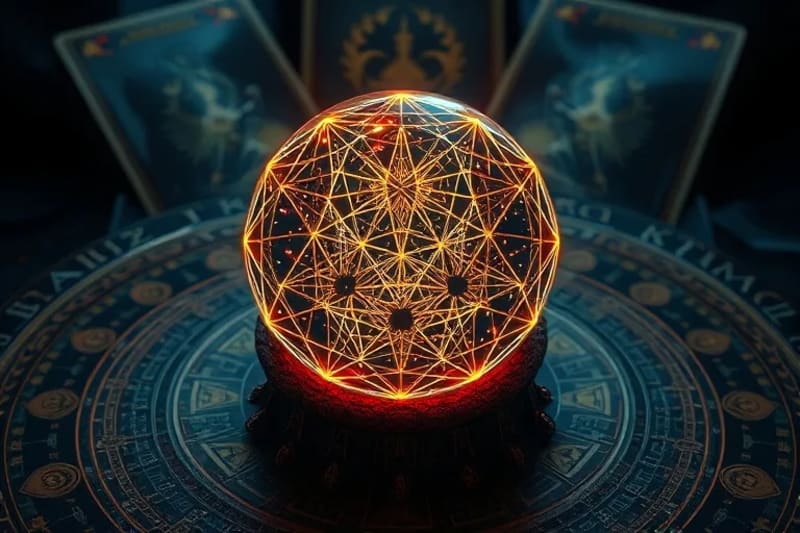 Exploring the intricate dance between advanced algorithms and ancient wisdom, where digital patterns meet symbolic interpretations to forge new pathways of understanding and ethical inquiry.
Conceptual AI render, illustrating the fusion of technology and esoteric knowledge.
Divination, in its myriad forms—from tarot reading and astrology to numerology and scrying—has historically served as a means for individuals to gain insight into their lives, understand potential futures, and navigate complex decisions. These practices often rely on subjective interpretation, symbolic language, and a deep connection to human experience. AI, on the other hand, operates on logic, data, and algorithms, excelling at pattern recognition and predictive modeling based on vast datasets. The attempt to bridge these two fundamentally different approaches creates a unique set of challenges and opportunities.
Table of Contents
- Understanding AI and Divination
- The Mechanisms of AI in Divination
- Ethical Considerations in AI Divination
- Bias and Fairness in Predictive Algorithms
- Privacy and Data Security Concerns
- The Human Element: Empathy and Intuition
- Over-Reliance and Loss of Agency
- Commercialization and Exploitation
- Accountability and Responsibility
- Best Practices for Ethical Development
- The Future of AI and Divination
Understanding AI and Divination
To fully grasp the implications of their intersection, it is crucial to define both AI and divination in this context. Artificial intelligence refers to the simulation of human intelligence in machines that are programmed to think like humans and mimic their actions. This includes learning, problem-solving, perception, and decision-making. AI systems can process vast amounts of data, identify complex patterns, and make predictions or recommendations based on these analyses.
Divination, conversely, encompasses a range of practices aimed at gaining insight into a question or situation by way of an occultic, standardized process or ritual. It often involves interpreting signs, symbols, or omens, and is frequently rooted in spiritual, philosophical, or psychological frameworks. Unlike AI's data-driven approach, traditional divination often emphasizes intuition, personal connection, and the nuanced understanding of archetypal meanings that transcend purely logical analysis. The core difference lies in their epistemologies: AI seeks knowledge through empirical data and algorithms, while divination often seeks understanding through symbolic resonance and intuitive insight.
The Mechanisms of AI in Divination
AI can contribute to divination in several ways, primarily by automating data collection, pattern recognition, and interpretation. For example, in astrology, AI can analyze countless birth charts, planetary positions, and historical events to identify correlations that might be too complex for human astrologers to discern manually. Similarly, for tarot, AI could be trained on vast databases of card meanings, spreads, and user feedback to generate interpretations. This automation offers speed and the capacity to process an unprecedented volume of information.
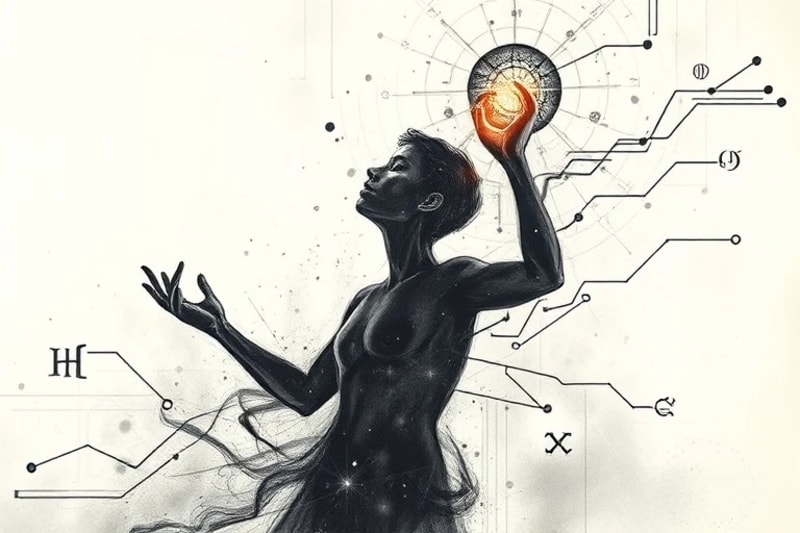 A visual representation of how digital data streams can interact with the abstract concept of human intuition in predictive systems.
AI-powered divination tools typically function by:
- Data Aggregation: Collecting and organizing vast amounts of information related to specific divination systems (e.g., astrological ephemerides, tarot card interpretations, numerological charts).
- Pattern Recognition: Identifying recurring patterns, correlations, and statistical probabilities within the aggregated data that might correspond to certain outcomes or interpretations.
- Natural Language Processing (NLP): Generating textual interpretations or responses that mimic human-like advice, often based on learned linguistic patterns from existing divination texts.
- Predictive Modeling: Using machine learning algorithms to forecast potential trends or outcomes based on input data and identified patterns, much like predictive analytics in other fields.
Ethical Considerations in AI Divination
The integration of AI into divination is not without its ethical quandaries. The very nature of divination, which often touches upon personal vulnerabilities, hopes, and fears, makes it a particularly sensitive area for algorithmic intervention. Ethical considerations span several critical domains, from data integrity to the psychological impact on users.
Bias and Fairness in Predictive Algorithms
One of the most significant ethical concerns in any AI application is bias, and AI divination is no exception. AI systems learn from the data they are fed. If this data contains historical, cultural, or societal biases, the AI will inevitably perpetuate and amplify them. For instance, if tarot interpretations in the training data predominantly reflect certain cultural norms or gender stereotypes, the AI's readings will likely reflect these biases, potentially offering unfair or unhelpful advice.
Ensuring fairness requires meticulously curated datasets that are diverse and representative, as well as constant auditing of the AI's outputs for discriminatory patterns. Without such vigilance, AI divination could inadvertently reinforce harmful stereotypes or provide skewed perspectives that do more harm than good, especially when dealing with sensitive personal inquiries. The challenge is compounded by the subjective nature of divination, where "correctness" is often less about objective truth and more about resonance and personal meaning.
Privacy and Data Security Concerns
Users often share deeply personal information when seeking divination—their hopes, fears, relationship issues, career anxieties, and health concerns. When this information is fed into an AI system, questions of privacy and data security become paramount. How is this sensitive data stored? Who has access to it? Could it be used for purposes other than providing a reading, such as targeted advertising or even discrimination?
Developers of AI divination tools have a strong ethical obligation to implement robust data encryption, anonymization techniques, and clear, transparent privacy policies. Users must be fully informed about how their data is collected, used, and protected. Breaches of trust or security in this domain could have severe psychological and social repercussions, undermining the very purpose of seeking guidance.
The Human Element: Empathy and Intuition
Perhaps the most fundamental ethical challenge is the AI's inability to replicate genuine human empathy, intuition, and the nuanced understanding of the human condition. A human diviner often provides comfort, active listening, and personalized guidance that goes beyond mere interpretation of symbols. They can read body language, sense emotional states, and adapt their advice with compassion and wisdom. AI, by its nature, lacks consciousness, emotional intelligence, and lived experience.
 A symbolic representation of the delicate balance required when merging historical esoteric knowledge with cutting-edge digital technologies.
Relying solely on AI for divination could strip the practice of its therapeutic and deeply personal aspects. The ethical imperative here is to acknowledge AI's limitations and to clearly communicate that algorithmic interpretations are not a substitute for human connection, empathy, or professional counseling when needed. The spiritual or psychological depth often found in traditional divination may be diminished or lost entirely in a purely algorithmic interaction.
Over-Reliance and Loss of Agency
The allure of quick answers and seemingly objective predictions from AI can lead to an over-reliance on these tools. Users might begin to outsource critical thinking and decision-making to algorithms, potentially eroding their personal agency and self-trust. If an AI predicts a certain outcome, individuals might feel compelled to follow that path, even if it contradicts their own intuition or better judgment.
Ethical AI design in this field should promote critical engagement rather than blind acceptance. Tools should be designed to empower users to reflect and make their own choices, viewing AI insights as one perspective among many, rather than an infallible decree. This requires careful phrasing of interpretations and explicit disclaimers about the nature of algorithmic "predictions."
Commercialization and Exploitation
The commercial potential of AI divination is vast, but it also opens the door to exploitation. Unscrupulous developers might create AI tools that prey on vulnerabilities, offering false hope, making overly definitive predictions, or encouraging addictive usage patterns for financial gain. The line between providing helpful insight and exploiting human desire for certainty can be easily blurred.
Ethical guidelines must address pricing models, marketing claims, and the overall business practices of AI divination platforms. Transparency about the AI's capabilities and limitations is crucial to prevent deceptive practices. The focus should remain on providing genuine value and support, rather than maximizing profit at the expense of user well-being.
Accountability and Responsibility
Who is accountable when an AI divination system provides harmful or misleading advice? If a user makes a significant life decision based on an AI's "prediction" that leads to negative consequences, where does the responsibility lie? Is it with the AI developer, the data scientists, the platform owner, or the user themselves?
Establishing clear lines of accountability is essential. This involves robust testing, peer review, and continuous monitoring of AI systems. Legal and ethical frameworks need to evolve to address these new challenges, ensuring that there are mechanisms for redress when AI systems cause harm. The lack of a clear legal precedent makes this a particularly complex area.
Best Practices for Ethical Development
To navigate these ethical complexities, developers and users alike must adopt best practices. These include:
- Transparency: Clearly state that the insights are AI-generated and explain the limitations of the technology.
- Data Governance: Implement strict protocols for data collection, storage, and usage, prioritizing user privacy and security.
- Bias Mitigation: Actively work to identify and reduce biases in training data and algorithmic outputs.
- Human Oversight: Incorporate human experts in the development and ongoing evaluation of AI divination systems.
- Empowerment-Focused Design: Design tools that encourage critical thinking, self-reflection, and personal agency, rather than passive acceptance.
- Ethical Guidelines: Develop and adhere to industry-specific ethical codes that address the unique challenges of AI in sensitive domains like divination.
- User Education: Educate users about how AI divination works, its capabilities, and its inherent limitations.
The Future of AI and Divination
The future of AI and divination is likely to be one of continued evolution and debate. AI may serve as a powerful tool for research, helping to uncover patterns and correlations in esoteric systems that have been studied for centuries. It could also make certain forms of divination more accessible to a wider audience, offering introductory insights or novel perspectives. However, it is crucial that this evolution prioritizes ethical considerations and human well-being above all else. The goal should be to augment human understanding and intuition, not replace it.
Ultimately, the intersection of AI and divination presents a unique opportunity to reflect on what we value in guidance and foresight. It challenges us to define the boundaries of technology and the enduring importance of human connection, empathy, and wisdom in navigating the complexities of life. As these technologies advance, a thoughtful, interdisciplinary approach—combining technological expertise with ethical philosophy, psychology, and spiritual understanding—will be essential to ensure that AI serves humanity responsibly in this intriguing new domain. For further exploration into related topics, consider how Astro-Genomics unveils karmic health blueprints or the insights offered by connecting with spirit guides and animal totems.
Explore More Esoteric Insights
Dive deeper into the mystical and scientific intersections with our curated selection of articles. Expand your understanding of the subtle forces that shape our reality and discover new perspectives on self-discovery and universal truths.
- Automatic Writing: Connecting with Spirit Guides
- The 8th House: Intimacy, Shared Resources, & Transformation
- Tarot Sacred Geometry Universal Truths Esoteric
- Astro-Sonic Healing: Natal Chart Frequency Therapy
- Lunar Oracle: Advanced Mansions Predictive Astrology Life Events
- Planetary Rulerships Zodiac Myths: Esoteric Archetypes Self-Discovery
- AI Dream Interpretation Algorithmic Subconscious Symbolism
- Esoteric Symbolism Zodiac Myths: Decoding Archetypal Narratives
- Alchemical Crystal Elixirs Vibrational Planetary Transits
- Moon Phases Birth Chart: Emotional Blueprint
- Tarot Junguiano Avanzado: Sombra, Luz, Autoconocimiento Profundo
- Hermenéutica Avanzada Profecías Bíblicas: Patrones Fin Tiempos
Source: Hybrid content assisted by AI and human editorial supervision.


Comments
Post a Comment