
Mesoamerican Astrology AI Oracles Decoding Ancient Wisdom
In an era defined by rapid technological advancement, the human quest for meaning and self-understanding persists, often leading us to explore ancient wisdom traditions. Among these, Mesoamerican astrology stands out for its profound complexity, intricate calendrical systems, and deep connection to the cosmos. Far from being mere superstition, these ancient practices offered sophisticated frameworks for understanding human destiny, agricultural cycles, and societal rhythms.
Today, the emergence of Artificial Intelligence (AI) presents a fascinating opportunity to revisit and decode these ancient insights. By leveraging AI's capacity for pattern recognition, data analysis, and predictive modeling, we can potentially unlock new layers of understanding from Mesoamerican astrological systems, transforming them into "AI Oracles" that offer modern insights. This fusion of ancient wisdom and cutting-edge technology promises a unique path to self-discovery and a deeper appreciation of our shared human heritage.
Table of Contents
- Historical Roots of Mesoamerican Astrology
- The Complex Calendrical Systems
- Birth Signs and Personal Destiny
- The Rise of AI Oracles in Astrology
- Bridging Ancient Wisdom with Modern AI
- Potential Applications and Benefits
- Ethical Considerations and Cultural Sensitivity
- The Future of AI and Ancient Astrology
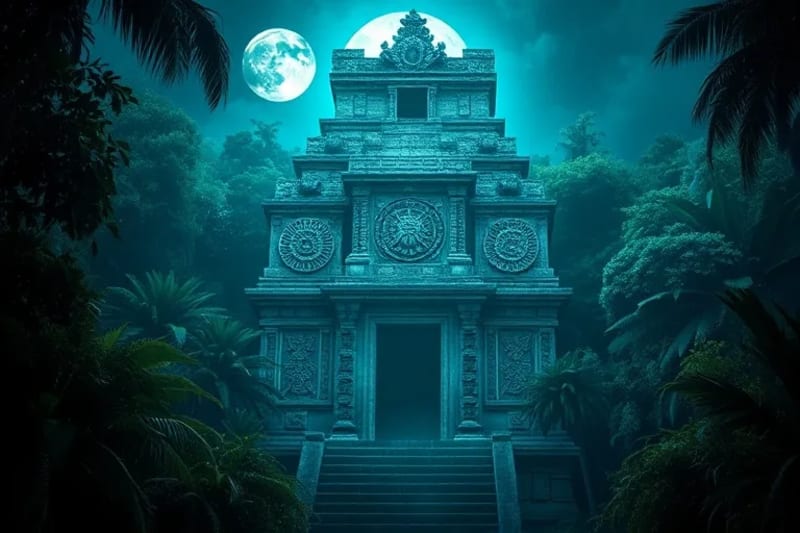
The convergence of ancient spiritual knowledge and advanced artificial intelligence, revealing profound mysteries and insights.
This conceptual visualization, rendered by AI, explores the intricate interplay between historical astrological symbols and contemporary digital interpretation, offering a fresh perspective on timeless wisdom.Historical Roots of Mesoamerican Astrology
Mesoamerican astrology is not a single, monolithic system but a collection of interconnected traditions practiced by various cultures, including the Maya, Aztec, Zapotec, and Olmec. These civilizations shared a common reverence for celestial bodies and a belief in their profound influence on earthly events and human lives. Their astrological practices were deeply integrated into their cosmology, religion, and daily life, guiding everything from agricultural planting to political decisions and personal rituals.
For the Maya, for instance, time was cyclical and imbued with sacred meaning. Their priests, known as "daykeepers," meticulously observed celestial phenomena, recording their movements and correlating them with terrestrial events. This meticulous record-keeping formed the bedrock of their astrological interpretations, which were often complex and multi-layered. The Aztec, similarly, had a rich astrological tradition that influenced their social structure, warfare, and religious ceremonies, with each day and year carrying specific divinatory meanings.
The Complex Calendrical Systems
At the heart of Mesoamerican astrology lie its sophisticated calendrical systems, which are far more intricate than the Gregorian calendar we use today. The most prominent among these are the Tzolkin (or Sacred Round) and the Haab' (or Civil Calendar), often used in conjunction with the Long Count calendar.
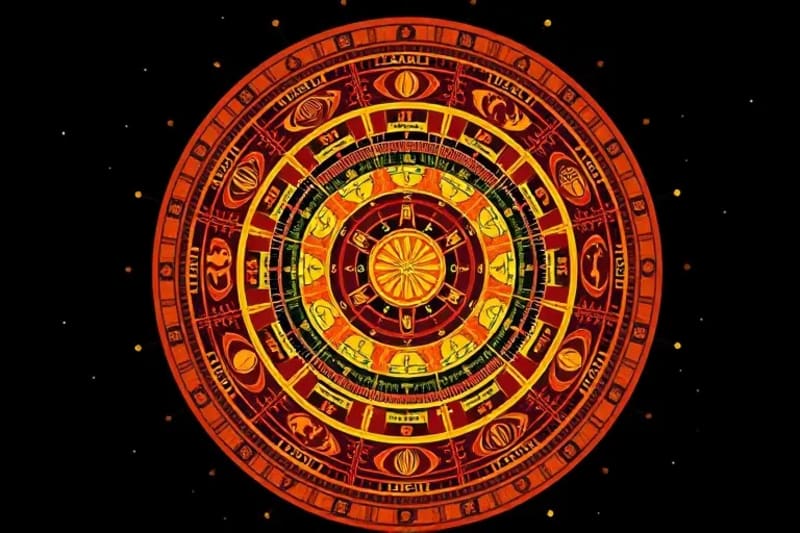
An intricate representation of the Tzolkin calendar, enhanced with digital patterns for AI analysis.
- The Tzolkin (Sacred Round): This 260-day calendar is a permutation of 20 day-names and 13 numbers. Each day has a unique combination, and its meaning is derived from the interplay of the day-name glyph and its associated number. The Tzolkin is primarily divinatory and ceremonial, used for naming children, determining auspicious dates for events, and understanding personal destiny.
- The Haab' (Civil Calendar): A 365-day solar calendar, similar to our own, consisting of 18 months of 20 days each, plus a 5-day period known as the Wayeb'. The Haab' tracked agricultural cycles and seasonal changes, crucial for the sustenance of these societies.
- The Calendar Round: The Tzolkin and Haab' intermesh to form a 52-year cycle known as the Calendar Round. This cycle was profoundly significant, marking a period of great change and renewal, often accompanied by elaborate ceremonies.
- The Long Count: This linear calendar tracked vast spans of time, counting days from a mythical starting point. It was used to record historical events, astronomical observations, and prophecies, giving a grand cosmic perspective to their understanding of time.
The complexity of these interlocking cycles, with their myriad permutations and symbolic associations, makes Mesoamerican astrology a rich field for analytical exploration. Understanding the nuances of how these calendars interacted and influenced interpretations is key to decoding their ancient wisdom.
Birth Signs and Personal Destiny
Unlike Western astrology, which primarily focuses on zodiac signs based on the sun's position, Mesoamerican astrology emphasizes the day of birth within the Tzolkin calendar. Each of the 20 day-names (e.g., Imix, Ik', Ak'bal) and 13 numbers carried specific energies, characteristics, and destinies. A person's birth day-sign was believed to influence their personality, talents, challenges, and life path.
For example, someone born on a day associated with the "Wind" (Ik') might be seen as communicative, adaptable, and intellectual, while a "Jaguar" (Ix) day could signify strength, leadership, and a connection to the spiritual realm. These interpretations were not static but were further nuanced by the numerical coefficient (1-13) and the broader calendrical context, including the Haab' and the position within the 52-year Calendar Round. This intricate layering provided a highly personalized and dynamic astrological profile, offering guidance for life choices and understanding one's inherent nature. Further exploration into these ancient systems can be found by understanding Chart Ruler: Unlocking Core Identity & Life Purpose in Astrology.
The Rise of AI Oracles in Astrology
The concept of an "AI Oracle" might sound futuristic, but it's grounded in the capabilities of modern artificial intelligence. AI excels at processing vast amounts of data, identifying complex patterns, and making predictions based on learned correlations. In the context of astrology, an AI Oracle would involve feeding historical astrological data, textual interpretations, astronomical observations, and even historical events into sophisticated algorithms.
These algorithms could then learn the intricate relationships between celestial configurations, calendrical cycles, and their associated meanings and outcomes. For instance, an AI could analyze thousands of historical birth charts and life events, identifying subtle patterns that human astrologers might miss. This isn't about replacing human intuition but augmenting it with computational power, allowing for a deeper, more data-driven understanding of astrological principles. The ethical implications of such advanced analysis, especially in areas like Birth Chart Analysis in the AI Era, are crucial to consider.
Bridging Ancient Wisdom with Modern AI
The true innovation lies in how AI can bridge the gap between ancient Mesoamerican wisdom and modern insights. The intricate nature of Mesoamerican calendars, with their interlocking cycles and symbolic glyphs, presents a perfect challenge for AI's pattern recognition capabilities. Here’s how AI can contribute:
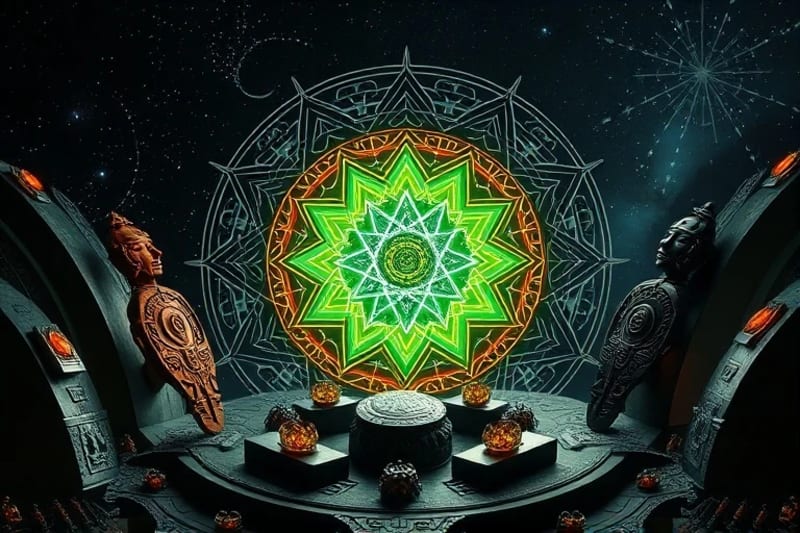
A conceptual depiction of artificial intelligence unraveling the hidden patterns within ancestral heritage.
- Data Analysis of Ancient Texts: AI can process vast archives of Mayan codices, Aztec manuscripts, and other epigraphic records, identifying recurring themes, correlations between specific dates and events, and the contextual meanings of glyphs. This can help reconstruct lost interpretations or clarify ambiguous passages.
- Pattern Recognition in Calendrical Cycles: The cyclical nature of Mesoamerican time is highly amenable to AI analysis. Algorithms can detect subtle long-term patterns in the interplay of the Tzolkin, Haab', and Long Count, potentially revealing previously unnoticed astrological influences or predictive cycles.
- Predictive Modeling Based on Historical Data: By cross-referencing historical records of births, deaths, harvests, wars, and other significant events with their corresponding astrological configurations, AI can build models that predict tendencies or probabilities associated with certain calendrical alignments. This could offer insights into personal predispositions or societal trends.
- Personalized Interpretations: An AI Oracle could take an individual's birth date (and potentially other relevant data) and generate a highly detailed Mesoamerican astrological profile, drawing from a vast knowledge base and offering nuanced interpretations that would be time-consuming for a human to compile manually.
This synergistic approach allows us to move beyond mere translation of ancient texts to a dynamic, interactive engagement with their profound wisdom, making it accessible and relevant for contemporary seekers.
Potential Applications and Benefits
The integration of Mesoamerican astrology and AI Oracles opens up several exciting possibilities:
- Enhanced Personal Insights: Individuals could gain a deeper understanding of their innate strengths, challenges, and life purpose based on a rich, ancient astrological framework. This could complement other forms of self-discovery, such as Past Life Regression, by providing a unique cultural lens.
- Cultural Preservation and Revitalization: AI can play a crucial role in preserving and revitalizing endangered indigenous knowledge systems. By digitizing and analyzing ancient texts, AI helps ensure these traditions are not lost and can be understood by new generations.
- New Research Avenues: Scholars and anthropologists can use AI to uncover new patterns and connections within Mesoamerican cosmology, leading to breakthroughs in our understanding of these complex civilizations.
- Guidance for Modern Challenges: While rooted in antiquity, the cyclical wisdom of Mesoamerican astrology, interpreted through AI, might offer unique perspectives on modern dilemmas, from personal well-being to community planning.
The ability to access and interpret this wisdom in a structured, data-driven way could empower individuals and foster a greater appreciation for diverse cultural perspectives on existence.
Ethical Considerations and Cultural Sensitivity
As with any application of AI to cultural heritage, ethical considerations are paramount. It is crucial to approach this endeavor with immense respect and cultural sensitivity:
- Interpretation Accuracy: Ensuring that AI interpretations remain true to the original spirit and context of Mesoamerican traditions is vital. This requires collaboration with indigenous scholars and community leaders.
- Cultural Appropriation: The risk of cultural appropriation must be actively mitigated. The goal should be respectful engagement, preservation, and sharing of knowledge, not commercial exploitation or misrepresentation.
- Bias in AI: AI models are only as unbiased as the data they are trained on. Care must be taken to ensure that the data used for training AI Oracles is comprehensive and free from modern biases that could distort ancient meanings.
- Ownership and Access: Questions of intellectual property and who benefits from these AI-driven insights must be addressed transparently, ensuring that indigenous communities are empowered and recognized.
A collaborative, inclusive approach is essential to ensure that AI serves as a tool for empowerment and understanding, rather than a means of further marginalization or misinterpretation.
The Future of AI and Ancient Astrology
The convergence of Mesoamerican astrology and AI Oracles represents a frontier where ancient wisdom meets cutting-edge technology. This synergy has the potential to not only decode complex historical systems but also to offer profound, personalized insights for individuals in the modern world. As AI continues to evolve, its capacity to process, interpret, and synthesize information will only grow, making it an increasingly powerful tool for exploring the depths of human knowledge, both ancient and contemporary.
By fostering interdisciplinary collaboration between archaeologists, linguists, AI specialists, and indigenous communities, we can ensure that these AI Oracles are developed responsibly and respectfully. The ultimate goal is to create a bridge that allows the profound wisdom of Mesoamerican civilizations to enrich our understanding of ourselves and our place in the cosmos, offering a unique blend of historical reverence and future-forward insight. This approach aligns with a broader trend of integrating ancient practices with modern understanding, much like exploring Biophilic Manifestation: Nature's Blueprint for Abundance and Harmony.
Explore More Cosmic Insights
- Lunar Astrology Emotional Well-being: Harmonizing Moon Cycles
- Mindfulness Astrological Cycles: Daily Practices
- Planetary Dignities: Accidental Mastery in Electional Astrology
- Astro-Linguistics: Words and Mantras for Manifestation Power
- Flow State in Extreme Sports: Neuroscience and Performance
- Cronobiología y Astrología: Ritmos Internos y Salud
- Vida Monástica en la Era Hiperconectada: Silencio y Paz Interior
Source: Hybrid content assisted by AI and human editorial supervision.


Comments
Post a Comment