
Psycho-Astrology Jungian Archetypes Shadow Work Wholeness
Psycho-astrology represents a profound intersection between the ancient wisdom of astrology and the depths of modern psychology, particularly the analytical psychology of Carl Jung. This interdisciplinary field offers a unique lens through which to understand the human psyche, providing a framework for self-discovery, shadow work, and the pursuit of psychological wholeness. By integrating the symbolic language of the birth chart with Jungian concepts, individuals can unlock deeper insights into their innate patterns, motivations, and potential for growth.
The birth chart, a snapshot of the cosmos at the moment of one's birth, serves as a symbolic map of the individual psyche. Each planet, sign, and house placement corresponds to specific psychological functions and archetypal energies. Jungian archetypes, universal primordial images and patterns that reside in the collective unconscious, find vivid expression within this astrological blueprint. Understanding these connections allows for a more nuanced and holistic approach to personal development, moving beyond superficial interpretations to address core psychological dynamics.

The intricate dance between celestial patterns and the human psyche, illuminating the journey towards self-awareness and integration.
This conceptual visualization, rendered through advanced AI, explores the profound connection between astrological influences and the archetypal energies within the human psyche, drawing inspiration from the rich tapestry of Jungian thought.The ultimate goal of psycho-astrology is to facilitate the process of individuation, a term coined by Jung to describe the lifelong psychological process of integrating the conscious and unconscious, ultimately leading to the realization of one's unique and complete self. This journey often involves confronting the "shadow," those repressed or unacknowledged aspects of the personality that, though often perceived as negative, hold immense potential for growth and vitality when brought into conscious awareness. The birth chart provides invaluable clues for identifying and working with these hidden dimensions.
Table of Contents
- Jungian Archetypes in the Natal Chart
- Identifying the Shadow in the Birth Chart
- Shadow Work Through Astrological Insights
- Individuation and Archetypal Integration
- Astrological Transits and Archetypal Activation
- Benefits of Psycho-Astrological Integration
Jungian Archetypes in the Natal Chart
Jungian archetypes are not inherited ideas, but rather inherited predispositions to respond to the world in certain ways. They are universal patterns of thought and imagery that derive from the collective unconscious, influencing our dreams, myths, and behaviors. In the context of the natal chart, each planetary body, zodiac sign, and house placement can be seen as embodying specific archetypal energies, offering a rich symbolic vocabulary for psychological analysis.
For instance, the Sun in a birth chart often represents the Ego or the Hero archetype, symbolizing the core identity, will, and conscious purpose. Its sign and house placement describe how this heroic journey of self-realization unfolds. The Moon, conversely, correlates with the Anima/Animus (the unconscious feminine/masculine principle in the opposite sex) and the Great Mother archetype, reflecting emotional needs, instincts, and the subconscious self. Its position reveals patterns of nurturing, security, and emotional expression.
Mars frequently embodies the Warrior archetype, representing assertion, drive, and the capacity for action and aggression. Venus aligns with the Lover or Aphrodite archetype, signifying values, aesthetics, relationships, and the capacity for attraction and harmony. Jupiter can be linked to the Wise Old Man or the Benevolent King, symbolizing expansion, wisdom, and opportunity, while Saturn often represents the Father or Senex archetype, embodying structure, discipline, boundaries, and the lessons of limitation.
The outer planets—Uranus, Neptune, and Pluto—are often associated with transpersonal archetypes that influence generations and deeper collective processes. Uranus can represent the Rebel or the Innovator, symbolizing sudden change, liberation, and genius. Neptune aligns with the Mystic or the Redeemer, embodying spirituality, illusion, and collective dreams, as explored further in discussions on Neptune Aspects: Navigating Dreams, Illusion, Spirituality. Pluto, the most profound of the outer planets, is often linked to the Destroyer and Regenerator, representing transformation, power, death, and rebirth, and is crucial for shadow work.
Identifying the Shadow in the Birth Chart
The shadow, in Jungian terms, comprises the unconscious aspects of the personality that the conscious ego does not identify with. It includes all the things we repress, deny, or project onto others—our fears, insecurities, undesirable traits, but also undeveloped potentials and creative impulses. The birth chart provides a powerful diagnostic tool for pinpointing where these shadow elements might reside, offering clues to their nature and how they manifest.
Planets in challenging aspects (squares, oppositions, quincunxes) or those placed in difficult houses (e.g., the 6th, 8th, or 12th house) often indicate areas where shadow material is most potent. For example, a heavily afflicted Pluto can signify deep-seated power struggles, fears of betrayal, or issues around control and transformation. Similarly, a challenging Saturn placement might point to feelings of inadequacy, self-criticism, or a fear of responsibility that has been repressed.
The 12th house, traditionally associated with hidden enemies, self-undoing, and the unconscious, is a primary domain for exploring the shadow. Planets placed here often operate outside conscious awareness, influencing behavior in subtle yet powerful ways. Similarly, the sign opposite the Ascendant (the Descendant) and its ruling planet can reveal projected shadow qualities that we tend to see in others rather than acknowledge within ourselves. Understanding these "destiny points" can be crucial for self-insight, as discussed in detail in Vertex & Anti-Vertex: Destiny Points in Your Birth Chart.
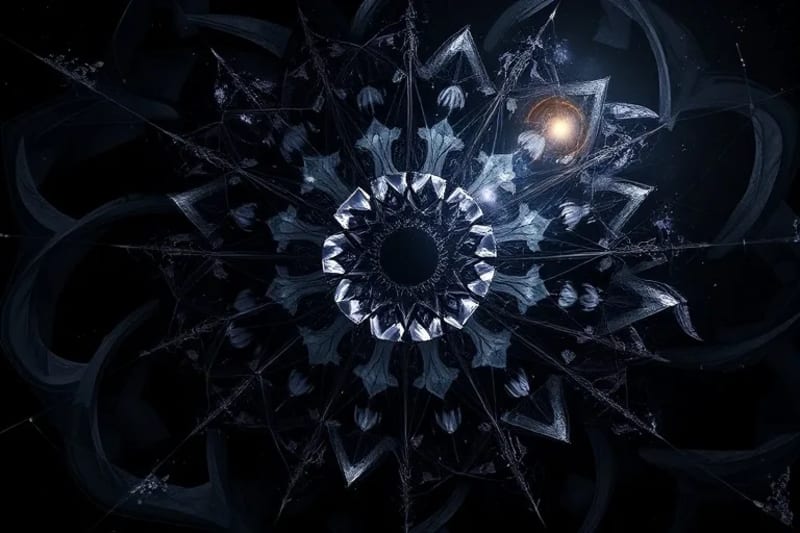
The process of confronting and integrating the shadow, depicted as a dynamic interplay of light and darkness within the psyche.
This digital artwork conceptually illustrates the journey of shadow work, drawing on universal psychological themes of hidden potentials and conscious integration, created by an AI rendering engine.Shadow Work Through Astrological Insights
Engaging in shadow work with the aid of astrology involves a systematic process of self-inquiry and conscious integration. The birth chart acts as a guide, highlighting specific areas for exploration. The first step often involves identifying the planetary placements and aspects that are most challenging or repressed. For example, if Mars is in a difficult aspect to Saturn, it might indicate a repressed anger or a fear of asserting oneself, leading to passive-aggressive behaviors or internal conflict.
Once identified, the individual can begin to observe how these shadow traits manifest in their daily life. This involves journaling, dream analysis, and paying attention to projections onto others. For instance, if one constantly criticizes others for being lazy (a shadow projection), their chart might reveal a strong work ethic (Saturn) that has repressed their own need for rest (perhaps a weak 6th house or a challenging aspect to the Moon).
Techniques such as active imagination, where one dialogues with the archetypal energies represented in the chart, can be highly effective. For a repressed Warrior archetype (Mars), one might visualize engaging in a constructive conflict or setting firm boundaries. For the Great Mother archetype (Moon) that has been neglected, one might focus on self-nurturing practices. This mindful engagement with subconscious messages is also central to Dream Interpretation Mindfulness: Subconscious Messages Self-Discovery, providing another avenue for shadow integration.
Individuation and Archetypal Integration
Individuation is the central concept in Jungian analytical psychology, describing the process by which an individual becomes a whole, undivided person, distinct from the collective. It is a journey of psychological growth that involves the integration of all aspects of the self, including the conscious ego, the personal unconscious, and the collective unconscious. Astrology provides a roadmap for this journey, showing the unique archetypal challenges and potentials inherent in each individual.
The integration of archetypes means bringing unconscious patterns into conscious awareness and allowing them to enrich the personality rather than control it from the shadows. For example, acknowledging and integrating the Warrior archetype (Mars) means learning to assert oneself constructively, rather than suppressing anger or lashing out impulsively. Similarly, integrating the Trickster archetype (often linked to Mercury or Uranus) means embracing creativity and adaptability, rather than falling into self-deception or chaos.
The process of individuation is not about perfection but about completeness. It involves accepting and embracing all parts of oneself, even those deemed undesirable by society or the ego. The astrological chart, with its intricate web of planetary relationships, illustrates the inherent tension and dynamism required for this integration. Each aspect and placement represents an opportunity to balance opposing forces and synthesize diverse energies into a cohesive whole.
Astrological Transits and Archetypal Activation
Astrological transits, the ongoing movements of planets in the sky relative to the natal chart, play a crucial role in activating archetypal energies and bringing shadow material to the surface. These transits act as cosmic triggers, creating periods of intense psychological challenge and opportunity for growth. When a transiting outer planet (like Pluto, Neptune, or Uranus) aspects a natal planet, it can initiate profound shifts in consciousness and force a confrontation with previously unconscious material.
For example, a Pluto transit to a personal planet often signifies a period of deep psychological purging and transformation, forcing the individual to confront power dynamics, fears of loss, or repressed desires. A Neptune transit might dissolve old boundaries, bringing spiritual insights but also potential for confusion or illusion, making it a powerful time for Aura Cleansing Protection: Maintaining Energetic Field. Uranus transits can bring sudden awakenings, rebellions against old structures, and a strong urge for freedom, often disrupting the ego's comfortable patterns.
Understanding these transits allows individuals to consciously engage with the archetypal energies being activated, rather than being passively overwhelmed by them. By recognizing the psychological themes at play, one can approach these periods with greater awareness, using them as catalysts for shadow integration and further individuation. This dynamic interplay between celestial mechanics and personal development is a cornerstone of psycho-astrology.
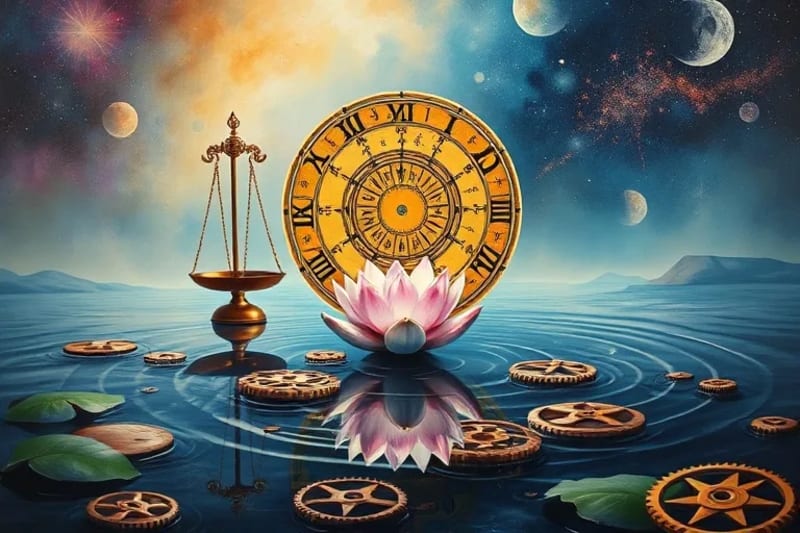
A symbolic representation of the intricate path to psychological wholeness, guided by the wisdom of ancient charts and the balance of inner forces.
This surrealist interpretation of astrological and psychological integration was generated by AI, blending historical symbols with abstract concepts of self-realization.Benefits of Psycho-Astrological Integration
The integration of Jungian archetypes and shadow work through psycho-astrology offers a multitude of benefits for personal growth and psychological well-being. Firstly, it fosters profound self-awareness, allowing individuals to understand the deeper motivations behind their behaviors and emotional responses. This clarity can lead to a reduction in self-blame and an increase in self-compassion, as one realizes that many struggles stem from unconscious archetypal patterns rather than personal failings.
Secondly, it empowers individuals to reclaim projected qualities and integrate disowned aspects of themselves. By bringing the shadow into conscious awareness, its destructive potential diminishes, and its latent energy can be harnessed for creative and constructive purposes. This process often leads to a greater sense of inner vitality and authenticity, as one is no longer expending energy on repression or projection.
Furthermore, psycho-astrology can significantly improve interpersonal relationships. By understanding one's own archetypal dynamics and shadow projections, individuals can develop greater empathy for others and reduce conflict arising from unconscious interactions. It helps in recognizing that what bothers us most about others often reflects an unintegrated aspect of ourselves.
Ultimately, this integrated approach supports the journey towards psychological wholeness, leading to a more balanced, resilient, and fulfilled life. It provides a framework for navigating life's challenges with greater wisdom and purpose, transforming obstacles into opportunities for deeper self-realization. The birth chart, when viewed through this psychological lens, becomes not just a map of destiny, but a guide for conscious evolution.
Explore More Insights
Cosmic Sociology Mapping Global Consciousness Digital Age AI
Celestial Mechanics Karmic Cycles Planetary Transits Destiny
Source: Hybrid content assisted by AI and human editorial supervision.


Comments
Post a Comment