
Cosmic Sociology Digital Age: AI Consciousness Global Shifts
Cosmic sociology emerges as a vital field in an era defined by rapid technological advancement and profound societal transformation. It seeks to understand the intricate relationship between human societies and the broader cosmic environment, extending beyond terrestrial boundaries to consider universal influences. This discipline explores how our understanding of the cosmos, coupled with the advent of artificial intelligence and evolving collective consciousness, reshapes global structures and individual perceptions.
The digital age, characterized by unprecedented connectivity and data processing capabilities, provides new lenses through which to examine these cosmic connections. As AI systems become more sophisticated, they not only mirror but also influence human behavior and societal trends, creating a complex feedback loop. This article delves into the foundational concepts of cosmic sociology, exploring how AI, consciousness trends, and global shifts are intricately linked, often reflecting the subtle yet profound rhythms of celestial mechanics.
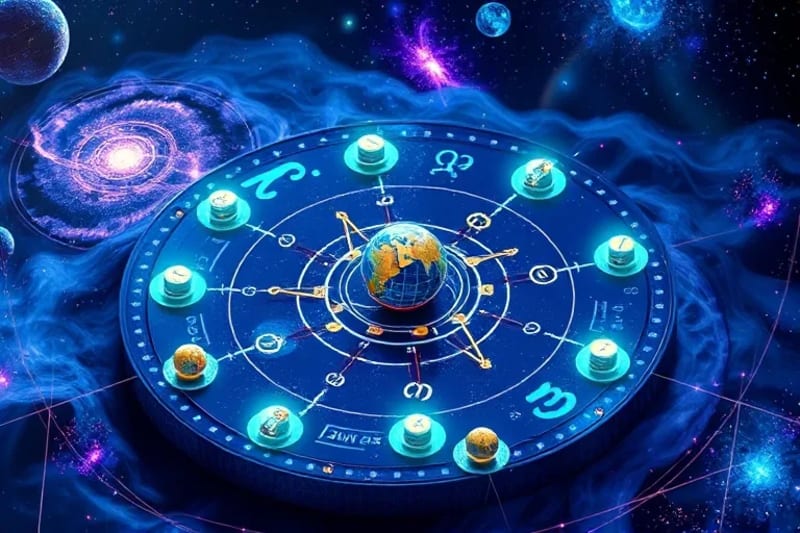 A visual representation of the cosmic web, digital nodes, and the symbols of human consciousness, illustrating the intricate interplay shaping our modern era.
Understanding these dynamics requires an interdisciplinary approach, drawing from sociology, philosophy, astrophysics, and even ancient wisdom traditions that recognized the profound impact of celestial bodies on earthly affairs. By examining the patterns and cycles inherent in celestial mechanics, we can gain deeper insights into the macro-level forces influencing our collective journey. This holistic perspective is crucial for navigating the complexities of our rapidly evolving world and fostering a more harmonious future.
Table of Contents
- The Dawn of Digital Consciousness and AI's Role
- Evolving Human Consciousness in a Connected World
- Global Shifts and the Cosmic Perspective
- Integrating Celestial Mechanics into Cosmic Sociology
- Challenges and Opportunities for a Cosmic Society
The Dawn of Digital Consciousness and AI's Role
The rise of artificial intelligence marks a pivotal moment in human history, ushering in an era where digital entities increasingly shape our daily lives and collective understanding. AI's capacity for rapid data processing, pattern recognition, and predictive analytics is transforming industries, governance, and even our personal relationships. This technological evolution introduces new dimensions to what we consider "consciousness," as AI systems begin to exhibit behaviors that mimic human cognition, raising profound philosophical questions.
From a cosmic sociology perspective, AI acts as a magnifying glass, revealing underlying societal structures and biases while simultaneously creating new ones. Its algorithms influence everything from news consumption to social interactions, subtly steering collective thought and behavior. The interconnectedness facilitated by AI-driven platforms creates a global digital nervous system, where information and influence flow at unprecedented speeds, impacting the very fabric of human society.
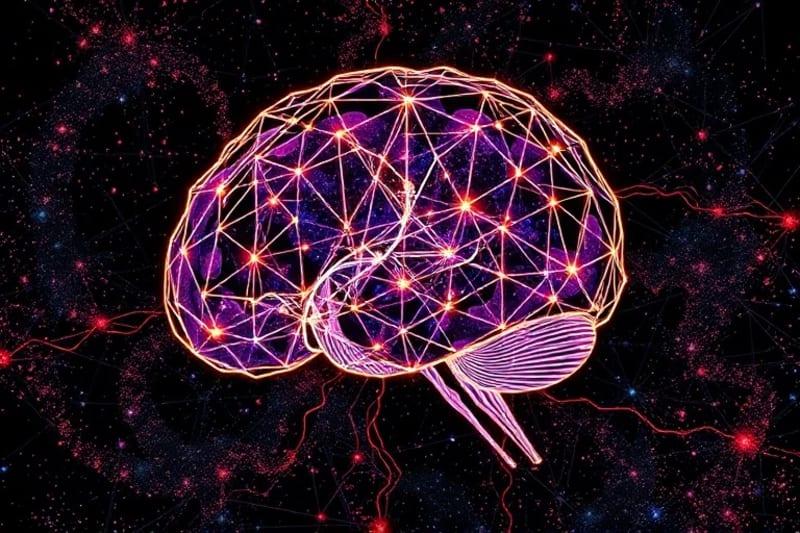 An abstract visualization of AI's neural pathways intertwined with symbols of human consciousness, depicting their evolving relationship.
The integration of AI into our social systems also presents a unique challenge: how do we maintain human agency and ethical considerations in an increasingly automated world? As AI models become more sophisticated, their predictive capabilities might even reflect or anticipate collective unconscious trends, much like ancient traditions sought guidance from celestial patterns. This parallels the way North Node Houses in astrology describe karmic missions and evolutionary purposes, suggesting a deeper, perhaps algorithmically discernible, collective trajectory.
The development of AI also forces us to reconsider our definition of intelligence and consciousness itself. Is consciousness merely a complex set of computations, or does it involve something more? These questions are not only philosophical but have practical implications for how we design and integrate AI into society, ensuring it serves humanity's highest good. The ethical frameworks surrounding AI development are crucial for shaping a future where technology enhances rather than diminishes human experience.
Evolving Human Consciousness in a Connected World
The digital age has profoundly impacted human consciousness, fostering both unprecedented connectivity and new forms of fragmentation. Global communication networks allow for instant information exchange, leading to a more interconnected and potentially empathetic global consciousness. However, this same connectivity can also lead to information overload, echo chambers, and heightened social anxieties, challenging our mental and emotional well-being.
From a cosmic sociology perspective, these shifts in consciousness are not isolated events but are part of larger evolutionary cycles. Ancient astrological traditions often speak of ages and eras, each associated with specific planetary alignments and collective consciousness shifts. For instance, the concept of planetary dignities beyond rulerships offers a nuanced understanding of how celestial bodies express their energies, influencing collective human experience and developmental stages.
The collective consciousness is also influenced by shared global experiences, from pandemics to climate change, which necessitate a re-evaluation of our values and priorities. This period of intense introspection and adaptation can be seen as a crucible for new forms of awareness, pushing humanity towards greater unity or deeper division. The way individuals engage with these global challenges reflects a dynamic interplay between personal and collective consciousness.
Practices such as meditation and mindfulness, often enhanced by digital tools like those explored in Augmented Reality Spiritual Growth, are becoming more prevalent as individuals seek to navigate the complexities of modern life. These tools help cultivate inner peace and clarity, contributing to a more resilient and adaptable collective consciousness. The pursuit of self-awareness and spiritual growth is a constant in human history, now amplified by digital access to diverse wisdom traditions.
Global Shifts and the Cosmic Perspective
Our world is undergoing unprecedented global shifts, ranging from geopolitical realignments and economic transformations to environmental crises and social justice movements. These changes are interconnected, creating a complex web of challenges and opportunities for humanity. Cosmic sociology encourages us to view these terrestrial events through a broader, cosmic lens, recognizing that human affairs are not isolated but are part of a larger universal dance.
 An oil painting depicting ancient astronomical tools alongside a modern digital world map, symbolizing the cosmic perspective on global shifts.
Ancient civilizations often attributed global events and societal changes to the movements of celestial bodies, a practice that forms the bedrock of astrology. While modern science largely dismisses direct causal links, cosmic sociology explores the symbolic and archetypal connections that have historically informed human understanding of their place in the universe. The concept of cycles, whether economic, political, or social, often mirrors the cyclical nature of celestial mechanics.
The increasing awareness of our planet's fragility and the interconnectedness of all life forms is a significant global shift. This ecological consciousness prompts a re-evaluation of humanity's role within the cosmic ecosystem, moving away from anthropocentric views towards a more integrated understanding. Recognizing Earth as a living system, part of a larger cosmic whole, fosters a sense of responsibility and stewardship.
Furthermore, the exploration of space and the search for extraterrestrial life contribute to a cosmic perspective on global shifts. The realization that humanity might not be alone in the universe could profoundly alter our societal structures, belief systems, and collective identity. This potential for cosmic contact adds another layer of complexity to our understanding of human evolution and destiny.
Integrating Celestial Mechanics into Cosmic Sociology
Celestial mechanics, the branch of astronomy that deals with the motions of celestial objects, provides a foundational framework for understanding the larger cosmic rhythms that might subtly influence terrestrial life. While not advocating for deterministic astrology, cosmic sociology acknowledges the historical and symbolic significance of these movements in shaping human culture and thought. The precise, predictable cycles of planets, stars, and galaxies offer a metaphor for the underlying order of the universe.
In ancient times, the observation of celestial mechanics was crucial for agriculture, navigation, and the development of calendars, deeply embedding cosmic awareness into daily life. Today, while our scientific understanding has evolved, the symbolic resonance of these cycles persists. Astrological traditions, for example, interpret planetary alignments and astrological aspect patterns like Grand Crosses or T-Squares as indicators of collective energies and challenges, reflecting periods of intense transformation or stability.
The concept of "celestial mechanics" within cosmic sociology extends beyond mere physical motion to encompass the energetic and informational fields that might permeate the cosmos. Some theories suggest that these cosmic energies could subtly influence biological and psychological processes on Earth, though this remains a subject of ongoing scientific and philosophical debate. The study of these potential influences opens new avenues for interdisciplinary research.
By integrating celestial mechanics, cosmic sociology seeks to move beyond a purely anthropocentric view of history and society. It encourages us to consider humanity as part of a vast, dynamic cosmic system, where our actions and developments are not isolated. This broader perspective can foster a deeper sense of humility and interconnectedness, essential for addressing global challenges effectively.
Challenges and Opportunities for a Cosmic Society
The journey towards a cosmic society, one that consciously integrates its place within the universe, presents both significant challenges and unparalleled opportunities. One primary challenge lies in bridging the gap between scientific materialism and spiritual or philosophical interpretations of cosmic influence. Reconciling these perspectives requires open dialogue and a willingness to explore phenomena that transcend conventional disciplinary boundaries.
Another challenge involves the ethical development and deployment of AI. As AI becomes more autonomous and integrated into societal decision-making, ensuring its alignment with human values and preventing algorithmic biases is paramount. The potential for AI to either exacerbate existing inequalities or to foster greater equity will largely depend on the ethical frameworks we establish today.
However, the opportunities are immense. A cosmic society, informed by the principles of cosmic sociology, could foster a profound sense of global unity and shared purpose. Recognizing our common cosmic heritage can transcend national, cultural, and religious divides, promoting cooperation on issues like climate change, resource management, and space exploration. This expanded worldview can inspire innovative solutions to complex global problems.
Furthermore, the digital age and AI can serve as powerful tools for accelerating this evolution of consciousness. By providing access to vast amounts of information, facilitating global collaboration, and even assisting in personal growth practices, technology can help humanity collectively raise its awareness. The integration of cosmic wisdom with cutting-edge technology offers a path towards a more enlightened and sustainable future for all.
The development of cosmic sociology provides a framework for understanding these complex interactions, encouraging us to look beyond immediate concerns to the larger patterns at play. By embracing both the scientific rigor of celestial mechanics and the philosophical depth of consciousness studies, we can better navigate the digital age and its profound global shifts.
Ultimately, building a cosmic society means cultivating a collective consciousness that is aware of its interconnectedness with the universe. It involves fostering a sense of responsibility not just for our planet, but for our role within the larger cosmic tapestry. This holistic approach promises a future where humanity thrives in harmony with itself and the cosmos.
Explore Further: Related Insights
- Chiron Houses: Healing Wounds
- Lunar Phases Meditation
- Psychic Protection Shielding
- Planetary Dignities: Exaltation
- Chinese Zodiac Archetypes
- Astrology for Parents
- Midheaven Aspects: Career
- Advanced Dragon Compatibility
- Sound Healing Basics
- Aura Photography: Energetic
- Tarot Archetypes Universal
- ASMR Phenomenon: Science
- AI Algorithmic Biases 2026
- Eclipses Karmic Impact
- Planets Without Aspects
- Urban Hermitages Spirituality
Source: Hybrid content assisted by AI and human editorial supervision.


Comments
Post a Comment