
Vibrational Linguistics: Words, Mantras, Manifestation Power
In the vast tapestry of New Age thought and spiritual exploration, the concept of vibrational linguistics emerges as a compelling framework for understanding the profound impact of language on our reality. This advanced discipline posits that words are not merely arbitrary symbols for communication but are imbued with inherent energetic frequencies that actively shape our consciousness, influence our environment, and drive the process of manifestation. Far beyond simple semantics, vibrational linguistics delves into the subtle energetic undercurrents of spoken and written language, revealing how every utterance, thought, and mantra contributes to the vibrational blueprint of our existence.
This article aims to provide a comprehensive, in-depth exploration of vibrational linguistics, dissecting its theoretical underpinnings, scientific correlations, and practical applications. We will navigate the intricate connections between sound, frequency, consciousness, and the power of intentional language, offering a nuanced perspective on how individuals can harness this ancient wisdom for personal transformation and deliberate co-creation. From the resonant power of ancient mantras to the subtle influence of everyday affirmations, understanding vibrational linguistics offers a potent key to unlocking a more aligned and empowered life.
Table of Contents
- Introduction to Vibrational Linguistics
- The Physics of Sound and Energetic Resonance
- Language, Perception, and Reality: The Sapir-Whorf Hypothesis
- Mantras: Ancient Wisdom for Modern Minds
- Affirmations and Intentions: Sculpting Your Reality
- Consciousness as a Vibrational Amplifier
- Practical Techniques for Applied Vibrational Linguistics
- Ethical Dimensions and Common Misconceptions
- Conclusion: Harnessing the Power of Intentional Language
Introduction to Vibrational Linguistics
Vibrational linguistics is an interdisciplinary field that bridges ancient spiritual traditions with modern scientific understanding, particularly in quantum physics and neuroscience. It operates on the premise that everything in the universe, including thoughts and words, is energy vibrating at specific frequencies. From this perspective, language is not merely a tool for conveying information but a dynamic force that actively participates in the creation and organization of reality.
The core tenet is that the frequency embedded within a word, phrase, or mantra interacts with the energetic field of an individual and their environment. Positive, empowering language is believed to elevate one's vibrational state, attracting corresponding experiences and opportunities. Conversely, negative or limiting language can lower one's frequency, potentially attracting less desirable outcomes. This concept forms the bedrock of manifestation practices, where deliberate word choice and focused intention are paramount.
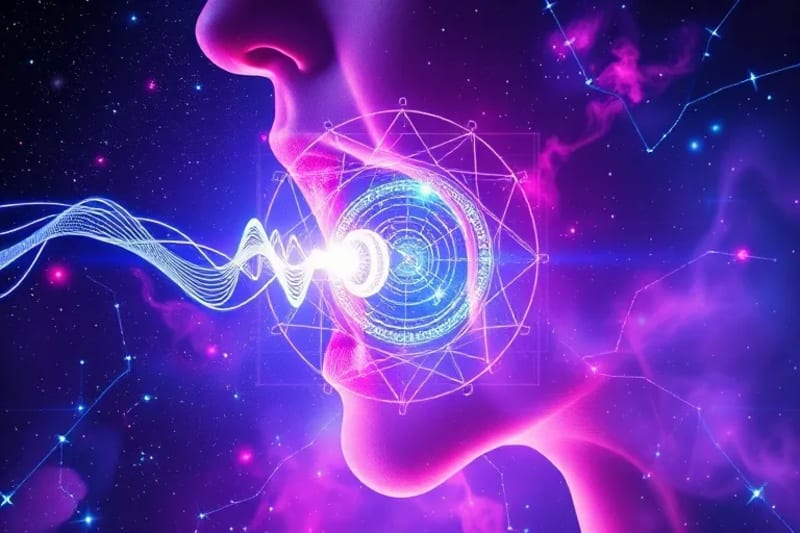
Precursores intelectuales, diagramas fundamentales y representaciones conceptuales que forjaron la visión de la Lingüística Vibracional sobre la realidad y la manifestación.
Fuente visual sujeta a disponibilidad del ecosistema: Wikimedia Commons bajo licencia CC BY-SA 4.0 o renderizado conceptual IA.The Physics of Sound and Energetic Resonance
To grasp vibrational linguistics, it is essential to understand the fundamental physics of sound and resonance. Sound is a form of energy that travels as waves, causing vibrations in a medium. These vibrations have measurable frequencies, amplitudes, and wavelengths. The human body, composed largely of water, is an excellent conductor of these vibrations, making us highly susceptible to their influence.
Resonance occurs when an object vibrates at its natural frequency in response to external vibrations of the same frequency. This principle is evident in phenomena like cymatics, where sound frequencies create intricate geometric patterns in sand, water, or other media. Dr. Hans Jenny's pioneering work in cymatics visually demonstrated how different frequencies generate distinct, often beautiful, forms. This suggests that sound, and by extension, spoken words, possess an inherent creative and organizational power.
From a quantum perspective, particles exhibit wave-particle duality, meaning they behave as both particles and waves. This implies that at the most fundamental level, everything is vibrating energy. When we utter words, we are not just producing air disturbances; we are emitting complex vibrational patterns that interact with the quantum field, potentially influencing the probability of certain outcomes. This aligns with the New Age perspective on quantum physics and consciousness, where observation and intention play a crucial role in shaping reality.
Language, Perception, and Reality: The Sapir-Whorf Hypothesis
The Sapir-Whorf Hypothesis, also known as linguistic relativity, proposes that the structure of a language affects its speakers' worldview or cognition. While often debated in mainstream linguistics, this hypothesis finds a compelling resonance within vibrational linguistics. If language shapes thought, and thought emits a vibration, then the very structure and vocabulary of our native tongue could inherently influence our energetic blueprint.
Strong versions of the hypothesis suggest that language determines thought, while weaker versions propose that it merely influences it. Regardless, the implication for vibrational linguistics is profound: the words we use daily, the grammatical structures we employ, and the cultural nuances embedded in our language can predispose us to certain ways of perceiving and interacting with reality. This extends beyond simple word choice to the underlying energetic patterns of entire linguistic systems.
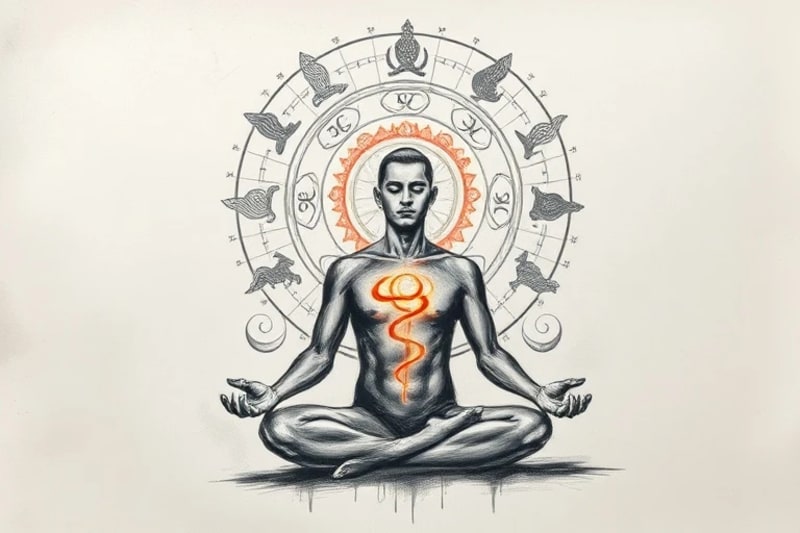
The resonant power of mantras in meditation.
Consider the difference between a language rich in terms for emotional states versus one that is more utilitarian. The former might encourage a deeper emotional intelligence and expression, thus fostering a different energetic experience. This highlights the importance of not just what we say, but how our language fundamentally structures our internal and external worlds.
Mantras: Ancient Wisdom for Modern Minds
Mantras are perhaps the most direct application of vibrational linguistics. Originating from ancient Vedic traditions, a mantra is a sacred utterance, a word, or a phrase, often in Sanskrit, repeated with intention. The power of mantras lies not just in their semantic meaning but, crucially, in their vibrational quality. Each sound within a mantra is believed to carry a specific energetic frequency designed to resonate with particular aspects of consciousness or the universal energy field.
The repetitive chanting of mantras has been shown to induce profound physiological and psychological effects. Studies have indicated that mantra recitation can:
- Reduce Stress and Anxiety: The rhythmic nature of chanting calms the nervous system, lowering heart rate and blood pressure.
- Enhance Focus and Concentration: Directing attention to the sounds and vibrations of the mantra trains the mind to stay present.
- Promote Neuroplasticity: Regular practice can create new neural pathways, leading to positive changes in brain structure and function.
- Shift Brainwave States: Mantras can guide the brain into alpha and theta states, associated with deep relaxation, meditation, and heightened creativity.
The vibrational impact of mantras is thought to "tune" the practitioner's energetic field to a higher frequency, clearing energetic blockages and aligning them with their desired intentions. This makes them a powerful tool for spiritual growth, healing, and manifestation. For those interested in exploring ancient wisdom for modern guidance, understanding these practices can be transformative, much like delving into the insights of runes divination.
Affirmations and Intentions: Sculpting Your Reality
While mantras often draw from ancient, sacred texts, affirmations are personalized statements designed to reprogram the subconscious mind and align one's vibrational state with desired outcomes. The effectiveness of affirmations in vibrational linguistics stems from the principle that consistent, emotionally charged language can reshape neural pathways and alter one's energetic frequency.
Key elements for powerful affirmations include:
- Positive Phrasing: Always state what you want, not what you don't want. For example, "I am healthy" instead of "I am not sick."
- Present Tense: Affirmations should be stated as if they are already true ("I am," "I have") to signal to the subconscious that the desired reality is current.
- Emotional Resonance: The words must evoke genuine positive emotion. Feeling is the fuel that charges the affirmation's vibrational frequency.
- Specificity: While general affirmations are good, specific intentions can be more potent. "I attract abundance" is good; "I attract a fulfilling career that brings me joy and financial freedom" is more powerful.
Intentions, closely related to affirmations, are clear, focused declarations of what one wishes to create or experience. In vibrational linguistics, an intention is a directed energetic signal, a blueprint sent into the quantum field. The clarity, emotional conviction, and consistency of this signal determine its vibrational strength and its potential for manifestation. This aligns with the principles of biophilic manifestation, which emphasizes aligning intentions with natural patterns.

The intricate energetic architecture of words and their influence on reality.
Consciousness as a Vibrational Amplifier
The efficacy of vibrational linguistics is not solely dependent on the words themselves but is profoundly amplified by the consciousness of the speaker. Our thoughts, beliefs, and emotional states act as powerful modulators of the vibrational frequencies we emit. A word spoken with conviction and positive emotion carries a far higher and clearer frequency than the same word uttered with doubt or apathy.
This concept underscores the importance of inner work and self-awareness. If an individual holds deep-seated limiting beliefs or unresolved emotional trauma, even the most perfectly crafted affirmations may struggle to manifest. The internal vibrational state, often influenced by subconscious patterns, can override conscious linguistic efforts. Techniques like automatic writing for shadow work can be instrumental in uncovering and transmuting these underlying energetic blocks.
Consciousness acts as a filter and a projector. It filters incoming information based on existing beliefs and projects outgoing intentions with a specific energetic signature. Therefore, cultivating a positive mindset, practicing mindfulness, and engaging in emotional healing are not just complementary practices but essential foundations for effective vibrational linguistics. The clearer and more coherent one's internal energetic state, the more potent their linguistic creations become.
Practical Techniques for Applied Vibrational Linguistics
Implementing vibrational linguistics into daily life involves conscious awareness and consistent practice. Here are several advanced techniques:
- Intentional Vocabulary Audit: Regularly review your spoken and internal dialogue. Identify and consciously replace words that carry negative connotations or limit your potential (e.g., "I can't" with "I am learning how").
- Resonant Affirmation Creation: Craft affirmations that not only state your desire but also evoke a strong emotional response. Repeat them daily, ideally in front of a mirror, to enhance self-belief and energetic charge.
- Mantra Practice: Explore traditional mantras or create personal ones. Focus on the sound and vibration as much as the meaning. Use mala beads for counting repetitions to maintain focus.
- Silent Language: Recognize that thoughts are also a form of vibrational language. Practice mindful thinking, observing your thoughts without judgment and gently redirecting negative thought patterns.
- Written Manifestation: Write down your intentions and affirmations. The act of writing can solidify the energetic blueprint. Consider writing them in a "future journal" as if they have already happened.
- Vocal Toning and Chanting: Experiment with vocalizing sounds and tones without specific words. This can help clear energetic blockages and align your chakras, enhancing your overall vibrational frequency.
- Environmental Language: Pay attention to the language used in your environment – media, conversations, music. Consciously choose to immerse yourself in uplifting and empowering linguistic environments.
Ethical Dimensions and Common Misconceptions
As with any powerful tool, vibrational linguistics comes with ethical responsibilities and potential misconceptions. It is crucial to approach this practice with integrity and a balanced perspective.
Ethical Considerations:
1. Non-Harm: Never use vibrational linguistics to manipulate or harm others. The principle of "do no harm" is paramount in all spiritual practices.
2. Personal Responsibility: While words are powerful, they are not a substitute for action. Manifestation requires aligned action in the physical world.
3. Respect for Free Will: Avoid attempting to manifest outcomes that infringe upon the free will of others.
4. Authenticity: Ensure your intentions and affirmations are truly aligned with your highest good and not driven by ego or external pressures.
Common misconceptions include the idea that one can simply wish for something without any effort, or that all negative experiences are solely due to "bad vibrations." While our words and thoughts are influential, life is a complex interplay of personal energy, collective consciousness, and external circumstances. Vibrational linguistics is a tool for empowerment and alignment, not a magic wand that bypasses the natural laws of cause and effect.
It is also important to avoid spiritual bypassing, where individuals use spiritual concepts to avoid confronting difficult emotions or taking practical steps. Vibrational linguistics should complement, not replace, psychological healing, critical thinking, and responsible decision-making.
Conclusion: Harnessing the Power of Intentional Language
Vibrational linguistics offers a profound paradigm shift in how we perceive and interact with language. By recognizing words, mantras, and intentions as potent energetic frequencies, we unlock a deeper understanding of our co-creative power. From the scientific principles of sound and resonance to the ancient wisdom of mantra practice, the evidence suggests that our linguistic choices are far from passive; they are active architects of our reality.
Embracing the principles of vibrational linguistics empowers us to become more conscious creators of our lives. By auditing our vocabulary, crafting resonant affirmations, engaging in mantra practice, and cultivating a high-vibrational consciousness, we can intentionally sculpt our internal and external worlds. This journey demands self-awareness, consistency, and ethical responsibility, but the rewards—a life lived in greater alignment, purpose, and joy—are immeasurable. The power to manifest lies not just in what we say, but in the energetic signature embedded within every word we choose.
Source: Hybrid content assisted by AI and human editorial supervision.


Comments
Post a Comment