
Dwarf Planets: Eris, Makemake, Haumea Natal Chart Impact
While traditional astrology primarily focuses on the ten classical planets, the discovery of dwarf planets in the Kuiper Belt has expanded our understanding of cosmic influences. These distant celestial bodies, particularly Eris, Makemake, and Haumea, are increasingly recognized for their profound impact on personal transformation and spiritual evolution within the natal chart. They represent deeper, often hidden, layers of our psyche and destiny, challenging conventional perspectives and pushing us towards radical self-discovery.
Their slow orbits mean they spend many years in a single sign, affecting entire generations and signifying collective shifts as well as individual journeys. Understanding their placement in your birth chart can unlock insights into your unique path of growth, conflict resolution, and the areas where you are destined to break free from societal norms or personal limitations. These dwarf planets act as catalysts, urging us to confront uncomfortable truths and embrace our authentic selves.
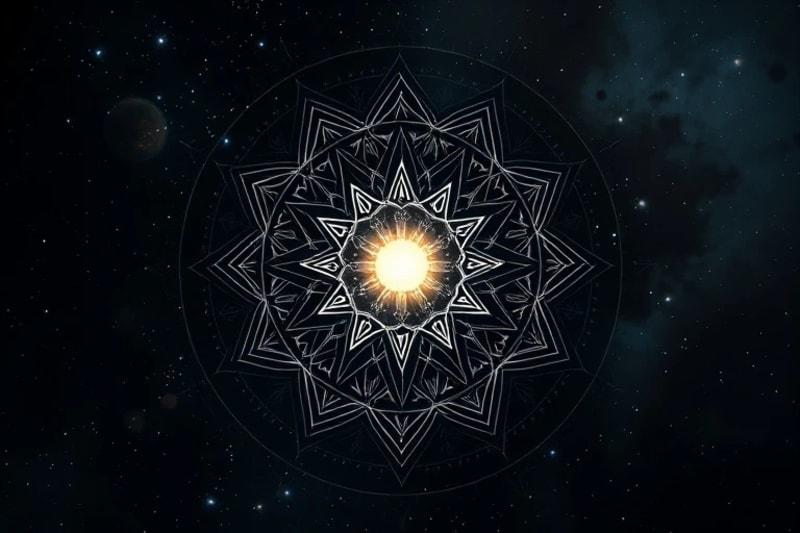
The celestial dance of dwarf planets, Eris, Makemake, and Haumea, symbolizes the profound, often hidden, cosmic forces that guide individual and collective transformation.
This conceptual image, rendered by AI, evokes the mysterious and ancient wisdom embedded in the far reaches of our solar system, influencing our deepest evolutionary paths.
The influence of dwarf planets extends beyond the personal, often reflecting significant global shifts and evolutionary pressures. Their discovery itself marked a paradigm shift in astronomy, mirroring the internal shifts they provoke in individuals. By integrating their symbolism, astrologers can offer a more nuanced and comprehensive reading of a person's life purpose and challenges.
This article will delve into the specific astrological interpretations of Eris, Makemake, and Haumea, exploring how their positions in your natal chart can shed light on your personal growth, areas of conflict, and unique contributions to the world. We will examine their mythologies, their discovered characteristics, and their emerging astrological significances, providing a framework for understanding their transformative power.
Table of Contents
- Eris: The Disruptor of Discord and Truth-Teller
- Makemake: The Guardian of Sacred Boundaries and Spiritual Journey
- Haumea: The Catalyst of Rebirth and Creative Force
- Integrating Dwarf Planet Influences in Your Natal Chart
- Dwarf Planets and Collective Evolution
Eris: The Disruptor of Discord and Truth-Teller
Eris, named after the Greek goddess of discord and strife, was discovered in 2005 and is larger than Pluto. Its astrological significance is deeply tied to themes of truth, justice, and the disruption of false narratives. Eris in the natal chart points to areas where an individual may experience significant conflict or challenge, often leading to a profound re-evaluation of personal values and societal structures.
Individuals with prominent Eris placements might feel a strong urge to expose hypocrisy, challenge authority, or fight for marginalized causes. This energy can manifest as internal struggle, leading to periods of intense self-doubt or external battles against injustice. The ultimate purpose of Eris's influence is to bring hidden truths to light, even if the process is uncomfortable or creates upheaval. It forces us to confront our shadow selves and the collective shadow of humanity.
For example, Eris in a fire sign might manifest as a passionate, even aggressive, pursuit of truth, while in a water sign, it could lead to deep emotional processing of perceived injustices. Understanding Eris's house and aspects in your natal chart can reveal the specific life areas where these themes of disruption and truth-telling will play out. It's a powerful force for authentic self-expression, even if it means standing alone against the tide.
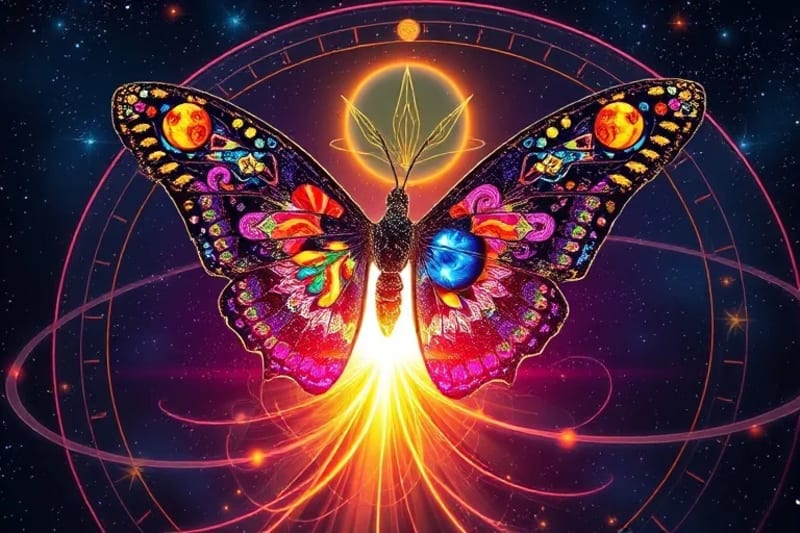
The intricate patterns and swirling colors within a breaking chrysalis symbolize the profound and often beautiful process of inner growth and evolution that dwarf planets can catalyze.
This digital artwork, created by AI, captures the essence of transformation, reflecting the deep psychological shifts initiated by celestial influences.
Makemake: The Guardian of Sacred Boundaries and Spiritual Journey
Makemake, named after the Rapa Nui creator god of humanity, fertility, and the chief god of the birdman cult, was discovered in 2005. Astrologically, Makemake is associated with the establishment and maintenance of sacred boundaries, spiritual sovereignty, and the journey of self-discovery through profound experiences. It highlights our relationship with the divine, our personal ethics, and the spiritual laws we live by.
In a natal chart, Makemake's placement can indicate where an individual needs to define and protect their spiritual and personal space. It speaks to the importance of integrity, self-respect, and honoring one's unique path, even when it diverges from popular opinion. Challenges related to Makemake might involve struggles with personal boundaries, feeling overwhelmed by external influences, or a crisis of faith that ultimately leads to a stronger spiritual foundation. This dwarf planet encourages a deep connection to one's inner wisdom and intuitive guidance, fostering a sense of spiritual autonomy.
Makemake's influence can be particularly potent in aspects to personal planets, suggesting how one's core identity or emotional landscape interacts with these themes. It encourages a solitary, yet profound, spiritual journey, much like the birdman cult's isolated rituals. For further exploration of how celestial bodies influence our inner world, consider delving into Moon Astrology: Emotions, Instincts, Inner World Guide.
Haumea: The Catalyst of Rebirth and Creative Force
Haumea, named after the Hawaiian goddess of childbirth and fertility, known for her rapid transformations and ability to give birth without effort, was discovered in 2004. Astrologically, Haumea represents accelerated cycles of creation, destruction, and rebirth. It signifies areas in life where rapid change and innovative solutions are possible, often leading to breakthroughs and profound creative expression.
In the natal chart, Haumea's placement indicates where an individual possesses a unique capacity for rapid manifestation and a deep connection to the life-death-rebirth cycle. This can manifest as an ability to quickly adapt to new circumstances, to innovate under pressure, or to experience profound personal transformations that seem to happen almost instantaneously. Haumea challenges us to let go of outdated forms and embrace the new, often through intense periods of creative output or sudden shifts in life direction.
For those with strong Haumea influences, there can be a natural talent for birthing new ideas, projects, or even new versions of themselves. This energy is about breaking free from stagnation and embracing the dynamic flow of existence. It's a powerful force for regeneration and the constant renewal of life. The connection between celestial cycles and personal transformation is also explored in Celestial Cycles: Planetary Rulerships & Electional Astrology.
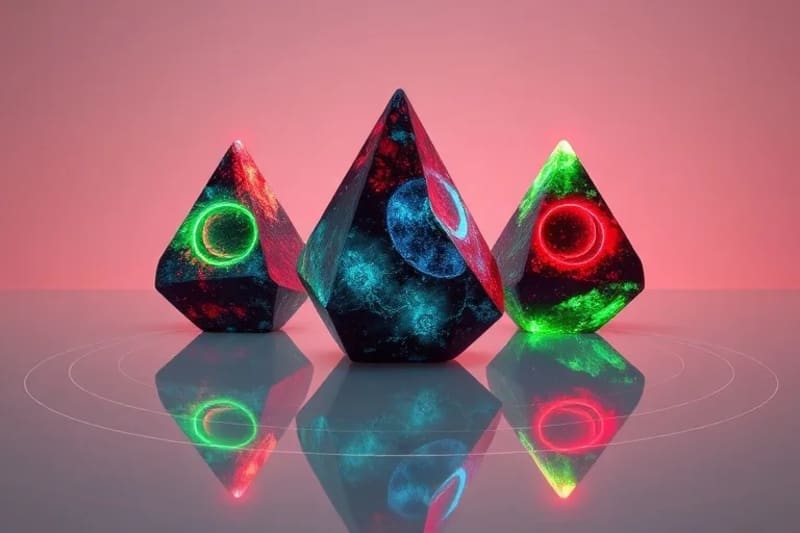
Stylized crystalline forms symbolize the distinct energetic signatures of Eris, Makemake, and Haumea, highlighting their unique contributions to personal and spiritual development.
This 3D render, generated by AI, offers a conceptual view of how these distant celestial bodies manifest their influence through subtle, yet powerful, energetic currents.
Integrating Dwarf Planet Influences in Your Natal Chart
To effectively integrate the influences of Eris, Makemake, and Haumea into your natal chart interpretation, it's crucial to consider their house placements, aspects to other planets, and the signs they occupy. These factors will personalize their general themes, revealing how these transformative energies specifically manifest in your life. For instance, Eris in the 7th house might indicate conflicts in relationships that lead to profound truths about partnership, while Haumea in the 5th house could signify a rapid and innovative approach to creative projects or self-expression.
- House Placement: The astrological house where a dwarf planet resides indicates the specific areas of life where its themes will be most active. For example, Makemake in the 10th house might suggest a need to establish strong ethical boundaries in one's career or public image.
- Sign Placement: The zodiac sign a dwarf planet occupies describes the manner or style in which its energy is expressed. Eris in Aries, for instance, could manifest as a pioneering spirit in challenging injustice, while Eris in Libra might seek truth through balanced, albeit sometimes confrontational, dialogue.
- Aspects: Aspects to other planets reveal how these dwarf planet energies interact with other parts of your personality and life. A challenging aspect from Eris to your Sun could indicate an ongoing struggle with authenticity and self-assertion, while a harmonious aspect from Haumea to your Venus might signify effortless creativity in your relationships.
The interplay of these factors creates a unique blueprint for personal transformation. These dwarf planets often act as deep-seated motivators, pushing us beyond our comfort zones to achieve greater authenticity and spiritual alignment. Their influence is not always easy, but it is always profound, leading to significant evolutionary leaps. For a broader perspective on astrological psychology, consider reading Astro-Psychology: Jungian Archetypes, Birth Chart Analysis.
Dwarf Planets and Collective Evolution
Beyond individual charts, dwarf planets also carry significant weight in mundane astrology, reflecting broader societal trends and collective evolutionary processes. Their long orbital periods mean they stay in a particular zodiac sign for decades or even centuries, influencing entire generations and marking periods of significant global change. For example, Eris's discovery coincided with increased global awareness of social injustices and the rise of movements demanding truth and accountability.
Makemake's themes of sacred boundaries and spiritual sovereignty can be seen in collective movements advocating for indigenous rights, environmental protection, and the re-evaluation of ethical governance. Haumea's influence, with its emphasis on rapid rebirth and creative destruction, might align with periods of technological revolution, paradigm shifts in science, or widespread social restructuring. These celestial bodies serve as cosmic signposts, guiding humanity through its collective journey of transformation and growth.
By studying their movements and historical correlations, astrologers can gain deeper insights into the underlying currents shaping our world. The integration of dwarf planets into astrological practice offers a richer, more complex understanding of both personal and collective destinies, paving the way for a more enlightened future. This expanded perspective allows us to connect individual experiences to larger cosmic rhythms, fostering a sense of interconnectedness and shared purpose. This holistic view is also present in Ecopsychology Planetary Wellness: Earth Rhythms Connection.
Explore More Cosmic Insights
Delve deeper into the intricate tapestry of celestial influences and personal growth with our curated selection of articles:
- Astro-Botany: Celestial Influences Plant Growth
- Fire Dragon Water Snake Compatibility: Chinese Zodiac Deep Dive
- Monkey's Shadow: Overcoming Trickery & Restlessness in Chinese Zodiac
- Monkey's Business Acumen: Strategic Career Moves by Element
- Planetary Hours: Daily Planning for Productivity
- Fixed Stars Mundane Astrology Global Eras Prediction
- Digital Esoteric Symbolism: Decoding Virtual World Meanings
- Horse Chinese Zodiac: Traits, Compatibility, Elements
- Numerology Dreamwork Synthesis: Deeper Self-Insight
- Metal Snake Year: Traits, Destiny & Horoscope
- Elemental Triplicities Astrology: Fire, Earth, Air, Water
Beyond the Stars: Related Content
Expand your knowledge with insights from our partner blogs:
- AI Impact Digital Art Intellectual Property: Challenges
- Quantum Cybersecurity: Protecting Critical Infrastructure Future
- Alphabet History: Origins, Evolution, Global Impact
- Sports Astrology: Maximize Your Performance
- Advanced Quantum Numerology: Deciphering Life's AI Code
- Horse Chinese Horoscope: Meaning, Personality, and Destiny
- Biblical Prophecies AI Singularity Digital Eden
- Saint Michael Archangel: Intervention in the End Times
- Sacred Relics Forensic Evidence Dialogue Faith Science
Source: Hybrid content assisted by AI and human editorial supervision.


Comments
Post a Comment