
Astro-Psychology: Jungian Archetypes, Birth Chart Analysis | StarPluto
Astro-psychology represents a fascinating convergence of two profound systems for understanding the human psyche: the ancient wisdom of astrology and the depth psychology of Carl Jung. This interdisciplinary approach offers a unique lens through which to explore our inner landscapes, revealing the archetypal patterns that shape our personalities, motivations, and life paths. By integrating Jungian archetypes with the intricate symbolism of the birth chart, individuals can unlock deeper levels of self-awareness and personal growth.
The synergy between these two fields is not merely coincidental; both astrology and Jungian psychology posit that human experience is influenced by universal, primordial patterns. While astrology maps these patterns through planetary positions and zodiacal energies at the moment of birth, Jung identified them as archetypes residing in the collective unconscious. This article delves into how these powerful frameworks can be interwoven to provide a comprehensive and transformative understanding of the self.
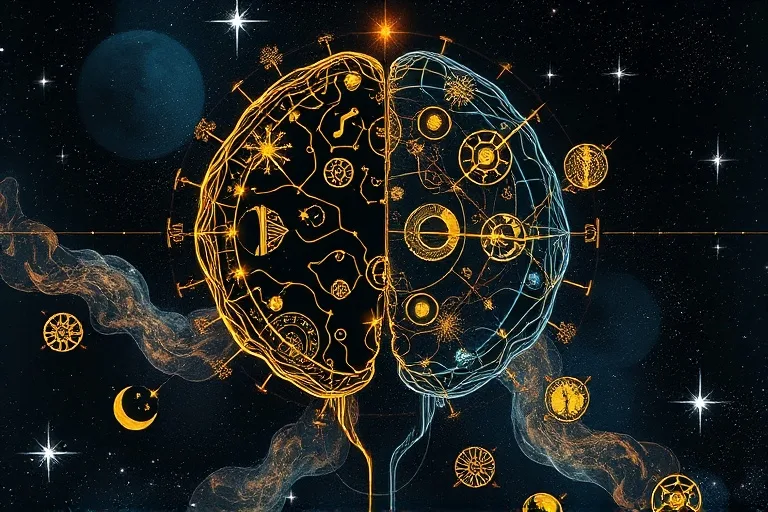
A digital illustration depicting the intricate connection between cosmic patterns and the human psyche, symbolizing astro-psychology.
Understanding Jungian Archetypes
Carl Jung, a pioneering Swiss psychiatrist and psychoanalyst, introduced the concept of archetypes as universal, archaic patterns and images that derive from the collective unconscious and are the psychic counterpart of instinct. These archetypes are not inherited ideas, but rather inherited predispositions to respond to the world in certain ways. They are fundamental building blocks of the human psyche, influencing our thoughts, emotions, behaviors, and dreams.
Jung believed that these archetypes manifest in myths, fairy tales, religions, and art across all cultures, indicating their universal nature. They provide a framework for understanding the deeper dynamics of personality and the underlying motivations that drive human action. Recognizing and integrating these archetypes is a crucial step in the process of individuation, Jung's term for psychological development and self-realization.
Key Jungian Archetypes and Their Manifestations:
The Persona: This is the mask we present to the world, the social identity we adopt. It's how we want to be perceived and often reflects societal expectations. In a birth chart, the Ascendant (Rising Sign) often correlates with the Persona.
The Shadow: Comprising the repressed aspects of our personality—qualities we deem negative or unacceptable—the Shadow holds both our darker impulses and unacknowledged potentials. Integrating the Shadow is vital for wholeness.
The Anima/Animus: The Anima is the unconscious feminine aspect in men, and the Animus is the unconscious masculine aspect in women. These archetypes influence our relationships, projections, and understanding of the opposite gender.
The Self: The central archetype, representing the totality of the psyche, both conscious and unconscious. It is the goal of individuation, symbolizing wholeness, unity, and the ultimate potential of the individual.
The Hero: Embodies courage, strength, and the journey of overcoming obstacles. The Hero's Journey is a classic mythological pattern that reflects our personal quests for growth and achievement.
The Wise Old Man/Woman: Represents wisdom, guidance, and spiritual insight. This archetype often appears in times of crisis, offering counsel and deeper understanding.
The Great Mother: Symbolizes nurturing, fertility, protection, and unconditional love, but also can represent engulfment or destruction. It relates to our earliest experiences of care and security.
The Child: Represents innocence, potential, vulnerability, and the future. It can manifest as the divine child, the wounded child, or the magical child, reflecting our core essence and need for care.
The Birth Chart: A Cosmic Blueprint
The birth chart, also known as a natal chart, is a snapshot of the heavens at the precise moment and location of an individual's birth. It is a complex diagram that maps the positions of the Sun, Moon, planets, and other celestial points across the twelve zodiac signs and twelve astrological houses. Each component of the birth chart carries symbolic meaning, collectively forming a unique psychological and spiritual blueprint.
Astrology posits that these cosmic configurations reflect the innate potentials, challenges, and core energies that an individual brings into this lifetime. It's a tool for self-understanding, offering insights into one's personality traits, emotional patterns, relationship dynamics, career inclinations, and spiritual journey. Interpreting a birth chart involves understanding the interplay between these various elements.
An antique book on archetypal wisdom, paired with astrological tools, symbolizing the fusion of ancient psychological and cosmic knowledge.
Key Components of a Birth Chart:
Planets: Represent fundamental drives, functions, and psychological needs (e.g., Sun for ego, Moon for emotions, Mercury for communication). Each planet acts as an archetypal force.
Zodiac Signs: Describe the 'how' or the quality through which the planetary energies express themselves (e.g., Sun in Aries expresses ego assertively, Sun in Libra expresses it through relationship).
Houses: Represent the 'where' or the specific areas of life where these energies and archetypes manifest (e.g., 1st House for self-identity, 7th House for partnerships, 10th House for career).
Aspects: The angular relationships between planets, indicating how different psychological functions interact and combine (e.g., a square aspect suggests tension and challenge, a trine suggests ease and flow).
Planets as Archetypal Forces
In astro-psychology, each planet in the birth chart can be seen as embodying a specific Jungian archetype or a cluster of archetypal energies. Understanding this correlation allows for a deeper, more nuanced psychological interpretation of the natal chart. The planets are not just celestial bodies; they are symbolic representations of universal human experiences and psychological functions.
By analyzing the condition of each planet—its sign, house, and aspects—we can discern how these archetypal forces are expressed within an individual's psyche. This provides profound insights into their core drives, emotional needs, communication style, and areas of potential growth or conflict. For example, a prominent Mars might indicate a strong Hero archetype, while a challenged Saturn could point to Shadow work related to authority or limitation.
Planetary Archetypal Correspondences:
| Planet | Primary Jungian Archetype(s) | Psychological Expression |
|---|---|---|
| Sun | The Self, The Hero, The King/Queen, The Ego | Core identity, purpose, vitality, conscious will, self-expression. |
| Moon | The Great Mother, The Child, The Anima/Animus (inner feminine) | Emotional nature, security needs, instincts, unconscious habits, nurturing. |
| Mercury | The Messenger, The Trickster, The Puer/Puella Aeternus (eternal youth) | Communication, intellect, learning, perception, adaptability, wit. |
| Venus | The Lover, The Artist, The Maiden, The Hedonist | Love, relationships, values, aesthetics, pleasure, harmony, attraction. |
| Mars | The Warrior, The Aggressor, The Hero, The Destroyer | Drive, assertion, courage, aggression, initiative, sexuality, action. |
| Jupiter | The Wise Old Man/Woman, The Benefactor, The Guru, The Explorer | Expansion, growth, optimism, philosophy, higher learning, luck, abundance. |
| Saturn | The Father, The Taskmaster, The Senex (old man), The Shadow (limitations) | Discipline, responsibility, structure, boundaries, lessons, karma, fear. |
| Uranus | The Rebel, The Innovator, The Awakener, The Revolutionary | Sudden change, innovation, freedom, unconventionality, rebellion, genius. |
| Neptune | The Mystic, The Dreamer, The Victim, The Savior, The Illusionist | Spirituality, intuition, compassion, illusion, escapism, dissolution, art. |
| Pluto | The Transformer, The Destroyer, The Regenerator, The Underworld Lord, The Shadow (deepest) | Transformation, power, death and rebirth, intensity, psychological depth, hidden forces. |
Zodiac Signs: Archetypal Expressions
Just as planets represent fundamental psychological functions, the twelve zodiac signs describe the archetypal modes of expression for these functions. Each sign embodies a distinct set of characteristics, motivations, and ways of perceiving the world, which can be directly linked to Jungian archetypes. When a planet is placed in a particular sign, it takes on the archetypal flavor of that sign, influencing how its energy manifests.
For instance, the Sun in Leo might express the Hero archetype with a flair for dramatic self-expression and a need for recognition, while the Sun in Cancer might express the Great Mother archetype through nurturing and protecting their emotional core. Understanding the archetypal essence of each sign deepens the psychological interpretation of the birth chart, revealing the 'costumes' or 'roles' our inner archetypes tend to wear.
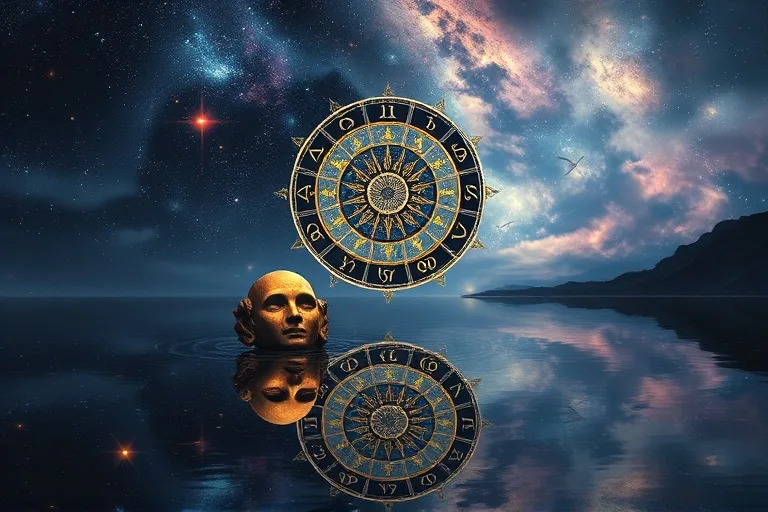
A surrealist painting illustrating the fragmented yet interconnected nature of the birth chart and its archetypal reflections within the psyche.
Examples of Zodiacal Archetypal Expressions:
Aries: Strongly linked to the Hero and Warrior archetypes, emphasizing courage, pioneering spirit, and direct action. It's the impulse to begin and conquer.
Taurus: Connects with the Earth Mother (aspect of Great Mother) and Lover/Artist, focusing on sensuality, stability, beauty, and material security.
Gemini: Embodies the Messenger and Trickster, highlighting communication, curiosity, duality, and intellectual agility.
Cancer: Deeply tied to the Great Mother and Child, representing nurturing, emotional security, home, and protective instincts.
Leo: Strongly aligns with the King/Queen and Hero, emphasizing self-expression, leadership, creativity, and a need for recognition.
Virgo: Relates to the Healer, Servant, and Perfectionist, focusing on analysis, service, order, and practical improvement.
Libra: Connects with the Lover, Judge, and Diplomat, emphasizing balance, harmony, justice, and relationship-oriented behavior.
Scorpio: Linked to the Transformer, Shadow, Detective, and Sorcerer, dealing with intensity, transformation, power dynamics, and hidden truths.
Sagittarius: Embodies the Explorer, Guru, and Philosopher, focusing on adventure, truth-seeking, higher knowledge, and freedom.
Capricorn: Aligns with the Father, Builder, and Achiever, emphasizing discipline, ambition, structure, and responsibility.
Aquarius: Connects with the Rebel, Innovator, and Humanitarian, focusing on originality, social reform, intellectualism, and collective consciousness.
Pisces: Linked to the Mystic, Dreamer, Victim, and Martyr, dealing with spirituality, empathy, imagination, and transcendence.
Houses: Archetypal Arenas of Life
The twelve houses of the birth chart represent distinct areas of life where our archetypal energies play out. They describe the specific contexts and experiences through which we encounter and express our planetary and zodiacal influences. When we integrate Jungian archetypes with the houses, we gain insight into the 'stage' upon which our inner dramas unfold and where certain archetypal themes are most active.
For example, the 4th House (home and roots) might highlight the Great Mother or Child archetype in relation to family and emotional foundations, while the 10th House (career and public image) could illuminate the Persona or Hero archetype in our professional life. This provides a practical framework for understanding how our inherent psychological patterns manifest in our daily existence and significant life events.
Archetypal Significance of the Houses:
1st House (Ascendant): The Persona, self-image, how we appear to the world, initial approach to life. Governs the physical body and self-identity.
2nd House: Values, possessions, self-worth. Can relate to the Earth Mother (resources) or the Hedonist (desire for comfort).
3rd House: Communication, siblings, short journeys, early education. The Messenger and Trickster are active here.
4th House (IC): Home, roots, family, emotional foundations, the unconscious. Strongly associated with the Great Mother and the Child.
5th House: Creativity, romance, children, self-expression, pleasure. The Lover, Artist, and Child archetypes are prominent.
6th House: Work, daily routines, health, service. The Servant, Healer, and aspects of the Perfectionist are relevant.
7th House (Descendant): Partnerships, marriage, open enemies. Where we encounter our Anima/Animus projections and the Lover archetype in others.
8th House: Transformation, shared resources, intimacy, death, rebirth, hidden depths. The Transformer, Shadow, and Sorcerer archetypes are deeply engaged here.
9th House: Higher education, philosophy, long journeys, spirituality, belief systems. The Guru, Explorer, and Wise Old Man/Woman find expression.
10th House (MC): Career, public image, reputation, authority. The King/Queen, Hero, and Father archetypes are often activated.
11th House: Friends, groups, hopes, wishes, humanitarian causes. The Rebel, Innovator, and Humanitarian archetypes are key.
12th House: Subconscious, hidden matters, spirituality, self-undoing, karma. A realm of the Mystic, Victim, and often where the Shadow resides before integration. It's the collective unconscious made personal.
Aspects: Archetypal Dynamics and Interactions
Astrological aspects—the angular relationships between planets—reveal how the various archetypal forces within us interact. These interactions can be harmonious, challenging, or neutral, shaping the dynamics of our inner world and influencing how we experience life. When we combine this with Jungian thought, aspects illustrate the complex interplay between different archetypes, revealing areas of psychic tension, integration, or potential.
For example, a square between Mars (Warrior) and Venus (Lover) might indicate an inner conflict between assertive action and the desire for harmony, reflecting a challenge in integrating these two archetypal drives. Conversely, a trine between Jupiter (Wise Old Man) and the Sun (Self) could signify an innate capacity for wisdom and personal growth. Analyzing aspects through an archetypal lens provides a deeper understanding of our internal dialogues and developmental tasks.
Archetypal Interpretations of Major Aspects:
Conjunction (0°): A merging or blending of archetypal energies. The planets involved act as one, intensely expressing their combined archetypal themes. Can be very powerful, for good or ill.
Sextile (60°): Opportunities for archetypal cooperation. These aspects suggest ease and natural talent in combining the energies, offering supportive pathways for expression.
Square (90°): Archetypal tension and conflict. This dynamic indicates internal friction or external challenges that demand conscious effort and integration. Often a source of growth.
Trine (120°): Harmonious flow between archetypes. These aspects represent innate talents, ease, and natural support between the planetary functions, often leading to effortless expression.
Opposition (180°): Archetypal polarity and projection. This aspect highlights a dynamic tension between two opposing forces, often experienced through relationships or external circumstances, requiring balance and integration.
Practical Applications of Astro-Psychology
The integration of Jungian archetypes with birth chart analysis offers a powerful framework for practical application in various aspects of life. This combined approach moves beyond simple prediction or personality description, delving into the deeper psychological currents that drive our existence. It provides tools for profound self-discovery, healing, and conscious evolution.
By understanding the archetypal forces at play in one's chart, individuals can gain clarity on their life purpose, navigate challenges with greater insight, and cultivate a more authentic self. This approach empowers individuals to actively engage with their inner world, transforming unconscious patterns into conscious choices and fostering holistic well-being. It's a journey of individuation guided by cosmic and psychological maps.
Key Applications:
Self-Discovery and Personal Growth: Identify dominant archetypes and their interplay in the birth chart to understand core motivations, strengths, and vulnerabilities. This fosters greater self-acceptance and guides personal development.
Shadow Work and Integration: The birth chart can pinpoint areas where the Shadow archetype is most active (e.g., Pluto aspects, difficult Saturn placements). Astro-psychology helps bring unconscious material to consciousness for integration and healing.
Relationship Dynamics: Understand how archetypal projections (Anima/Animus) and planetary interactions influence compatibility and conflict in relationships. This fosters empathy and conscious relating.
Career and Vocation: Align career choices with innate archetypal drives and talents revealed in the chart (e.g., a strong Mars/Sun in the 10th house might indicate a Heroic calling). This leads to greater fulfillment.
Crisis and Transition: During challenging transits or life phases, astro-psychology can reveal which archetypes are being activated, offering a deeper meaning to the experience and guiding the individual through transformation.
Benefits of this Synthesis for Self-Discovery
The integration of Jungian archetypes with birth chart analysis offers a unique and powerful pathway to self-discovery and personal empowerment. By combining these two intricate systems, individuals gain a holistic understanding of their psychological makeup, transcending superficial personality traits to explore the deeper, universal patterns that inform their existence. This synthesis provides a rich tapestry of meaning, enabling a more conscious and purposeful life.
This approach empowers individuals to recognize and work with their innate potentials and challenges, rather than being passively driven by unconscious forces. It fosters a sense of agency and purpose, encouraging a journey of continuous growth and individuation. Ultimately, astro-psychology offers a profound tool for navigating the complexities of the human experience with greater wisdom, compassion, and authenticity.
The journey of self-discovery is an ongoing process, and the combined insights from Jungian psychology and astrology provide an invaluable compass. Whether seeking to understand recurring patterns, unlock hidden talents, or integrate challenging aspects of the self, astro-psychology offers a comprehensive and deeply enriching perspective. It reminds us that our personal story is intricately woven into the grand narrative of the cosmos, reflecting universal truths within our individual lives.
Fuente: Contenido híbrido asistido por IAs y supervisión editorial humana.


Comments
Post a Comment