
Feng Shui Lunar Mansions Urban Harmony
The Intersection of Feng Shui and Lunar Mansions: Harmonizing Urban Spaces with Celestial Rhythms
In an increasingly urbanized world, the quest for harmonious living environments has led many to explore ancient wisdom traditions. Among these, Feng Shui, the traditional Chinese practice of arranging surroundings to create balance with the natural world, and the lesser-known but equally profound concept of Lunar Mansions, offer powerful frameworks. This article delves into how these two ancient systems can intersect to inform the design and harmonization of modern urban spaces, creating environments that resonate with both earthly energies and celestial rhythms.
The application of Feng Shui in urban planning is not a new concept, as historical Chinese cities were often laid out according to its principles. However, integrating the nuanced influence of Lunar Mansions adds another layer of sophistication, allowing for a deeper alignment with cosmic forces. By understanding the specific energies associated with each lunar mansion and combining this knowledge with Feng Shui's spatial arrangements, urban planners and architects can design cities that foster well-being, prosperity, and spiritual growth for their inhabitants.
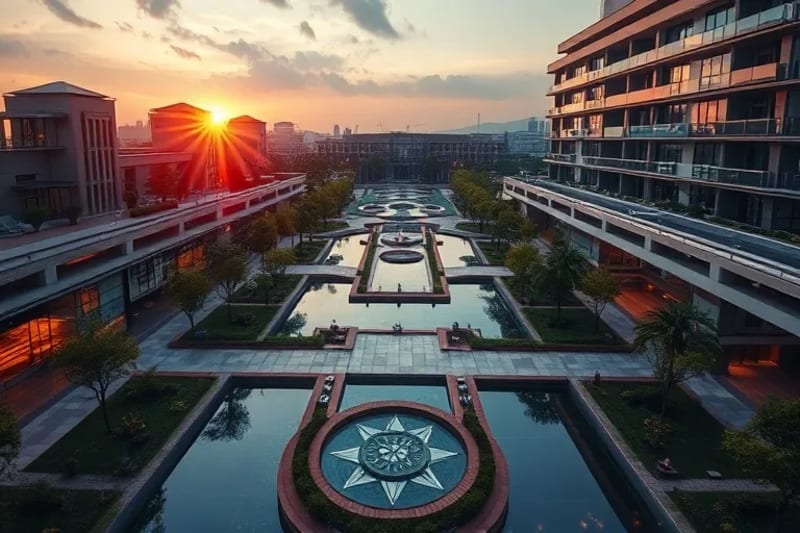 The interplay of natural elements and human design creating a balanced urban environment, reflecting a deep understanding of energetic flows and celestial influences.
This conceptual rendering, crafted by advanced AI, explores the potential for urban design to integrate ancient wisdom, drawing inspiration from principles of harmony and cosmic alignment.
Table of Contents
- Understanding Feng Shui: The Art of Placement
- The Concept of Lunar Mansions: Celestial Markers
- The Synergy: Feng Shui Meets Lunar Mansions
- Applying the Principles to Urban Design
- Case Studies: Historical and Modern Implications
- Challenges and Future Directions
Understanding Feng Shui: The Art of Placement
Feng Shui, literally translated as "wind-water," is an ancient Chinese philosophical system of harmonizing everyone with their surrounding environment. It involves the study of how energy, or "Qi" (pronounced "chi"), flows through spaces and how this flow impacts human well-being. The core principles of Feng Shui are rooted in the belief that everything in the universe is interconnected and that the arrangement of objects and spaces can either enhance or detract from the flow of vital energy.
Key components of Feng Shui include the Bagua (an octagonal map that overlays a space to identify different life areas), the Five Elements theory (Wood, Fire, Earth, Metal, Water), and the concepts of Yin and Yang. Each element is associated with specific colors, shapes, directions, and even emotions, and their balanced interaction is crucial for a harmonious environment. For instance, the Metal element is associated with precision and organization, while Water represents flow and communication. Understanding these elements is fundamental to applying Feng Shui effectively.
In urban contexts, Feng Shui principles can guide the layout of streets, the placement of buildings, the design of parks, and even the orientation of individual structures. For example, ensuring that buildings are not directly facing sharp corners or "poison arrows" of other structures, or positioning entrances to capture auspicious Qi, are common applications. The goal is to create an environment where energy can flow smoothly, promoting health, prosperity, and positive relationships among residents. More insights into elemental interactions can be found by exploring Beyond Zodiac Elements: Advanced Elemental Interactions in Compatibility.
The Concept of Lunar Mansions: Celestial Markers
While Feng Shui focuses on terrestrial energies, Lunar Mansions, or "Xiu" (宿) in Chinese astronomy, represent a system of celestial divisions. These are 28 segments of the sky, each associated with a specific constellation or asterism, through which the Moon passes during its monthly cycle. Originating in ancient China, this system was used for timekeeping, navigation, and astrological prognostication, similar to the zodiac in Western astrology but based on the Moon's path rather than the Sun's.
Each Lunar Mansion carries unique energetic qualities and symbolic meanings. They are grouped into four major quadrants, each associated with a cardinal direction and a mythical creature: the Azure Dragon of the East, the Vermilion Bird of the South, the White Tiger of the West, and the Black Tortoise of the North. These creatures not only represent directions but also embody different aspects of power, protection, and prosperity.
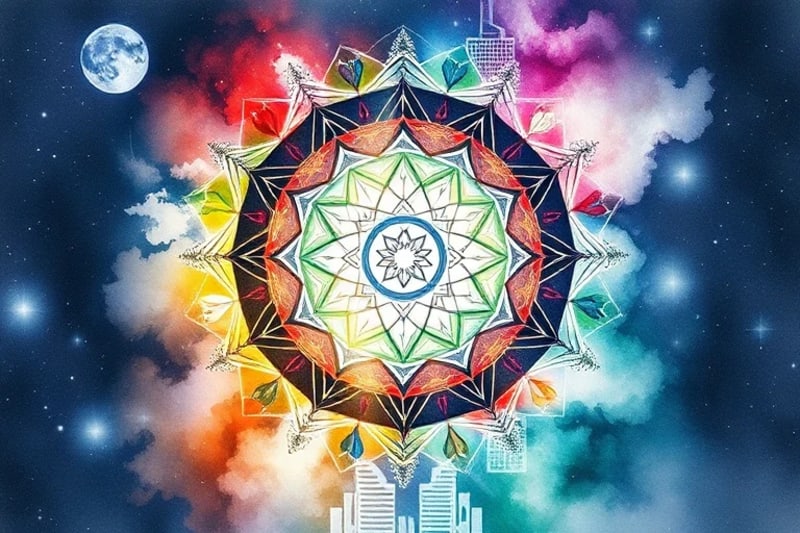 A visual representation of the foundational elements of Feng Shui, illustrating their dynamic interplay in shaping the energy of designed spaces.
Astrologically, the Lunar Mansions are believed to influence daily events, human temperament, and the auspiciousness of certain activities. For example, some mansions are considered favorable for starting new projects, while others are better for introspection or rest. Understanding these celestial rhythms can provide a powerful tool for timing and strategic planning, not just for individuals but also for collective endeavors like urban development. The importance of precise celestial calculations is echoed in discussions about Birth Chart Precision: Exact Time of Birth Importance in personal astrology.
The Synergy: Feng Shui Meets Lunar Mansions
The true innovation lies in merging the terrestrial wisdom of Feng Shui with the celestial insights of Lunar Mansions. While Feng Shui optimizes the immediate environment, Lunar Mansions provide a broader cosmic context, allowing for designs that are not only grounded in earthly harmony but also aligned with universal cycles. This integrated approach suggests that an urban space can be designed not just for static balance, but for dynamic resonance with the ever-changing celestial energies.
Consider an urban development project. Traditional Feng Shui would guide the placement of buildings, roads, and water features to ensure optimal Qi flow. By layering the knowledge of Lunar Mansions, planners could further refine these designs. For instance, if a city district is intended to foster creativity and innovation, and the dominant lunar mansion influencing that region or period is associated with intellectual pursuits, the Feng Shui elements chosen (e.g., Wood for growth, Water for wisdom) and their arrangement could be amplified to align with this specific celestial energy.
This integration allows for a more holistic understanding of a site's potential. It moves beyond static considerations to embrace the temporal aspect of energy. A building designed during an auspicious lunar mansion for commerce might be more likely to thrive, provided its Feng Shui layout also supports business activities. This creates a powerful synergy, where the micro (Feng Shui) and macro (Lunar Mansions) influences work in concert.
Applying the Principles to Urban Design
The practical application of Feng Shui and Lunar Mansions in urban design involves several layers of analysis and planning. It begins with a comprehensive site assessment, considering not only geographical features but also the historical and energetic context of the land. This is followed by a celestial analysis, identifying the dominant Lunar Mansions and their associated energies relevant to the region or the specific timing of the project.
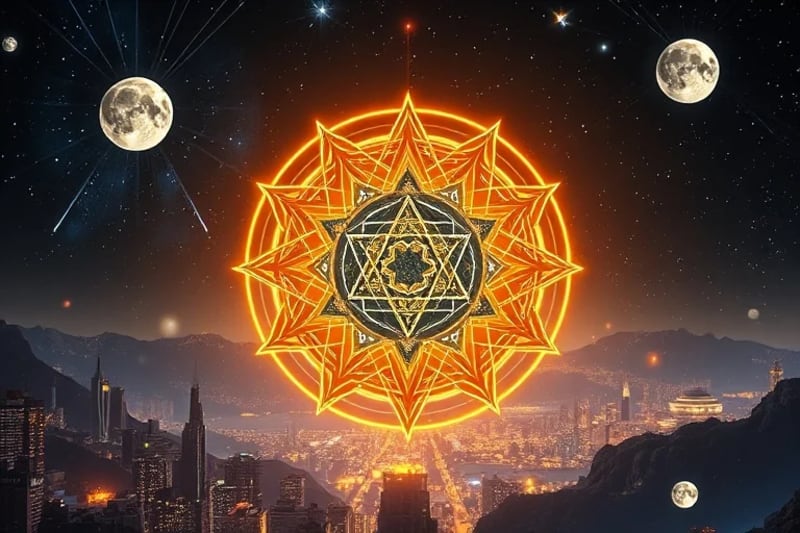 A futuristic visualization of how ancient celestial divisions might subtly guide the development and energetic flow of future urban environments.
For example, a city planning to develop a new financial district might seek to align its construction with lunar mansions known to favor wealth accumulation and stable growth. The Feng Shui design would then emphasize elements like water features (symbolizing wealth) and robust, well-grounded structures (Earth element) to reinforce these energies. The orientation of key buildings, the flow of pedestrian traffic, and the placement of public art could all be meticulously planned to enhance the desired outcomes.
Consider the example of a residential area. If a particular Lunar Mansion is associated with family harmony and community, the urban design could incorporate communal green spaces, circular pathways (promoting unity), and buildings with welcoming, open facades, all harmonized with appropriate Feng Shui elements. This thoughtful integration aims to create environments that naturally support the well-being and aspirations of their inhabitants, fostering a sense of belonging and collective prosperity.
The application can also extend to existing urban spaces through revitalization projects. By analyzing the current energetic imbalances using Feng Shui principles and then cross-referencing with the prevailing celestial influences of Lunar Mansions, targeted interventions can be designed. This might involve adding specific water features, planting certain types of trees, or even adjusting the lighting in public areas to correct energetic deficiencies and enhance auspicious flows. This approach offers a comprehensive framework for urban development that respects both the immediate environment and the broader cosmic context.
Case Studies: Historical and Modern Implications
Historically, many ancient Chinese capitals, such as Chang'an (modern Xi'an), were meticulously planned according to Feng Shui principles. Their layouts often reflected the Bagua and the cardinal directions, with specific gates and districts aligned to optimize the flow of Qi and ensure imperial prosperity. While direct evidence of Lunar Mansion integration in these large-scale urban plans is less documented than Feng Shui, it is plausible given the pervasive influence of celestial observation in ancient Chinese culture.
In modern times, the application of Feng Shui in urban development has seen a resurgence, particularly in Asia. Cities like Hong Kong and Singapore are renowned for incorporating Feng Shui into their skyline and infrastructure design. Skyscrapers are often designed with specific orientations, and public spaces include water features and green areas strategically placed to enhance prosperity and harmony. While explicit references to Lunar Mansions are rarer in public discourse, advanced Feng Shui practitioners often consider broader astrological influences, which would implicitly include lunar cycles.
For example, the design of certain financial districts in major Asian cities, with their emphasis on water elements and specific building shapes, can be seen as an application of Feng Shui to attract wealth. If these projects were also initiated or aligned with periods influenced by Lunar Mansions associated with financial growth, their success could be attributed to this dual harmonization. This subtle integration suggests a powerful, albeit often unstated, influence of cosmic timing on urban prosperity. The concept of aligning with auspicious timing is also crucial in understanding personal astrological influences, such as those discussed in Astrology Debt Abundance Financial Karma Unpacked.
Challenges and Future Directions
Integrating Feng Shui and Lunar Mansions into contemporary urban planning presents several challenges. Modern urban development is often driven by economic factors, population density, and technological constraints, which may conflict with traditional principles. The scientific validation of these ancient practices remains a subject of debate, making it difficult to incorporate them into conventional planning regulations.
However, as interest in sustainable and holistic urban living grows, there is an increasing openness to alternative design philosophies. Future directions could involve interdisciplinary research combining traditional knowledge with modern data analytics and environmental psychology. This could lead to quantifiable metrics for measuring the impact of Feng Shui and Lunar Mansion principles on urban well-being, potentially paving the way for their broader acceptance.
Furthermore, the rise of smart cities and digital twin technologies offers new avenues for simulating and optimizing urban environments based on these principles. Imagine a digital model of a city where the flow of Qi and the influence of Lunar Mansions are visualized and adjusted in real-time, allowing planners to predict and enhance the energetic quality of urban spaces. This fusion of ancient wisdom with cutting-edge technology could unlock unprecedented levels of urban harmony and human flourishing. The broader concept of celestial mechanics influencing global consciousness is explored in Cosmic Sociology Celestial Mechanics Mapping Global Consciousness.
In conclusion, the intersection of Feng Shui and Lunar Mansions offers a profound and sophisticated approach to harmonizing urban spaces. By considering both the immediate terrestrial environment and the overarching celestial rhythms, we can design cities that are not merely functional but truly nurturing, fostering a deeper connection between humanity and the cosmos. This ancient wisdom, when thoughtfully applied, holds immense potential for creating more balanced, prosperous, and spiritually resonant urban futures.
Explore More Harmonious Insights
Metal Element Chinese Zodiac: Character, Destiny, Compatibility | StarPluto
Chinese Zodiac & Business Partnerships: Finding Your Perfect Match | StarPluto
Astrology Mindfulness Integration: Inner Harmony Path Guide | StarPluto
Horóscopo Carta Natal: Componentes Esenciales Interpretación | AstroFuturo
Miguel Arcángel Batalla Espiritual Era IA Protección Avanzada
Source: Hybrid content assisted by AI and human editorial supervision.


Comments
Post a Comment