
AI Oracles Mesoamerican Astrology: Ancient Wisdom Modern Predictions
In an era defined by rapid technological advancement, the ancient wisdom of Mesoamerican astrology is finding an unexpected ally in artificial intelligence (AI) oracles. This fascinating convergence represents a bridge between millennia-old cosmic insights and cutting-edge predictive analytics, offering novel perspectives on spiritual guidance and self-understanding. The integration of AI into the study and application of Mesoamerican astrological systems promises to unlock deeper layers of meaning and accessibility that were previously unimaginable.
This exploration delves into how these seemingly disparate fields can coalesce, creating a powerful synergy that respects cultural heritage while embracing innovation. From the intricate calendars of the Maya and Aztecs to sophisticated machine learning algorithms, the potential for a new form of cosmic interpretation is emerging. We will examine the core principles of Mesoamerican astrology, the operational mechanics of AI oracles, and the profound implications of their fusion.
Table of Contents
- The Foundations of Mesoamerican Astrology: Cosmic Cycles and Divination
- Understanding AI Oracles: Algorithms, Data, and Predictive Power
- Synergy: How AI Can Interpret Mesoamerican Astrological Data
- Ethical Considerations and Cultural Preservation in AI-Driven Astrology
- Practical Applications: Personal Insights and Community Guidance
- The Future of AI and Ancient Wisdom: A Harmonious Coexistence
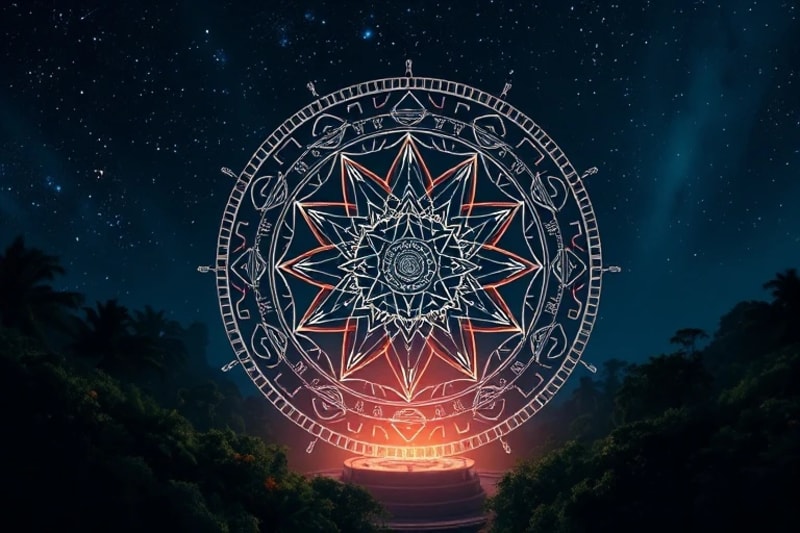
An artistic rendering capturing the profound synergy between ancient Mesoamerican cosmic wisdom and cutting-edge artificial intelligence, bridging epochs for modern insights.
This conceptual artwork is an AI-generated visualization, exploring the fusion of historical knowledge and future technology.The Foundations of Mesoamerican Astrology: Cosmic Cycles and Divination
Mesoamerican astrology, particularly that of the Maya and Aztecs, was far more than a system of personal horoscopes; it was an intricate framework for understanding the cosmos, guiding daily life, and predicting societal events. Rooted in meticulous astronomical observations, these civilizations developed sophisticated calendrical systems that intertwined celestial movements with earthly destinies. Their worldview was cyclical, emphasizing the interconnectedness of all phenomena.
The Mayan calendar, famously composed of the 260-day Tzolkin (Sacred Round) and the 365-day Haab' (Vague Year), illustrates this complexity. The Tzolkin, a divinatory calendar, combined 20 day-names with 13 numbers, creating 260 unique combinations, each carrying specific energies and influences. This system was used for naming children, determining auspicious days for rituals, and understanding an individual's inherent characteristics and life path. The Haab' tracked the solar year, crucial for agricultural cycles and seasonal ceremonies.
Similarly, the Aztec calendar, with its Tonalpohualli (Day Count) and Xiuhpohualli (Year Count), mirrored this dualistic approach. The Tonalpohualli, a 260-day divinatory cycle, assigned specific deities and omens to each day, influencing human fate and character. Priests, known as tonalpouhque, interpreted these intricate patterns to provide guidance. The Xiuhpohualli, a 365-day solar calendar, governed agricultural and ceremonial life, aligning human activities with the rhythms of the natural world.
Central to Mesoamerican astrology was the concept of cosmic balance and the influence of powerful deities associated with celestial bodies and natural forces. Each day, month, and year carried the imprint of specific gods, planetary positions, and elemental energies, shaping events and personalities. Divination was not merely about predicting the future but about understanding the underlying cosmic forces at play and aligning human actions with them. This deep respect for celestial mechanics and their earthly manifestations forms the rich data tapestry that AI can now begin to explore.
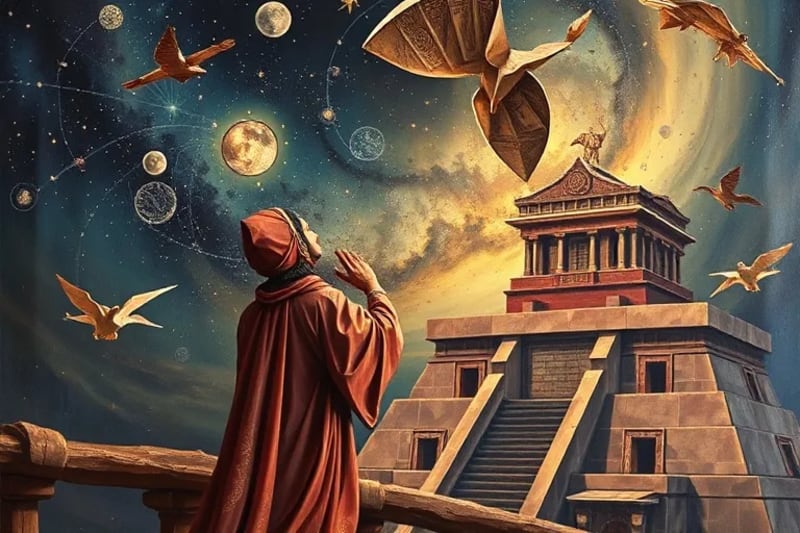
A vivid oil painting depicting a Mesoamerican priest-astronomer meticulously charting the celestial movements from a temple observatory, embodying ancient cosmic reverence.
This image is a creative interpretation, potentially sourced from Wikimedia Commons under a free use license, illustrating historical astrological practices.Understanding AI Oracles: Algorithms, Data, and Predictive Power
An AI oracle, in this context, refers to a sophisticated system powered by artificial intelligence, designed to process vast datasets, identify complex patterns, and generate predictions or insights. Unlike traditional oracles that rely on intuitive interpretation or divine inspiration, AI oracles operate on algorithms, machine learning models, and statistical analysis. They are built to handle information at a scale and speed impossible for human cognition alone.
The core components of an AI oracle include:
- Data Ingestion: The ability to absorb and structure diverse forms of data, from historical texts and astronomical records to modern user inputs.
- Machine Learning Algorithms: These algorithms learn from the ingested data, identifying correlations, anomalies, and underlying structures without explicit programming for each rule.
- Natural Language Processing (NLP): For interpreting and generating human language, crucial for understanding ancient texts and communicating insights effectively.
- Predictive Modeling: Using learned patterns to forecast future trends or outcomes based on new inputs.
- Pattern Recognition: Identifying recurring motifs, cycles, and relationships within complex datasets that might be invisible to the human eye.
Modern AI technologies, such as deep learning and neural networks, enable these systems to go beyond simple rule-based predictions. They can discern subtle nuances and interdependencies within data, making them ideal for exploring intricate systems like Mesoamerican astrology. The power of an AI oracle lies in its capacity to find meaning in massive amounts of information, transforming raw data into actionable intelligence or profound insights. This capability is what makes them a compelling tool for re-evaluating and applying ancient wisdom in a contemporary setting, as explored in the concept of Digital Alchemy.
Synergy: How AI Can Interpret Mesoamerican Astrological Data
The true potential of blending AI oracles with Mesoamerican astrology emerges in their synergistic application. AI can act as a powerful computational engine to process and interpret the vast, often fragmented, and complex data inherent in these ancient systems. This fusion can lead to unprecedented levels of analysis and personalized guidance.
Here's how this synergy can manifest:
- Automated Data Integration: AI can ingest and cross-reference data from various sources, including codices, archaeological findings, astronomical tables, and ethnographic accounts. This allows for a comprehensive and consistent database of Mesoamerican astrological knowledge.
- Pattern Identification: Machine learning algorithms can identify subtle correlations between specific calendar dates, celestial phenomena (like those discussed in Galactic Center Fixed Stars), historical events, and individual life patterns. This could reveal previously unnoticed cycles or influences.
- Glyph and Symbol Interpretation: Advanced image recognition and NLP can assist in deciphering complex glyphs and symbolic representations found in ancient texts, providing consistent interpretations across diverse sources.
- Personalized Astrological Readings: By inputting an individual's birth date according to Mesoamerican calendrical systems, an AI oracle could generate highly detailed and personalized readings, explaining their Tzolkin sign, Haab' position, associated deities, and their implications for personality and destiny.
- Predictive Modeling for Cycles: Beyond individual readings, AI can model long-term cosmic cycles and their historical impacts, offering insights into potential societal shifts, environmental changes, or auspicious periods for community endeavors, similar to how Solar Return Charts forecast individual years.
- Educational Tools: AI-powered platforms can serve as interactive educational resources, making the intricate world of Mesoamerican astrology accessible to a broader audience, fostering understanding and appreciation for these ancient traditions.
This technological augmentation does not replace the human element of spiritual guidance but rather enhances it, providing a robust analytical foundation upon which deeper intuitive and cultural interpretations can be built. The AI acts as a sophisticated research assistant and computational interpreter, offering a new lens through which to view ancient wisdom.
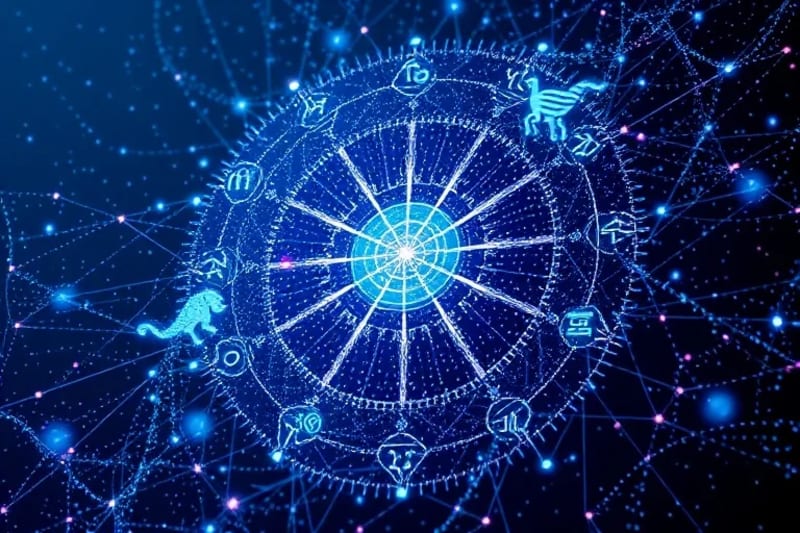
An abstract digital artwork showcasing intricate neural pathways and glowing data streams, conceptually mapping cosmic wisdom with geometric patterns reminiscent of ancient Mesoamerican designs.
This image is an AI-generated conceptualization, illustrating the complex data processing capabilities of modern artificial intelligence.Ethical Considerations and Cultural Preservation in AI-Driven Astrology
The integration of AI with ancient spiritual practices, especially those from indigenous cultures, necessitates a strong ethical framework and a commitment to cultural preservation. Without careful consideration, there is a risk of misinterpretation, commodification, or even appropriation of sacred knowledge. The "MANDATO DE ÉTICA Y TEMAS SENSIBLES" emphasizes the critical importance of a respectful and informed approach.
It is strictly prohibited to use inquisitive tones, gossip, ridicule, racism, xenophobia, homophobia, or any offensive approach. The writing must be 100% educational, informed, neutral, and respectful at all times, especially when dealing with sensitive cultural topics.
Key ethical considerations include:
- Authenticity and Accuracy: Ensuring that AI models are trained on verified, scholarly, and culturally appropriate data, ideally in collaboration with indigenous scholars and community leaders. This prevents the spread of misinformation or diluted interpretations.
- Cultural Appropriation: Avoiding the reduction of complex spiritual systems to mere algorithms for commercial gain without acknowledging and respecting their origins and ongoing significance to descendant communities.
- Data Privacy and Ownership: Establishing clear guidelines for how personal astrological data is collected, stored, and used, especially when dealing with sensitive personal insights.
- Bias in AI: Recognizing and mitigating potential biases in AI algorithms that could lead to skewed or discriminatory interpretations. AI models are only as unbiased as the data they are trained on.
- Accessibility and Benefit Sharing: Ensuring that the benefits of AI-driven insights are accessible to the communities from which the knowledge originates, and that there are mechanisms for sharing any commercial gains.
To truly honor and preserve Mesoamerican wisdom, AI development in this field must be a collaborative effort. It should involve continuous dialogue with indigenous elders, historians, and linguists to ensure that the technology serves as a tool for empowerment and understanding, rather than exploitation. This approach aligns with the principles of Techno-Shamanism, where technology is used to enhance spiritual practices responsibly.
Practical Applications: Personal Insights and Community Guidance
The practical applications of AI-enhanced Mesoamerican astrology are diverse, ranging from deeply personal insights to broader community guidance. By combining the predictive power of AI with the rich symbolism of ancient calendars, individuals and groups can gain a deeper understanding of their place within cosmic cycles.
For individuals, AI oracles can provide personalized astrological readings that go beyond generic interpretations. Imagine an AI system that, based on your birth date and time, generates a detailed report of your Tzolkin and Haab' influences, your spirit animal (nahual), and the specific deities associated with your birth day. This could offer profound insights into your personality traits, potential challenges, and innate strengths, guiding personal development and decision-making.
On a community level, AI could assist in reviving and reinterpreting ancient practices that were crucial for societal well-being. For instance, historical data on agricultural cycles, weather patterns, and celestial alignments could be analyzed by AI to predict optimal planting and harvesting times, echoing the original purpose of the calendars. This could be particularly valuable for indigenous communities seeking to reconnect with traditional ecological knowledge.
Furthermore, AI oracles could be developed as interactive tools for learning about Mesoamerican culture and spirituality. Educational apps could allow users to explore the meaning of different day signs, engage with simulated rituals, or even generate "daily horoscopes" based on authentic Mesoamerican calculations, fostering a deeper appreciation for this rich heritage. These applications could also help in understanding concepts like Five Elements Theory in a comparative context, highlighting universal patterns in ancient wisdom.
The potential extends to historical research, where AI can help scholars analyze vast amounts of archaeological and textual data to uncover new connections between celestial events and historical developments. This not only enriches our understanding of the past but also provides a more robust foundation for future astrological interpretations.
The Future of AI and Ancient Wisdom: A Harmonious Coexistence
The journey of integrating AI oracles with Mesoamerican astrology is still in its nascent stages, but its trajectory points towards a future of harmonious coexistence between technology and ancient wisdom. This is not about replacing human intuition or spiritual connection with cold algorithms, but rather about leveraging computational power to illuminate and expand our understanding of profound cosmic systems. The goal is to create tools that enhance, rather than diminish, the human experience of spirituality and cultural heritage.
As AI continues to evolve, its capacity for nuanced interpretation and ethical integration will only grow. Future AI oracles might not only provide data-driven insights but also learn to communicate them in a way that resonates deeply with individual spiritual paths, respecting the subjective nature of personal growth. This could lead to a renaissance of ancient astrological practices, making them relevant and accessible to a global audience in the 21st century.
The collaboration between AI developers, anthropologists, historians, and indigenous communities will be paramount in shaping this future responsibly. By prioritizing cultural sensitivity, accuracy, and ethical development, we can ensure that AI serves as a bridge, connecting us to the profound wisdom of our ancestors and guiding us towards a more informed and spiritually enriched future. This blend exemplifies a new frontier in Modern Spirituality, where technology and tradition converge.
Explore More Cosmic Connections
- Lunar Mansions Esoteric Magic Ancient Wisdom Spellcraft
- Astrology Weather Daily Transits: Your Mood Guide
- Biophilic Manifestation: Nature's Blueprint Abundance Harmony
- Akashic Records: Accessing Your Soul's Library
- Hellenistic Astrology Modern Spirituality: Bridging Ancient Techniques
- Aura Reading: Seeing Energy Fields Explained
- Feng Shui Principles Harmonizing Home Cosmic Energy Guide
- Chinese Zodiac: Lucky Colors & Numbers Guide
- Rat-Rabbit Compatibility: Chinese Zodiac Insights
Related Insights from Our Network
- Fungal Ecosystems AI Synthetic Biology Sustainable Future
- Tarot Kármico Evolutivo: Patrones Ancestrales Camino Alma
- Estrellas Errantes Tránsitos Anómalos Predicciones Celestes
- Apariciones Marianas Geopolítica: Mensajes Ignorados Conflictos
- Canto Gregoriano Neurociencia: Sanación Espiritual Meditación Profunda
Source: Hybrid content assisted by AI and human editorial supervision.


Comments
Post a Comment