
Five Elements Theory: Chinese Astrology Guide | StarPluto
The Five Elements Theory, known as Wu Xing (五行) in Chinese, is a cornerstone of traditional Chinese philosophy, science, and metaphysics. Far more than a simple classification system, it provides a comprehensive framework for understanding the natural world, human behavior, and the intricate dance of cosmic energies. In Chinese astrology, this theory is indispensable, offering profound insights into personality, destiny, and interpersonal dynamics.
Originating over two millennia ago, the Five Elements Theory posits that everything in the universe is composed of and influenced by five fundamental elements: Wood, Fire, Earth, Metal, and Water. These elements are not static substances but dynamic forces in constant flux, interacting through intricate cycles of creation and destruction. Understanding these interactions is key to unlocking the wisdom embedded in Chinese astrological readings and various other traditional practices.
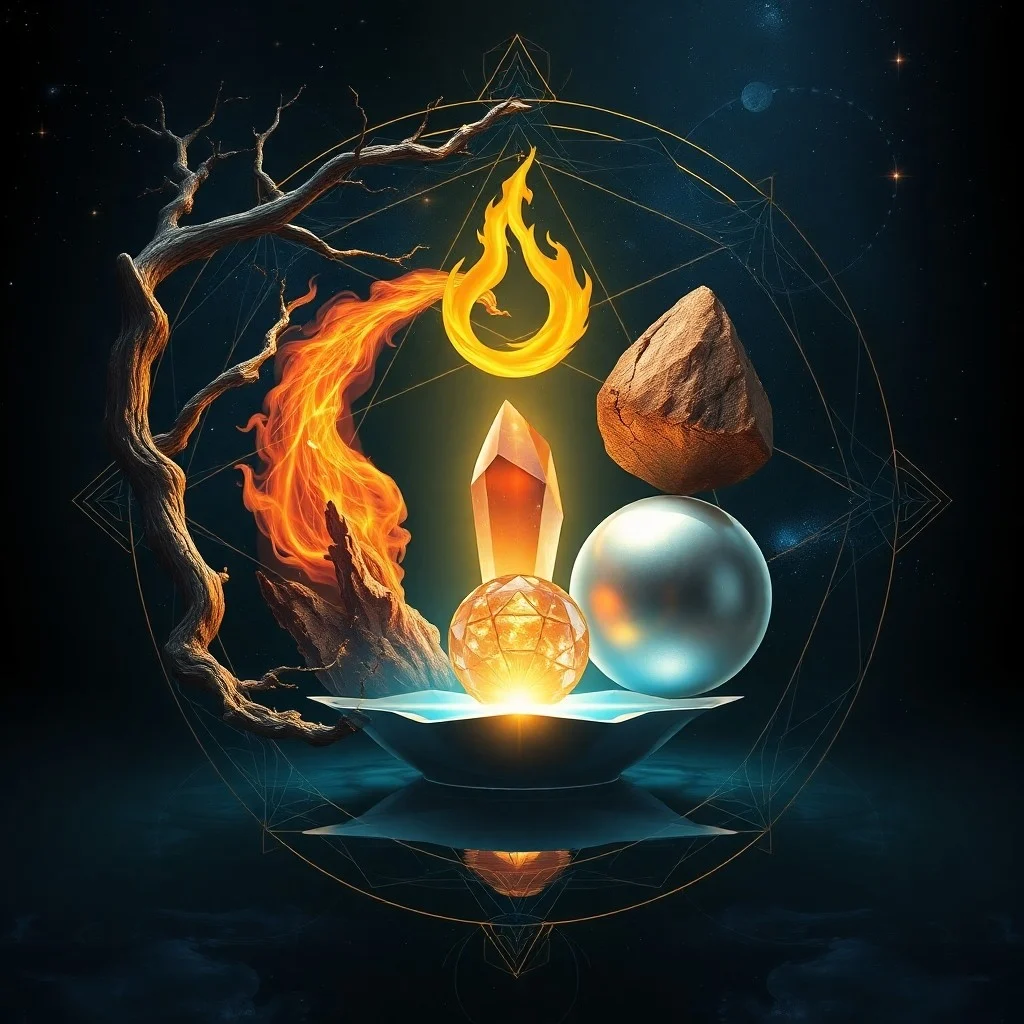
This comprehensive guide aims to demystify the Five Elements Theory, exploring each element's characteristics, their fundamental cycles, and their practical application within Chinese astrology. Whether you are new to the subject or seeking to deepen your understanding, this article will serve as an educational and informative resource.
Table of Contents
- The Five Elements Explained: Characteristics and Symbolism
- Wood (木 - Mù): Growth and Vitality
- Fire (火 - Huǒ): Passion and Transformation
- Earth (土 - Tǔ): Stability and Nurturing
- Metal (金 - Jīn): Structure and Discipline
- Water (水 - Shuǐ): Wisdom and Fluidity
- Cycles of Interaction: Sheng and Ke
- Application in Chinese Astrology
- Beyond Astrology: Feng Shui and TCM
- Conclusion: A Holistic Framework
The Five Elements Explained: Characteristics and Symbolism
Each of the Five Elements embodies a unique set of qualities, directions, seasons, colors, and even emotions. These correspondences are vital for interpreting their influence in various contexts, from personal characteristics to environmental energies. Understanding these fundamental attributes is the first step in mastering the theory.
Wood (木 - Mù): Growth and Vitality
The Wood element symbolizes growth, vitality, expansion, and creativity. It is associated with spring, new beginnings, and upward movement, much like a tree reaching for the sky. Individuals strongly influenced by Wood tend to be pioneering, ambitious, and compassionate. They possess a natural drive to initiate projects and lead others.
- Key Traits: Ambitious, compassionate, creative, pioneering, assertive, growth-oriented.
- Associated with: Spring, East, green color, liver, gallbladder, anger, vision.
- Strengths: Strong leadership, innovation, resilience, generosity.
- Weaknesses: Impulsiveness, stubbornness, tendency towards anger or frustration.
Fire (火 - Huǒ): Passion and Transformation
Fire represents passion, enthusiasm, dynamism, and transformation. It is linked to summer, warmth, and intense energy. People with a dominant Fire element are often charismatic, energetic, and love to be at the center of attention. They inspire others and bring joy and excitement to their surroundings.
- Key Traits: Enthusiastic, passionate, charismatic, energetic, joyful, communicative.
- Associated with: Summer, South, red color, heart, small intestine, joy, speech.
- Strengths: Inspirational, sociable, warm, quick-witted, decisive.
- Weaknesses: Impatience, restlessness, impulsivity, can be overly dramatic or easily burned out.
Earth (土 - Tǔ): Stability and Nurturing
The Earth element embodies stability, grounding, nurturing, and practicality. It is associated with the transitional periods between seasons, symbolizing balance and sustenance. Individuals influenced by Earth are reliable, patient, and supportive. They are excellent problem-solvers and often act as mediators, providing a sense of security.
- Key Traits: Stable, practical, reliable, patient, nurturing, empathetic, grounded.
- Associated with: Late summer/seasonal transitions, Center, yellow/brown color, spleen, stomach, worry, taste.
- Strengths: Dependable, loyal, good listeners, organized, resilient.
- Weaknesses: Stubbornness, overthinking, tendency to worry, resistance to change.

Metal (金 - Jīn): Structure and Discipline
The Metal element signifies structure, order, precision, and discipline. It is associated with autumn, harvest, and contraction. Individuals with a strong Metal influence are often organized, principled, and analytical. They value justice, clarity, and efficiency, striving for perfection in their endeavors. You can explore more about Tarot Esoteric Geometry: Unlocking Universal Truths Sacred Shapes to see how Metal interacts with other elements.
- Key Traits: Organized, disciplined, analytical, principled, just, precise, reserved.
- Associated with: Autumn, West, white/gray color, lungs, large intestine, sadness/grief, smell.
- Strengths: Strong sense of justice, excellent organizational skills, determination, integrity.
- Weaknesses: Rigidity, aloofness, overly critical, prone to melancholy or stubbornness.
Water (水 - Shuǐ): Wisdom and Fluidity
Water represents wisdom, intuition, adaptability, and depth. It is linked to winter, introspection, and hidden potential. People dominated by the Water element are often deep thinkers, highly intuitive, and adaptable. They possess a quiet strength and can navigate complex situations with ease, often having a profound understanding of human nature.
- Key Traits: Intuitive, wise, adaptable, introspective, empathetic, perceptive, calm.
- Associated with: Winter, North, black/dark blue color, kidneys, bladder, fear, hearing.
- Strengths: Excellent intuition, deep understanding, flexible, resourceful, patient.
- Weaknesses: Can be fearful, secretive, indecisive, prone to isolation or overthinking.
Cycles of Interaction: Sheng and Ke
The Five Elements are not isolated entities; they are in constant interaction, forming dynamic relationships that govern their influence. These interactions are primarily described by two main cycles: the Creative (Sheng) Cycle and the Destructive (Ke) Cycle. Understanding these cycles is paramount for interpreting elemental dynamics in any Chinese metaphysical system.

The Creative (Sheng) Cycle (生)
The Sheng cycle describes how each element nourishes and supports the next, fostering growth and harmony. This is a benevolent and supportive relationship, illustrating the continuous flow of energy in nature.
- Wood feeds Fire: Wood provides fuel for fire.
- Fire creates Earth: Fire turns wood into ash, which becomes earth.
- Earth produces Metal: Metal is extracted from the earth.
- Metal collects Water: Metal, when heated, can turn into liquid, or a metal container can hold water.
- Water nourishes Wood: Water helps trees and plants grow.
The Destructive (Ke) Cycle (克)
The Ke cycle describes how each element controls or overcomes another, maintaining balance and preventing any single element from becoming too dominant. This is not inherently negative but represents a necessary check and balance in the system. For a deeper dive into elemental interactions, consider exploring advanced zodiac compatibility.
- Wood controls Earth: Tree roots can break up soil, or plants deplete nutrients from the earth.
- Earth controls Water: Earth can absorb or dam water.
- Water controls Fire: Water extinguishes fire.
- Fire controls Metal: Fire melts metal.
- Metal controls Wood: Metal tools cut wood.
Beyond these two primary cycles, there are also the Over-acting (Cheng) Cycle (乘) and the Counter-acting (Wu) Cycle (侮), which describe imbalances where an element either overpowers or is insulted by another. These complex interactions are crucial for diagnosing imbalances in health, personality, or environmental energies.
Application in Chinese Astrology
In Chinese astrology, particularly the Bazi (Four Pillars of Destiny) system and the Chinese Zodiac, the Five Elements Theory is fundamental. Each birth year, month, day, and hour is assigned an element, creating a unique elemental blueprint for an individual. This blueprint reveals key aspects of their personality, strengths, weaknesses, and potential life path.
Elemental Personality Traits
The dominant element in a person's birth chart significantly shapes their character. For instance, a person born under a strong Wood influence might be a natural leader, constantly seeking new ventures. Conversely, a strong Water influence could indicate a highly intuitive and adaptable individual. These elemental traits provide a deeper layer of understanding beyond the animal signs of the Tarot Esoteric Geometry: Unlocking Universal Truths Sacred Shapes.
| Element | Personality Keywords | Career Aptitudes |
|---|---|---|
| Wood | Pioneering, creative, assertive, compassionate, growth-oriented. | Entrepreneur, artist, teacher, leader, designer. |
| Fire | Passionate, charismatic, energetic, joyful, communicative. | Performer, public speaker, sales, marketing, entertainer. |
| Earth | Stable, practical, reliable, nurturing, empathetic, grounded. | Administrator, real estate, social worker, counselor, farmer. |
| Metal | Organized, disciplined, analytical, principled, just, precise. | Engineer, lawyer, accountant, doctor, military. |
| Water | Intuitive, wise, adaptable, introspective, empathetic, perceptive. | Philosopher, researcher, therapist, spiritual guide, writer. |
Elemental Compatibility
The interactions between the Five Elements also play a crucial role in assessing compatibility between individuals. Relationships where elements are in a Creative (Sheng) cycle often experience harmony and mutual support. For example, a Wood person and a Fire person might have a naturally supportive relationship, as Wood feeds Fire.
Conversely, relationships with elements in a Destructive (Ke) cycle might face more challenges, requiring conscious effort to maintain balance. A Water person and a Fire person, for instance, might experience clashes due to their inherent controlling relationship. However, these challenges can also lead to growth and a deeper understanding if navigated wisely. Delve into specific pairings like Virgo Scorpio Compatibility for Western astrological insights.
Yearly Forecasts and Health
The Five Elements are also used in yearly forecasts, where the dominant element of a particular year interacts with an individual's birth elements. This can predict periods of growth, challenge, or stability. For example, a Dragon Year 2024 forecast will consider the elemental interactions specific to that year.
Furthermore, the theory extends to health, with each element corresponding to specific organs and emotions. An imbalance in one element can manifest as physical or emotional ailments. For example, an excess of Fire might lead to heart issues or anxiety, while a deficiency in Water could impact kidney health or manifest as fear.
Beyond Astrology: Feng Shui and TCM
The influence of the Five Elements Theory extends far beyond astrology, permeating various aspects of traditional Chinese culture and science. Its principles are foundational to practices like Feng Shui and Traditional Chinese Medicine (TCM), demonstrating its holistic nature and pervasive impact.
Feng Shui: Harmonizing Environments
In Feng Shui, the art of arranging spaces to achieve harmony with the environment, the Five Elements are used to balance energy (Qi) in homes and workplaces. Specific colors, materials, and shapes are associated with each element, and their strategic placement can enhance or mitigate elemental influences. For instance, incorporating wood elements (plants, wooden furniture) can promote growth and vitality, while metal elements (metal decor, white colors) can bring clarity and precision.
A balanced elemental arrangement in a room can promote well-being, productivity, and positive relationships. Conversely, an imbalance, such as too much Fire in a resting area, might lead to restlessness or conflict. Feng Shui practitioners meticulously analyze these elemental interactions to create auspicious environments.
Traditional Chinese Medicine (TCM): Health and Balance
In Traditional Chinese Medicine (TCM), the Five Elements Theory is a diagnostic and treatment tool. Each element corresponds to specific organ systems, emotions, tastes, and even senses. For example, the Wood element is linked to the liver and gallbladder, anger, and the sense of sight. An imbalance in Wood energy might manifest as liver issues, irritability, or vision problems.
TCM practitioners use this framework to identify patterns of imbalance in a patient's body and mind. Treatments, including acupuncture, herbal medicine, and dietary recommendations, are then tailored to restore elemental harmony. For instance, if a patient exhibits symptoms of excessive Fire, cooling herbs or acupuncture points associated with Water might be used to bring balance. This holistic approach emphasizes prevention and the interconnectedness of all bodily functions.
Conclusion: A Holistic Framework
The Five Elements Theory is a profound and intricate system that offers a holistic lens through which to view the universe and our place within it. From shaping personal destinies in Chinese astrology to harmonizing living spaces in Feng Shui and restoring health in Traditional Chinese Medicine, its principles are deeply embedded in Chinese thought.
By understanding the unique characteristics of Wood, Fire, Earth, Metal, and Water, along with their dynamic creative and destructive cycles, we gain invaluable insights into ourselves, our relationships, and the world around us. Embracing this ancient wisdom can lead to a more balanced, harmonious, and insightful life journey. For more insights into celestial influences, explore Tarot Esoteric Geometry: Unlocking Universal Truths Sacred Shapes.
Fuente: Contenido híbrido asistido por IAs y supervisión editorial humana.


Comments
Post a Comment