
Urban Geomancy: Aligning Cities with Cosmic Harmonies
Unveiling Urban Geomancy and Celestial Mechanics
Urban geomancy and celestial mechanics represent a fascinating intersection of ancient wisdom and modern understanding, exploring how the layout and design of cities can be harmonized with natural and cosmic energies. This field delves into the subtle influences that shape our living environments, suggesting that the alignment of urban spaces with celestial patterns can profoundly impact human well-being, prosperity, and spiritual connection. Far from being mere superstition, these concepts invite us to reconsider the intrinsic relationship between our built world and the greater cosmos.
Historically, many ancient civilizations meticulously planned their cities, temples, and monuments based on astronomical observations and an intuitive understanding of telluric energies. They believed that by mirroring cosmic order on Earth, they could create environments conducive to health, wisdom, and societal harmony. This introductory exploration aims to shed light on the core principles of urban geomancy and celestial mechanics, providing a foundational understanding for those seeking to connect with these profound concepts.
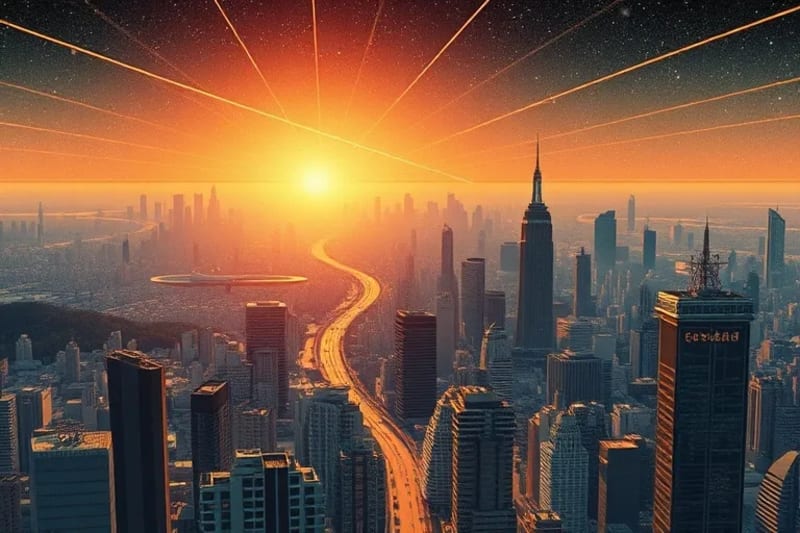 Conceptual rendering of advanced urban planning integrating celestial mechanics and geomantic principles, reflecting a profound connection between the built environment and universal energies.
This evocative image, a conceptual AI render, draws inspiration from historical architectural alignments and modern astrophysical theories, offering a visual synthesis of ancient wisdom and future urban design.
Table of Contents
- What is Urban Geomancy?
- Celestial Mechanics in Ancient Urbanism
- Historical Examples of Cosmic Cities
- Key Principles of Alignment
- Modern Applications and Relevance
- Benefits of Harmonized Urban Spaces
- Integrating Ancient Wisdom Today
What is Urban Geomancy?
Urban geomancy is the practice of aligning cities and structures with the Earth's natural energy lines and cosmic forces to promote harmony, well-being, and prosperity. It is rooted in the belief that the Earth is a living organism, crisscrossed by invisible energy currents, often referred to as ley lines or dragon currents in various traditions. These energies, when properly understood and channeled, can enhance the vitality of a place and its inhabitants.
The concept extends beyond mere aesthetics or practical urban planning. It involves a holistic approach that considers the spiritual, energetic, and ecological dimensions of a site. Practitioners of geomancy analyze topography, water flow, geological features, and even historical events to determine the optimal placement and orientation of buildings and entire urban layouts. This ancient art seeks to create spaces that resonate with the natural rhythms of the planet.
In many cultures, geomancy was an integral part of city founding rituals, ensuring that new settlements were established on auspicious ground. This practice was not static; it evolved with the understanding of the environment and the cosmos, adapting to local conditions while maintaining universal principles of harmony. Understanding urban geomancy provides a unique lens through which to view the development of human settlements throughout history.
Celestial Mechanics in Ancient Urbanism
Celestial mechanics, in the context of ancient urbanism, refers to the study and application of astronomical cycles and planetary movements in the design and orientation of cities and sacred sites. Ancient civilizations possessed sophisticated knowledge of astronomy, which they used not only for timekeeping and navigation but also for imbuing their built environments with cosmic significance. They observed the sun's solstices and equinoxes, the moon's phases, and the positions of stars and planets.
This astronomical knowledge was often integrated with religious and philosophical beliefs, leading to the creation of cities that functioned as terrestrial reflections of the heavens. Buildings, streets, and entire urban grids were aligned to specific celestial events, such as sunrise on the summer solstice or the rising of a particular star. This alignment was believed to channel cosmic energies, blessing the city and its inhabitants with divine favor and stability.
The precise orientation of structures allowed for the creation of light and shadow effects that marked important dates or served ritualistic purposes. For instance, a temple entrance might be designed to catch the first ray of sun on a specific day, symbolizing renewal or divine presence. This deep connection between the terrestrial and celestial realms highlights a profound worldview where humans were seen as part of a larger cosmic tapestry, as explored in the broader context of Astrology, Art, and Literature: Cosmic Symbolism.
 An artistic representation of a city plan infused with astrological and energetic principles, illustrating the subtle connections between urban design and cosmic influences.
Historical Examples of Cosmic Cities
Throughout history, numerous civilizations have left behind compelling evidence of urban planning guided by geomantic and celestial principles. These examples demonstrate a universal human impulse to connect the earthly realm with the cosmic.
Ancient Egypt: The pyramids and temples were meticulously aligned with cardinal directions and specific stars, such as Orion and Sirius. The city of Amarna, for example, was laid out in relation to the sun god Aten, with its main axis aligning with the sunrise on significant dates.
Mesoamerican Civilizations: Cities like Teotihuacan and Chichen Itza exhibit remarkable astronomical alignments. The Avenue of the Dead in Teotihuacan points towards the setting sun on the equinoxes, while the El Castillo pyramid at Chichen Itza creates a serpent-like shadow during the spring and autumn equinoxes, symbolizing the descent of Kukulkan.
Ancient China: Feng Shui, a complex system of geomancy, guided the layout of cities, palaces, and homes. Beijing's Forbidden City, for instance, is a prime example, with its north-south axis and careful placement of buildings to optimize the flow of 'qi' (life force energy) and align with cosmic directions. This practice extends to modern concepts like Feng Shui for Digital Nomads, adapting ancient principles to contemporary living spaces.
Indigenous Cultures: Many indigenous communities worldwide built their settlements and sacred sites in harmony with natural landforms and celestial cycles, often reflecting their deep spiritual connection to the Earth and sky. The medicine wheels of Native American tribes are prime examples of such cosmic mapping.
Key Principles of Alignment
The principles governing urban geomancy and celestial mechanics are multifaceted, combining observational science with intuitive understanding. These principles aim to create a symbiotic relationship between human habitation and the natural world.
A core aspect involves understanding the flow of energy. This includes the Earth's magnetic fields, underground water currents, and geological fault lines, all of which can influence the energetic quality of a site. The placement of structures is then optimized to either harness beneficial energies or mitigate harmful ones.
| Principle | Description | Application in Urban Design |
|---|---|---|
| Cardinal Directions | Aligning with North, South, East, West, often symbolizing balance and order. | Streets, main avenues, and significant buildings oriented to cardinal points for cosmic energy flow. |
| Solar Alignments | Orienting structures to solstices, equinoxes, or specific sunrise/sunset points. | Sacred architecture, public squares, and ceremonial pathways designed for solar events. |
| Lunar Cycles | Considering the moon's phases and positions for agricultural or spiritual timing. | Less direct in urban layout, but influences timing of events or water management systems. |
| Stellar Alignments | Orienting to specific stars or constellations, often linked to deities or ancestral beliefs. | Temples, observatories, and monumental structures pointing to key celestial bodies. |
| Topography & Water | Integrating natural landforms, hills, rivers, and coastlines into the urban fabric. | Strategic placement of settlements, water features, and green spaces to optimize energy flow. |
| Sacred Geometry | Incorporating universal patterns and proportions found in nature and the cosmos. | Designing building layouts, street grids, and public spaces using geometric ratios. |
Modern Applications and Relevance
While the overt application of urban geomancy and celestial mechanics might seem relegated to ancient history, their underlying principles hold significant relevance for contemporary urban planning. Modern cities face challenges such as environmental degradation, social disconnection, and a lack of spiritual resonance. Re-engaging with these ancient wisdom traditions can offer innovative solutions.
Contemporary urban designers and architects are increasingly looking beyond purely functional or aesthetic considerations. There's a growing interest in creating spaces that foster well-being, promote community, and connect inhabitants with nature. This includes integrating green spaces, optimizing natural light, and designing layouts that encourage positive energy flow, mirroring geomantic principles.
Furthermore, the study of celestial mechanics continues to inform our understanding of cosmic influences. While not directly dictating city layouts as in ancient times, the awareness of planetary cycles and their potential energetic impact can contribute to a more holistic approach to urban development. This is particularly relevant when considering the broader implications of Neptune Transits: Spiritual Dissolution, Creative Awakening, which can influence collective consciousness and societal shifts, indirectly impacting how we perceive and design our environments.
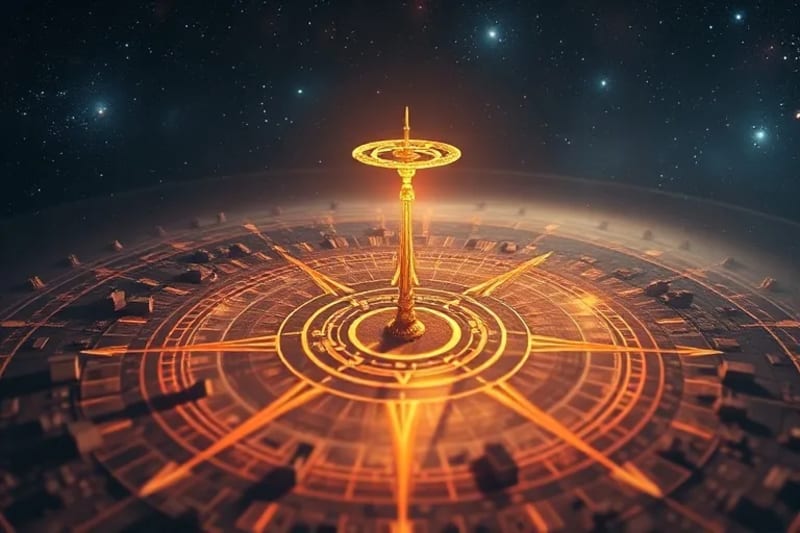 A conceptual image blending ancient tools of measurement with futuristic holographic city designs, symbolizing the timeless quest for harmony between human settlements and cosmic order.
Benefits of Harmonized Urban Spaces
The deliberate alignment of urban spaces with geomantic and celestial principles is believed to yield a multitude of benefits, enhancing the quality of life for residents and fostering a more sustainable relationship with the environment. These benefits extend across physical, emotional, and spiritual dimensions.
Enhanced Well-being: Spaces designed in harmony with natural energies can reduce stress, improve mood, and promote physical health. Access to natural light, green spaces, and balanced energy flows contributes to a sense of calm and vitality.
Community Cohesion: Thoughtfully designed public spaces, aligned with unifying principles, can foster stronger community bonds and a shared sense of place. This encourages interaction and collective engagement.
Spiritual Connection: Cities that reflect cosmic order can inspire a deeper connection to the universe and a sense of purpose. This can manifest as increased mindfulness and appreciation for the interconnectedness of all things.
Environmental Sustainability: By understanding and respecting natural energy flows, urban planning can become more sustainable, minimizing negative environmental impacts and promoting ecological balance. This includes efficient use of resources and integration of natural systems.
Prosperity and Stability: Historically, well-aligned cities were believed to attract prosperity and ensure long-term stability. While not a direct causal link in modern terms, a harmonious environment can certainly contribute to economic vitality and social resilience.
Integrating Ancient Wisdom Today
The challenge and opportunity for contemporary urban development lie in integrating these ancient wisdom traditions with modern scientific and technological advancements. This is not about replicating ancient cities but about extracting the underlying principles and applying them in innovative ways.
For example, understanding the energetic qualities of a site can inform decisions about land use, building materials, and the placement of infrastructure. Incorporating elements of sacred geometry into architectural design can create aesthetically pleasing and energetically balanced spaces. Furthermore, fostering a greater awareness of celestial cycles can help communities reconnect with natural rhythms, promoting a more mindful way of life.
The dialogue between urban geomancy, celestial mechanics, and modern disciplines like ecological design, biophilic architecture, and even circular economy models, can lead to the creation of truly regenerative and life-affirming urban environments. By recognizing that cities are not just collections of buildings but living systems, we can design for a future where human flourishing is intertwined with cosmic harmony. This holistic approach ensures that our built environments support not only our physical needs but also our spiritual and energetic well-being, paving the way for more resilient and vibrant communities.
Explore More Cosmic Insights
Quincunx Aspect: Navigating Uncomfortable Growth in Your Chart | StarPluto
Rabbit Chinese Zodiac: Meaning, Traits, Compatibility | StarPluto
Dream Incubation: Subconscious Guidance Techniques Explained | StarPluto
Chinese Zodiac Parenting: Understanding Child's Animal Sign | StarPluto
Multiple Retrograde Planets: Karmic Dive into Natal Chart Analysis | StarPluto
Lucid Dreaming Techniques: Conscious Exploration Guide | StarPluto
Feng Shui Digital Nomad Harmonizing Virtual Spaces Wellbeing
Juno Pallas Vesta Asteroids Birth Chart: Decoding Influence | StarPluto
Western vs. Chinese Zodiac: A Cross-Cultural Guide | StarPluto
Cosmo-Gastronomy: Intuitive Recipes Zodiacal Elements Chakras
Natural Magic: Earth Connection Rituals and Elements | AstroFuturo
Synastry by Houses: Destinies in the Natal Chart | AstroFuturo
Holy Trinity: Central Mystery of Christian Faith | Profecías de la Virgen
Saint Pio of Pietrelcina: Miracles, Stigmata, and Bilocation in Modern Life
Source: Hybrid content assisted by AI and human editorial supervision.


Comments
Post a Comment