
Western vs. Chinese Zodiac: A Cross-Cultural Guide | StarPluto
Astrology, in its myriad forms, has captivated humanity for millennia, offering frameworks for understanding personality, predicting future trends, and navigating life's complexities. Among the most widely recognized systems are the Western (or Tropical) Zodiac and the Chinese Zodiac. While both aim to provide insights into human nature and destiny, they originate from distinct cultural, astronomical, and philosophical traditions, leading to fascinating differences in their methodologies and interpretations.
This guide delves into a cross-cultural comparison of these two influential astrological systems, exploring their historical roots, core components, and the unique perspectives each offers. Understanding these distinctions can enrich one's appreciation for global wisdom traditions and provide a more comprehensive lens through which to view personal and collective experiences.
The Western Zodiac, deeply rooted in Hellenistic and Mesopotamian astronomy, focuses on the position of the sun, moon, and planets at the exact moment of an individual's birth. It delineates twelve zodiac signs, each corresponding to a specific segment of the ecliptic, influencing psychological traits and life paths. Conversely, the Chinese Zodiac operates on a twelve-year cycle, with each year associated with a specific animal and one of five elements, shaping an individual's fundamental character and destiny based on their birth year.
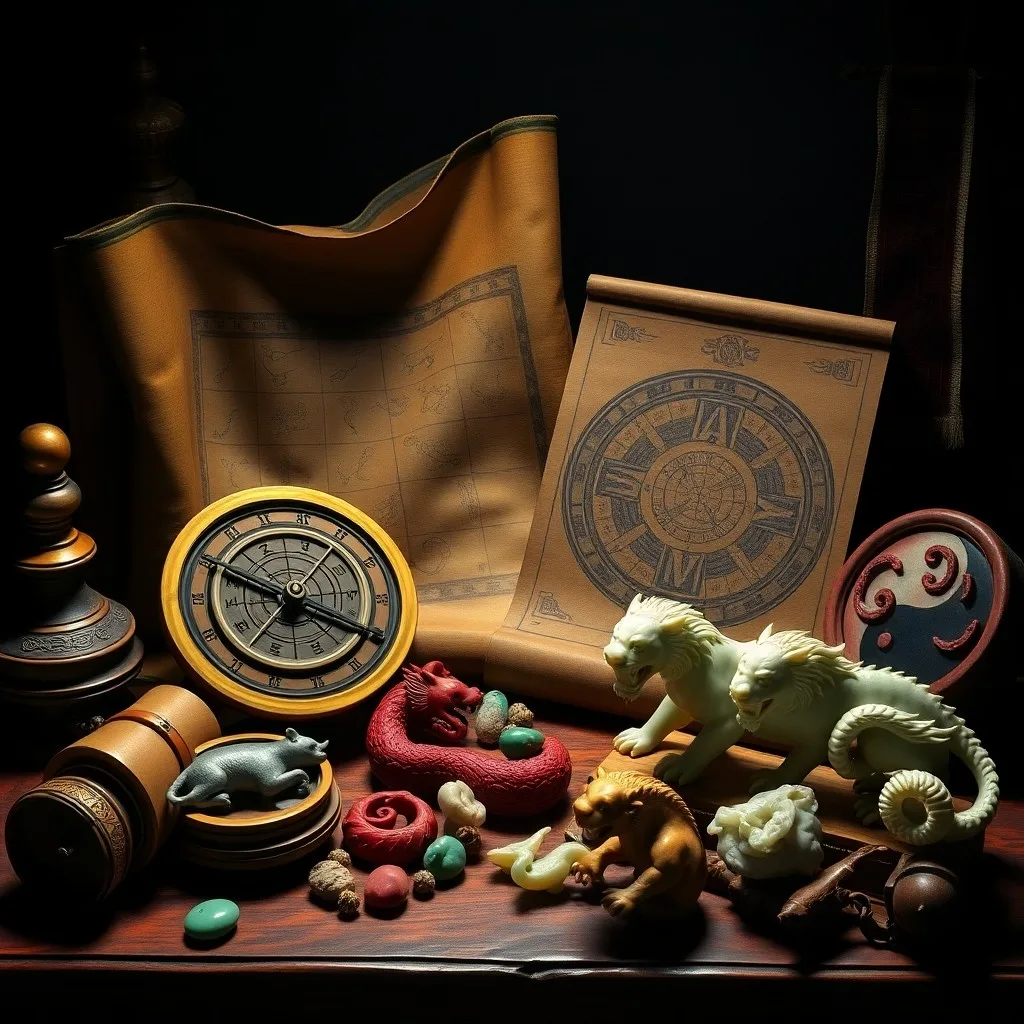
A vibrant digital illustration comparing the celestial map of Western astrology with the intricate animal cycle of the Chinese zodiac.
While the Western system emphasizes individual birth charts and planetary influences, the Chinese system often highlights broader personality archetypes and compatibility based on birth year. Both systems offer valuable tools for self-reflection and understanding interpersonal dynamics, albeit through different lenses. This exploration aims to clarify these differences and highlight their respective strengths.
1. Western Zodiac: Foundations and Core Principles
The Western Zodiac, also known as Tropical Astrology, traces its roots back to ancient Mesopotamia, particularly Babylonian astronomy, and was further developed by the Greeks and Egyptians. It is a geocentric system, meaning it views the Earth as the center of the universe, with celestial bodies orbiting around it. The zodiac itself is an imaginary belt in the sky, approximately 18 degrees wide, through which the Sun, Moon, and planets appear to move.
This belt is divided into twelve equal sections of 30 degrees each, corresponding to the twelve zodiac signs: Aries, Taurus, Gemini, Cancer, Leo, Virgo, Libra, Scorpio, Sagittarius, Capricorn, Aquarius, and Pisces. Each sign is associated with specific dates, typically spanning about a month, and is believed to imbue individuals born under its influence with particular personality traits, strengths, and weaknesses.
Beyond the Sun sign, Western astrology considers a complex array of factors in a natal chart (birth chart). This chart is a snapshot of the heavens at the precise moment and location of an individual's birth. Key components include:
- Planets: Each planet (including the Sun and Moon, often referred to as luminaries) represents a different facet of the personality or life experience. For example, Mercury governs communication, Venus love and values, and Mars drive and action.
- Houses: The natal chart is divided into twelve houses, each representing a different area of life, such as career, relationships, family, and self-identity. The sign on the cusp of each house, and the planets within it, provide further detail.
- Aspects: These are the angular relationships between planets in the chart, indicating how different energies and personality traits interact. Trines and sextiles are generally considered harmonious, while squares and oppositions suggest tension or challenges.
- Elements and Modalities: The signs are categorized by four elements (Fire, Earth, Air, Water) and three modalities (Cardinal, Fixed, Mutable), which further define their energetic expression and behavioral patterns.
The emphasis in Western astrology is often on psychological profiling, understanding inner motivations, and exploring potential for personal growth. It provides a detailed blueprint of an individual's character and life journey, highlighting both innate talents and areas for development. The intricate interplay of these elements creates a unique and highly personalized astrological profile.
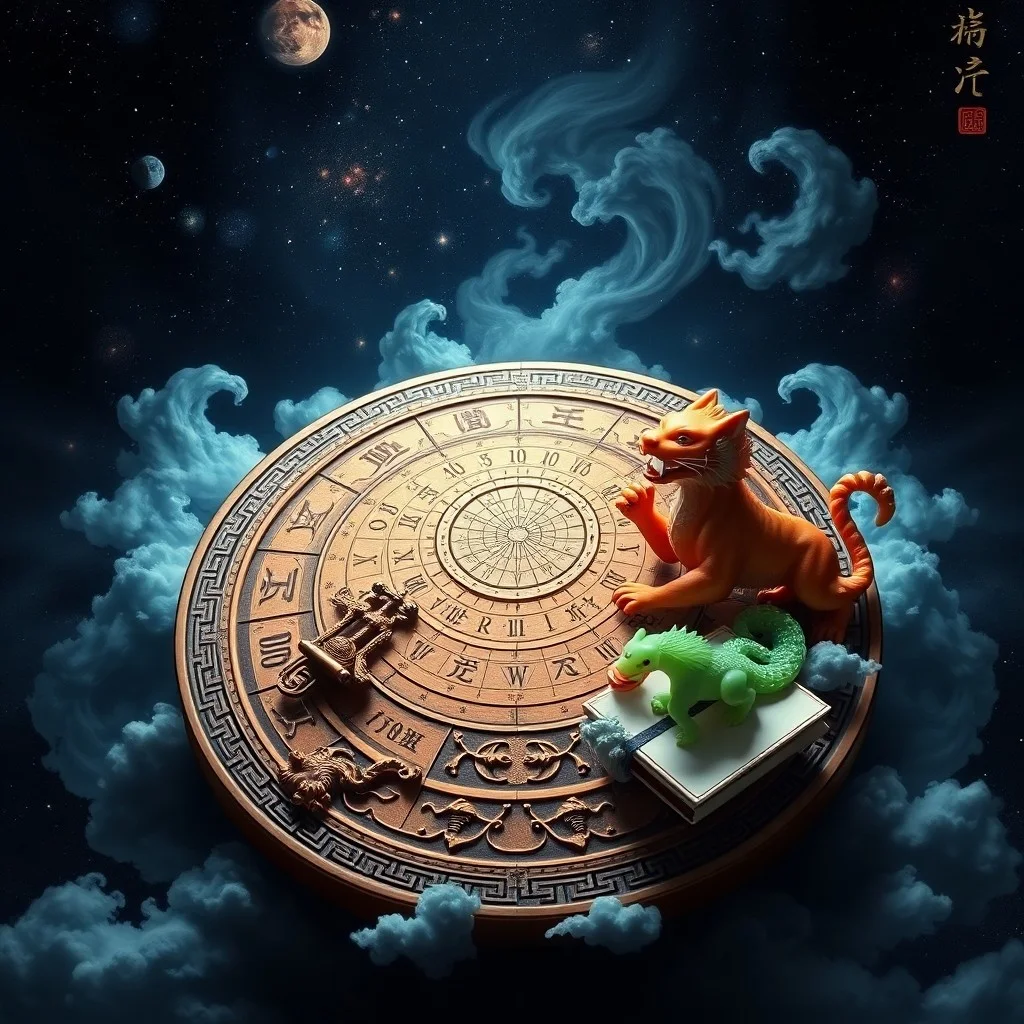
A still life photograph featuring a brass astrolabe, ancient parchment, and Greek coins, symbolizing the historical roots of Western astrology.
2. Chinese Zodiac: Origins and Elemental Cycles
The Chinese Zodiac, or Sheng Xiao (生肖), is an ancient system that originated in China and is based on a twelve-year cycle, with each year corresponding to one of twelve animals: Rat, Ox, Tiger, Rabbit, Dragon, Snake, Horse, Goat (or Sheep), Monkey, Rooster, Dog, and Pig. Unlike the Western Zodiac, which is determined by the month of birth, the Chinese Zodiac sign is determined by the year of birth, specifically according to the Chinese lunar calendar.
Legend has it that the order of the animals was determined by a race across a river, organized by the Jade Emperor. Each animal's characteristics are believed to influence the personality and destiny of those born in its year. For instance, individuals born in the Year of the Dragon are often seen as charismatic and powerful, while those born in the Year of the Rabbit are typically gentle and cautious.
A crucial component of the Chinese Zodiac is the integration of the Five Elements (Wu Xing): Wood, Fire, Earth, Metal, and Water. These elements cycle through a 60-year period (12 animals x 5 elements), adding a layer of complexity and nuance to each animal sign. For example, a Wood Dragon will have different characteristics than a Fire Dragon, even though both are Dragons.
- Wood: Associated with growth, creativity, and generosity.
- Fire: Linked to passion, dynamism, and leadership.
- Earth: Represents stability, practicality, and reliability.
- Metal: Symbolizes determination, discipline, and ambition.
- Water: Connected to adaptability, intuition, and communication.
In addition to the annual animal and element, Chinese astrology also considers the concepts of Yin and Yang, which represent opposing yet complementary forces. Each animal sign is inherently Yin or Yang, further shaping its energetic expression. For example, the Dragon is Yang, while the Snake is Yin. This system offers a broad, archetypal understanding of personality and is often used for compatibility analysis, career guidance, and general life predictions.
3. Key Differences in Methodology and Focus
The fundamental differences between the Western and Chinese Zodiac systems stem from their distinct approaches to celestial observation and philosophical underpinnings. While both are powerful tools for self-discovery, their methodologies diverge significantly.
- Basis of Calculation: The Western Zodiac is based on the Earth's annual journey around the Sun, marking the Sun's apparent position against the backdrop of constellations. It uses the tropical zodiac, which is fixed to the equinoxes and solstices. The Chinese Zodiac, however, is based on the lunar calendar and Jupiter's orbital cycle, assigning an animal sign to each year.
- Timeframe: Western astrology uses the exact moment of birth (date, time, and location) to construct a highly personalized natal chart. Chinese astrology primarily uses the birth year, with additional layers like birth month, day, and hour (the Four Pillars of Destiny or Bazi) adding more detail, though the animal year remains central.
- Components: Western astrology incorporates planets, houses, aspects, elements (four), and modalities (three). Chinese astrology focuses on the twelve animal signs, the Five Elements (Wood, Fire, Earth, Metal, Water), and the principles of Yin and Yang.
- Focus of Interpretation: Western astrology often emphasizes psychological traits, inner motivations, individual potential, and specific life areas (career, relationships, etc.). It provides a detailed map of the psyche. Chinese astrology tends to focus on broader personality archetypes, general destiny patterns, interpersonal compatibility, and auspicious timing for events.
These differences are summarized in the table below, offering a clear side-by-side comparison of their core characteristics:
| Feature | Western Zodiac | Chinese Zodiac |
|---|---|---|
| Origin | Mesopotamia, Hellenistic Greece | Ancient China |
| Basis | Sun's position through constellations (Tropical Zodiac) | Lunar calendar, Jupiter's orbit (annual animal cycle) |
| Primary Determinant | Month of birth (Sun sign) and exact birth time/location (natal chart) | Year of birth (animal sign) |
| Cycle Length | 12 signs, approximately 1 month each | 12 animals, 1 year each (repeats every 12 years) |
| Number of Signs/Animals | 12 Zodiac Signs | 12 Animal Signs |
| Elements | 4 (Fire, Earth, Air, Water) | 5 (Wood, Fire, Earth, Metal, Water) |
| Additional Factors | Planets, Houses, Aspects, Modalities | Yin/Yang, Five Elements (60-year cycle), Four Pillars of Destiny |
| Primary Focus | Psychological profile, individual potential, specific life areas | Personality archetypes, general destiny, compatibility, auspicious timing |
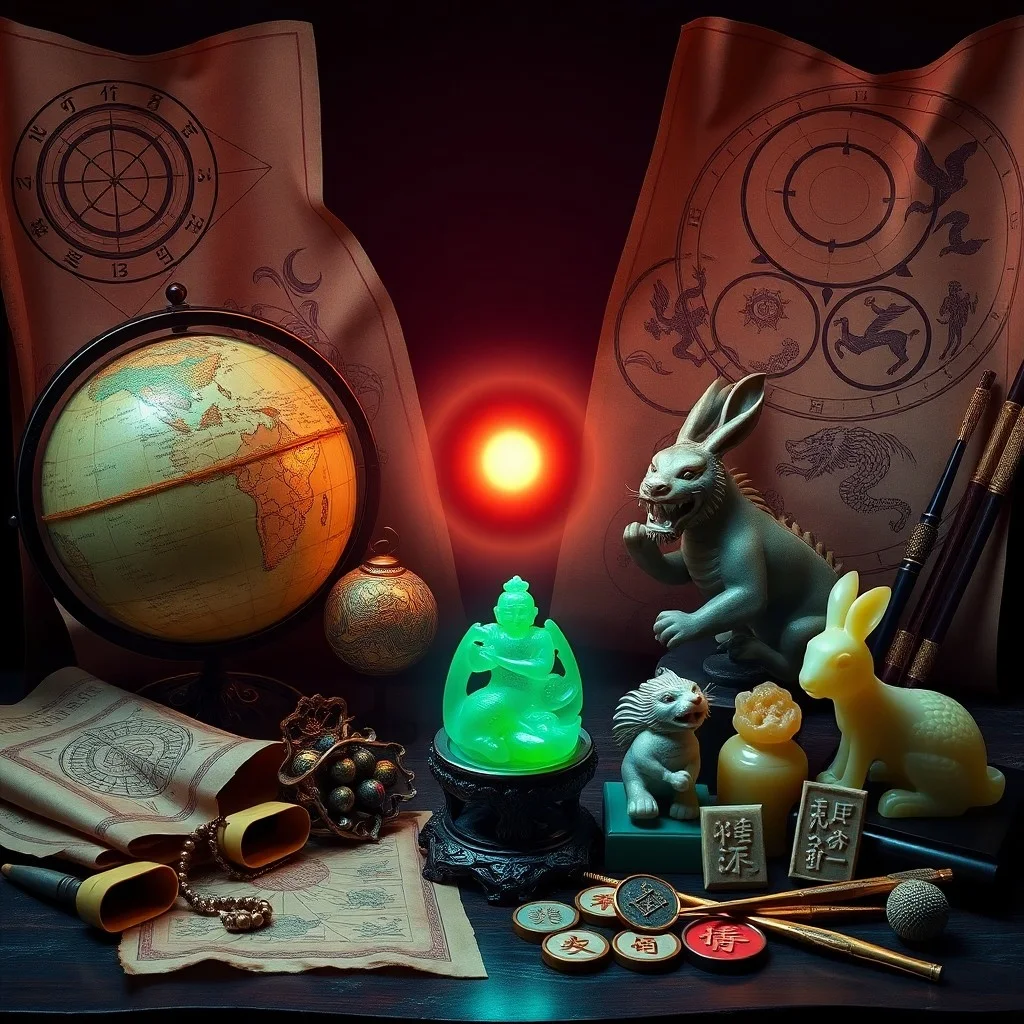
An oil painting still life featuring a Chinese calligraphy brush, ink stone, and a scroll depicting a dragon and tiger, representing the rich symbolism of the Chinese zodiac.
4. Shared Goals and Applications
Despite their methodological disparities, both Western and Chinese astrological systems share overarching goals: to provide insight, guidance, and a framework for understanding the human experience. They serve as valuable tools for self-reflection and offer perspectives on life's journey.
Common applications and shared objectives include:
- Self-Understanding: Both systems offer archetypes and characteristics that can resonate with individuals, helping them to recognize their strengths, weaknesses, and inherent tendencies. This self-awareness can be a powerful catalyst for personal growth.
- Interpersonal Compatibility: Both traditions provide methods for assessing compatibility between individuals, whether in romantic relationships, friendships, or professional partnerships. Western astrology uses synastry (comparing two natal charts), while Chinese astrology often relies on the compatibility of animal signs and elements.
- Predictive Insights: While not deterministic, both systems offer insights into potential future trends and cycles. Western astrology uses transits and progressions to forecast periods of change or opportunity, while Chinese astrology uses annual forecasts for each animal sign, often combined with elemental influences.
- Career and Life Path Guidance: By understanding innate talents and challenges indicated by one's astrological profile, individuals can gain clarity on suitable career paths, educational choices, and general life direction.
- Cultural Significance: Both zodiacs are deeply embedded in their respective cultures, influencing traditions, art, literature, and even daily decision-making. They provide a rich tapestry of symbolism and meaning that connects individuals to a broader cosmic narrative.
Ultimately, both systems aim to empower individuals with knowledge about themselves and the world around them, fostering a sense of connection to universal patterns and energies. They offer different paths to similar destinations: greater wisdom and a more informed approach to life.
5. Integrating Insights for a Holistic View
For those interested in a more comprehensive understanding of themselves and their place in the world, integrating insights from both Western and Chinese Zodiac systems can be incredibly enriching. While they are distinct, their complementary nature can offer a multi-dimensional perspective that neither system provides alone.
Consider how a Western Sun sign might interact with a Chinese animal sign. For example, a fiery Aries (Western) born in the year of the gentle Rabbit (Chinese) might exhibit a unique blend of assertive leadership and diplomatic sensitivity. The Aries drive could be tempered or refined by the Rabbit's cautious nature, or the Rabbit's peaceful demeanor could gain a boost of courage from the Aries influence.
Similarly, the elemental influences from both systems can add layers of interpretation. A Western Earth sign (Taurus, Virgo, Capricorn) combined with a Chinese Water element year might suggest a grounded individual with deep emotional intuition. This synthesis allows for a more nuanced and intricate personal profile, moving beyond simplistic categorizations.
To begin integrating these insights, one might:
- Identify Both Signs: Determine your Western Sun sign (and ideally your full natal chart) and your Chinese animal sign, including its associated element.
- Study Core Traits: Familiarize yourself with the fundamental characteristics, strengths, and challenges associated with both your Western and Chinese signs.
- Look for Overlaps and Contrasts: Note where the traits align, reinforcing certain aspects of your personality, and where they diverge, indicating potential internal dynamics or areas for balance.
- Observe in Practice: Reflect on how these combined influences manifest in your daily life, relationships, and decision-making. This experiential learning deepens understanding.
By embracing both Western and Chinese astrology, individuals can tap into a broader spectrum of ancient wisdom, fostering a more profound sense of self-awareness and a richer understanding of the intricate cosmic dance that shapes human existence. It's about building a more complete picture, rather than choosing one system over the other.
6. Frequently Asked Questions
Here are some common questions regarding the comparison of Western and Chinese Zodiac systems:
Q1: Can I be both a Western Leo and a Chinese Tiger?
Yes, absolutely. Your Western Sun sign is determined by your birth month, while your Chinese animal sign is determined by your birth year. It is very common and completely normal to have a different sign in each system. For example, someone born in August 1986 would be a Western Leo and a Chinese Tiger (Fire Tiger, specifically).
Q2: Which zodiac system is more accurate or "better"?
Neither system is inherently "more accurate" or "better" than the other; they simply offer different perspectives. Western astrology provides a highly detailed psychological profile based on the precise moment of birth, while Chinese astrology offers broader archetypal insights into personality and destiny based on the birth year. Many find value in exploring both for a more holistic understanding of themselves and others.
Q3: How does the Chinese New Year affect my animal sign?
The Chinese New Year, which typically falls between late January and mid-February, marks the transition from one animal year to the next. If you were born in January or early February, you need to check the exact date of the Chinese New Year for your birth year to determine your correct animal sign. For instance, if you were born in January 1987, you would still be a Tiger (from 1986), as the Year of the Rabbit (1987) began later in February.
Q4: Do the elements in Western and Chinese astrology mean the same thing?
While both systems use elements to categorize and describe energies, their interpretations and numbers differ. Western astrology uses four elements (Fire, Earth, Air, Water) to describe temperament and energetic expression. Chinese astrology uses five elements (Wood, Fire, Earth, Metal, Water) which cycle through the years and influence personality, health, and interactions in a more dynamic, cyclical way. There are conceptual overlaps, but they are not identical.
Q5: Can these systems be used for daily guidance?
Yes, both systems can offer daily or periodic guidance. Western astrology provides daily horoscopes based on planetary transits to your natal chart, as well as more in-depth forecasts for longer periods. Chinese astrology offers annual forecasts for each animal sign, often detailing predictions for love, career, health, and finance, which can be consulted for general guidance throughout the year.
Fuente: Contenido híbrido asistido por IAs y supervisión editorial humana.


Comments
Post a Comment