
Chinese Zodiac: Personality Development Journey | StarPluto
The Chinese Zodiac, a fascinating system rooted in ancient Chinese philosophy and astronomy, offers a unique lens through which to understand personality development. Unlike Western astrology, which is based on monthly zodiac signs, the Chinese Zodiac assigns an animal sign to each year in a 12-year cycle, influencing an individual's innate characteristics, behaviors, and life path. This intricate system goes beyond simple categorization, delving into how these fundamental traits evolve and manifest throughout a person's lifelong journey, shaped by the interplay of the Five Elements and the principles of Yin and Yang.
Understanding one's Chinese Zodiac sign is not merely about identifying with an animal; it's about recognizing a blueprint of potential strengths, weaknesses, and tendencies. This framework provides insights into how individuals interact with the world, their approach to relationships, career, and personal growth. As we navigate different stages of life, from childhood to old age, the core essence of our animal sign remains, yet its expression matures, adapts, and deepens, reflecting a continuous process of self-discovery and transformation.
Table of Contents
- Introduction to Chinese Zodiac and Personality
- The 12 Animal Signs and Their Core Traits
- The Five Elements: Shaping Elemental Personalities
- Yin and Yang: The Dynamic Balance in Personality
- Personality Evolution Through Life Stages
- The Interplay of Zodiac, Elements, and Life Experiences
- Harnessing Zodiac Insights for Personal Growth
Introduction to Chinese Zodiac and Personality
The Chinese Zodiac, known as Sheng Xiao, is a repeating cycle of 12 years, with each year represented by an animal and its reputed attributes. This ancient system is not just a calendar; it's a profound astrological tool that provides a framework for understanding human nature and destiny. The animal assigned to one's birth year is believed to influence their personality, career, relationships, and overall life trajectory. This influence is further nuanced by the Five Elements (Wood, Fire, Earth, Metal, Water) and the dualistic forces of Yin and Yang, creating a rich tapestry of individual characteristics.
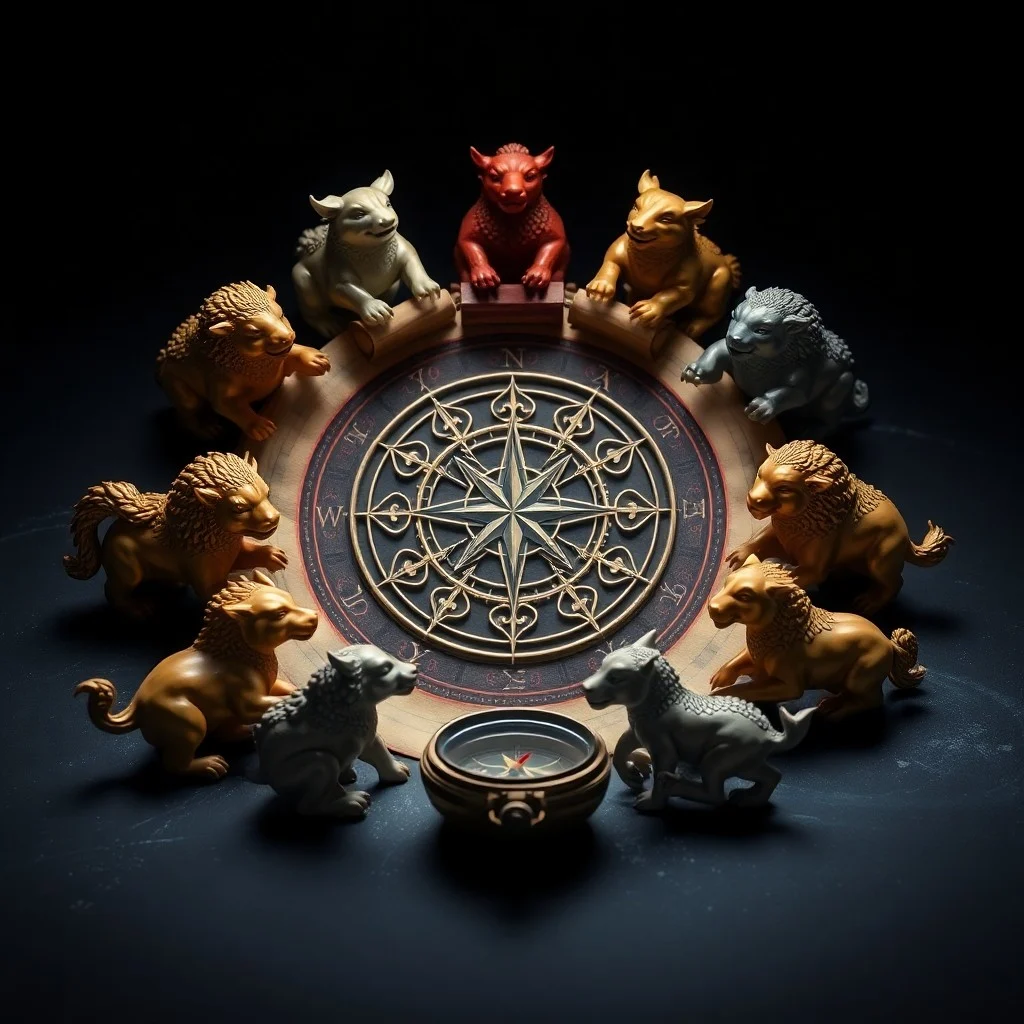
 A digital illustration depicting the intricate cosmic clock of the Chinese Zodiac, symbolizing its deep influence on personality development.
The concept of personality development within the Chinese Zodiac is dynamic. It suggests that while certain traits are inherent, they are not static. Instead, they interact with life experiences, environmental factors, and personal choices, leading to continuous growth and adaptation. This lifelong journey involves recognizing one's innate tendencies, understanding how they are expressed, and learning to balance or enhance them for optimal well-being and success. It's a journey of self-awareness, where the zodiac acts as a guide, offering insights into one's inner workings and potential.
The 12 Animal Signs and Their Core Traits
Each of the 12 animal signs possesses a distinct set of characteristics that form the foundation of an individual's personality. These traits are often observed in people born under a particular sign, influencing their general demeanor, decision-making, and interactions. While these are broad generalizations, they provide a starting point for understanding the zodiac's impact.
- Rat: Intelligent, quick-witted, charming, resourceful, but can be cunning and secretive.
- Ox: Diligent, dependable, strong, determined, patient, yet sometimes stubborn and conservative.
- Tiger: Brave, confident, charismatic, adventurous, passionate, but can be impulsive and rebellious.
- Rabbit: Gentle, compassionate, sensitive, artistic, refined, though sometimes timid and indecisive.
- Dragon: Ambitious, energetic, charismatic, powerful, lucky, but can be arrogant and demanding.
- Snake: Wise, enigmatic, intuitive, elegant, philosophical, yet can be jealous and possessive.
- Horse: Enthusiastic, energetic, independent, charming, social, but sometimes impatient and restless.
- Goat (Sheep): Gentle, artistic, compassionate, creative, peaceful, though often indecisive and overly sensitive.
- Monkey: Clever, witty, curious, innovative, versatile, but can be mischievous and opportunistic.
- Rooster: Observant, hardworking, courageous, honest, confident, yet sometimes boastful and critical.
- Dog: Loyal, honest, responsible, protective, friendly, but can be pessimistic and stubborn.
- Pig: Compassionate, generous, honest, diligent, good-tempered, though sometimes naive and materialistic.
These core traits are not fixed destinies but rather inclinations. For example, a "stubborn" Ox might learn flexibility through life's challenges, or a "cunning" Rat might channel their resourcefulness for noble causes. The journey of personality development is about refining these inherent qualities and mitigating their potential downsides.
The Five Elements: Shaping Elemental Personalities
Beyond the animal signs, the Chinese Zodiac incorporates the Five Elements: Wood, Fire, Earth, Metal, and Water. Each element is associated with specific qualities and influences the animal sign of a particular year, creating a more nuanced personality profile. This elemental overlay cycles every two years, meaning that over a 60-year period (12 animals x 5 elements), each animal sign will be paired with each element once. This adds depth and variation to the core animal traits.
 An antique Chinese scroll, symbolizing the continuous path of personality evolution through various life stages.
- Wood: Associated with growth, creativity, and flexibility. Wood individuals are often ambitious, compassionate, and cooperative. They tend to be natural leaders with a strong sense of justice.
- Fire: Represents passion, dynamism, and innovation. Fire personalities are energetic, adventurous, and enthusiastic. They are often charismatic and enjoy being in the spotlight, though they can be impulsive.
- Earth: Symbolizes stability, practicality, and reliability. Earth individuals are grounded, patient, and responsible. They value security and are often very methodical in their approach to life.
- Metal: Linked to determination, integrity, and discipline. Metal personalities are strong-willed, structured, and resilient. They are often fair and principled, but can sometimes be rigid or unyielding.
- Water: Embodies adaptability, intuition, and communication. Water individuals are perceptive, empathetic, and flexible. They are often good communicators and can easily flow with changes, though they might be prone to indecision.
For instance, a Wood Rat might be more innovative and less secretive than a Metal Rat, who would be more disciplined and perhaps more rigid in their resourcefulness. This elemental influence adds layers of complexity, making each individual's personality truly unique, even among those sharing the same animal sign. The interaction between the animal's inherent nature and the element's qualities dictates the specific flavor of their personality.
Yin and Yang: The Dynamic Balance in Personality
The principles of Yin and Yang are fundamental to Chinese philosophy and permeate the Zodiac system. Yin represents femininity, darkness, passivity, and receptivity, while Yang represents masculinity, light, activity, and assertiveness. Each animal sign is inherently either Yin or Yang, influencing how their core traits are expressed. For example, the Rat is Yang, suggesting an active and assertive approach to its cleverness, while the Ox is Yin, implying a more passive yet deeply determined nature.
| Animal Sign | Yin/Yang Polarity | Key Influence |
|---|---|---|
| Rat | Yang | Active resourcefulness, assertive charm |
| Ox | Yin | Passive determination, receptive strength |
| Tiger | Yang | Assertive courage, active leadership |
| Rabbit | Yin | Receptive gentleness, passive diplomacy |
| Dragon | Yang | Active ambition, assertive charisma |
| Snake | Yin | Receptive wisdom, passive intuition |
| Horse | Yang | Active enthusiasm, assertive independence |
| Goat | Yin | Receptive compassion, passive creativity |
| Monkey | Yang | Active cleverness, assertive innovation |
| Rooster | Yin | Receptive observation, passive diligence |
| Dog | Yang | Active loyalty, assertive protection |
| Pig | Yin | Receptive generosity, passive diligence |
The balance of Yin and Yang within an individual's chart, considering their birth year, month, day, and hour, further refines their personality. A person with a strong Yang influence might be more outgoing and action-oriented, while a strong Yin influence could lead to a more introspective and thoughtful nature. The goal in personality development, according to this philosophy, is to achieve a harmonious balance between these opposing forces, allowing for adaptability and resilience in various life situations. This dynamic equilibrium is crucial for holistic growth.
Personality Evolution Through Life Stages
Personality is not a fixed entity but a constantly evolving landscape. The Chinese Zodiac provides a framework for understanding how inherent traits manifest and transform across different life stages. From childhood to old age, the core essence of one's animal sign remains, but its expression is modulated by experience, learning, and environmental factors. This continuous journey of self-refinement is a central theme in Chinese astrological thought.
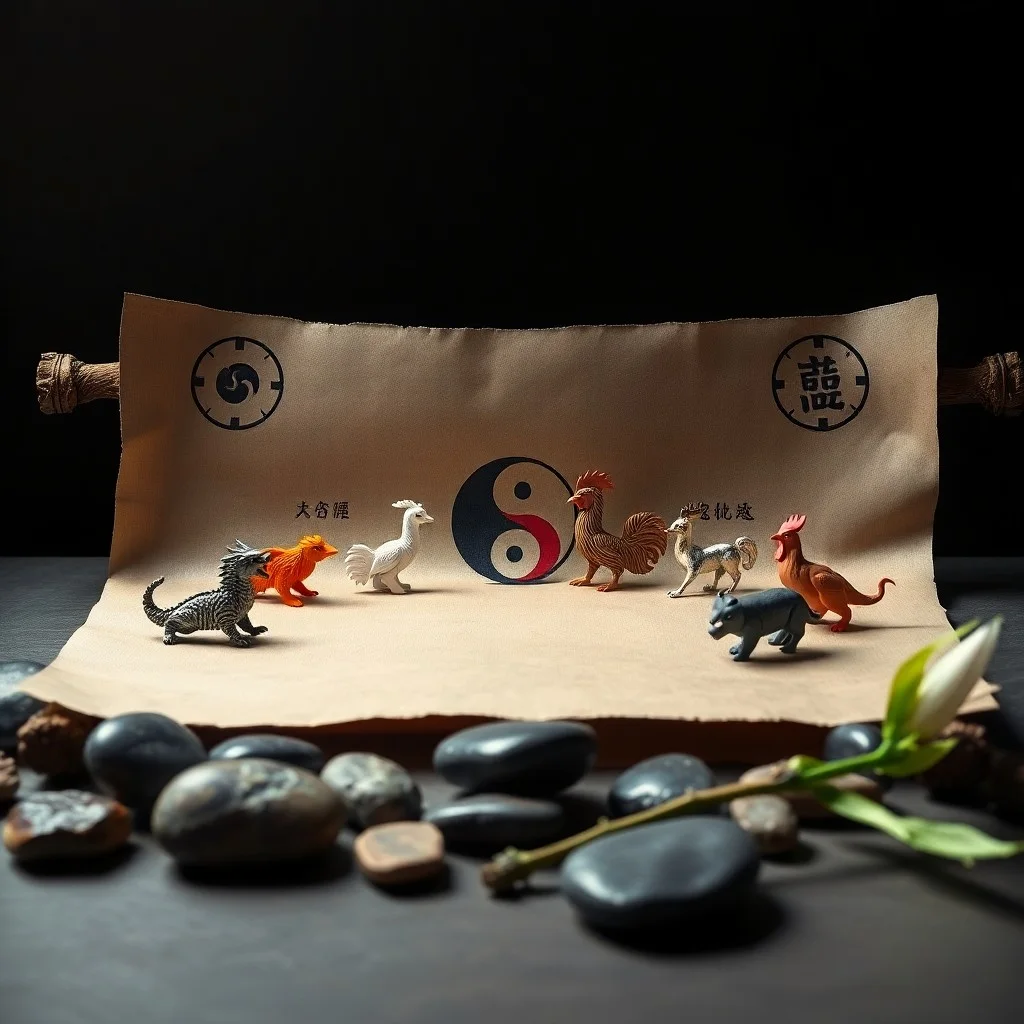
 A conceptual 3D render illustrating the harmonious and dynamic interaction of the Five Elements, influencing personality.
- Childhood: During these formative years, the raw, unfiltered traits of the animal sign are most apparent. A young Tiger might be overtly boisterous, while a Rabbit child could be noticeably shy. This is a period of discovering innate tendencies.
- Adolescence and Young Adulthood: As individuals mature, they begin to grapple with the social implications of their inherent traits. They learn to adapt, control, or channel their energies. A Dragon might learn humility, or a Monkey might refine their cleverness into strategic thinking.
- Middle Adulthood: This stage often brings a deeper understanding of oneself and a greater integration of experiences. People tend to leverage their strengths more effectively and work on mitigating their weaknesses. An Ox's stubbornness might transform into unwavering resolve.
- Later Adulthood: With wisdom gained from a lifetime of experiences, individuals often achieve a more balanced expression of their zodiac traits. They may become more philosophical, compassionate, and less reactive, embodying the refined essence of their animal sign.
This journey is not linear; there can be periods of regression or accelerated growth. The Chinese Zodiac suggests that while we are born with a certain predisposition, our ultimate personality is a product of continuous interaction between our innate nature and the world around us. It emphasizes the potential for conscious development and self-improvement throughout life.
The Interplay of Zodiac, Elements, and Life Experiences
The true complexity and predictive power of the Chinese Zodiac lie in the intricate interplay between the animal sign, the Five Elements, and the individual's unique life experiences. It's not enough to know just your animal; understanding your elemental type provides crucial context. For example, a Fire Horse will exhibit different characteristics and face different challenges than a Water Horse. The Fire Horse might be more overtly passionate and impulsive, while the Water Horse might be more adaptable and emotionally fluid, yet still retaining the core independence of the Horse.
Moreover, the specific year, month, day, and even hour of birth each carry their own animal and elemental influences, creating a comprehensive Four Pillars of Destiny chart. This chart offers a highly personalized blueprint, revealing the intricate energetic dynamics that shape an individual's personality and destiny. It explains why two people born in the same year (same animal sign) can have vastly different personalities and life paths, as their elemental and temporal alignments vary significantly.
Life experiences, both positive and challenging, act as catalysts for personality development. A Metal Dragon, inherently strong-willed, might learn the value of compromise after a difficult partnership. A Wood Rabbit, naturally gentle, might develop resilience and assertiveness when faced with professional challenges. The zodiac provides the foundation, but life's lessons build the structure, constantly refining and reshaping the individual. This holistic view emphasizes continuous growth and the potential for self-mastery.
Harnessing Zodiac Insights for Personal Growth
The primary value of understanding the Chinese Zodiac and its influence on personality development lies in its application for personal growth. By recognizing our inherent strengths, we can leverage them more effectively in our careers, relationships, and personal pursuits. For example, a Rat's resourcefulness can be channeled into innovative problem-solving, or an Ox's diligence can lead to sustained success in long-term projects. Awareness of potential weaknesses also allows for conscious effort to mitigate them.
Furthermore, the zodiac offers insights into compatibility with others, both in romantic relationships and professional collaborations. Understanding the inherent traits and elemental influences of family members, friends, or colleagues can foster greater empathy and more effective communication. It helps in appreciating diverse perspectives and navigating potential conflicts with wisdom. This knowledge promotes a more harmonious interaction with the world.
Ultimately, the Chinese Zodiac serves as a powerful tool for self-discovery and a roadmap for a lifelong journey of personality refinement. It encourages introspection, self-awareness, and a proactive approach to personal development. By embracing the wisdom of this ancient system, individuals can better understand their unique place in the cosmic tapestry and consciously work towards becoming their most authentic and balanced selves. It is a journey of continuous learning, adaptation, and growth, guided by the timeless insights of the Chinese Zodiac.
Source: Hybrid content assisted by AIs and human editorial supervision.


Comments
Post a Comment