
I Ching Divination: Ancient Wisdom Through Oracle Coins | StarPluto
The I Ching, also known as the Book of Changes, stands as one of the oldest and most revered texts in Chinese culture. Far more than a simple fortune-telling device, it is a profound philosophical system offering guidance on complex life situations and fostering a deeper understanding of the universe's dynamic processes. Its wisdom, distilled over millennia, provides a unique lens through which to view change, decision-making, and personal growth.
This ancient oracle invites individuals to engage in a contemplative dialogue with the cosmos, seeking clarity and perspective rather than definitive answers. Through its intricate system of hexagrams, the I Ching reveals the underlying patterns of events, encouraging self-reflection and alignment with the natural flow of existence. Understanding its principles and methods, particularly through the use of oracle coins, opens a pathway to profound self-discovery and informed action.
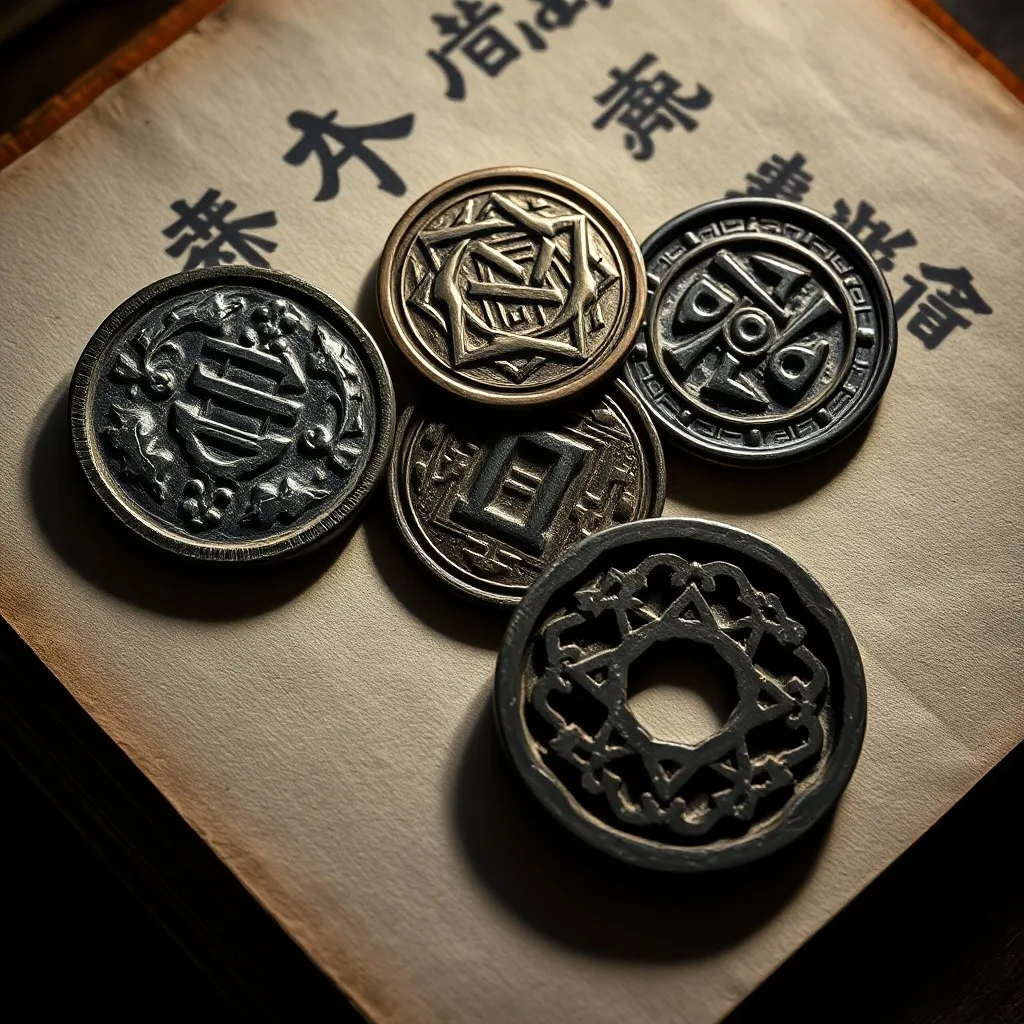
An oil painting captures the mystical essence of ancient I Ching oracle coins, symbols of profound Chinese wisdom guiding destiny.
This guide will delve into the historical roots, core concepts, and practical application of I Ching divination using oracle coins. Whether you are a seasoned esoteric practitioner or a curious newcomer, you will find valuable insights into this timeless system. We aim to demystify its process and highlight its potential as a tool for personal and spiritual development, helping you navigate life's ever-changing currents with greater awareness.
Table of Contents
- History and Origins of the I Ching
- The Core Concepts: Yin and Yang, Trigrams, and Hexagrams
- The Oracle Coins Divination Method
- Interpreting the Hexagrams
- Ethical Considerations and Best Practices
- Benefits of I Ching Divination
History and Origins of the I Ching
The genesis of the I Ching is shrouded in the mists of ancient Chinese history, with its origins dating back over three millennia. Legend attributes its earliest foundations to the mythical Emperor Fuxi, who is said to have observed the patterns of the universe and encoded them into eight trigrams, known as the Ba Gua. These trigrams represented the fundamental forces and phenomena of nature, forming the primordial basis of the system.
Over centuries, this foundational knowledge was expanded and refined. During the Western Zhou Dynasty (c. 1046–771 BCE), King Wen is credited with arranging the trigrams into 64 hexagrams and adding brief judgments or interpretations to each. His son, the Duke of Zhou, further enriched the text by adding lines of commentary to each of the six lines within every hexagram, thereby deepening the interpretive layers of the oracle.
The final and perhaps most influential layer of development came with the commentaries attributed to Confucius and his disciples, known as the "Ten Wings." These philosophical treatises transformed the I Ching from a mere divination manual into a profound work of cosmology, ethics, and political philosophy. It became a cornerstone of Confucian thought, emphasizing self-cultivation, moral conduct, and the understanding of cosmic order.
Throughout its long history, the I Ching has been consulted by emperors, scholars, and common people alike, serving as a guide for strategic planning, personal reflection, and spiritual enlightenment. Its enduring relevance lies in its ability to adapt to changing times while preserving its core principles of dynamic balance and the interconnectedness of all things. The Book of Changes continues to offer timeless wisdom to those who seek its counsel.
The Core Concepts: Yin and Yang, Trigrams, and Hexagrams
At the heart of the I Ching lies the fundamental concept of Yin and Yang, the two complementary and opposing forces that govern all phenomena in the universe. Yin represents the feminine, dark, receptive, yielding, and passive aspects, while Yang embodies the masculine, light, active, creative, and assertive principles. These forces are not static but are in constant flux, transforming into one another and maintaining cosmic balance.
In the I Ching, Yin is represented by a broken line (--) and Yang by a solid line (—). These basic lines combine to form the building blocks of the system: the trigrams. A trigram consists of three lines, arranged from bottom to top, symbolizing a specific natural phenomenon or quality. There are eight fundamental trigrams, each with its own image, attribute, and family association:
- ☰ Qian (Heaven): Creative, strong, father.
- ☷ Kun (Earth): Receptive, yielding, mother.
- ☳ Zhen (Thunder): Arousing, initiating, eldest son.
- ☴ Xun (Wind/Wood): Gentle, penetrating, eldest daughter.
- ☵ Kan (Water): Abysmal, dangerous, middle son.
- ☲ Li (Fire): Clinging, illuminating, middle daughter.
- ☶ Gen (Mountain): Stillness, stopping, youngest son.
- ☱ Dui (Lake/Marsh): Joyous, stimulating, youngest daughter.
When two trigrams are combined, one above the other, they form a hexagram. A hexagram, therefore, consists of six lines, representing a more complex and nuanced situation or state of being. There are 64 possible hexagrams, each with a unique name, image, and extensive commentary that describes its meaning, potential developments, and advice for action. The lower trigram often represents the inner or initial situation, while the upper trigram signifies the outer or developing circumstances.
A cinematic still life of ancient I Ching scrolls on a scholar's desk, symbolizing the profound depth of ancient wisdom and its enduring legacy.
The beauty of the I Ching lies in its dynamic nature. Some lines within a hexagram can be "changing lines," meaning they are in the process of transforming from Yin to Yang or vice versa. These changing lines indicate movement and potential evolution within the situation, leading to a secondary, or "transforming," hexagram. This secondary hexagram offers insight into the future direction or outcome if the advice of the changing lines is heeded. This intricate interplay of static and changing elements provides a rich tapestry for interpretation, reflecting the constant flow of life itself.
The Oracle Coins Divination Method
The most common and accessible method for consulting the I Ching involves using three identical coins. Traditionally, Chinese coins with a square hole in the center are used, where the side with four characters represents Yang (3 points) and the side with two characters represents Yin (2 points). However, any three coins can be used, as long as you assign a value to each side (e.g., heads = 3, tails = 2).
The process involves casting the three coins six times to build a hexagram from bottom to top. Each cast generates one line. Here’s a step-by-step guide to performing I Ching divination with coins:
- Formulate Your Question: Before casting, sit quietly and formulate a clear, concise, and sincere question. The I Ching responds best to questions about your attitude, approach, or understanding of a situation, rather than simple yes/no queries or attempts to predict specific events. Focus on what you need to know or how to act.
- Prepare Your Space: Find a quiet place where you won't be disturbed. You might want to have a notebook and pen ready to record your hexagram.
- Cast the Coins (Six Times): Hold the three coins in your hands, focus on your question, and gently toss them. Record the result of each throw.
- Determine the Line:
- Count the total value of the coins.
- If using Chinese coins: Yang side (characters) = 3, Yin side (no characters) = 2.
- If using regular coins: Heads = 3, Tails = 2 (or vice versa, just be consistent).
The sum of the three coins will result in one of four possibilities, determining the type of line you draw:
| Coin Combination (Example: Heads=3, Tails=2) | Total Value | Line Type | Symbol | Description |
|---|---|---|---|---|
| 3 Tails (2+2+2) | 6 | Changing Yin (Old Yin) | -- x -- | A broken line with an 'x' or circle in the middle, indicating it will change to Yang. |
| 2 Tails, 1 Head (2+2+3) | 7 | Stable Yang (Young Yang) | — | A solid line, remaining Yang. |
| 1 Tail, 2 Heads (2+3+3) | 8 | Stable Yin (Young Yin) | -- | A broken line, remaining Yin. |
| 3 Heads (3+3+3) | 9 | Changing Yang (Old Yang) | — o — | A solid line with an 'o' or 'x' in the middle, indicating it will change to Yin. |
After six throws, you will have constructed your hexagram, drawing lines from bottom to top. This is your primary hexagram. If any changing lines (Old Yin or Old Yang) appeared, you will then draw a secondary hexagram by changing those lines to their opposite (Old Yin becomes Young Yang, Old Yang becomes Young Yin). This secondary hexagram represents the future state or outcome.
Interpreting the Hexagrams
Interpreting an I Ching reading is an art that combines scholarly understanding with intuitive insight. It's not about receiving a direct answer, but rather about gaining a deeper perspective on your situation and the forces at play. The interpretation process typically involves several layers:
- The Primary Hexagram: Begin by understanding the overall meaning of the primary hexagram. Each hexagram has a name, an image (composed of two trigrams), and a general judgment. Consult a reliable I Ching text to read the judgment and the image commentary for your primary hexagram. This will provide the overarching theme and current state of your situation.
- The Changing Lines: If your reading produced any changing lines, these are crucial. Each line within a hexagram has its own specific commentary. Read the commentary for each changing line carefully, as they offer particular advice or warnings related to your query. These lines highlight the active elements within your situation that are undergoing transformation.
- The Secondary (Transforming) Hexagram: After understanding the primary hexagram and its changing lines, turn your attention to the secondary hexagram. This hexagram represents the future direction or the outcome that will emerge if you follow the guidance of the changing lines. It shows where the situation is heading.
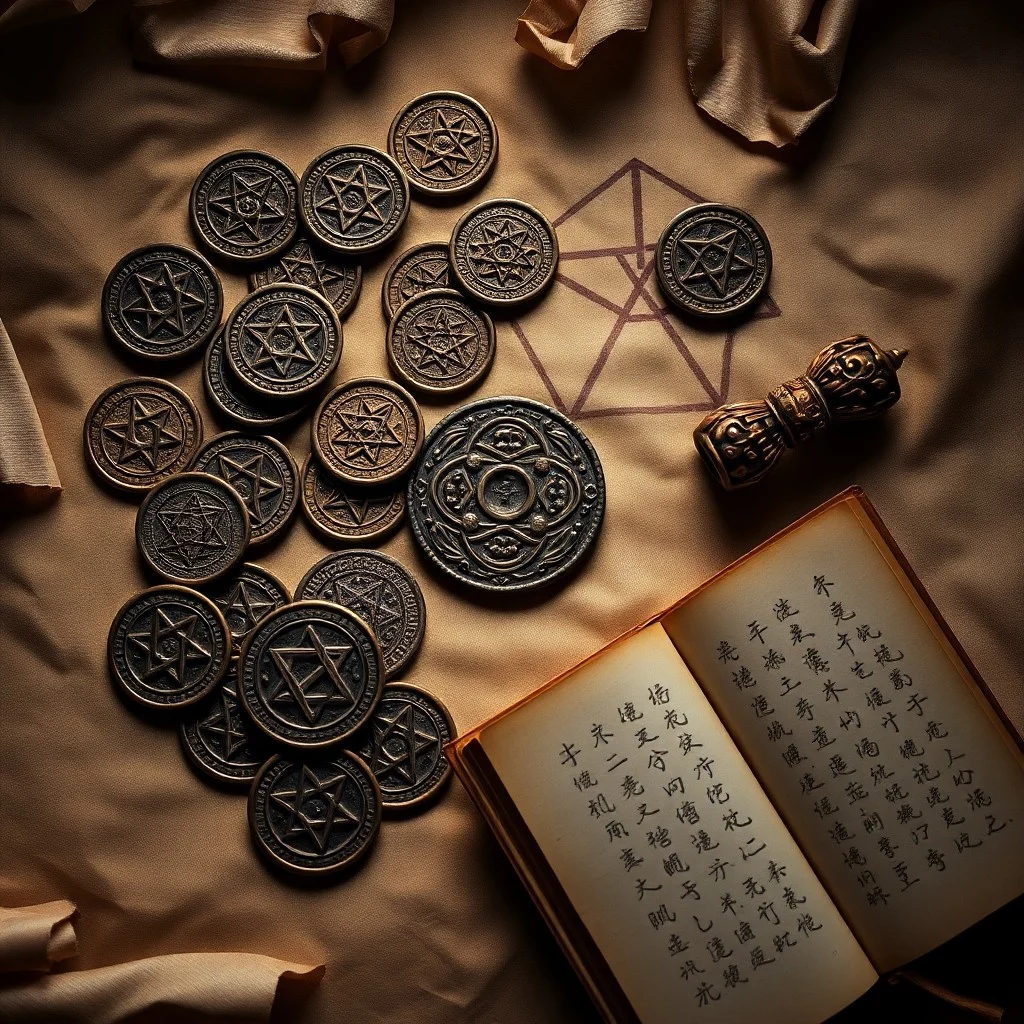
An abstract digital illustration captures the dynamic interplay of Yin and Yang, symbolizing the cosmic balance inherent in ancient wisdom traditions.
It is essential to approach the interpretation with an open mind and a willingness to reflect. The I Ching does not dictate, but rather illuminates. Consider how the symbolism and advice relate to your specific question and current life circumstances. Sometimes, the meaning may not be immediately obvious, requiring contemplation and introspection. Keep a journal of your readings to track patterns and deepen your understanding over time.
Remember that the I Ching speaks in metaphors and archetypes. Its language is rich with imagery and philosophical depth. Don't look for literal predictions, but rather for guidance on how to align yourself with the natural flow of change and make wise choices. The true power of the I Ching lies in its capacity to stimulate self-awareness and foster a harmonious relationship with the forces of the universe.
Ethical Considerations and Best Practices
Consulting the I Ching is a sacred act that requires respect and a mindful approach. To gain the most profound and beneficial insights, it's important to adhere to certain ethical considerations and best practices. These guidelines ensure that your interaction with the oracle is meaningful and productive, fostering genuine growth rather than superficial answers.
- Formulate Clear and Sincere Questions: The I Ching responds best to questions that are thoughtful, open-ended, and focused on your personal growth or understanding. Avoid trivial questions, those designed to test the oracle, or questions about other people's lives without their consent. Frame your question in a way that allows for self-reflection, such as "How should I approach this challenge?" or "What is the underlying dynamic of this situation?"
- Approach with Respect and Humility: Treat the I Ching as a wise teacher, not a fortune-teller. Approach it with a receptive mind and a humble heart, ready to listen to its guidance, even if it's not what you initially expected. Avoid demanding answers or repeating the same question multiple times in a short period.
- Avoid Trivial or Manipulative Queries: The I Ching is a tool for profound insight, not for predicting lottery numbers or manipulating outcomes. Using it for trivial matters diminishes its power and your connection to its wisdom. Focus on significant life decisions, personal dilemmas, or spiritual inquiries.
- Give Time for Integration: After receiving a reading, take time to meditate on the hexagrams and their commentaries. The wisdom of the I Ching often unfolds over days or even weeks as you reflect on its message in the context of your life. Don't rush to another reading if the first one hasn't been fully integrated.
- Record Your Readings: Keeping a journal of your questions, the hexagrams received, and your initial interpretations can be incredibly insightful. Over time, you'll notice patterns, deepen your understanding of the I Ching's symbolism, and see how its advice played out in your life. This practice enhances your learning and intuition.
- Consult Infrequently for Significant Matters: The I Ching is not meant for daily consultation. It is a powerful tool best reserved for moments of significant decision-making, confusion, or when seeking deeper understanding of a complex situation. Over-consultation can lead to confusion and diminish the oracle's potency.
By observing these ethical guidelines, you transform the act of divination into a profound practice of self-awareness and spiritual development. The I Ching becomes a trusted companion on your journey, offering timeless wisdom to navigate the ever-changing currents of life with integrity and insight.
Benefits of I Ching Divination
Engaging with the I Ching offers a multitude of benefits that extend far beyond simple prediction. It serves as a powerful catalyst for personal growth, fostering a deeper connection to oneself and the universal patterns of change. The wisdom embedded within its hexagrams provides a unique framework for navigating life's complexities with greater clarity and purpose.
- Enhanced Self-Reflection and Awareness: The I Ching encourages introspection, prompting you to examine your motives, attitudes, and actions. By reflecting on the hexagrams, you gain a more objective perspective on your situation, uncovering hidden biases or unexplored possibilities. This process cultivates a heightened sense of self-awareness, which is fundamental to personal development.
- Guidance for Decision-Making: When faced with difficult choices, the I Ching doesn't make the decision for you, but it illuminates the dynamics at play and suggests optimal approaches. It helps you understand the potential consequences of different paths, allowing you to make choices that are more aligned with your true self and the natural flow of events.
- Perspective on Change: Life is a constant process of change, and the I Ching is the "Book of Changes." It teaches you to embrace impermanence, understand the cycles of growth and decline, and adapt gracefully to new circumstances. This perspective reduces anxiety about the unknown and fosters resilience in the face of adversity.
- Spiritual and Philosophical Insight: Beyond practical advice, the I Ching offers profound philosophical insights into the nature of reality, the interplay of Yin and Yang, and the interconnectedness of all phenomena. Regular consultation can deepen your spiritual understanding, connecting you to ancient wisdom traditions and a broader cosmic perspective.
- Cultivation of Intuition: The interpretive nature of the I Ching encourages you to trust your inner wisdom. As you engage with its symbolic language, you develop your intuitive faculties, learning to discern subtle meanings and apply abstract principles to concrete situations. This strengthens your overall decision-making abilities and self-trust.
- Stress Reduction and Inner Peace: By providing a framework for understanding and accepting life's challenges, the I Ching can reduce stress and foster a sense of inner peace. Knowing that there's a deeper order to events, and having a tool to consult for guidance, can be immensely comforting during times of uncertainty.
In essence, the I Ching is not just an oracle; it is a profound system for living wisely. By engaging with its ancient wisdom through the simple act of casting coins, you unlock a powerful resource for self-knowledge, strategic action, and harmonious living. It invites you to become an active participant in your destiny, guided by the timeless principles of change and balance.
Source: Hybrid content assisted by AIs and human editorial supervision.


Comments
Post a Comment