
Chakra Healing Basics: Balancing Your Energy Centers | StarPluto
The concept of chakras, often described as spinning wheels of energy, is a cornerstone of various ancient spiritual traditions, particularly Hinduism and Buddhism. These vital energy centers are believed to govern our physical, emotional, mental, and spiritual well-being. Understanding and balancing these chakras is key to achieving holistic health and a deeper connection to our inner selves and the universe.
In a world increasingly focused on external achievements and material gains, the internal landscape of our energetic body often goes unnoticed. However, imbalances in these energy centers can manifest as physical ailments, emotional distress, and spiritual stagnation. This comprehensive guide delves into the basics of chakra healing, providing foundational knowledge and practical techniques to help you balance your energy centers.
Table of Contents
- Introduction to Chakra Healing
- Historical and Cultural Significance
- The Seven Primary Chakras
- Root Chakra (Muladhara)
- Sacral Chakra (Svadhisthana)
- Solar Plexus Chakra (Manipura)
- Heart Chakra (Anahata)
- Throat Chakra (Vishuddha)
- Third Eye Chakra (Ajna)
- Crown Chakra (Sahasrara)
- Comprehensive Chakra Properties Table
- Effective Chakra Healing Techniques
- Integrating Chakra Healing Daily
- Conclusion and Energetic Well-being
Introduction to Chakra Healing
Chakra healing refers to the practice of restoring balance and harmony to the body's energy centers. The word "chakra" itself is Sanskrit for "wheel" or "disk," symbolizing the rotating energy vortices within us. These centers are not physical organs but rather energetic hubs that process and distribute life force energy, known as Prana in Hinduism or Qi in Chinese medicine.
Each of the seven main chakras is associated with specific physiological functions, emotional states, mental attributes, and spiritual aspects. When these chakras are open, balanced, and aligned, energy flows freely, promoting optimal health and a sense of vitality. Conversely, blockages or imbalances can lead to a range of issues, from chronic pain to emotional instability.
A serene figure meditating, embodying the concept of balanced chakra energy flowing through the body.
Historical and Cultural Significance
The earliest known references to chakras appear in ancient Hindu texts, particularly the Vedas, which date back to 1500-500 BCE. These scriptures describe a complex system of energy channels (nadis) and centers (chakras) within the subtle body. Over millennia, this knowledge evolved and was incorporated into various yogic and tantric practices, aiming for spiritual enlightenment and physical well-being.
Buddhism also adopted and adapted the chakra system, with variations found in Tibetan Vajrayana Buddhism. In these traditions, chakras are often linked to specific deities, mantras, and meditative visualizations. The concept gradually spread westward, gaining popularity in the New Age movement and alternative healing communities during the 20th century, where it was often simplified and integrated with other esoteric practices.
Modern interpretations of chakras often blend ancient wisdom with contemporary psychology and energy medicine. While scientific consensus on the physical existence of chakras is still developing, many practitioners and individuals report profound benefits from engaging with chakra healing practices. This enduring appeal highlights the universal human quest for balance and inner peace.
The Seven Primary Chakras
There are seven main chakras aligned along the spine, from the base to the crown of the head. Each chakra is distinct, yet interconnected, influencing different aspects of our being. Understanding each one individually is the first step towards effective healing and balancing.
Root Chakra (Muladhara)
Located at the base of the spine, the Root Chakra is associated with our sense of stability, security, and grounding. It connects us to the earth and provides the foundation for our existence. When balanced, we feel safe, secure, and supported.
- Location: Base of the spine, perineum.
- Color: Red.
- Element: Earth.
- Associated Issues (Imbalance): Anxiety, fear, insecurity, financial instability, lower back pain, issues with legs/feet.
Sacral Chakra (Svadhisthana)
Situated just below the navel, the Sacral Chakra governs creativity, pleasure, sexuality, and emotions. It is the center of our emotional fluidity and our ability to experience joy and passion. A balanced Sacral Chakra allows for healthy emotional expression and creative flow.
- Location: Lower abdomen, below the navel.
- Color: Orange.
- Element: Water.
- Associated Issues (Imbalance): Emotional instability, creative blocks, sexual dysfunction, urinary problems, hip issues.
Solar Plexus Chakra (Manipura)
Found in the upper abdomen, the Solar Plexus Chakra is the seat of our personal power, self-esteem, and willpower. It influences our confidence, motivation, and ability to manifest our desires. When balanced, we feel empowered and purposeful.
- Location: Upper abdomen, stomach area.
- Color: Yellow.
- Element: Fire.
- Associated Issues (Imbalance): Low self-esteem, lack of control, digestive problems, fatigue, anger issues.
Heart Chakra (Anahata)
Located in the center of the chest, the Heart Chakra is the bridge between our lower and upper chakras, connecting our physical and spiritual selves. It is the center of love, compassion, empathy, and forgiveness. A balanced Heart Chakra allows us to give and receive love freely.
- Location: Center of the chest.
- Color: Green (or Pink).
- Element: Air.
- Associated Issues (Imbalance): Loneliness, jealousy, resentment, heart problems, asthma, upper back issues.
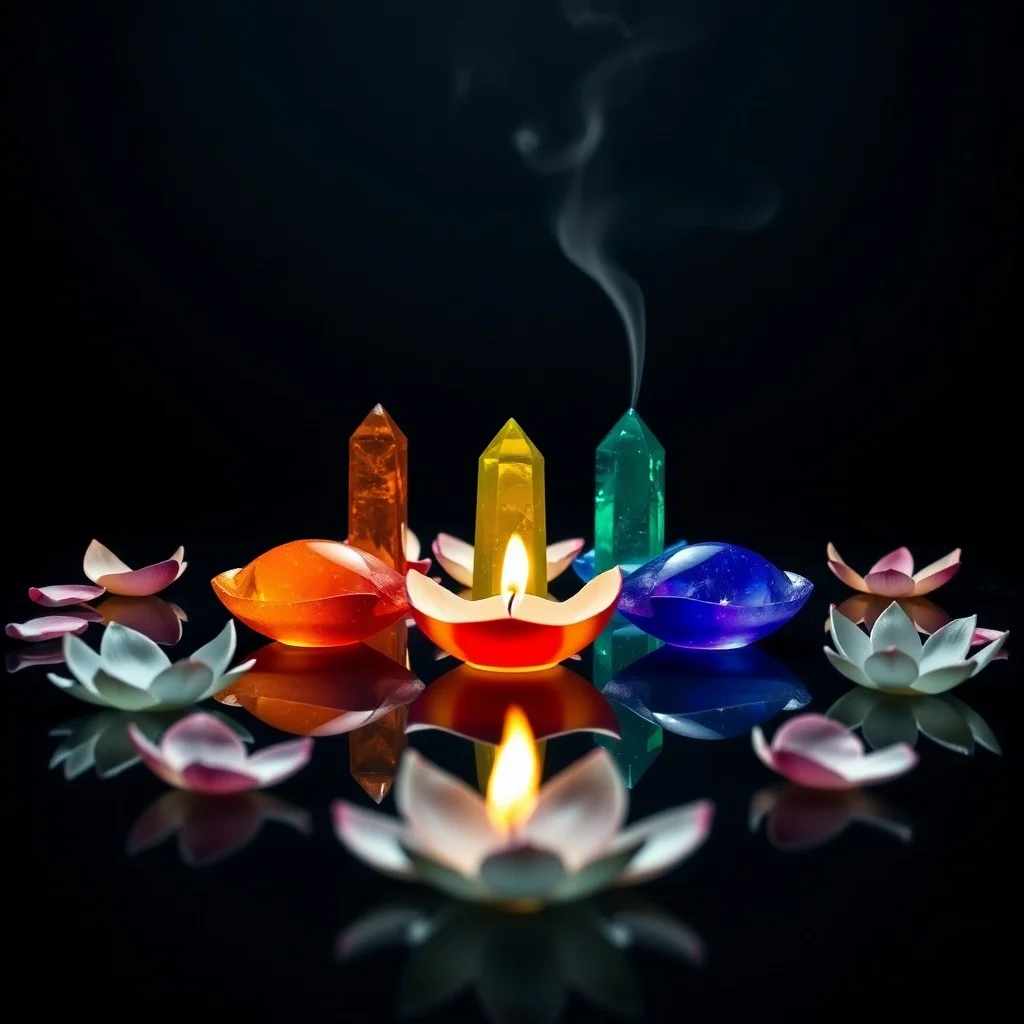
A selection of vibrant crystals, each associated with a specific chakra, used for energetic alignment.
Throat Chakra (Vishuddha)
Located in the throat area, this chakra is responsible for communication, self-expression, and truth. It governs our ability to speak our truth, listen effectively, and express our authentic selves. A balanced Throat Chakra fosters clear and honest communication.
- Location: Throat, neck area.
- Color: Blue.
- Element: Sound/Ether.
- Associated Issues (Imbalance): Difficulty expressing thoughts, fear of public speaking, thyroid issues, sore throat, neck pain.
Third Eye Chakra (Ajna)
Situated between the eyebrows, the Third Eye Chakra is the center of intuition, insight, and inner wisdom. It governs our ability to perceive beyond the physical realm, access spiritual guidance, and visualize. When balanced, we experience heightened intuition and clarity.
- Location: Forehead, between the eyebrows.
- Color: Indigo.
- Element: Light.
- Associated Issues (Imbalance): Lack of intuition, poor decision-making, headaches, eye problems, confusion.
Crown Chakra (Sahasrara)
Located at the very top of the head, the Crown Chakra represents our connection to the divine, universal consciousness, and spiritual enlightenment. It is the gateway to higher states of awareness and our sense of purpose. A balanced Crown Chakra brings a sense of unity and spiritual understanding.
- Location: Top of the head.
- Color: Violet (or White).
- Element: Thought/Cosmic Energy.
- Associated Issues (Imbalance): Spiritual disconnection, lack of purpose, depression, feeling isolated, chronic exhaustion.
Comprehensive Chakra Properties Table
This table provides a quick reference for the key attributes of each of the seven primary chakras, including their location, associated color, element, and common signs of imbalance. This summary can be a useful tool for self-assessment and understanding where your energetic focus might be needed.
| Chakra (Sanskrit Name) | Location | Color | Element | Keywords | Imbalance Signs |
|---|---|---|---|---|---|
| Root (Muladhara) | Base of spine | Red | Earth | Security, grounding, stability | Anxiety, fear, financial issues, lower back pain |
| Sacral (Svadhisthana) | Below navel | Orange | Water | Creativity, pleasure, emotions, sexuality | Emotional instability, creative blocks, sexual dysfunction |
| Solar Plexus (Manipura) | Upper abdomen | Yellow | Fire | Personal power, self-esteem, willpower | Low confidence, digestive issues, anger |
| Heart (Anahata) | Center of chest | Green/Pink | Air | Love, compassion, empathy, forgiveness | Loneliness, jealousy, heart problems, grief |
| Throat (Vishuddha) | Throat area | Blue | Sound/Ether | Communication, self-expression, truth | Difficulty speaking, thyroid issues, neck pain |
| Third Eye (Ajna) | Between eyebrows | Indigo | Light | Intuition, insight, wisdom, visualization | Lack of clarity, headaches, eye strain, confusion |
| Crown (Sahasrara) | Top of head | Thought/Cosmic Energy | Violet/White | Spiritual connection, enlightenment, purpose | Spiritual disconnection, depression, isolation, chronic fatigue |
Effective Chakra Healing Techniques
Balancing and healing your chakras involves a variety of practices that can be integrated into your daily routine. The key is consistency and a willingness to tune into your energetic body. Here are some widely recognized and effective techniques:
- Meditation and Visualization: This is one of the most powerful tools. Focus on each chakra, visualizing its associated color glowing brightly and spinning freely. You can imagine breathing light into the chakra or releasing any blockages. Guided meditations specifically for chakra balancing are widely available and can be highly beneficial.
- Affirmations: Positive affirmations can reprogram your subconscious mind and align your thoughts with the desired state of each chakra. For example, for the Root Chakra, you might say, "I am safe and secure," or for the Heart Chakra, "I give and receive love effortlessly."
- Color Therapy: Each chakra resonates with a specific color. Surrounding yourself with these colors, through clothing, decor, or even colored light therapy, can help stimulate and balance the corresponding chakra. Eating foods of the chakra's color is also a simple way to incorporate this.
- Crystals: Gemstones and crystals carry unique energetic properties that can influence our chakras. Placing specific crystals on or near the corresponding chakra during meditation or carrying them with you can help in their activation and balancing. Examples include Red Jasper for the Root, Carnelian for the Sacral, Citrine for the Solar Plexus, Green Aventurine for the Heart, Sodalite for the Throat, Amethyst for the Third Eye, and Clear Quartz for the Crown.
- Diet and Nutrition: Eating whole, natural foods that correspond to the colors and elements of each chakra can support their health. Root vegetables for the Root Chakra, juicy fruits for the Sacral, grains for the Solar Plexus, leafy greens for the Heart, water for the Throat, dark berries for the Third Eye, and light, purifying foods for the Crown.
- Essential Oils: Aromatherapy can be a potent tool for chakra healing. Specific essential oils are believed to resonate with each chakra, aiding in relaxation, emotional release, and energetic alignment. For instance, Sandalwood for the Root, Ylang-Ylang for the Sacral, Lemon for the Solar Plexus, Rose for the Heart, Peppermint for the Throat, Frankincense for the Third Eye, and Lavender for the Crown.
- Yoga and Movement: Certain yoga poses (asanas) are designed to stimulate and open specific chakras. For example, Warrior Pose can strengthen the Root Chakra, while Camel Pose can open the Heart Chakra. Engaging in physical activity that connects you with your body can also help release stagnant energy.
An abstract painting capturing the dynamic and harmonious interplay of chakra colors and energy.
Integrating Chakra Healing into Daily Life
The journey of chakra healing is continuous and deeply personal. It's not about a one-time fix but rather a commitment to self-awareness and energetic maintenance. Incorporating these practices into your daily life can lead to profound and lasting changes. Start by focusing on one chakra at a time, especially if you identify a specific area of imbalance.
Listen to your body and intuition. Pay attention to how different practices make you feel. Journaling can be an excellent way to track your progress and identify patterns in your energetic state. Remember, the goal is not perfection, but rather a gentle and consistent effort towards greater balance and well-being.
Engage with nature to ground your Root Chakra, express your creativity to stimulate your Sacral, set clear intentions to empower your Solar Plexus, practice kindness to open your Heart, communicate authentically for your Throat, trust your inner voice for your Third Eye, and seek moments of spiritual connection for your Crown. By nurturing each of these centers, you cultivate a harmonious inner ecosystem.
Conclusion and Energetic Well-being
Chakra healing offers a powerful pathway to understanding and optimizing your energetic self. By recognizing the role each chakra plays in your overall well-being, you gain valuable insights into your physical health, emotional patterns, and spiritual journey. The practices outlined above provide a starting point for anyone looking to embark on this transformative path.
Embracing chakra healing is an investment in your holistic health, fostering a deeper connection to your inner wisdom and the universal life force. As you work to balance these vital energy centers, you'll likely experience increased vitality, emotional resilience, mental clarity, and a profound sense of peace and purpose. Continue to explore and experiment with different techniques to find what resonates most deeply with you.
Fuente: Contenido híbrido asistido por IAs y supervisión editorial humana.


Comments
Post a Comment