
Chinese Zodiac Mythology: Legends Behind Each Animal Sign | StarPluto
The Chinese Zodiac, known as Sheng Xiao, is a fascinating and intricate system that assigns an animal and its reputed attributes to each year in a repeating 12-year cycle. Far more than just a calendar, it is deeply embedded in Chinese culture, influencing personality traits, compatibility, and even destiny. Understanding the mythology behind each animal sign offers profound insights into their symbolic meanings and the rich tapestry of ancient Chinese beliefs.
At the heart of the Chinese Zodiac lies a captivating legend: the Great Race. This mythical tale explains the order of the twelve animals and their characteristics, providing a vibrant narrative that has been passed down through generations. It serves as a foundational story, not only for the zodiac itself but also for understanding the cultural values and wisdom that shaped its interpretation.
Table of Contents
- The Great Race: The Origin Story
- Rat: The Clever Pioneer
- Ox: The Diligent Pillar
- Tiger: The Courageous Leader
- Rabbit: The Gentle Strategist
- Dragon: The Majestic Benefactor
- Snake: The Wise Enigma
- Horse: The Free-Spirited Adventurer
- Goat: The Compassionate Artist
- Monkey: The Ingenious Innovator
- Rooster: The Observant Perfectionist
- Dog: The Loyal Guardian
- Pig: The Generous Optimist
The Great Race: The Origin Story
The most popular legend explaining the order of the Chinese Zodiac animals is the story of the Great Race, orchestrated by the Jade Emperor. He declared a race across a mighty river, promising that the first twelve animals to reach the opposite bank would have a year named after them. This divine decree set off a chain of events that revealed the unique characteristics and cunning of each animal, solidifying their place in the zodiac cycle.
The animals gathered at the riverbank, eager to compete. The Rat, being small but incredibly clever, realized it couldn't cross the river alone. It convinced the kind-hearted Ox to carry it across, promising to sing to him during the journey. Just as they reached the shore, the Rat, with a final burst of energy, jumped off the Ox's head and landed first, claiming the inaugural spot.

The legendary Great Race, where the Jade Emperor determined the order of the Chinese Zodiac animals through a challenging river crossing.
The Ox, despite its strength, arrived second, followed closely by the Tiger, whose powerful swimming skills were evident. The Rabbit, unable to swim, cleverly hopped across stones and a floating log, eventually being pushed ashore by a gust of wind, securing fourth place. The Dragon, a creature of immense power, could have flown directly, but paused to help villagers and then blew wind to assist the Rabbit's log, arriving fifth.
The Snake, hidden on the Horse's hoof, startled the Horse at the last moment, slithering ahead to claim sixth place, leaving the Horse in seventh. The Goat, Monkey, and Rooster worked together to cross on a raft, with the Rooster finding the raft, the Monkey pushing, and the Goat navigating. After much effort, they arrived eighth, ninth, and tenth, respectively. Finally, the Dog, known for its love of water, got distracted playing and arrived eleventh, and the Pig, after stopping for a snack and a nap, was the last to cross, completing the cycle as the twelfth animal.
Rat: The Clever Pioneer
The Rat's legend in the Great Race highlights its intelligence, quick wit, and resourcefulness. Despite its small stature, the Rat outsmarted larger, stronger animals, securing the first position through cunning rather than brute force. This tale emphasizes the value of intellect over physical prowess in Chinese culture.
- Personality Traits: Individuals born in the Year of the Rat are often perceived as intelligent, adaptable, charming, and ambitious. They possess a keen intuition and are excellent problem-solvers, always finding ways to overcome obstacles.
- Cultural Significance: The Rat symbolizes wealth, surplus, and prosperity due to its reproductive capabilities and ability to hoard food. It is also associated with a pioneering spirit and the ability to thrive in any environment.
Ox: The Diligent Pillar
The Ox's second-place finish, despite its strength and perseverance, is a testament to its honest and hardworking nature. It was tricked by the Rat but remained steadfast in its journey, embodying the virtues of diligence and reliability. This legend underscores the importance of steady effort and integrity.
- Personality Traits: People born under the Ox sign are typically known for their strong will, determination, reliability, and patience. They are methodical, responsible, and excel through sheer hard work and dedication.
- Cultural Significance: The Ox represents strength, stability, and perseverance. It is a symbol of prosperity through hard work and is highly valued in agricultural societies for its contribution to farming.
Tiger: The Courageous Leader
The Tiger's powerful swim across the river, battling strong currents, showcases its bravery and competitive spirit. Its third-place finish reflects its natural leadership and commanding presence. The Tiger's legend highlights courage and an adventurous spirit.
- Personality Traits: Tigers are often described as brave, confident, competitive, and natural leaders. They are passionate, adventurous, and possess a strong sense of justice, often challenging authority.
- Cultural Significance: The Tiger is a symbol of power, courage, and protection. It is believed to ward off evil spirits and represents leadership and ambition.
Rabbit: The Gentle Strategist
The Rabbit's journey in the Great Race, using stepping stones and a floating log, demonstrates its intelligence, caution, and good fortune. Its fourth-place arrival, aided by the Dragon's breath, suggests a blend of cleverness and auspicious circumstances. This legend emphasizes adaptability and a gentle approach.
- Personality Traits: Rabbits are generally seen as gentle, elegant, compassionate, and responsible. They are articulate, thoughtful, and prefer peaceful environments, often avoiding conflict.
- Cultural Significance: The Rabbit symbolizes longevity, mercy, and prudence. It is also associated with beauty, good luck, and a gentle nature.
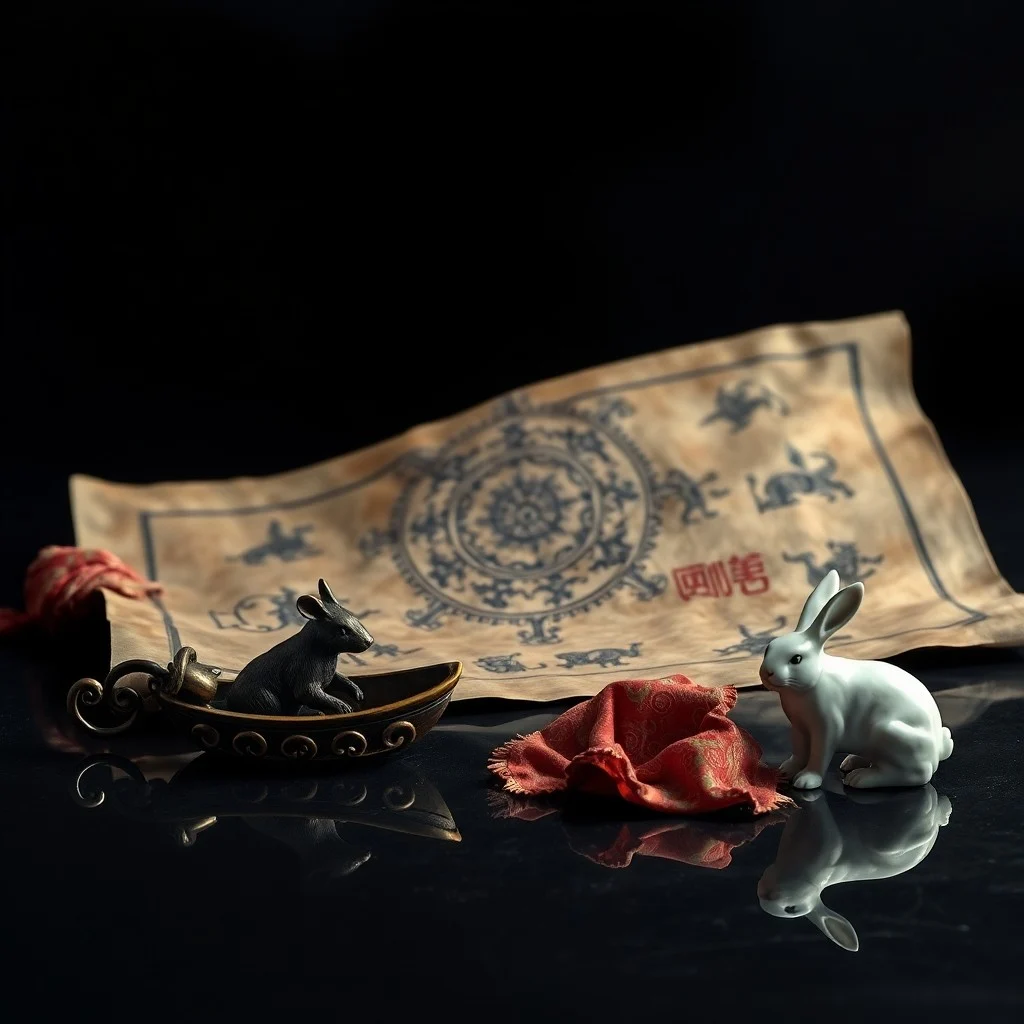
A still life arrangement of ancient Chinese scrolls, brushes, and ink, representing the profound wisdom and historical depth of zodiac mythology.
Dragon: The Majestic Benefactor
The Dragon, a creature of immense power and majesty, could have easily won the race. However, its fifth-place finish reveals its benevolent nature, as it stopped to help villagers and then blew wind to guide the Rabbit's log. This act of selflessness highlights the Dragon's role as a protector and benefactor.
- Personality Traits: Dragons are often characterized as charismatic, intelligent, confident, and ambitious. They are natural leaders, full of energy and enthusiasm, and are often seen as lucky and powerful.
- Cultural Significance: The Dragon is the most revered animal in Chinese culture, symbolizing power, nobility, honor, luck, and success. It is associated with imperial authority and good fortune.
Snake: The Wise Enigma
The Snake's cunning arrival, hidden on the Horse's hoof and then startling it to claim sixth place, underscores its intelligence, intuition, and elusive nature. This legend portrays the Snake as a creature of deep thought and strategic action, often underestimated.
- Personality Traits: Snakes are usually considered intelligent, wise, enigmatic, and intuitive. They are often calm and collected, possess a deep understanding of situations, and can be quite charming and mysterious.
- Cultural Significance: The Snake symbolizes wisdom, intuition, and transformation. While sometimes associated with mystery or danger, it is primarily seen as a bringer of good fortune and protection.
Horse: The Free-Spirited Adventurer
The Horse's strong performance in the race, only to be surprised by the Snake at the very end, highlights its energetic, free-spirited, and independent nature. Its seventh-place finish reflects its speed and adventurous spirit, though sometimes its impulsiveness can lead to minor setbacks.
- Personality Traits: Horses are typically energetic, active, independent, and enthusiastic. They love freedom, travel, and are often popular due to their cheerful and outgoing personalities.
- Cultural Significance: The Horse symbolizes speed, freedom, passion, and success. It is often associated with travel, vitality, and a spirit of adventure.
Goat: The Compassionate Artist
The Goat (also known as Sheep or Ram) arrived eighth, collaborating with the Monkey and Rooster. This act of teamwork emphasizes its gentle, compassionate, and peaceful nature. The legend shows the Goat's ability to work harmoniously with others, valuing cooperation over individual glory.
- Personality Traits: Goats are generally gentle, calm, compassionate, and artistic. They are creative, empathetic, and prefer stability and harmony, often avoiding confrontation.
- Cultural Significance: The Goat symbolizes peace, harmony, and good fortune. It is associated with creativity, kindness, and a gentle disposition.
An abstract representation of the zodiac cycle as a cosmic timepiece, illustrating the timeless influence of these ancient animal signs.
Monkey: The Ingenious Innovator
The Monkey's role in pushing the raft with the Goat and Rooster across the river showcases its intelligence, curiosity, and playful nature. Its ninth-place finish reflects its quick thinking and ability to adapt to challenges, often finding innovative solutions. This legend emphasizes ingenuity and versatility.
- Personality Traits: Monkeys are usually clever, intelligent, curious, and playful. They are quick-witted, versatile, and enjoy being the center of attention, often possessing a good sense of humor.
- Cultural Significance: The Monkey symbolizes intelligence, wit, and versatility. It is often associated with good luck and the ability to overcome difficulties through cleverness.
Rooster: The Observant Perfectionist
The Rooster's contribution to finding the raft for the Goat and Monkey highlights its keen observation skills and meticulous nature. Its tenth-place finish, after a collaborative effort, reflects its attention to detail and practical approach. The legend emphasizes punctuality and precision.
- Personality Traits: Roosters are typically observant, hardworking, courageous, and confident. They are honest, communicative, and often perfectionists, paying great attention to detail and appearance.
- Cultural Significance: The Rooster symbolizes punctuality, honesty, and protection. Its crowing at dawn is associated with driving away evil spirits and bringing good fortune.
Dog: The Loyal Guardian
The Dog's eleventh-place arrival, after being distracted by playing in the water, perfectly illustrates its loyal, honest, and playful nature. Despite its momentary lapse, its inherent goodness and protective instincts are central to its character. This legend emphasizes faithfulness and genuine care.
- Personality Traits: Dogs are generally loyal, honest, responsible, and protective. They are trustworthy, kind, and have a strong sense of justice, often putting others' needs before their own.
- Cultural Significance: The Dog symbolizes loyalty, honesty, and protection. It is considered a good omen for families and is associated with faithfulness and companionship.
Pig: The Generous Optimist
The Pig's last-place finish, due to stopping for a meal and a nap, highlights its easygoing, generous, and optimistic nature. While it may seem lazy, this legend also points to its contentment and enjoyment of life's simple pleasures. It represents abundance and good fortune.
- Personality Traits: Pigs are typically generous, compassionate, diligent, and optimistic. They are honest, sincere, and enjoy life, often bringing joy and prosperity to those around them.
- Cultural Significance: The Pig symbolizes wealth, prosperity, and good fortune. It is associated with honesty, sincerity, and a happy, contented life.
The legends of the Chinese Zodiac animals offer more than just origin stories; they provide a moral framework and a deep understanding of human characteristics as perceived in ancient Chinese philosophy. Each animal, through its actions in the Great Race, embodies a set of virtues and flaws that resonate with the personalities of those born under its sign. This rich mythological background continues to influence cultural practices, personal beliefs, and even modern-day interpretations of destiny and compatibility.
Exploring these tales allows us to appreciate the intricate connection between folklore, astrology, and the enduring wisdom of Chinese civilization. Whether you identify with the Rat's cleverness or the Ox's diligence, the Chinese Zodiac offers a timeless lens through which to view oneself and the world.
Fuente: Contenido híbrido asistido por IAs y supervisión editorial humana.


Comments
Post a Comment