
Vibrational Medicine: Sound Healing, Mantras, Frequency Therapy | StarPluto
Vibrational medicine represents a fascinating frontier in holistic health, positing that all matter, including the human body, is composed of energy vibrating at specific frequencies. This ancient yet increasingly recognized paradigm suggests that imbalances in these energetic frequencies can manifest as illness or dis-ease. By introducing harmonious vibrations, practitioners aim to restore equilibrium and promote healing at a fundamental level.
This approach moves beyond the purely biochemical model of conventional medicine, exploring the subtle energetic systems that underpin physical, mental, and emotional well-being. It encompasses a diverse range of practices, from the ancient art of sound healing and the spiritual power of mantras to modern frequency therapies utilizing advanced technology. Understanding these modalities requires an open mind and a willingness to explore the interconnectedness of energy, consciousness, and health.

Tarot Quantum Mechanics Intersecting Divination Reality, a core principle of vibrational medicine.
The concept of vibrational medicine is rooted in the understanding that everything in the universe is in a state of vibration. From the smallest subatomic particles to the largest galaxies, all entities possess a unique resonant frequency. In the context of human health, this means that every cell, organ, and system within the body emits and receives specific vibrational patterns. When these patterns are disrupted, either by external stressors or internal disharmony, the body's natural healing mechanisms can be compromised, leading to various health issues.
The goal of vibrational therapies is to re-establish healthy resonant frequencies within the body. This can be achieved through various means, each leveraging different forms of energy—be it acoustic, electromagnetic, or even linguistic—to influence the body's energetic field. The effectiveness of these methods often relies on the principle of sympathetic resonance, where one vibrating object causes another object with a similar natural frequency to vibrate.
Table of Contents
- What is Vibrational Medicine?
- Scientific Principles Underlying Vibrational Medicine
- Sound Healing: Ancient Practices, Modern Applications
- Mantras: The Power of Sacred Sound and Intention
- Frequency Therapy: Harnessing Electromagnetic Fields
- Integrating Vibrational Medicine into Holistic Health
- Future Directions and Research in Vibrational Medicine
What is Vibrational Medicine?
Vibrational medicine, also known as energy medicine or bioenergetic medicine, is a holistic healing approach that operates on the premise that the human body is an intricate network of energy fields. These fields are believed to influence physical, emotional, and spiritual health. Unlike conventional medicine, which primarily focuses on biochemical processes, vibrational medicine addresses the subtle energy systems that govern these processes.
The concept is not new; ancient healing traditions from around the world have long recognized the importance of energy flow for health. Practices such as acupuncture, Qigong, and Ayurveda are all founded on the manipulation of subtle energies within the body. Modern vibrational medicine seeks to bridge these ancient insights with contemporary scientific understanding, exploring how energy, frequency, and resonance can be utilized for therapeutic purposes.
Key to vibrational medicine is the idea that disease is often a manifestation of energetic blockages or disharmonies. By restoring the natural flow and balance of these energies, the body's innate capacity for self-healing is activated. This can involve various methods, from direct application of specific frequencies to the use of intention and consciousness to influence energetic fields.
Scientific Principles Underlying Vibrational Medicine
The scientific basis of vibrational medicine draws from quantum physics, biophysics, and emerging fields like bioelectromagnetics. At its core is the understanding that matter and energy are interchangeable, as articulated by Einstein's famous equation E=mc². This implies that everything, including our bodies, is fundamentally energy vibrating at different frequencies.
- Resonance and Entrainment: Resonance is the phenomenon where an object vibrates at its natural frequency when exposed to an external vibration of the same frequency. Entrainment is a related concept where two oscillating systems, when coupled, tend to fall into synchrony. In vibrational medicine, the aim is to introduce healthy frequencies that can entrain diseased or imbalanced cells back into a state of optimal function.
- Bioelectromagnetism: The human body produces its own electromagnetic fields, generated by cellular activity, nerve impulses, and biochemical reactions. These fields are crucial for communication between cells and organs. Disruptions in these bioelectromagnetic fields can impair cellular function and contribute to disease. Frequency therapies often work by introducing external electromagnetic fields to modulate these internal processes.
- Quantum Biology: This interdisciplinary field explores the role of quantum phenomena in biological processes. It suggests that quantum coherence, entanglement, and tunneling might play a role in biological communication and energy transfer, offering a deeper explanation for how subtle energetic interventions could impact health.
While these principles provide a theoretical framework, the scientific validation of many vibrational therapies is still an ongoing process. Rigorous research is needed to fully understand the mechanisms and efficacy of these modalities, moving them from anecdotal evidence to evidence-based practice. However, the growing body of research in fields like psychoneuroimmunology also highlights the profound connection between mind, body, and energy, lending credibility to holistic approaches.
Sound Healing: Ancient Practices, Modern Applications
Sound healing is one of the oldest forms of vibrational medicine, with roots in ancient cultures worldwide. From indigenous chants and drumming to the use of singing bowls in Tibetan monasteries, sound has been utilized for its therapeutic properties for millennia. The premise is that sound vibrations can penetrate the body, influencing cellular structure, brainwave states, and emotional patterns.
The human body is approximately 70% water, making it an excellent conductor of sound. When sound waves pass through the body, they can create a cellular massage, releasing tension, stimulating circulation, and promoting relaxation. Different frequencies and tones are believed to have specific effects, targeting various organs, chakras, or energetic centers.

Tarot Quantum Mechanics Intersecting Divination Reality, creating harmonious vibrations.
Common Sound Healing Modalities:
- Singing Bowls and Gongs: These instruments produce rich, sustained tones and overtones that create a deeply immersive sonic experience. The vibrations are felt physically, often inducing states of deep relaxation, meditation, and altered consciousness. They are frequently used for stress reduction, pain management, and emotional release.
- Tuning Forks: Calibrated to specific frequencies, tuning forks are applied to specific points on the body or held near the ears. The vibrations are thought to stimulate nerve endings, balance energy meridians, and promote cellular regeneration. Different frequencies are associated with various therapeutic effects, such as pain relief or chakra balancing.
- Vocal Toning and Chanting: The human voice itself is a powerful healing instrument. Toning involves sustained vocal sounds, often on a single vowel, to create resonant vibrations within the body. Chanting, especially of sacred words or mantras, combines sound with intention, amplifying its therapeutic potential.
- Binaural Beats: These are auditory illusions perceived when two slightly different frequency pure-tone sine waves are presented to a listener, one to each ear. The brain perceives a third "beat" frequency, which can entrain brainwaves to specific states, such as relaxation (alpha waves) or deep sleep (delta waves).
Research on sound healing, though still nascent, shows promising results for reducing anxiety, improving sleep quality, and alleviating chronic pain. Studies have indicated that sound baths can decrease tension and anger, while specific frequencies may promote tissue repair and reduce inflammation. The subjective experience of profound relaxation and emotional release is also a significant aspect of its therapeutic value.
Mantras: The Power of Sacred Sound and Intention
Mantras are sacred sounds, words, or phrases, typically from ancient spiritual traditions, that are repeated aloud or silently during meditation. The word "mantra" itself is derived from Sanskrit, meaning "instrument of thought" or "freeing the mind." More than just sounds, mantras are imbued with specific intentions and energetic qualities, making them a powerful form of vibrational medicine.
The practice of chanting mantras is believed to create specific vibrational patterns in the brain and body. This repetition can lead to a meditative state, calming the nervous system, reducing mental chatter, and fostering a sense of inner peace. Neuroscientific studies have shown that mantra recitation can alter brainwave activity, increase gamma-band oscillations associated with higher cognitive functions, and reduce activity in the default mode network, which is linked to self-referential thought and mind-wandering.
Beyond the physiological effects, mantras carry semantic and spiritual weight. The vibrational quality of certain sounds is thought to resonate with specific energetic centers (chakras) or divine qualities. For example, the "Om" mantra, considered the primordial sound of the universe, is believed to align the practitioner with universal consciousness and promote a sense of unity.
The Science and Practice of Mantras:
- Vocal Cord Vibration: The physical act of chanting creates vibrations in the vocal cords, which resonate through the skull and into the brain. This internal massage can stimulate the vagus nerve, which plays a crucial role in regulating heart rate, digestion, and stress response.
- Focused Attention: Repeating a mantra provides a focal point for the mind, helping to quiet distracting thoughts and cultivate mindfulness. This focused attention can lead to states of deep concentration and absorption, similar to those achieved in other forms of meditation.
- Intention and Belief: The power of mantras is amplified by the intention and belief of the practitioner. When a mantra is recited with a clear purpose, such as healing, peace, or abundance, the energetic resonance of the sound is infused with that intention, potentially influencing the energetic field of the individual and their surroundings.
- Neuroplasticity: Consistent mantra practice can lead to changes in brain structure and function, enhancing neural pathways associated with positive emotions, self-awareness, and resilience. This neuroplastic effect supports long-term psychological and emotional well-being.
Mantras are often used in conjunction with other spiritual practices, such as yoga and meditation, to deepen their effects. They can be a powerful tool for emotional regulation, spiritual development, and fostering a positive mental state, contributing significantly to holistic health. For those interested in exploring this modality, starting with simple, universally recognized mantras like "Om" or "So Hum" can be a gentle introduction to their profound benefits.
Frequency Therapy: Harnessing Electromagnetic Fields
Frequency therapy represents a more technologically advanced branch of vibrational medicine, utilizing specific electromagnetic frequencies to influence biological processes. The underlying theory is that every cell, pathogen, and substance has a unique resonant frequency. By applying precise frequencies, it's believed possible to restore cellular function, neutralize pathogens, or reduce pain.
The history of frequency therapy can be traced back to pioneers like Royal Rife in the early 20th century, who claimed to have cured various diseases using specific electromagnetic frequencies. While Rife's work remains controversial and largely unproven by conventional scientific standards, it laid the groundwork for modern devices and research in this field. Today, various forms of frequency therapy are explored, often with different mechanisms of action and applications.
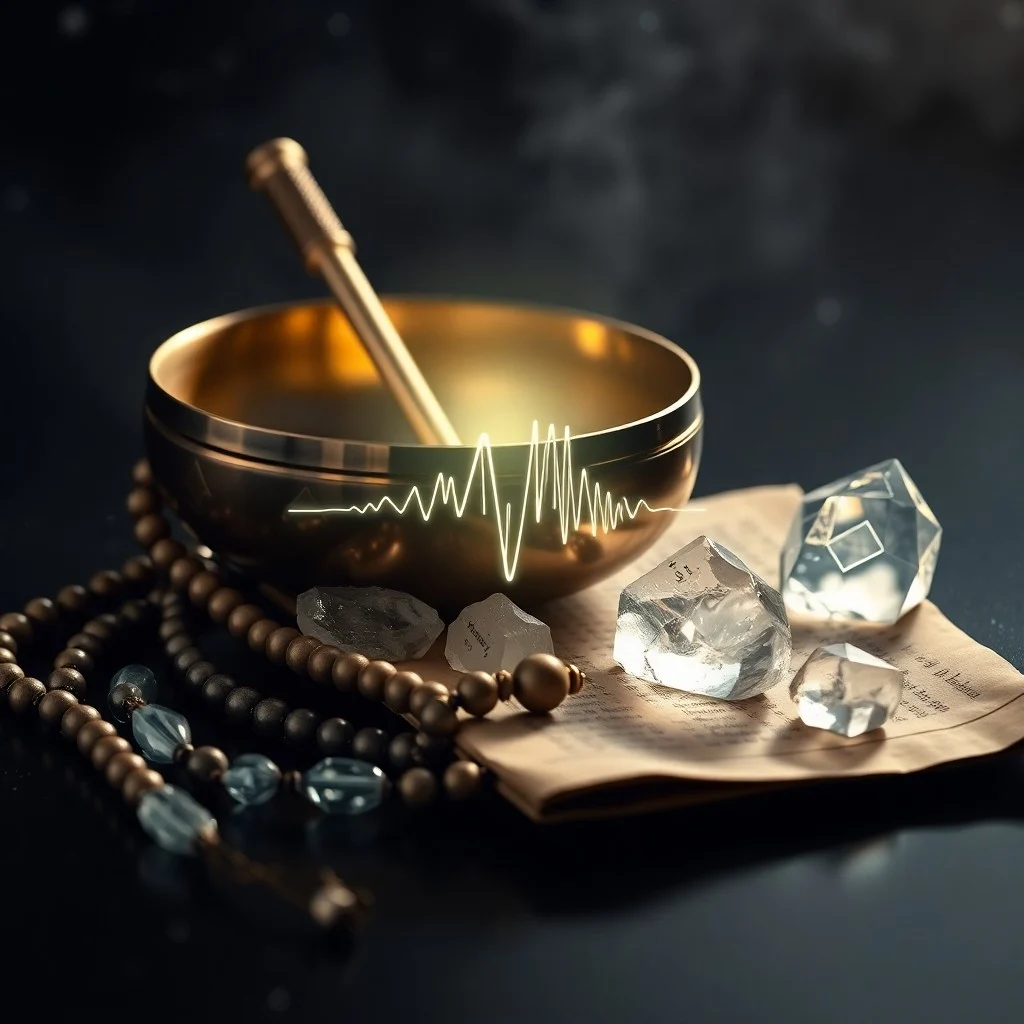
Tarot Quantum Mechanics Intersecting Divination Reality for holistic well-being.
Key Types of Frequency Therapy:
- Bioresonance Therapy (BRT): This therapy uses an electronic device to measure and analyze the electromagnetic frequencies emitted by the body. It then generates "inverted" or harmonizing frequencies, which are fed back into the body to cancel out or rebalance pathological frequencies. BRT is often used for allergy treatment, detoxification, and pain relief.
- Pulsed Electromagnetic Field (PEMF) Therapy: PEMF devices emit electromagnetic fields that pulse at specific frequencies. These fields are believed to penetrate cells, stimulating cellular repair, reducing inflammation, and improving circulation. PEMF therapy is widely used for chronic pain, bone healing, and neurological conditions, with a growing body of scientific evidence supporting its efficacy.
- Rife Frequencies and Devices: Inspired by Royal Rife's original work, modern Rife machines generate specific frequencies that are believed to resonate with and destroy pathogens (bacteria, viruses, fungi) without harming healthy cells. While many Rife devices are available, their therapeutic claims often lack robust scientific validation and are not recognized by mainstream medical authorities.
- Microcurrent Therapy: This involves applying very low-level electrical currents to the body, often in the microampere range. These currents are thought to mimic the body's natural bioelectrical signals, promoting ATP production (cellular energy), tissue repair, and pain reduction. Microcurrent therapy is used in sports medicine, wound healing, and facial rejuvenation.
The scientific community's stance on frequency therapy varies greatly depending on the modality. PEMF therapy, for instance, has gained significant traction and is FDA-approved for certain conditions, with numerous studies supporting its benefits. Other modalities, like bioresonance and Rife therapy, remain largely outside mainstream acceptance, primarily due to a lack of large-scale, peer-reviewed clinical trials. However, proponents often point to anecdotal successes and the theoretical plausibility derived from biophysics, urging for more research into these potentially transformative therapies.
Integrating Vibrational Medicine into Holistic Health
Vibrational medicine is rarely presented as a standalone cure but rather as a complementary approach within a broader holistic health paradigm. Its strength lies in addressing the energetic and subtle aspects of well-being that conventional medicine may not fully encompass. Integrating these therapies can enhance the effectiveness of other treatments and support the body's natural healing processes.
For individuals seeking a more comprehensive approach to health, vibrational modalities can offer tools for stress reduction, emotional balance, and spiritual growth. The emphasis on harmony and resonance aligns perfectly with the holistic view that true health involves the balance of mind, body, and spirit. Practitioners often combine different vibrational techniques with dietary changes, lifestyle adjustments, and psychological support to create personalized wellness plans.
The World Health Organization (WHO) acknowledges traditional and complementary medicine as a significant part of healthcare delivery worldwide. While specific vibrational therapies may not be explicitly endorsed, the WHO's strategy emphasizes the integration of traditional medicine into national health systems, recognizing its potential to contribute to health and well-being, especially in areas where conventional medicine may not fully address patient needs.
This perspective encourages further research and regulation to ensure safety and efficacy, paving the way for a more integrated future of healthcare where both conventional and complementary approaches can coexist and benefit patients.
The integration of vibrational medicine also highlights the importance of individual experience and subjective well-being. Many people report profound shifts and improvements in their health after engaging with these therapies, even if the mechanisms are not yet fully understood by conventional science. This patient-centered approach, where personal experience is valued, is a hallmark of holistic healthcare.
Future Directions and Research in Vibrational Medicine
The field of vibrational medicine is dynamic and evolving, with ongoing research aiming to unravel its complexities and validate its therapeutic potential. Advances in quantum biology, biophysics, and neuroscience are providing new tools and theoretical frameworks to explore how subtle energies interact with biological systems. This interdisciplinary approach is crucial for moving vibrational therapies from the realm of alternative practice into mainstream acceptance.
Future research will likely focus on:
- Mechanism Elucidation: Deeper understanding of how specific frequencies and vibrations interact at the cellular and molecular level, influencing gene expression, protein synthesis, and cellular communication.
- Standardization and Dosimetry: Developing standardized protocols and precise dosimetry for various vibrational therapies to ensure consistent and reproducible results, which is essential for clinical trials.
- Clinical Trials: Conducting large-scale, randomized controlled trials to evaluate the efficacy of vibrational therapies for specific health conditions, comparing them against placebos and conventional treatments.
- Technological Innovation: Developing more sophisticated devices for measuring and applying bioenergetic frequencies, potentially leading to personalized vibrational medicine tailored to an individual's unique energetic blueprint.
- Integration with Conventional Medicine: Exploring safe and effective ways to integrate vibrational therapies into existing healthcare systems, offering patients a wider range of therapeutic options.
As our understanding of energy and consciousness continues to expand, vibrational medicine holds the promise of revolutionizing healthcare by addressing the root energetic imbalances that contribute to disease. While challenges remain in terms of scientific validation and regulatory acceptance, the potential for non-invasive, holistic healing approaches is immense, offering hope for a future where health is viewed and treated in its full energetic complexity.
Fuente: Contenido híbrido asistido por IAs y supervisión editorial humana.


Comments
Post a Comment