
AI Dream Interpretation: Decoding Subconscious Symbolism
AI Dream Interpretation: Advanced Algorithmic Decoding of Subconscious Symbolism & Collective Unconscious
The enigmatic world of dreams has captivated humanity for millennia, serving as a profound conduit to our inner landscapes and, some believe, to universal truths. From ancient shamans to modern psychoanalysts, the quest to decipher these nocturnal narratives has been a constant. Today, with the advent of artificial intelligence, this age-old pursuit is entering an unprecedented era, promising advanced algorithmic decoding of subconscious symbolism and a deeper understanding of the collective unconscious.
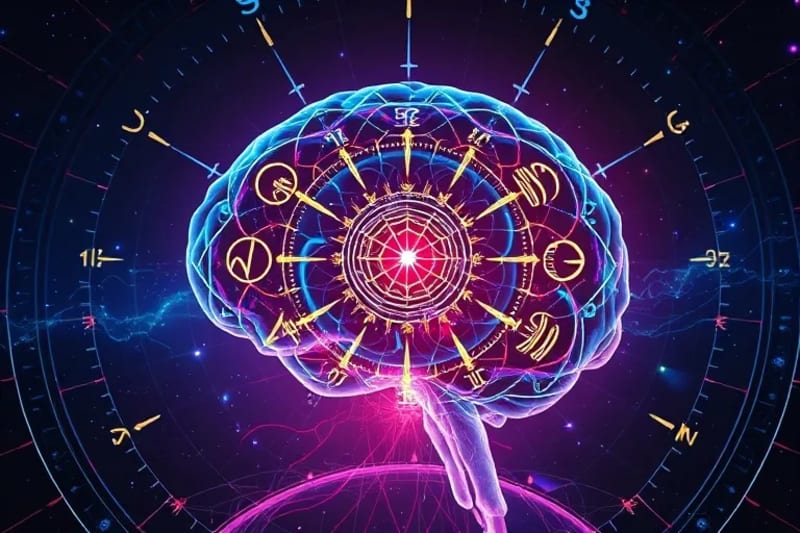 Precursors intellectuales, diagramas fundamentales y representaciones conceptuales que forjaron la visión de la interpretación onírica asistida por IA sobre la conciencia y el simbolismo.
Fuente visual sujeta a disponibilidad del ecosistema: Wikimedia Commons bajo licencia CC BY-SA 4.0 o renderizado conceptual IA.
Traditional dream interpretation, rooted in psychology and esotericism, relies heavily on subjective analysis, often influenced by the interpreter's theoretical framework and the dreamer's personal history. While invaluable, this approach can be time-consuming and prone to individual biases. The integration of AI offers a novel pathway, leveraging computational power to process vast amounts of data, recognize complex patterns, and potentially uncover insights that elude human perception.
This article delves into the cutting-edge methodologies employed by AI in dream analysis, exploring how machine learning, natural language processing (NLP), and deep learning algorithms are being trained to identify recurring symbols, thematic structures, and emotional nuances within dream narratives. We will also examine the ambitious goal of connecting individual dream experiences to the broader concept of the collective unconscious, as theorized by Carl Jung, and the ethical considerations inherent in such advanced technological applications.
Table of Contents
- Historical Context of Dream Interpretation
- AI Methodologies in Dream Analysis
- Decoding Subconscious Symbolism
- The Collective Unconscious and AI
- Challenges and Limitations
- Ethical Implications and Future Prospects
Historical Context of Dream Interpretation
Throughout history, dreams have been regarded as messages from deities, omens of the future, or windows into the soul. Ancient civilizations, such as the Egyptians and Mesopotamians, meticulously recorded and interpreted dreams, believing them to hold divine guidance or prophetic warnings. In Greek and Roman cultures, dream interpretation was often intertwined with medicine and philosophy, with figures like Aristotle exploring their physiological and psychological origins.
The modern era saw the rise of psychoanalytic theories, most notably Sigmund Freud's work on dream analysis as a "royal road to the unconscious." Freud posited that dreams are disguised fulfillments of repressed wishes, with manifest content (what is remembered) concealing latent content (the true, unconscious meaning). Carl Jung, a contemporary of Freud, expanded on this, introducing the concept of the collective unconscious and archetypes, universal patterns and images derived from the shared experiences of humanity.
These foundational theories, while differing in their specifics, underscore the profound belief that dreams are not random neurological firings but rather meaningful expressions of our inner world. The challenge has always been to systematically and objectively unlock these meanings, a task that AI is now poised to revolutionize. Understanding these historical perspectives is crucial for appreciating the depth and complexity that AI aims to address in dream interpretation.
AI Methodologies in Dream Analysis
The application of AI to dream interpretation involves several sophisticated methodologies, primarily drawing from the fields of machine learning, natural language processing (NLP), and deep learning. These techniques enable AI systems to process and analyze vast quantities of dream narratives, identifying patterns and correlations that might be imperceptible to human analysts.
 A visual representation of AI mapping subconscious thought through interconnected symbols and neural pathways.
Natural Language Processing (NLP): At the core of AI dream interpretation is NLP, which allows machines to understand, interpret, and generate human language. Dream narratives, often rich in metaphor and abstract imagery, are fed into NLP models. These models can identify key entities (people, objects, places), sentiments (emotions expressed), and thematic elements within the text. Advanced NLP techniques, such as semantic analysis and topic modeling, can extract deeper meanings and recurring motifs from seemingly disparate dream elements.
Machine Learning (ML) and Deep Learning (DL): ML algorithms are trained on extensive datasets of dream reports, often paired with their traditional interpretations or psychological profiles of the dreamers. Through supervised learning, the AI learns to associate specific symbols or narrative structures with particular psychological states, emotional conflicts, or life events. Deep learning, a subset of ML utilizing neural networks, can identify more intricate and hierarchical patterns, mimicking the complex layers of the human subconscious. This allows for the recognition of subtle connections that might indicate underlying psychological dynamics.
Symbolic AI and Knowledge Graphs: Beyond statistical pattern recognition, some AI approaches incorporate symbolic AI, which uses explicit representations of knowledge and reasoning. This involves building knowledge graphs that map relationships between dream symbols, cultural meanings, mythological archetypes, and psychological concepts. For instance, a "snake" might be linked to transformation, danger, or healing, depending on context and cultural database. This allows the AI to perform more nuanced, context-aware interpretations, moving beyond mere statistical correlation to a more semantic understanding.
The synergy of these methodologies enables AI to not only identify individual symbols but also to understand their interplay within the broader narrative of a dream, offering a holistic and data-driven interpretative framework. This advanced approach promises to bridge the gap between subjective human insight and objective data analysis, providing a more comprehensive understanding of dream content. For those interested in the broader implications of consciousness and technology, exploring topics like Quantum Physics Consciousness Spiritual Perspective New Age can provide a complementary view on how technology intersects with the esoteric.
Decoding Subconscious Symbolism
The subconscious mind communicates through a rich tapestry of symbols, metaphors, and narratives. AI's ability to decode this symbolism lies in its capacity to analyze vast datasets and identify recurring patterns that transcend individual experiences. Unlike human interpreters who might rely on a limited set of personal associations or theoretical frameworks, AI can draw from a global lexicon of symbolic meanings.
AI systems are trained on diverse sources, including psychological texts, mythological dictionaries, cultural studies, and even user-submitted dream journals. This training allows them to build a comprehensive "symbolic dictionary" that is constantly updated and refined. When a dream narrative is input, the AI can cross-reference its elements against this dictionary, identifying potential meanings and their contextual relevance. For example, a dream about "flying" might be interpreted as a desire for freedom, escape, or achievement, depending on other elements present in the dream and the dreamer's reported emotional state.
Furthermore, AI can detect subtle shifts in symbolic meaning over time within an individual's dream patterns. By tracking a series of dreams, the algorithm can identify evolving themes, unresolved conflicts, or emerging psychological insights. This longitudinal analysis provides a dynamic understanding of the dreamer's subconscious processes, offering a more personalized and evolving interpretation than a single, static analysis.
The power of algorithmic decoding extends to identifying not just individual symbols but also the relationships between them. A dream featuring a "house" and a "storm" might be interpreted differently than a dream with a "house" and a "garden." AI can map these interconnections, revealing the complex narrative structures that the subconscious constructs. This capability is particularly useful in understanding how various aspects of a dreamer's life or psychological state are represented and processed during sleep.
The Collective Unconscious and AI
Carl Jung's concept of the collective unconscious posits a universal, inherited reservoir of experiences and patterns, common to all humanity, expressed through archetypes. This realm, distinct from the personal unconscious, contains primordial images and instincts that influence our thoughts, emotions, and behaviors. The idea that AI could tap into or even help map this collective domain is one of the most intriguing prospects of advanced dream interpretation.
 A conceptual rendering of a neural network interacting with universal archetypal symbols, representing AI's exploration of the collective unconscious.
AI can approach the collective unconscious by analyzing vast cross-cultural datasets of myths, folklore, religious texts, and historical dream records. By identifying recurring symbols, narratives, and character types across diverse cultures and time periods, AI can statistically validate the existence and prevalence of Jungian archetypes. For instance, the "hero's journey" or the "shadow" archetype might manifest in strikingly similar ways across seemingly unrelated dream narratives and cultural stories, which AI can detect and categorize.
This comparative analysis allows AI to build a global database of archetypal patterns, providing a framework against which individual dreams can be measured. When an AI identifies an archetypal symbol in a personal dream, it can then provide interpretations that connect the dreamer's individual experience to these universal human themes. This not only enriches the interpretation but also offers a sense of connection to a larger human narrative, fostering a deeper understanding of self in relation to the collective.
While AI cannot "experience" the collective unconscious in the same way a human might, its ability to process and synthesize massive amounts of cultural and symbolic data offers an unprecedented tool for mapping its contours. This technological approach to understanding shared human patterns aligns with the exploration of Digital Esoteric Symbolism: Decoding Virtual World Meanings, where algorithms are used to find hidden patterns in digital expressions.
Challenges and Limitations
Despite its immense potential, AI dream interpretation faces several significant challenges and limitations. The inherently subjective and personal nature of dreams makes them particularly difficult for purely algorithmic systems to fully grasp. Human experience is nuanced, and a symbol's meaning can vary dramatically based on an individual's unique life history, cultural background, and current emotional state.
One primary challenge is the "grounding problem" – how to connect abstract symbolic interpretations back to the concrete reality of the dreamer's life. While AI can identify patterns, it may struggle to provide actionable insights or emotional resonance without human context. The emotional intelligence and empathetic understanding of a human therapist or interpreter are difficult, if not impossible, to replicate in an algorithm. Furthermore, the quality and quantity of training data are crucial. If the datasets used to train AI are biased or incomplete, the interpretations will reflect these flaws.
Another limitation lies in the dynamic and fluid nature of dreams. Dream narratives often defy linear logic, featuring sudden shifts, contradictions, and surreal elements. AI models, while adept at pattern recognition, may find it challenging to interpret these non-linear structures without losing critical contextual information. The "black box" nature of some deep learning models also presents a challenge; it can be difficult to understand *why* an AI arrived at a particular interpretation, making it harder to verify its accuracy or refine its approach.
Finally, privacy and data security are paramount concerns. Dream journals often contain highly sensitive personal information. Ensuring that this data is collected, stored, and processed ethically and securely is critical to maintaining trust and preventing misuse. Without robust ethical frameworks, the potential benefits of AI dream interpretation could be overshadowed by privacy breaches or misinterpretations that cause psychological distress.
Ethical Implications and Future Prospects
The ethical landscape of AI dream interpretation is complex and requires careful consideration. As AI systems become more sophisticated in understanding our subconscious, questions arise about data ownership, consent, and the potential for manipulation. Who owns the insights derived from your dreams? How can we ensure that interpretations are used for personal growth rather than commercial exploitation or surveillance?
The potential for misinterpretation is also a significant concern. A poorly trained or biased AI could provide interpretations that are not only inaccurate but potentially harmful, leading individuals down incorrect psychological paths or causing undue anxiety. Therefore, robust validation mechanisms and human oversight are indispensable. AI should function as a tool to augment human understanding, not replace it entirely, ensuring that the final interpretative layer is always guided by human empathy and ethical judgment.
Looking to the future, AI dream interpretation holds immense promise. It could democratize access to dream analysis, making it available to a wider audience beyond those who can afford traditional therapy. Personalized AI dream coaches could offer daily insights, helping individuals track their emotional well-being and subconscious patterns over time. Furthermore, the ability to analyze global dream patterns could offer unprecedented insights into the collective human psyche, potentially revealing emerging societal anxieties, hopes, or shifts in the collective unconscious.
The integration of AI with other biometric data, such as sleep tracking and physiological responses during REM sleep, could create a holistic picture of our nocturnal experiences. This multi-modal approach could lead to more accurate and personalized interpretations, bridging the gap between the subjective narrative and objective biological markers. The journey into the AI-assisted decoding of dreams is just beginning, promising a future where the mysteries of the subconscious are illuminated with unprecedented clarity, offering new avenues for self-discovery and collective understanding. This journey, much like the path of Biophilic Manifestation: Nature's Blueprint for Intentions, emphasizes the intricate connection between inner states and external realities.
Ultimately, the most effective approach will likely be a hybrid one, where AI provides data-driven insights and pattern recognition, while human experts offer the nuanced contextual understanding, emotional support, and ethical guidance necessary for truly meaningful dream interpretation. This collaboration between human intuition and artificial intelligence could unlock the deepest secrets of our dreaming minds.
Related Searches
- Quantum Physics Consciousness Spiritual Perspective New Age
- Digital Esoteric Symbolism: Decoding Virtual World Meanings
- Biophilic Manifestation: Nature's Blueprint for Intentions
- Synastry Attachment Theory Bridging Relationship Dynamics
- Urban Shamanism: Connecting City Spirits, Ley Lines, Landscapes
- Runes Divination: Interpreting Ancient Nordic Symbols
- Uranus Sign: Innovation, Rebellion, Change Explained
Source: Hybrid content assisted by AI and human editorial supervision.


Comments
Post a Comment