
Zodiac Myths Archetypes Modern Self-Discovery Guidance
The celestial tapestry has captivated humanity for millennia, with its constellations weaving tales of gods, heroes, and mythical beasts. These narratives, deeply embedded in the fabric of ancient cultures, form the bedrock of what we now recognize as zodiac myths and archetypal astrology. Far from being mere superstitions, these ancient stories and symbolic frameworks offer a powerful lens through which to understand the human psyche and navigate the complexities of modern life. They provide a timeless form of spiritual guidance, inviting individuals on a journey of profound self-discovery.
In an era dominated by rapid technological advancement and often superficial connections, the search for deeper meaning and personal authenticity has become more pressing than ever. Zodiac myths and archetypes serve as a rich reservoir of wisdom, offering insights into our inherent strengths, challenges, and life's purpose. By exploring these ancient narratives, we can uncover universal patterns of behavior and motivation that resonate within our own experiences, fostering a greater sense of connection to ourselves and the cosmos.

An ancient celestial map reveals the timeless wisdom embedded in zodiac constellations, guiding modern self-discovery.
This exploration delves into how these ancient systems, often dismissed as esoteric, can be recontextualized as practical tools for personal growth and spiritual enlightenment. We will examine their historical origins, define the concept of archetypes within an astrological framework, and illustrate their modern applications. The goal is to provide an introductory and educational perspective, making these profound concepts accessible to those seeking a deeper understanding of themselves and their place in the universe.
The Ancient Roots of Zodiacal Lore
The origins of the zodiac can be traced back to ancient Mesopotamia, particularly to the Babylonians, who were meticulous observers of the night sky. Around the 2nd millennium BCE, they developed a system to track the sun's path through twelve constellations, assigning symbolic meanings to each. These early astronomical observations were intrinsically linked with their religious beliefs and attempts to predict earthly events, laying the groundwork for what would later become astrology.
From Babylon, this knowledge spread to Egypt and then to Greece, where it was further refined and integrated into Hellenistic culture. The Greeks, with their rich mythological tradition, imbued these celestial patterns with their own pantheon of gods and heroes. For instance, the constellation Aries became associated with the Golden Fleece, Taurus with Zeus in bull form, and Gemini with the divine twins Castor and Pollux. This fusion of astronomical observation with mythic storytelling gave birth to the zodiac as we largely know it today.
The zodiac, therefore, is not merely a calendar of star signs but a complex system of symbolic narratives. Each sign carries a legacy of stories that reflect universal human experiences, challenges, and virtues. These myths served as a way for ancient peoples to make sense of the cosmos, understand their place within it, and interpret the forces that shaped their lives. They represent humanity's earliest attempts at spiritual guidance, offering allegories for life's journey.
The enduring power of these myths lies in their ability to transcend cultural and historical boundaries. They speak to fundamental aspects of the human condition, providing a framework for understanding personality traits, motivations, and potential life paths. This historical context is crucial for appreciating how these ancient systems can still offer relevant insights in our contemporary world, bridging the gap between the past and present in the quest for self-knowledge.
Understanding Archetypes in Astrology
The concept of archetypes, popularized by Swiss psychiatrist Carl Jung, refers to universal, archaic patterns and images that derive from the collective unconscious and are the psychic counterpart of instinct. In astrology, each zodiac sign can be understood as embodying a specific archetype, representing a fundamental pattern of human behavior, motivation, and expression. These archetypes are not rigid definitions but rather symbolic blueprints that influence our personalities and life experiences.
For example, Aries, the first sign of the zodiac, embodies the archetype of the Warrior or Pioneer. Its core traits include courage, initiative, and a pioneering spirit, driven by a desire for new beginnings. Taurus, on the other hand, aligns with the archetype of the Builder or Earth Mother, characterized by stability, sensuality, and a strong connection to the material world. These archetypes provide a deeper, more nuanced understanding of the zodiac signs beyond simple personality descriptions.

Abstract symbols visually represent the core energies of various zodiac archetypes, offering a glimpse into their essence.
Understanding these archetypes helps us recognize the universal patterns at play in our own lives and in the lives of others. It moves beyond a superficial understanding of "what sign someone is" to a deeper appreciation of the underlying psychological and spiritual forces. This archetypal framework is not limited to the twelve zodiac signs; each planet, house, and aspect in a natal chart also carries its own archetypal significance, contributing to a complex and highly individualized psychological profile. For further exploration of these celestial influences, consider delving into Planetary Dignities: Forecasting Life's Astrological Cycles.
Here is a simplified table illustrating some key zodiac archetypes and their core traits:
| Zodiac Sign | Associated Archetype | Core Traits |
|---|---|---|
| Aries | The Warrior, The Pioneer | Courageous, impulsive, leader, initiator |
| Taurus | The Builder, The Earth Mother | Stable, sensual, persistent, grounded |
| Gemini | The Communicator, The Trickster | Intellectual, adaptable, curious, versatile |
| Cancer | The Nurturer, The Mother | Emotional, protective, empathetic, home-loving |
| Leo | The King/Queen, The Performer | Generous, confident, dramatic, creative |
| Virgo | The Healer, The Analyst | Analytical, practical, diligent, service-oriented |
| Libra | The Peacemaker, The Artist | Balanced, diplomatic, charming, just |
| Scorpio | The Transformer, The Detective | Intense, passionate, secretive, regenerative |
| Sagittarius | The Explorer, The Philosopher | Optimistic, adventurous, wise, freedom-loving |
| Capricorn | The Achiever, The Father | Ambitious, disciplined, responsible, practical |
| Aquarius | The Innovator, The Humanitarian | Original, independent, progressive, intellectual |
| Pisces | The Mystic, The Dreamer | Compassionate, artistic, intuitive, spiritual |
Modern Application: Self-Discovery Through Zodiacal Narratives
In contemporary times, zodiac myths and archetypes offer a powerful framework for personal introspection and self-discovery. Understanding one's sun sign archetype, for instance, can illuminate inherent strengths and predispositions. It provides a foundational understanding of our core identity and how we are likely to approach life's challenges and opportunities. This self-awareness is the first step towards personal growth, allowing us to lean into our natural talents and consciously work on areas that require development.
Beyond the sun sign, a comprehensive natal chart reveals a complex interplay of various planetary archetypes, each influencing different facets of our personality and life. The Moon's position, for example, speaks to our emotional nature and inner world, while the Ascendant (Rising Sign) reflects our outer persona and how we are perceived by others. By integrating these multiple archetypal influences, individuals can gain a holistic understanding of their unique psychological makeup, moving beyond simplistic horoscopes to a profound self-analysis.
The process of self-discovery through zodiacal narratives is not about destiny but about potential. It encourages self-reflection, prompting questions like: "How does the archetype of the Warrior manifest in my life?" or "Am I embodying the highest expression of my Earth Mother archetype, or am I stuck in its shadow aspects?" This introspective journey empowers individuals to take conscious control of their personal development, fostering a deeper connection to their authentic self. For those interested in deeper astrological insights, exploring Monthly Horoscope Insights: New Moon Full Moon Energies can offer valuable context.
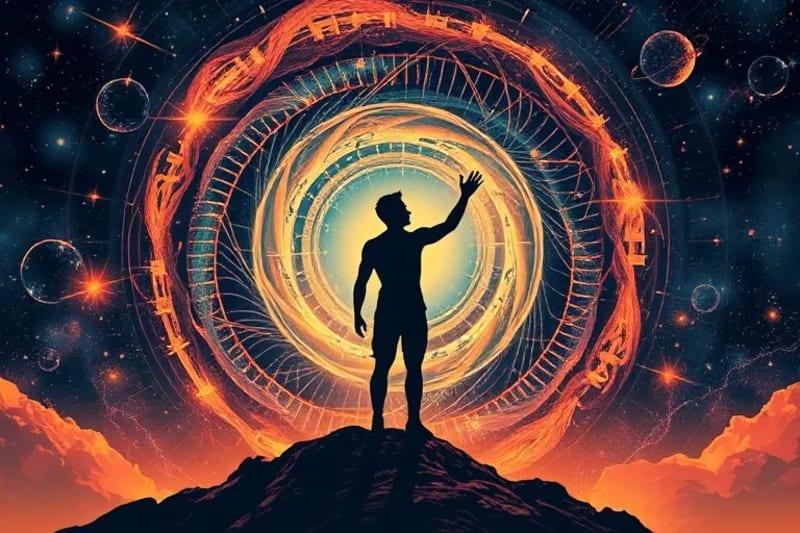
A human silhouette engaging with cosmic energy symbolizes the profound journey of self-discovery and personal transformation.
This approach also extends to understanding relationships and interactions with others. Recognizing the archetypal patterns in those around us can foster empathy and improve communication. It allows us to appreciate different perspectives and motivations, leading to more harmonious personal and professional connections. The zodiac, in this sense, becomes a language for understanding the diverse expressions of human nature.
Integrating Shadow Aspects and Growth Opportunities
Every archetype, while embodying positive traits, also possesses a "shadow" side – less desirable or undeveloped characteristics that can hinder personal growth. For instance, the Warrior archetype of Aries, while courageous, can also manifest as impulsiveness, aggression, or a lack of foresight. Similarly, the Builder of Taurus, known for stability, might exhibit stubbornness, resistance to change, or materialism. Acknowledging and integrating these shadow aspects is crucial for holistic self-understanding and true spiritual development.
Jungian psychology emphasizes that true individuation involves confronting and integrating the shadow, rather than suppressing it. In the context of zodiacal archetypes, this means recognizing when our inherent traits are operating from a lower, less evolved state. It involves asking ourselves how our natural tendencies might be holding us back or causing conflict in our lives. This honest self-assessment is not about self-criticism but about conscious awareness and the opportunity for transformation.
The journey of integrating opposing archetypal energies is also a significant part of this process. For example, a person strong in the Aries Warrior archetype might benefit from cultivating the diplomatic and balancing qualities of Libra. This integration leads to a more well-rounded and resilient personality, capable of navigating life's challenges with greater wisdom and grace. It is a continuous process of refinement, moving towards a more balanced and authentic expression of one's full potential. Exploring Zodiac Archetypes Jungian Shadow: Integrating Natal Chart can provide further insights into this crucial aspect of self-discovery.
By consciously working with both the light and shadow aspects of our archetypal makeup, we unlock profound growth opportunities. This allows us to transmute potential weaknesses into sources of strength and to live more authentically in alignment with our deepest selves. It’s a dynamic process that fosters resilience, self-acceptance, and a deeper understanding of the human condition.
Zodiac Myths as Spiritual Guidance
Beyond their psychological insights, zodiac myths offer a profound source of spiritual guidance. These ancient narratives are not merely historical curiosities; they are allegories rich with timeless lessons applicable to the modern human experience. Each myth associated with a zodiac sign tells a story of trials, triumphs, and transformations, mirroring the spiritual journey of self-discovery that many undertake.
Consider the myth of the Minotaur and Theseus, often associated with Taurus and its shadow aspects of being trapped or consumed by primal urges. This story can serve as a spiritual guide for individuals facing their own inner "minotaurs"—their fears, addictions, or destructive patterns. The hero's journey within these myths provides a template for navigating personal challenges, finding courage, and ultimately achieving liberation and self-mastery. The enduring power of these narratives lies in their ability to resonate with our deepest spiritual longings and provide symbolic pathways for growth.
The zodiacal myths connect us to a broader cosmological and spiritual context, reminding us that our individual lives are part of a larger, interconnected universe. They encourage us to look beyond the mundane and to seek meaning in the patterns of existence, both celestial and terrestrial. This connection to ancient wisdom traditions can provide a sense of grounding and purpose in a world that often feels chaotic and disconnected. For those seeking to align their intentions with cosmic principles, exploring Celestial Mechanics Manifestation: Aligning Intentions Cosmic Cycles offers a complementary perspective.
Ultimately, interpreting zodiac myths as spiritual guidance involves a process of personal hermeneutics. It's about finding personal resonance within these universal stories, extracting their wisdom, and applying it to our unique life circumstances. This active engagement transforms passive reception into an empowering tool for spiritual evolution, fostering a deeper connection to our inner wisdom and the collective human journey.
Conclusion
The rich tapestry of zodiac myths and archetypal narratives offers far more than just astrological predictions; it provides a profound and timeless system for modern spiritual guidance and self-discovery. By delving into the ancient roots of these celestial stories, understanding the universal archetypes they represent, and applying these insights to our contemporary lives, we unlock a powerful path to personal growth. This journey involves not only recognizing our inherent strengths but also courageously confronting and integrating our shadow aspects, leading to a more holistic and authentic self.
Embracing the wisdom embedded in these myths allows us to see our individual experiences as part of a larger, meaningful cosmic drama. They serve as allegories for our personal trials and triumphs, offering spiritual lessons that transcend time and culture. In a world constantly seeking meaning, the zodiacal archetypes provide a robust framework for introspection, fostering empathy, and deepening our connection to both ourselves and the intricate dance of the universe. This educational approach encourages a conscious engagement with astrology as a tool for profound self-awareness and spiritual evolution.
Source: Hybrid content assisted by AI and human editorial supervision.


Comments
Post a Comment