
Celestial Mechanics Mundane Astrology: Interpreting Cosmic Language
Mundane astrology, often overlooked in favor of personal birth chart analysis, offers a profound lens through which to understand global events, societal shifts, and the collective human experience. It is a specialized branch of astrology that applies astrological principles to nations, cities, political leaders, and major world occurrences. At its core lies the intricate dance of celestial mechanics, the precise and predictable movements of planets, stars, and other cosmic bodies. This article delves into how these mechanical movements translate into a mystical language, providing insights into the ebb and flow of earthly affairs.
The universe, in its grand design, operates with an astonishing degree of precision. From the elliptical orbits of planets to the rhythmic cycles of lunations and eclipses, every celestial event is a manifestation of underlying mechanical laws. For the mundane astrologer, these movements are not merely physical phenomena but are imbued with symbolic meaning, forming a complex narrative that reflects and influences life on Earth. Understanding this mystical language requires a blend of astronomical knowledge, historical awareness, and intuitive interpretation.
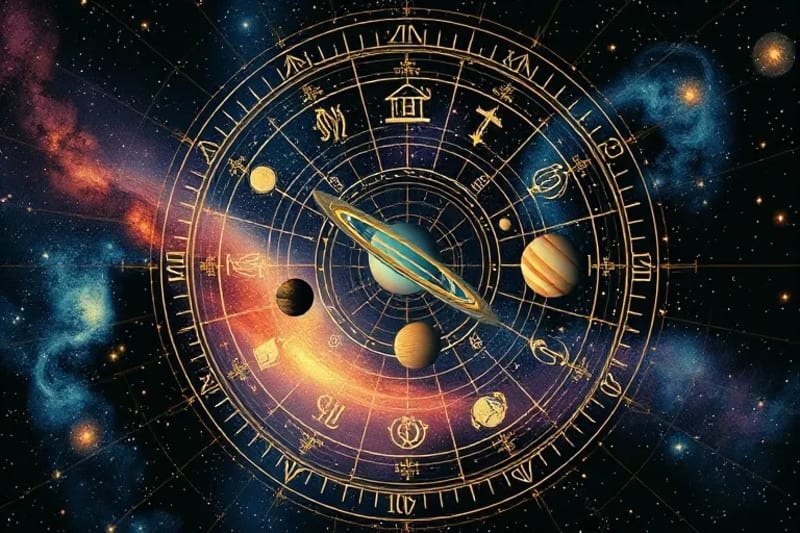
Precursors intellectuales, diagramas fundamentales y representaciones conceptuales que forjaron la visión de la astrología mundana sobre la mecánica celeste y su impacto global.
Fuente visual sujeta a disponibilidad del ecosistema: Wikimedia Commons bajo licencia CC BY-SA 4.0 o renderizado conceptual IA.
Table of Contents
- Foundations of Celestial Mechanics in Mundane Astrology
- Planetary Motions and Cycles: The Rhythmic Pulse
- Eclipses and Lunations: Cosmic Reset Points
- Planetary Ingresses and Aspects: Shifting Energies
- Mundane Astrology: A Macro Perspective on Earthly Affairs
- Interpreting the Mystical Language: Symbolism and Cycles
- Challenges and Ethical Considerations in Mundane Interpretation
- Conclusion: Unlocking Cosmic Insights for a Deeper Understanding
Foundations of Celestial Mechanics in Mundane Astrology
Celestial mechanics, in an astrological context, refers to the study of the positions and movements of celestial bodies as they relate to astrological interpretation. Unlike pure astronomy, which focuses solely on the physical properties and dynamics, astrological celestial mechanics assigns symbolic meaning to these movements. For instance, a planet's retrograde motion is not just an optical illusion from Earth's perspective; it signifies a period of introspection, review, or delays in the areas governed by that planet.
The fundamental components of celestial mechanics that form the bedrock of mundane astrology include planetary orbits, direct and retrograde motions, the phases of the Moon, eclipses, and the precise angles (aspects) formed between planets. Each of these elements contributes a unique "word" or "phrase" to the mystical language astrologers seek to decipher. Ancient civilizations, as explored in Astro-Archaeology Unearthing Ancient Celestial Narratives Civilizations, were acutely aware of these celestial patterns and integrated them into their societal structures and spiritual beliefs, recognizing their profound influence on human affairs.
Planetary Motions and Cycles: The Rhythmic Pulse
The planets, each associated with specific archetypal energies, move through the zodiacal signs at varying speeds, creating a constant flux of influences. Their journey through the 12 signs and houses of the zodiac forms cycles that repeat over time, creating predictable patterns that mundane astrologers analyze. These cycles can range from the relatively fast lunar cycle to the much slower cycles of outer planets like Pluto, which takes approximately 248 years to complete one orbit around the Sun.
Consider the cycles of Jupiter and Saturn, often referred to as the "social planets." Their conjunctions, occurring roughly every 20 years, have historically coincided with significant socio-political shifts and the rise and fall of ideologies. The precise timing and zodiacal sign of these conjunctions offer clues about the nature of the upcoming era. Similarly, the slower-moving outer planets (Uranus, Neptune, Pluto) mark generational and epochal changes, their transits often correlating with major technological advancements, spiritual awakenings, or profound societal transformations.

An astrolabe and map symbolize the blend of scientific observation and esoteric interpretation in celestial mechanics.
Eclipses and Lunations: Cosmic Reset Points
Eclipses, both solar and lunar, are among the most dramatic celestial events and hold immense significance in mundane astrology. They are often seen as cosmic reset points, marking periods of intensified change, revelations, and fated events on a global scale. A solar eclipse, representing a new beginning, can signify the start of new political regimes, economic policies, or cultural movements, often with an element of the unexpected or the sudden.
Lunar eclipses, conversely, are associated with culminations, endings, and emotional releases. They can bring hidden issues to light, expose corruption, or mark the conclusion of long-standing conflicts. The specific zodiacal sign and house in which an eclipse occurs provide further details about the areas of life that will be most affected. Beyond eclipses, the regular cycles of New Moons and Full Moons also play a crucial role, with New Moons initiating new cycles of activity and Full Moons bringing matters to a head or revealing their full scope.
Planetary Ingresses and Aspects: Shifting Energies
Planetary ingresses, the moments when a planet enters a new zodiac sign, mark a shift in the collective energetic landscape. For example, when Mars ingresses into a fiery sign like Aries, it can signal an increase in assertive actions, conflicts, or pioneering efforts globally. When Venus enters a harmonious sign like Libra, it might foster diplomatic efforts or focus on issues of justice and balance. These shifts are subtle but contribute significantly to the overall mundane astrological climate.
Aspects, the angular relationships between planets, are perhaps the most dynamic part of celestial mechanics in astrology. Conjunctions (0 degrees) merge energies, oppositions (180 degrees) create tension and awareness, squares (90 degrees) bring challenges and necessary action, and trines (120 degrees) offer ease and opportunity. In mundane astrology, these aspects between transiting planets can signify periods of international cooperation or conflict, economic booms or busts, or major societal breakthroughs. Understanding Advanced Aspect Patterns: Unlocking Hidden Potential is crucial for deciphering these complex interplays.
Mundane Astrology: A Macro Perspective on Earthly Affairs
Mundane astrology uses the same fundamental principles as natal astrology but applies them to collective entities. Instead of a birth chart for an individual, a mundane astrologer might cast a chart for the founding of a nation, the inauguration of a leader, or the moment a major event occurs. By analyzing the transits and progressions to these "mundane charts," astrologers can gain insights into the destiny and trajectory of nations and global trends.
For instance, the chart of a country can reveal its inherent strengths, weaknesses, and potential challenges. Planetary transits to this chart can indicate periods of economic prosperity, social unrest, political upheaval, or international relations. The concept of Astrological Houses: Angular, Succedent, Cadent Natal Energy is also vital here, as each house represents different sectors of a nation's life, such as its economy (2nd house), military (3rd/8th house), or foreign relations (7th/9th house).
The study of celestial mechanics in mundane astrology is not about predicting every minute detail, but rather about understanding the overarching themes and energies that shape our world. It provides a framework for comprehending why certain events occur at specific times and what underlying cosmic currents are at play.
This macro perspective helps us see beyond individual narratives to the larger patterns of human civilization and its interaction with the cosmos.
Interpreting the Mystical Language: Symbolism and Cycles
The interpretation of celestial mechanics in mundane astrology relies heavily on symbolism. Each planet, sign, and house carries a rich tapestry of meanings that must be carefully woven together. For example, Jupiter often symbolizes expansion, growth, and justice, while Saturn represents contraction, structure, and limitation. When these two planets form a challenging aspect, it might indicate a period of economic restraint or a re-evaluation of societal structures.
Beyond individual planetary meanings, mundane astrologers pay close attention to larger cycles. The synodic cycles of planets (the time it takes for two planets to return to the same aspect) are particularly telling. The Jupiter-Saturn cycle, for instance, has historically marked shifts in dominant economic and political paradigms. The Uranus-Pluto square of the 1960s correlated with widespread social revolution and counter-cultural movements, demonstrating the profound impact of these long-term planetary dialogues.

Abstract art depicting the unseen influences and complex interplay of cosmic energies on earthly events.
The interplay of these cycles creates a complex, multi-layered narrative. By synthesizing the information from planetary positions, aspects, ingresses, and eclipses, mundane astrologers construct a comprehensive picture of the global energetic landscape. This allows for a deeper understanding of historical patterns and potential future trends, providing context for current events that might otherwise seem chaotic or random.
Challenges and Ethical Considerations in Mundane Interpretation
While the mystical language of celestial mechanics offers profound insights, its interpretation in mundane astrology comes with significant challenges and ethical considerations. One primary concern is avoiding fatalism. Astrology, particularly mundane astrology, describes tendencies and potentials, not absolute certainties. Human free will and collective consciousness always play a role in how cosmic energies manifest.
Another challenge is the inherent complexity and the potential for misinterpretation. The sheer number of variables—planets, signs, houses, aspects, cycles, and different astrological systems—means that accurate and nuanced interpretation requires extensive knowledge and experience. Furthermore, mundane astrology often faces scientific skepticism, as its claims are not easily verifiable through conventional empirical methods. However, its historical correlation with major events suggests a pattern that warrants further exploration.
Ethically, astrologers must approach mundane predictions with responsibility and neutrality. The goal is to inform and provide context, not to incite fear or make definitive pronouncements that could be misused. The emphasis should always be on understanding the underlying energies and guiding principles, rather than on predicting specific disasters or triumphs. This approach ensures that the mystical language serves as a tool for collective awareness and growth.
Conclusion: Unlocking Cosmic Insights for a Deeper Understanding
The mystical language of celestial mechanics, as interpreted through mundane astrology, provides a fascinating and powerful framework for understanding the intricate relationship between the cosmos and our earthly existence. From the rhythmic pulse of planetary cycles to the dramatic shifts signaled by eclipses, every celestial movement contributes to a grand narrative that shapes nations, economies, and collective consciousness. By studying these patterns, we gain not only predictive insights but also a deeper appreciation for the interconnectedness of all things.
While the scientific community may view astrology with skepticism, the consistent historical correlations and the profound symbolic depth offered by mundane astrological analysis continue to captivate and inform those who seek a broader understanding of global trends. It encourages us to look beyond the immediate and recognize the larger cosmic forces at play, fostering a more informed and perhaps more harmonious approach to navigating the complexities of our shared world.
Explore Further: Related Insights
Source: Hybrid content assisted by AI and human editorial supervision.


Comments
Post a Comment