
Electional Astrology: Timing for Self-Improvement | StarPluto
Electional astrology, a specialized branch of astrological practice, offers a profound methodology for identifying the most auspicious moments to initiate endeavors. Unlike natal astrology, which analyzes the cosmic blueprint at birth, or horary astrology, which answers specific questions, electional astrology focuses on selecting a precise time to ensure the most favorable outcome for a particular action or project. This ancient technique, rooted in Hellenistic and medieval traditions, provides a powerful tool for personal development, allowing individuals to align their actions with supportive cosmic energies.
The core principle of electional astrology is that every moment carries a unique energetic signature, influenced by the positions and aspects of celestial bodies. By understanding these signatures, one can "elect" a moment that inherently supports the desired goal, whether it's launching a new business, starting a health regimen, embarking on a significant relationship, or initiating a personal transformation journey. This advanced astrological discipline moves beyond mere prediction, empowering individuals to actively co-create their future by leveraging cosmic timing.
Table of Contents
- What is Electional Astrology? Principles and Historical Context
- Key Astrological Factors in Electional Charts
- Applying Electional Astrology to Personal Development Goals
- Methodology for Electional Chart Selection
- Common Pitfalls and Considerations
- Ethical Considerations: Free Will and Destiny
- Conclusion: Harnessing Cosmic Timing for Self-Improvement
What is Electional Astrology? Principles and Historical Context
Electional astrology, also known as inceptional astrology, operates on the premise that the moment an event begins imprints its energetic signature upon that event, much like a birth chart defines an individual's life. The goal is to choose a "birth moment" for an enterprise that maximizes its potential for success and minimizes inherent challenges. This requires a sophisticated understanding of planetary dignities, aspects, house rulerships, and lunar phases.
Historically, electional astrology was a cornerstone of ancient civilizations, utilized by rulers, merchants, and individuals for everything from coronations and battles to marriages and agricultural plantings. Texts from Ptolemy, Al-Biruni, and medieval European astrologers detail intricate rules for elections, emphasizing the importance of a strong ascendant ruler, benefic planets in angular houses, and avoiding malefic aspects to critical points in the chart. Its resurgence in modern times reflects a growing interest in proactive self-empowerment and strategic life planning.
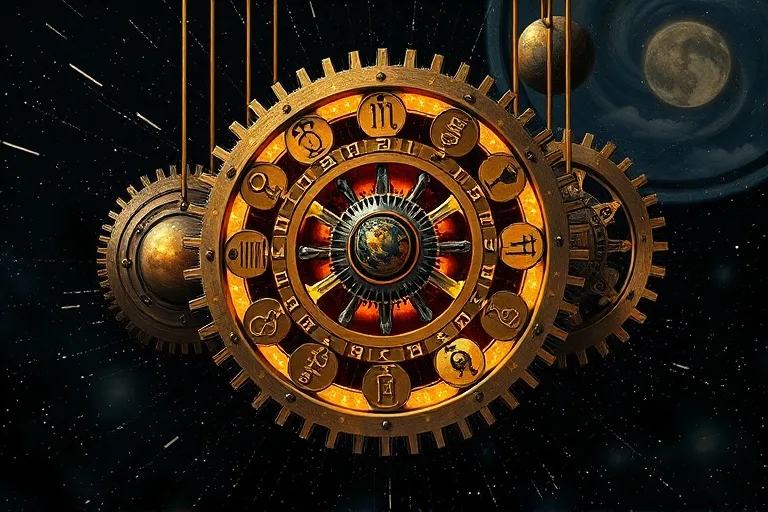
A digital illustration depicting the intricate cosmic clockwork of Tarot Quantum Mechanics Intersecting Divination Reality, where planetary gears and zodiac symbols align to influence auspicious timing for personal endeavors.
Key Astrological Factors in Electional Charts
Selecting an optimal electional chart involves a detailed analysis of several astrological components. The primary objective is to find a moment when the planetary energies are most conducive to the specific goal. This often means strengthening the planet ruling the matter at hand and ensuring it is well-aspected and dignified.
- The Ascendant and its Ruler: The Ascendant (rising sign) represents the endeavor itself. Its ruler should be strong by sign (exaltation or domicile), house (angular houses like 1st, 10th, 7th, 4th are preferred), and aspect (harmonious aspects to benefics). Avoiding affliction to the Ascendant ruler is paramount.
- The Moon: The Moon's condition is crucial as it signifies the unfolding of the event. A waxing Moon (moving towards fullness) is generally preferred for growth and initiation. The Moon should ideally be free of malefic aspects, especially squares or oppositions to Mars or Saturn, and not be "void of course" when initiating important matters.
- Planetary Dignities and Debilities: Planets are stronger when in their domicile or exaltation and weaker in their detriment or fall. For an election, the planet governing the matter should be in a strong, dignified position. For instance, if electing for a financial venture, Jupiter (expansion) or Venus (resources) should be well-placed.
- Aspects: Harmonious aspects (trines, sextiles) between the ruler of the Ascendant, the Moon, and the planet signifying the matter are highly desirable. Squares and oppositions, particularly from malefic planets (Mars, Saturn), should be avoided if possible, especially to the Ascendant, its ruler, or the Moon.
- House Rulerships: Each house corresponds to different areas of life. The house relevant to the goal should be strong, and its ruler well-placed. For example, for a career move, the 10th house and its ruler are critical.
- Fixed Stars: Advanced electional astrology may consider the conjunction of important planets or the Ascendant/Midheaven with benefic fixed stars, which can add significant power to an election.
Understanding these intricate layers allows for a nuanced selection process, moving beyond simplistic "good days" or "bad days" to pinpoint truly opportune moments. The interplay of these factors creates a dynamic energetic field that can either support or hinder an initiative, making the electional chart a powerful determinant of success.
Applying Electional Astrology to Personal Development Goals
The utility of electional astrology extends across a wide spectrum of personal development areas. By carefully selecting the timing, individuals can imbue their efforts with cosmic support, potentially accelerating progress and enhancing outcomes. This proactive approach transforms passive waiting into strategic action, aligning personal will with universal flow.

A still life photograph capturing the essence of , with tools for reflection and strategic timing.
Career Advancement and Business Ventures
For career-related goals, such as starting a new job, launching a business, or seeking a promotion, the 10th house (career, public image), 6th house (daily work, service), and 2nd house (finances) are paramount. The ruler of the 10th house should be strong, ideally in an angular house and well-aspected, especially by Jupiter (expansion) or Mercury (communication, business). The Moon should be waxing and free from malefic aspects. Avoiding Mercury retrograde for signing contracts or launching new initiatives is a common electional rule, as it can lead to communication breakdowns or reversals.
Health and Wellness Initiatives
When initiating a new diet, exercise routine, or medical treatment, the 6th house (health, daily routine) and 1st house (body, vitality) are key. The ruler of the 1st house should be strong and well-aspected, particularly by the Sun (vitality) or Jupiter (healing, growth). The Moon should be waxing for building health or waning for eliminating toxins. Avoiding Mars (inflammation, surgery) or Saturn (chronic issues) afflicting the 1st or 6th house is advisable. Electing for surgery often involves specific rules to minimize complications, such as avoiding Mars in the house of surgery.
Starting New Relationships or Projects
For new relationships (romantic or business partnerships) or collaborative projects, the 7th house (partnerships) and its ruler are central. Venus (love, harmony) should be well-placed and well-aspected, especially to the Ascendant ruler or the Moon. The Moon should be applying to a benefic planet or the ruler of the 7th house. For creative projects, the 5th house (creativity, self-expression) and its ruler, along with Venus and Neptune, would be important considerations. Ensuring a harmonious relationship between the planets involved in the election can foster long-term success and understanding.
Learning and Education
To begin a new course of study, enroll in a school, or start writing a book, the 3rd house (learning, short journeys) and 9th house (higher education, philosophy, publishing) are crucial. Mercury (intellect, communication) should be strong, direct, and well-aspected, especially by Jupiter (wisdom, expansion). The Moon applying to Mercury or Jupiter can signify ease in learning and intellectual growth. A strong Saturn can also indicate discipline and perseverance in studies, but too much affliction could suggest delays or difficulties.
Financial Planning and Investments
For making significant investments, opening a new bank account, or initiating financial strategies, the 2nd house (personal finances, resources) and 8th house (shared resources, investments, debt) are key. Jupiter (abundance, growth) and Venus (wealth) should be strong and well-aspected, particularly to the ruler of the 2nd house. The Moon should be waxing and applying to a benefic. Avoiding challenging aspects from Mars (losses, impulsive spending) or Saturn (restrictions, delays) to financial houses is critical. Retrograde planets in financial houses can indicate reversals or unexpected complications.
Spiritual Growth and Practices
For initiating spiritual practices, starting a meditation regimen, or embarking on a spiritual retreat, the 9th house (spirituality, higher wisdom) and 12th house (retreat, mysticism) are important. Neptune (spiritual connection, intuition) and Jupiter (faith, philosophy) should be well-placed and harmoniously aspected. The Moon applying to these planets or to the ruler of the 9th or 12th house can be highly beneficial. A strong Mercury can aid in understanding spiritual texts, while a well-placed Venus can foster compassion and inner peace. The absence of harsh aspects from outer planets can ensure a smoother spiritual journey.

An abstract piece representing the dynamic process of , guided by subtle cosmic influences.
Methodology for Electional Chart Selection
The process of selecting an electional chart is meticulous and requires a systematic approach. It typically involves several steps, moving from broad considerations to fine-tuning specific moments. This methodology ensures that all critical astrological factors are considered for optimal timing.
- Define the Goal Clearly: The first and most crucial step is to precisely articulate the objective of the election. What is the desired outcome? This clarity determines which houses, planets, and aspects will be emphasized in the electional chart.
- Identify Key Astrological Factors: Based on the goal, identify the primary significators. For example, for a marriage, Venus, the 7th house, and its ruler are paramount. For a new job, the 10th house, its ruler, and Mercury might be key.
- Check for Major Malefic Transits: Rule out periods with significant challenging transits to the natal chart of the individual, especially those involving outer planets (Saturn, Uranus, Neptune, Pluto) to personal planets or angles. Avoid initiating important matters during these times.
- Lunar Phase and Condition: Generally, a waxing Moon (new to full) is preferred for starting new things, while a waning Moon (full to new) is better for completion or release. Ensure the Moon is not void of course, especially when the Moon is the primary significator of the event.
- Planetary Retrogrades: Avoid initiating matters when the planet ruling the endeavor is retrograde. For instance, avoid starting a new business during Mercury retrograde or a new relationship during Venus retrograde. While not always a deal-breaker, it can introduce delays or revisions.
- Strengthen the Ascendant and its Ruler: Seek a time when the Ascendant ruler is in its domicile or exaltation, in an angular house (1st, 10th, 7th, 4th), and well-aspected by benefics (Jupiter, Venus).
- Fortify the House of the Matter: Ensure the house corresponding to the goal is strong, ideally with benefic planets placed within it or its ruler well-aspected. Avoid malefic planets in this house or afflicting its ruler.
- Avoid Malefic Aspects to Key Significators: Minimize squares and oppositions from Mars and Saturn to the Ascendant, its ruler, the Moon, and the planet signifying the matter. Conjunctions with malefics can also be problematic.
- Fine-tune with Minor Aspects and Fixed Stars: For advanced elections, consider minor aspects (quintiles, septiles) and the influence of benefic fixed stars, which can add subtle but powerful influences.
- Consider the Natal Chart: An electional chart should ideally harmonize with the individual's natal chart, avoiding activation of natal afflictions or challenging planetary placements.
This systematic approach, often requiring specialized software and experienced interpretation, allows for the selection of a moment that provides the strongest possible astrological foundation for the intended personal development goal. It is a testament to the depth and practicality of astrological wisdom.
Common Pitfalls and Considerations
While electional astrology is a powerful tool, its effective application requires careful consideration and an awareness of common pitfalls. Misinterpretations or oversimplifications can lead to suboptimal choices, undermining the very purpose of the election. It is not about finding a "perfect" chart, which is often impossible, but rather the "best available" chart that supports the specific intention.
- The Myth of the Perfect Chart: No chart is entirely free of challenges. The goal is to minimize major afflictions to the core significators of the event and maximize benefic influences. Compromises are often necessary, and the astrologer must weigh the pros and cons of various options.
- Over-reliance on General Rules: While general rules (e.g., avoid Mercury retrograde) are useful, they are not absolute. The specific context of the election and the overall strength of the chart can sometimes override a single challenging placement. A nuanced understanding is essential.
- Ignoring the Natal Chart: An electional chart should always be considered in relation to the individual's natal chart. An election that looks strong in isolation might activate challenging natal placements, leading to unforeseen difficulties. The election should ideally support the natal promise.
- Lack of Specificity in the Goal: A vague goal makes it impossible to identify the correct houses and planets to strengthen. "I want to be happy" is too broad; "I want to start a new creative project that brings me joy and financial stability" is specific enough for an election.
- Time Constraints: Sometimes, external circumstances dictate a narrow window for an election. This limits the astrologer's options and may necessitate choosing the "least bad" option rather than an ideal one. Flexibility and realistic expectations are key.
- Lunar Void of Course: While generally advised to avoid, the Moon void of course is more critical for initiating matters that require a clear, uninterrupted path. For routine tasks or reflection, its impact is less severe. However, for significant personal development initiatives, it's best to avoid.
- Planetary Interceptions: Intercepted signs and houses can complicate electional charts, as the energies of the intercepted signs may be harder to access or express. This requires a more advanced interpretation to ensure the elected moment can fully manifest its potential. You can learn more about this in Advanced Synastry: Intercepted Signs, Houses.
By being aware of these considerations, individuals and astrologers can approach electional astrology with a more realistic and effective mindset, maximizing its benefits for personal development while navigating its inherent complexities. The art lies in balancing astrological principles with practical constraints.
Ethical Considerations: Free Will and Destiny
The application of electional astrology raises important ethical questions concerning free will versus destiny. While electional astrology provides a framework for optimal timing, it does not negate personal effort or responsibility. It is a tool for empowerment, not a guarantee of success without action. The chosen moment merely creates a more fertile ground for the seeds of endeavor to grow.
Astrologers emphasize that electional astrology works best when combined with conscious effort and alignment with one's true purpose. It is not a magical shortcut but a strategic advantage. The decision to act, the quality of the effort, and the integrity of the intention remain paramount. The cosmos provides the favorable winds, but the individual must still set the sails and steer the ship.
Furthermore, electional astrology should not be used to manipulate or harm others. Its highest purpose is to support constructive, ethical, and growth-oriented actions. Responsible practice involves using this knowledge for personal and collective well-being, fostering a deeper connection to the rhythms of the universe and one's own inner wisdom. This aligns with broader principles of , which explores the interplay of past actions and present opportunities.
Conclusion: Harnessing Cosmic Timing for Self-Improvement
Electional astrology stands as a sophisticated and practical discipline within the broader field of astrological study. By meticulously analyzing planetary positions, aspects, and house rulerships, it offers a unique capacity to pinpoint optimal moments for initiating personal development goals. From career advancements and health initiatives to new relationships and spiritual practices, the strategic application of electional timing can significantly enhance the potential for success and fulfillment.
While demanding a deep understanding of astrological principles and careful consideration of potential pitfalls, the rewards of aligning personal endeavors with supportive cosmic energies are substantial. It empowers individuals to move beyond reactive living, embracing a proactive approach to shaping their future. As a tool for conscious co-creation, electional astrology offers a profound pathway to self-improvement, enabling a more harmonious and effective journey through life's myriad opportunities.
Fuente: Contenido híbrido asistido por IAs y supervisión editorial humana.


Comments
Post a Comment