
Psycho-Astrology Jungian Archetypes Shadow Self Wholeness
Psycho-Astrology: Integrating Jungian Archetypes and Shadow Self for Wholeness
Psycho-astrology represents a profound convergence of two powerful disciplines: Carl Jung's analytical psychology and the ancient wisdom of astrology. This interdisciplinary approach offers a unique framework for understanding the human psyche, revealing the intricate patterns of our inner world as reflected in the celestial tapestry of the birth chart. By exploring the archetypal energies symbolized by planets, signs, and houses, individuals can gain deeper insights into their unconscious motivations, personal mythology, and the path towards psychological integration and wholeness.

A cosmic landscape illustrating the interplay between the human psyche, archetypal energies, and the vastness of the unconscious mind.
At its core, psycho-astrology posits that the birth chart is not merely a predictive tool but a symbolic map of the individual's psychological structure. Each planetary placement, aspect, and house cusp corresponds to specific archetypal energies and developmental tasks. Jung's concept of the collective unconscious, a reservoir of universal patterns and images, finds a natural parallel in astrology's archetypal language, where zodiac signs and planets embody fundamental human experiences and drives.
Table of Contents
Jungian Archetypes and Astrological Correspondences
Carl Jung introduced several key archetypes that serve as foundational elements of the human psyche. These universal patterns of thought and behavior manifest in various ways, often reflected in our astrological charts. Understanding these connections can illuminate our core drives and complexes.
- The Persona: This is the mask we present to the world, our public image. In astrology, the Ascendant (Rising Sign) and its ruling planet often describe the Persona, indicating how we are perceived and how we initially engage with our environment. The Tenth House, representing career and public standing, also plays a significant role.
- The Shadow: Comprising all the repressed, disowned, or unconscious aspects of ourselves, both negative and positive. Astrologically, the Shadow can be seen in challenging planetary aspects, difficult house placements, or planets in signs opposite to our Sun sign, representing qualities we may project onto others.
- The Anima/Animus: The unconscious feminine image in a man (Anima) and the unconscious masculine image in a woman (Animus). These archetypes influence our relationships and projections. In the birth chart, Venus and the Moon often symbolize the Anima in men, while Mars and the Sun represent the Animus in women, indicating what we seek or project in partners.
- The Self: The central archetype of wholeness, representing the totality of the psyche, both conscious and unconscious. It is the organizing principle that guides individuation. Astrologically, the Sun, Moon, and Ascendant, when considered in their integrated totality, point towards the realization of the Self. The Midheaven and the North Node also offer clues to our higher purpose and potential for integration.
Other archetypes, such as the Hero, the Sage, the Trickster, or the Great Mother, can be linked to specific planetary energies or combinations. For instance, Jupiter often embodies the Sage or the Benefactor, while Mars aligns with the Warrior or the Hero. By analyzing these archetypal patterns within the birth chart, we can uncover deep-seated psychological dynamics that influence our lives.
The Shadow Self in the Birth Chart: Unveiling Repressed Aspects
The Shadow is arguably one of the most crucial Jungian concepts for psychological growth. It encompasses all the parts of ourselves that we have denied, suppressed, or deemed unacceptable, often due to societal conditioning or personal trauma. These can be negative traits like anger, jealousy, or selfishness, but also positive qualities like creativity, power, or joy that we fear to express.
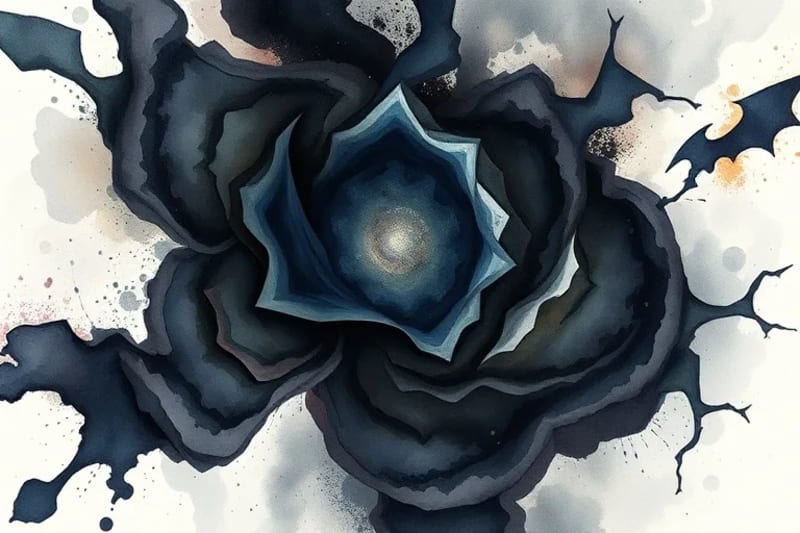
An abstract depiction of the shadow self, with dark forms hinting at repressed aspects seeking acknowledgment and integration.
In astrology, the Shadow often manifests through specific planetary placements and aspects. Planets in the 12th House, for example, can represent hidden talents or fears, while challenging aspects (squares, oppositions) between personal planets (Sun, Moon, Mercury, Venus, Mars) and outer planets (Uranus, Neptune, Pluto) can highlight areas of intense psychological conflict and repression. The sign opposite our Sun sign, or the qualities we find most irritating in others, can also point to our unacknowledged Shadow traits.
Understanding the Shadow is not about eliminating these aspects, but about integrating them. When the Shadow remains unconscious, it tends to project itself onto others, leading to judgment, conflict, and a feeling of being incomplete. For instance, someone with a repressed desire for power (perhaps indicated by a challenging Mars-Pluto aspect) might constantly criticize powerful figures or feel victimized by them. Recognizing these projections is the first step towards reclaiming these disowned parts of the self.
The Nodes of the Moon, particularly the South Node, can also offer insights into past life patterns or inherited karmic tendencies that contribute to our Shadow. The South Node often represents comfort zones or behaviors that, while familiar, may hinder our growth in this lifetime, requiring conscious effort to integrate new patterns represented by the North Node. This process is deeply intertwined with the concept of Karmic Nodes and Vertex Conjunctions, which unveil profound soul contracts and lessons.
Shadow Integration: Astrological Techniques for Mastery
Integrating the Shadow is a lifelong process that involves conscious effort and self-reflection. Astrology provides a powerful lens through which to identify and work with these unconscious aspects. Here are some techniques:
- Aspect Analysis: Examine challenging aspects in your birth chart, particularly those involving Pluto, Saturn, or the outer planets. These often highlight areas where repression or conflict exists. Understanding the planetary energies involved can provide clues about the nature of the Shadow.
- House Placements: Planets in the 12th House (unconscious, hidden enemies) or the 8th House (transformation, shared resources, psychological depths) can reveal aspects of the Shadow that need to be brought to light.
- Opposite Sign Exploration: If your Sun is in Aries, explore the qualities of Libra. If your Moon is in Taurus, explore Scorpio. Often, the qualities of the opposite sign are those we have disowned or project onto others. Consciously developing these qualities can lead to greater balance.
- Transits and Progressions: Significant transits or progressions to natal planets involved in challenging aspects can bring Shadow material to the surface, offering opportune moments for integration. For instance, a Pluto transit to a personal planet might force a confrontation with deeply buried fears or power dynamics.
- Active Imagination: Jung's technique of active imagination involves engaging with unconscious material through dreams, fantasies, or creative expression. This can be guided by astrological symbols found in the chart, allowing for a dialogue with archetypal figures or repressed parts of the self. This method complements practices like Spirit Guide Communication, fostering deeper inner dialogue.
Shadow integration is not about becoming "perfect" but about becoming "whole." It involves acknowledging and accepting all parts of ourselves, even those we find uncomfortable. This acceptance reduces the power of the unconscious to dictate our behavior and opens the door to greater self-awareness and authenticity.
The Path to Wholeness: Individuation and the Self
The ultimate goal of Jungian psychology is individuation – the process by which an individual becomes a psychological "in-dividual," a separate, indivisible unity or "whole." This journey involves integrating the various components of the psyche, including the conscious ego, the Persona, the Shadow, and the Anima/Animus, under the guidance of the Self.

A complex 3D render of cosmic gears, symbolizing the intricate interplay of archetypes and planetary forces leading to psychological wholeness.
In psycho-astrology, the birth chart serves as a blueprint for this individuation process. The Sun represents our conscious identity and ego, while the Moon symbolizes our emotional core and unconscious needs. The Ascendant is our interface with the world. The interactions between these core components, along with the other planets, reveal the unique challenges and opportunities for growth on our path to wholeness.
The concept of the "Self" in Jungian terms is often represented by mandalas – symbolic representations of the cosmos and the totality of the psyche. Astrologically, the entire birth chart can be seen as a personal mandala, with the center representing the core Self. The process of individuation involves aligning the ego with the Self, allowing our conscious personality to serve our deeper, authentic purpose. This often requires a deep commitment to self-awareness and personal development, echoing the intentionality found in practices like Personalized Planetary Hours for daily intentions.
Achieving wholeness doesn't mean eradicating difficulties, but rather developing the capacity to hold paradoxes and integrate seemingly contradictory aspects of our nature. It's about becoming more conscious, more complete, and more aligned with our true essence. This journey is often supported by practices that enhance self-awareness and emotional regulation, such as Mindfulness Emotional Regulation.
Practical Applications of Psycho-Astrology
The integration of Jungian psychology and astrology offers numerous practical benefits for personal growth and understanding:
- Self-Discovery: Gain a deeper understanding of your inherent strengths, weaknesses, motivations, and life purpose as revealed through your birth chart's archetypal patterns.
- Relationship Insights: Understand the psychological dynamics at play in your relationships by examining synastry and composite charts through an archetypal lens, revealing projections and unconscious expectations.
- Crisis as Opportunity: View periods of crisis or challenge (often indicated by difficult transits) as opportunities for psychological growth and Shadow integration, rather than purely negative experiences.
- Career and Vocation: Align your career path with your deeper archetypal calling, finding work that is not only fulfilling but also contributes to your individuation process.
- Spiritual Development: Connect with the spiritual dimension of your existence by recognizing the archetypal forces that shape human experience and guide your personal evolution.
Psycho-astrology is a powerful tool for self-exploration, offering a comprehensive map to navigate the complexities of the human psyche. By consciously engaging with the archetypal energies and integrating the Shadow, individuals can embark on a transformative journey towards greater self-awareness, authenticity, and ultimately, a profound sense of wholeness.
The journey of individuation is not about becoming perfect, but about becoming whole.
— Carl Jung
This approach encourages a dynamic engagement with one's astrological chart, moving beyond static interpretations to a living, evolving understanding of the self. It invites us to embrace our full spectrum of human experience, transforming unconscious patterns into conscious choices and fostering a richer, more integrated existence.
Explore Further: Related Insights & Tools
Source: Hybrid content assisted by AI and human editorial supervision.


Comments
Post a Comment