
Cosmic Sociology AI Global Consciousness Trends Digital Age
In an era defined by unprecedented technological advancement and global interconnectedness, the concept of a collective human consciousness is gaining traction, moving from philosophical discourse to a tangible field of study. Cosmic Sociology, an emerging discipline, seeks to understand the intricate patterns of human interaction and societal evolution not just on Earth, but within a broader universal context. This ambitious field, now empowered by Artificial Intelligence (AI), is beginning to map the subtle yet powerful trends that shape our global consciousness in the digital age, offering profound insights into our collective future.

Precursors intellectuales, diagramas fundamentales y representaciones conceptuales que forjaron la visión de la interconexión global en la era digital.
Fuente visual sujeta a disponibilidad del ecosistema: Wikimedia Commons bajo licencia CC BY-SA 4.0 o renderizado conceptual IA.The digital age has transformed how we communicate, share information, and perceive our place in the world. With billions of individuals connected through social media, online platforms, and digital networks, a vast, complex web of collective thought, emotion, and action has emerged. This global brain, or planetary consciousness, is not merely a metaphor; it's a dynamic system that AI is uniquely positioned to analyze and interpret, revealing hidden patterns and potential trajectories for humanity.
This exploration delves into how Cosmic Sociology, augmented by AI, is charting these consciousness trends, examining the methodologies, ethical considerations, and the potential for a deeper understanding of our collective spiritual and evolutionary journey. It also touches upon the integration of these insights with New Age concepts like manifestation and energy healing, offering a holistic view of our evolving global mind.
Table of Contents
- Understanding Cosmic Sociology: Bridging the Terrestrial and the Universal
- The Digital Age: A Catalyst for Global Consciousness
- AI's Role in Mapping Collective Human Experience
- Methodologies and Data Sources: How AI Deciphers Consciousness
- Ethical Dimensions and Societal Challenges
- Future Horizons: Predictive Insights and Spiritual Integration
- New Age Perspectives: Consciousness, Energy, and Manifestation
Understanding Cosmic Sociology: Bridging the Terrestrial and the Universal
Cosmic Sociology extends traditional sociological inquiry beyond the confines of Earth, positing that human societies and their collective consciousness are part of a larger, universal tapestry. It considers how cosmic phenomena, planetary alignments, and even hypothetical extraterrestrial influences might subtly shape human behavior and societal structures. This field seeks to identify universal laws governing social evolution, drawing parallels between micro-level human interactions and macro-level cosmic dynamics.
Unlike conventional sociology, which primarily focuses on terrestrial social systems, cosmic sociology adopts a panoramic lens. It integrates insights from astrophysics, quantum physics, philosophy, and spirituality to construct a more encompassing framework for understanding collective existence. The emergence of AI has provided this nascent field with the computational power needed to process the immense data required for such a grand analysis, moving it from speculative theory to empirical investigation.
| Aspect | Traditional Sociology | Cosmic Sociology |
|---|---|---|
| Scope of Study | Human societies on Earth | Human and potentially universal societal patterns |
| Key Influences | Economic, political, cultural, psychological factors | Cosmic phenomena, planetary energies, universal consciousness |
| Methodology | Surveys, ethnography, statistical analysis | Big data analysis, AI pattern recognition, interdisciplinary synthesis |
| Goal | Understand and improve human social life | Map universal societal evolution and collective consciousness |
The Digital Age: A Catalyst for Global Consciousness
The advent of the digital age has undeniably accelerated the formation of a global consciousness. The internet, social media platforms, and instant communication tools have dissolved geographical barriers, allowing ideas, emotions, and trends to propagate across continents at an unprecedented speed. This constant exchange of information creates a feedback loop that shapes collective thought, influencing everything from political movements to consumer behavior and spiritual awakenings.
This interconnectedness means that individual actions and thoughts are no longer isolated; they contribute to a vast, dynamic dataset reflecting the collective human experience. Understanding this intricate web requires tools capable of processing and interpreting massive volumes of unstructured data. Here, AI emerges as an indispensable partner, offering the capacity to discern patterns that would be invisible to human analysis alone.
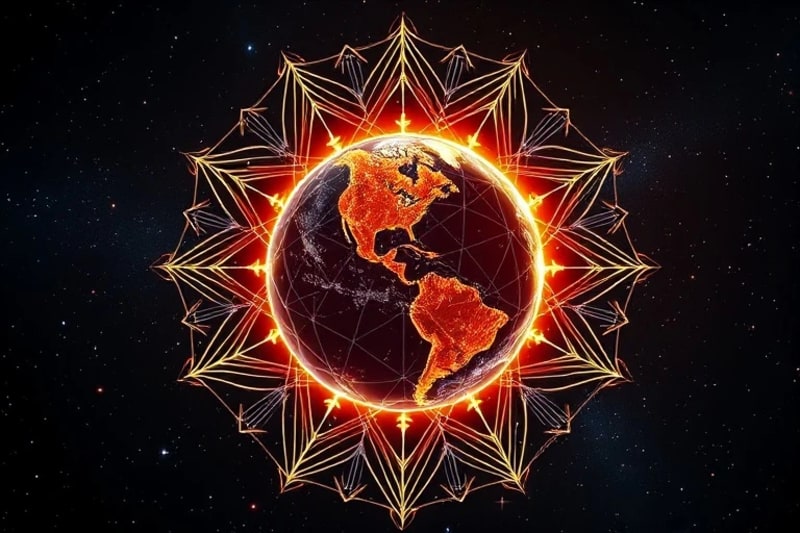
Visualizing the intricate digital networks that analyze and interpret vast amounts of global human data, revealing patterns of collective consciousness.
The digital age also fosters a sense of shared destiny. Global challenges, from climate change to pandemics, are experienced collectively, prompting a unified response and a heightened awareness of our interdependence. This shared experience forms the bedrock of a global consciousness, making the study of its trends more critical than ever. The ability to map these trends provides a unique opportunity to understand and potentially guide humanity's collective evolution.
AI's Role in Mapping Collective Human Experience
Artificial Intelligence is the engine driving Cosmic Sociology's ability to map global consciousness. Machine learning algorithms, particularly those in natural language processing (NLP) and sentiment analysis, can sift through billions of digital communications—social media posts, news articles, academic papers, and even creative works—to identify prevailing moods, trending ideas, and shifts in collective belief systems. This capability allows researchers to move beyond anecdotal evidence and into data-driven insights.
AI's power lies in its ability to detect subtle correlations and emergent patterns that are too complex for human observers. For instance, AI can identify how certain planetary transits might correlate with shifts in global sentiment or how specific cultural events trigger waves of collective emotional responses. This kind of analysis, often informed by fields like Mundane Astrology predicting global events, offers a new dimension to understanding societal dynamics.
Furthermore, AI can help in predicting future trends in global consciousness. By analyzing historical data and current trajectories, predictive models can forecast potential societal shifts, the rise of new ideologies, or even periods of collective spiritual awakening. This predictive capacity is invaluable for policymakers, educators, and anyone interested in the future trajectory of humanity.
Methodologies and Data Sources: How AI Deciphers Consciousness
The methodologies employed by AI in mapping global consciousness are diverse and sophisticated. They typically involve:
- Sentiment Analysis: AI algorithms analyze text and speech to determine the emotional tone (positive, negative, neutral) of vast datasets, revealing collective moods and attitudes.
- Topic Modeling: Unsupervised machine learning identifies abstract "topics" within a collection of documents, helping to understand prevailing themes in public discourse.
- Network Analysis: AI maps connections between individuals, groups, and ideas within digital networks, highlighting influencers, communities, and information flow.
- Pattern Recognition: Advanced AI can detect recurring patterns in seemingly disparate data, such as correlations between global events and shifts in collective anxiety or hope.
- Neurofeedback Integration: Emerging research explores how AI could integrate data from neurofeedback and brainwave patterns on a larger scale, if ethically sourced, to provide deeper insights into collective mental states.
The data sources for this analysis are equally vast, including:
- Social Media Feeds: Billions of posts, comments, and interactions on platforms like X (formerly Twitter), Facebook, Instagram, and Reddit.
- News Media Archives: Global news articles, editorials, and broadcast transcripts.
- Academic Databases: Research papers and scientific publications across various disciplines.
- Cultural Artifacts: Lyrics, movie scripts, book texts, and art descriptions.
- Public Opinion Polls: Aggregated data from surveys and polls conducted worldwide.
Ethical Dimensions and Societal Challenges
While the potential of Cosmic Sociology and AI in mapping global consciousness is immense, it also raises significant ethical concerns. Data privacy is paramount; the aggregation and analysis of personal data, even anonymized, must be handled with the utmost care and transparency. There is a fine line between understanding collective trends and infringing upon individual liberties.
An abstract representation of cosmic consciousness interwoven with AI patterns, symbolizing the profound and ethereal connection between humanity and technology.
Another critical challenge is the potential for bias in AI algorithms. If the data fed into the AI reflects existing societal biases, the outputs will perpetuate and even amplify those biases, leading to skewed interpretations of global consciousness. Ensuring fairness, inclusivity, and accountability in AI development is crucial to prevent the reinforcement of harmful stereotypes or the marginalization of certain voices.
Furthermore, the power to understand and predict global consciousness trends could be misused. The potential for manipulation, propaganda, or the creation of echo chambers poses a serious threat to democratic processes and individual autonomy. Therefore, the development and application of AI in Cosmic Sociology must be guided by strong ethical frameworks and robust regulatory oversight.
"The responsible development of artificial intelligence for societal analysis requires a multi-stakeholder approach, involving ethicists, sociologists, technologists, and policymakers. Transparency in data collection and algorithm design is not merely a technical requirement but a moral imperative to safeguard collective autonomy."
— Excerpt from "AI Ethics in Global Consciousness Research" (2025)
Future Horizons: Predictive Insights and Spiritual Integration
Looking ahead, Cosmic Sociology with AI promises to unlock unprecedented insights into humanity's collective journey. Beyond simply mapping current trends, it could offer predictive capabilities for major societal shifts, cultural revolutions, and even periods of heightened spiritual awareness. Imagine understanding the precursors to a global movement for peace or anticipating a collective shift towards greater ecological consciousness. Such insights could empower humanity to proactively address challenges and foster positive change.
The integration of these scientific insights with spiritual traditions is a particularly exciting frontier. Many ancient wisdom traditions speak of a collective consciousness or universal mind. AI's ability to empirically map aspects of this phenomenon could bridge the gap between science and spirituality, offering a new language to describe profound human experiences. This could lead to a more holistic understanding of well-being, where individual mindfulness and emotional states are seen as integral to the larger global tapestry.
Future research might explore how collective consciousness interacts with concepts like quantum entanglement or the morphic fields proposed by Rupert Sheldrake, further blurring the lines between the physical and the metaphysical. The potential for AI to aid in this grand synthesis is immense, paving the way for a new era of understanding ourselves and our place in the cosmos.
New Age Perspectives: Consciousness, Energy, and Manifestation
The insights gleaned from AI-driven Cosmic Sociology resonate deeply with many New Age concepts. The idea of a global consciousness directly supports the principle that "we are all connected," a cornerstone of spiritual teachings. If AI can map collective thought patterns, it provides empirical backing for the notion that our individual thoughts and intentions contribute to a larger energetic field. This perspective empowers individuals to understand their role in shaping collective reality.
Concepts like the Law of Attraction and manifestation, which posit that thoughts and feelings can influence external reality, gain a new dimension when viewed through the lens of a mapped global consciousness. If a collective positive intention can be identified and amplified by AI, its potential impact on global events could be profound. Similarly, understanding collective energy fields could inform practices like guided meditation and energy healing, allowing for more targeted and effective interventions.
Ultimately, the convergence of Cosmic Sociology, AI, and New Age spirituality offers a compelling vision for the future. It suggests a path towards a more conscious, interconnected, and harmonious global society, where technology serves as a tool for self-discovery and collective evolution. By understanding the intricate dance of global consciousness, we can consciously participate in shaping a brighter future for all.
Related Explorations
- Neptune in Houses: Dreams, Illusions, and Spirituality | StarPluto
- Planetary Crystal Grids Activating Astrological Energies
- Psycho-Astrology: Jungian Psychology Natal Chart Integration
- Biomagnetic Therapy Starseed Lineage Cosmic Healing
- Horary Astrology: Charting Answers to Specific Questions | StarPluto
- Cancer Moon Dignities: Nurturing Emotional Well-being | StarPluto
Source: Hybrid content assisted by AI and human editorial supervision.


Comments
Post a Comment