
Urban Geomancy Feng Shui City Dwellings Wellbeing
Urban Geomancy and Feng Shui: Aligning City Dwellings with Celestial Mechanics for Enhanced Well-being
In an increasingly urbanized world, the connection between our living spaces and our overall well-being has become a critical area of study. Ancient practices like geomancy and Feng Shui, once applied to natural landscapes and rural settlements, are now being reinterpreted for the complex tapestry of modern cities. This article explores how urban geomancy and Feng Shui, when integrated with an understanding of celestial mechanics, can transform city dwellings into sanctuaries of enhanced well-being and energetic harmony. We delve into the foundational principles, practical applications, and the profound benefits of aligning our urban environments with both earthly and cosmic forces.
Table of Contents
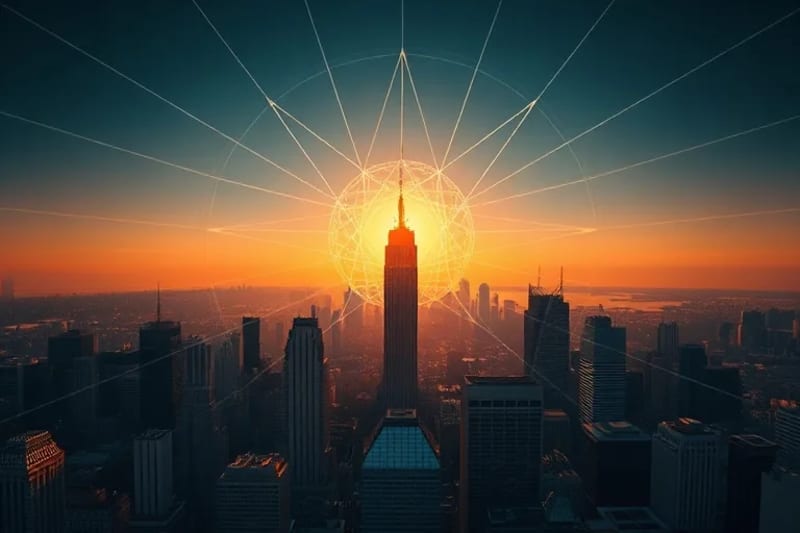
Conceptual representation of urban energetic patterns and celestial influences on city architecture.
1. Understanding Urban Geomancy
Geomancy, derived from the Greek words "geo" (earth) and "manteia" (divination), is an ancient practice focused on understanding the Earth's energies and their influence on human life. Traditionally, it involved interpreting patterns on the ground or the flow of natural forces to determine auspicious locations for settlements, temples, and burials. Urban geomancy adapts these principles to the built environment of cities, recognizing that urban structures, infrastructure, and human activity create their own complex energetic fields.
In an urban context, geomancy considers factors such as the city's overall layout, the orientation of major streets and buildings, the presence of green spaces, and even the flow of traffic and public transport. These elements are believed to create "ley lines" or energetic pathways that can either support or hinder the well-being of inhabitants. A city designed with geomantic principles in mind aims to harmonize these energies, promoting vitality, prosperity, and peace for its residents.
Research into urban planning and human psychology has increasingly highlighted the impact of urban design on mental health and social cohesion. While not always explicitly labeled "geomancy," studies on biophilic design, walkability, and access to nature within cities echo the core geomantic idea that our environment profoundly shapes our experience. Understanding these subtle energy flows can lead to more intuitive and supportive urban development.
2. The Foundations of Feng Shui in Urban Settings
Feng Shui, an ancient Chinese art and science, literally translates to "wind-water." It is concerned with arranging buildings, objects, and spaces to achieve harmony and balance with the natural environment. The core concept is "Qi" (pronounced "chi"), the vital life force or energy that flows through everything. Good Feng Shui aims to optimize the flow of beneficial Qi and mitigate negative Qi ("Sha Qi") within a space.
In urban dwellings, Feng Shui principles are applied to everything from the building's orientation and facade to the interior layout, furniture placement, and color schemes. Key considerations include the "commanding position" of a bed or desk, the balance of the five elements (wood, fire, earth, metal, water), and the avoidance of sharp angles or cluttered spaces. The goal is to create an environment that supports health, wealth, and harmonious relationships.
For city residents, applying Feng Shui can be particularly challenging due to external factors like tall buildings, busy streets, and limited control over architectural design. However, even small adjustments within an apartment or office can make a significant difference. For instance, strategically placing mirrors to expand a small space or using plants to soften harsh corners can improve the energetic quality of a room. The principles of advanced elemental balance in relationships also resonate with Feng Shui's focus on elemental harmony within living spaces.
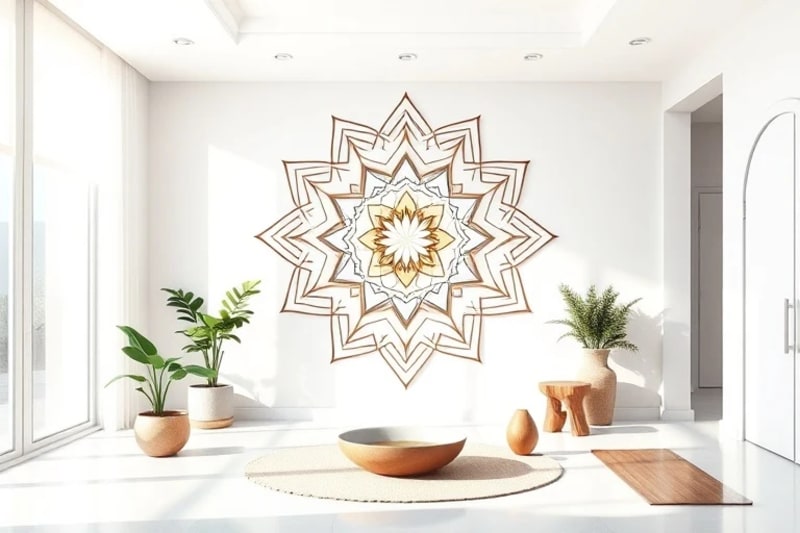
A watercolor depiction of a serene urban dwelling, showcasing harmonious Feng Shui principles.
3. Integrating Celestial Mechanics into Urban Design
Beyond earthly energies, ancient civilizations often aligned their cities and sacred sites with celestial phenomena. This practice, often overlooked in modern urban planning, suggests that the movements of the sun, moon, and planets can have subtle yet profound influences on our environment and ourselves. Integrating celestial mechanics into urban geomancy and Feng Shui involves considering astronomical alignments, solar paths, and lunar cycles.
For example, the orientation of a building relative to the rising and setting sun can impact natural light, warmth, and energy within a dwelling. Historically, many cultures built structures to align with solstices or equinoxes, harnessing specific energetic qualities of these celestial events. In urban planning, this could translate to designing street grids or building orientations that maximize beneficial solar exposure or align with significant astronomical markers, fostering a sense of connection to the cosmos.
Modern science, particularly in fields like chronobiology, acknowledges the impact of natural light cycles on human health and circadian rhythms. While the direct influence of planetary positions on urban design is speculative from a conventional scientific standpoint, the concept of mindful celestial mechanics for well-being encourages a holistic view of our environment, where cosmic rhythms are considered alongside terrestrial ones. This interdisciplinary approach seeks to create environments that are not only functional but also deeply resonant with natural cycles.
4. Practical Applications for City Dwellings
Applying urban geomancy and Feng Shui with celestial awareness in city dwellings can involve several practical steps, even within existing structures. These applications focus on optimizing energy flow, enhancing natural light, and creating a sense of balance and harmony.
- Site Analysis: Before choosing a dwelling, consider its location within the city. Is it near a park (good Qi)? Is it at a busy intersection (potential Sha Qi)? How do surrounding buildings impact light and views?
- Orientation and Layout: Understand the cardinal directions and how your dwelling is oriented. Maximize natural light from the east (morning sun) and south (warmth). Arrange furniture to support good Qi flow, avoiding clutter and blocked pathways.
- Elemental Balance: Incorporate the five elements through colors, materials, and shapes. For example, wood (plants, wooden furniture) for growth, fire (candles, warm colors) for energy, earth (ceramics, earthy tones) for stability, metal (metallic objects, white/gray) for clarity, and water (fountains, dark colors) for flow.
- Celestial Alignment: Observe how sunlight enters your home throughout the day and year. Use mirrors to reflect light into darker areas. Consider placing a bed or desk in alignment with a beneficial direction based on personal astrological charts or general auspicious alignments.
- Decluttering and Maintenance: A clean, well-maintained home promotes positive energy. Regular decluttering removes stagnant Qi and allows fresh energy to circulate freely.
Even in high-rise apartments, simple adjustments can significantly improve the living environment. For instance, using specific colors in a room can balance elemental energies, while placing a small water feature can introduce the water element and promote a sense of calm. These subtle changes contribute to a more supportive and nurturing home.
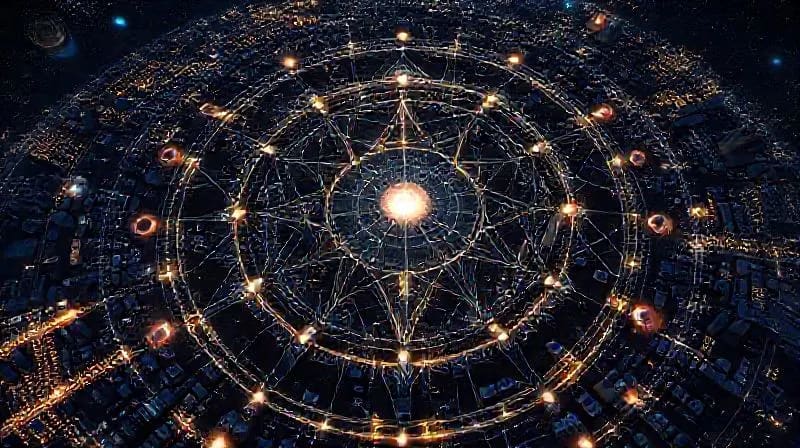
A 3D render illustrating the theoretical alignment of urban structures with celestial mechanics.
5. Benefits of Harmonious Urban Living
The intentional application of urban geomancy, Feng Shui, and celestial mechanics can yield a multitude of benefits for individuals and communities living in city environments. These advantages extend beyond mere aesthetics, impacting physical health, mental clarity, emotional stability, and even professional success.
- Enhanced Well-being: A harmonized living space can reduce stress, improve sleep quality, and foster a greater sense of peace and contentment. By mitigating negative energies and enhancing positive ones, residents experience a more supportive environment for their overall health.
- Increased Productivity and Creativity: A well-arranged workspace, aligned with beneficial energy flows, can boost focus, concentration, and innovative thinking. This is particularly valuable in the demanding urban professional landscape.
- Improved Relationships: Feng Shui principles often emphasize areas related to relationships. By balancing these sectors, residents may experience more harmonious interactions with family members, partners, and colleagues, contributing to stronger social bonds.
- Financial Prosperity: While not a guaranteed outcome, many practitioners believe that good Feng Shui can attract opportunities and support financial growth by creating an environment conducive to abundance.
- Connection to Nature and Cosmos: By consciously integrating natural elements and celestial alignments, urban dwellers can counteract the feeling of disconnection often associated with city life, fostering a deeper sense of belonging to the larger natural and cosmic order. This aligns with broader trends in future preventive medicine with AI, which increasingly recognizes the holistic impact of environment on health.
These benefits underscore the importance of viewing our urban environments not just as functional spaces, but as dynamic energy fields that can either uplift or deplete us. Intentional design and arrangement can transform these spaces into powerful allies for personal growth and collective harmony.
6. Challenges and Modern Adaptations
Implementing traditional geomancy and Feng Shui in modern urban environments presents unique challenges. Cities are often characterized by high-density living, pre-existing infrastructure, and limited individual control over building design. However, these challenges have spurred innovative adaptations of these ancient practices.
One significant challenge is the sheer scale and complexity of urban energy flows. Unlike a single dwelling in a natural landscape, a city is a dense network of buildings, roads, underground systems, and electromagnetic fields. Modern urban geomancers must consider these layers, sometimes using technology like GIS mapping to analyze energetic patterns. Another hurdle is the often rigid structure of urban planning regulations and the difficulty of altering existing buildings.
Adaptations include focusing on micro-environments within apartments, utilizing portable Feng Shui cures, and working with urban planners to incorporate principles into new developments. For instance, creating "pocket parks" or green roofs can introduce natural elements and improve Qi flow in dense areas. The concept of Chinese Horoscope Elemental Alchemy, for example, offers a framework for understanding personal energy interactions that can be applied to individual spaces, even within a challenging urban context.
Moreover, the rise of smart cities and data-driven urban planning offers new avenues for integrating these concepts. Imagine a city where sensors monitor environmental energy, and AI algorithms suggest optimal layouts or adjustments based on geomantic and Feng Shui principles. This blend of ancient wisdom and cutting-edge technology could pave the way for truly harmonious urban living.
7. Case Studies and Future Perspectives
While explicit "urban geomancy" projects are not widely publicized in the Western world, many cities have inadvertently or intentionally incorporated elements that align with these principles. For example, cities with well-planned green spaces, pedestrian-friendly layouts, and access to natural light often report higher levels of resident satisfaction and well-being. Singapore, known for its extensive green infrastructure and thoughtful urban planning, often exhibits characteristics that resonate with Feng Shui's emphasis on natural flow and balance.
In Hong Kong, Feng Shui is an integral part of architectural design, with many buildings featuring specific orientations, water features, or even "dragon gates" to allow Qi to flow through. While these practices are often driven by cultural beliefs, their underlying aim is to create environments that support prosperity and harmony for the occupants. These real-world examples demonstrate the tangible impact of applying such principles, even if the terminology differs.
The future of urban geomancy and Feng Shui in city dwellings lies in a multidisciplinary approach. This involves collaboration between urban planners, architects, environmental psychologists, and practitioners of these ancient arts. As our understanding of human-environment interaction deepens, and as technology provides new tools for analysis and design, we can expect to see more conscious efforts to create cities that are not only sustainable but also energetically vibrant and deeply supportive of human well-being. The goal is to move beyond mere functionality to create urban spaces that truly nourish the soul.
Explore Further Insights
Source: Hybrid content assisted by AI and human editorial supervision.


Comments
Post a Comment