
Dragon Phoenix Mythology Chinese Astrology Symbolism Guide | StarPluto
In the rich tapestry of Chinese culture, few symbols hold as much reverence and profound meaning as the Dragon (Lóng) and the Phoenix (Fènghuáng). Far beyond mere mythical creatures, they embody the very essence of cosmic balance, imperial power, and auspicious fortune. Their combined presence, often referred to as Lóng Fèng, represents the ultimate union of Yin and Yang, a perfect harmony that resonates deeply within Chinese astrology, art, and daily life.
Understanding the individual characteristics and collective symbolism of these two magnificent beings is crucial to appreciating their enduring influence. From ancient imperial decrees to modern-day wedding ceremonies, the Dragon and Phoenix continue to shape cultural narratives and provide a framework for interpreting destiny and prosperity.
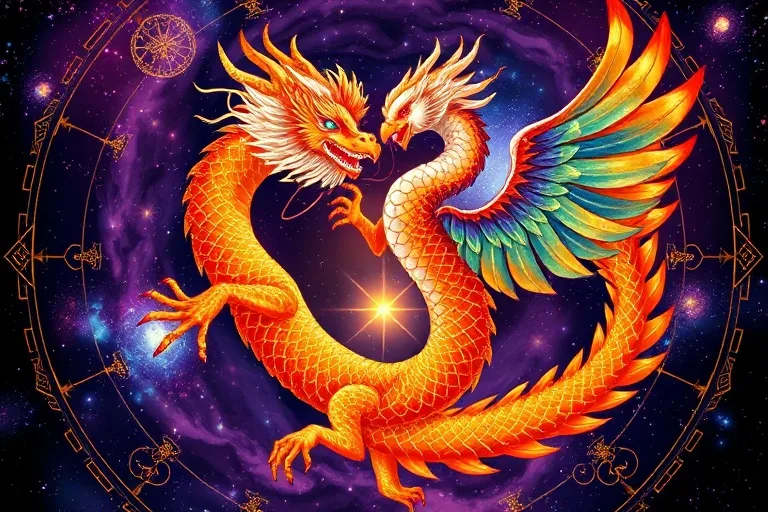
The Dragon and Phoenix together represent the ultimate union of Yin and Yang, a powerful symbol of balance and auspicious fortune in Chinese culture.
This comprehensive guide delves into the intricate mythology, cultural significance, and astrological interpretations of the Dragon and Phoenix, offering a deepened understanding of their roles as supreme symbols.
Table of Contents
- The Chinese Dragon (Lóng): Power and Imperial Authority
- The Chinese Phoenix (Fènghuáng): Grace and Renewal
- The Dragon and Phoenix Union: Perfect Harmony and Marital Bliss
- Astrological Impact: Interpreting Dragon and Phoenix Energies
- Cultural Manifestations: Art, Festivals, and Feng Shui
- Modern Relevance and Enduring Legacy
The Chinese Dragon (Lóng): Power and Imperial Authority
The Chinese Dragon, or Lóng, stands as one of the most revered and potent symbols in East Asian culture. Unlike its Western counterparts, which are often depicted as malevolent, the Chinese Dragon is a benevolent creature, a bringer of rain, good fortune, and prosperity. It is intrinsically linked to imperial power, wisdom, and strength, serving as the emblem of emperors throughout history.
Historically, the Dragon was the exclusive symbol of the Emperor, signifying his divine right to rule and his connection to the heavens. Only the Emperor could wear robes adorned with five-clawed dragons, while lesser officials were restricted to four or three claws. This strict iconography underscored the Dragon's supreme status.
- Characteristics: The Lóng is typically depicted with the head of a camel, horns of a deer, eyes of a rabbit, ears of a cow, neck of a snake, belly of a clam, scales of a carp, claws of an eagle, and paws of a tiger. This composite nature highlights its dominion over various elements and creatures.
- Symbolism: It embodies potent Yang energy, masculinity, success, adaptability, and transformation. Dragons are associated with water, clouds, and rainfall, making them vital for agricultural prosperity. They are also guardians of treasure and possessors of immense wisdom.
- Types of Dragons: Chinese mythology categorizes dragons into several types, each with specific roles and domains.
| Type of Dragon | Primary Role/Domain | Symbolic Significance |
|---|---|---|
| Tianlong (Celestial Dragon) | Guards celestial palaces, pulls chariots for deities. | Protector of the heavens, associated with gods and immortality. |
| Shenlong (Spiritual Dragon) | Controls wind, clouds, and rain. | Bringer of weather, vital for agriculture and life. |
| Dilong (Earth Dragon) | Governs rivers, lakes, and underground waters. | Controls earthly waters, associated with geomancy (Feng Shui). |
| Fucanglong (Treasure Dragon) | Guards precious metals, jewels, and hidden treasures. | Symbol of wealth, prosperity, and hidden knowledge. |
| Jiaolong (Horned Dragon) | Often associated with floods and oceans, some believe it's a younger, less powerful dragon. | Represents power over vast waters, sometimes seen as a challenge to overcome. |
In Chinese astrology, individuals born in the Year of the Dragon are believed to inherit many of its noble traits. They are often described as charismatic, intelligent, ambitious, and natural leaders. Dragon years are considered particularly auspicious for new ventures and significant life changes, promising good fortune and success.
The Chinese Phoenix (Fènghuáng): Grace and Renewal
The Fènghuáng, or Chinese Phoenix, is another paramount mythical creature, often regarded as the empress of all birds. It is a symbol of high virtue, grace, prosperity, and renewal. Unlike the Western phoenix that rises from ashes, the Fènghuáng's symbolism is more about the harmonious blending of qualities and the cyclical nature of life and prosperity.
The Fènghuáng is said to appear only during times of peace and prosperity, or to herald a new, virtuous ruler. Its presence is an omen of good things to come, signaling harmony and blessings. It is often depicted with the head of a golden pheasant, the body of a mandarin duck, the tail of a peacock, the legs of a crane, the mouth of a parrot, and the wings of a swallow.
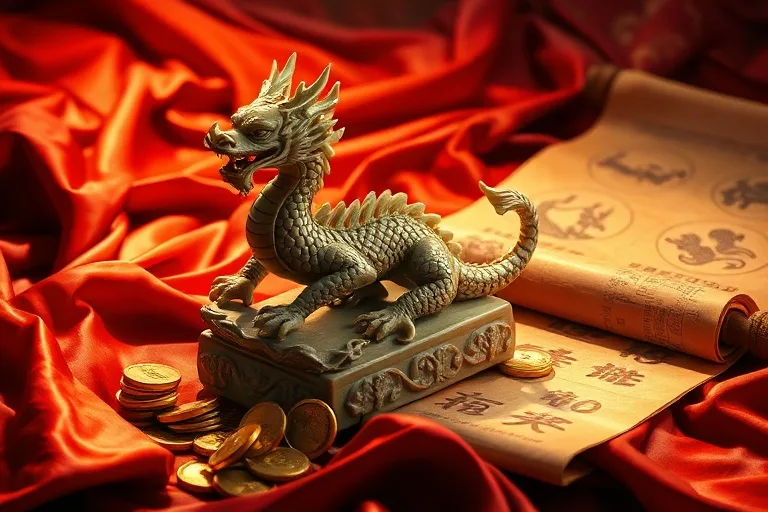
The jade dragon, a symbol of imperial power and wealth, often appears alongside astrological charts, signifying auspicious timing.
- Characteristics: The Fènghuáng's multi-species composition represents the unity of the avian world and, by extension, the harmony of the cosmos. Its plumage is said to contain the five fundamental colors (red, green, yellow, white, black), symbolizing the five virtues: benevolence, righteousness, propriety, wisdom, and fidelity.
- Symbolism: It embodies potent Yin energy, femininity, beauty, purity, and regeneration. The Phoenix is associated with fire, the sun, and the South direction. It represents transformation, rebirth, and the cyclical nature of existence, often seen as a harbinger of good luck and a symbol of the Empress.
- Virtues embodied: The Fènghuáng is a living embodiment of virtue. Its head signifies virtue, its wings duty, its back propriety, its breast benevolence, and its belly fidelity.
While there isn't a specific "Year of the Phoenix" in the Chinese Zodiac, its qualities are highly esteemed and sought after. Individuals who embody Phoenix-like traits are often seen as graceful, compassionate, and possessing an innate ability to inspire renewal and harmony in their surroundings. Its energy is believed to bring good fortune, especially in matters of love and relationships, and to signify the arrival of new opportunities after periods of challenge.
The Dragon and Phoenix Union: Perfect Harmony and Marital Bliss
The true power and beauty of these symbols emerge when the Dragon and Phoenix are depicted together. Known as Lóng Fèng, their union represents the perfect balance of Yin and Yang, the complementary forces that govern the universe. The Dragon, with its robust Yang energy, symbolizes masculinity, strength, and imperial authority, while the Phoenix, with its elegant Yin energy, represents femininity, grace, and prosperity.
Together, they create a powerful emblem of marital happiness, enduring love, and fruitful relationships. This is why the Lóng Fèng motif is ubiquitous in Chinese weddings, where it is believed to bless the couple with a harmonious and prosperous life, filled with children and good fortune.
- Yin and Yang Balance: The Dragon and Phoenix perfectly illustrate the concept of Yin and Yang. The Dragon's power is balanced by the Phoenix's grace, its assertiveness by her nurturing presence. This balance is not merely about opposition but about complementary forces working together to create a complete and harmonious whole.
- Imperial Couple: In imperial China, the Dragon represented the Emperor, and the Phoenix represented the Empress. Their combined imagery signified a strong, harmonious, and prosperous reign, reflecting the ideal partnership at the highest level of society.
- Auspicious Symbolism: Beyond marriage, the Lóng Fèng union is a general symbol of good luck, success, and prosperity in all aspects of life. It suggests that when strength and grace, ambition and virtue, work together, extraordinary outcomes are possible.
The symbolism extends to personal growth and societal well-being. A society or individual that successfully integrates the qualities of both the Dragon and Phoenix is seen as achieving optimal balance and flourishing. This profound concept underpins much of Chinese philosophy and ethical thought, emphasizing cooperation over conflict.
Astrological Impact: Interpreting Dragon and Phoenix Energies
In Chinese astrology, while the Dragon is one of the twelve zodiac animals, the Phoenix does not have a direct zodiac year. However, the energies and symbolism of both creatures are deeply integrated into astrological interpretations, particularly concerning compatibility, auspicious timing, and personal characteristics.
When analyzing compatibility in Chinese astrology, the presence of Dragon and Phoenix energies in birth charts can indicate a highly harmonious and powerful union. A partner born in the Year of the Dragon, for instance, might find an ideal match in someone whose chart exhibits strong Phoenix qualities, such as grace, intuition, and a desire for harmony.
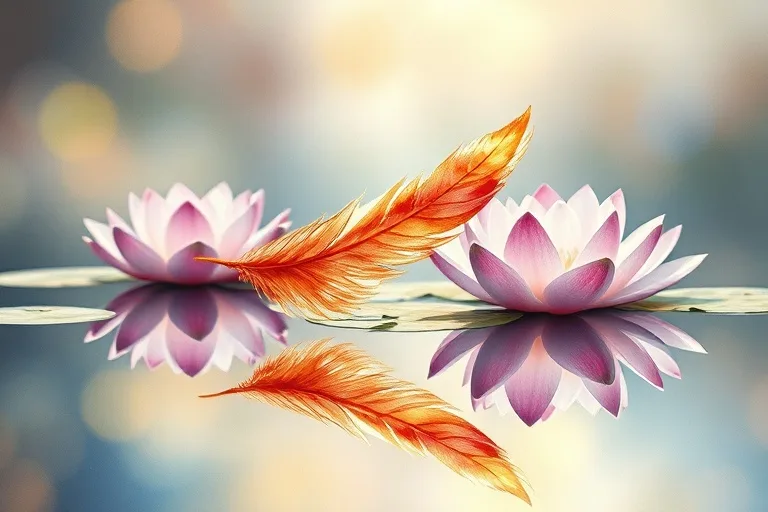
The gentle descent of a phoenix feather symbolizes grace, renewal, and the cyclical nature of life, bringing peace and new beginnings.
- Dragon's Influence: Individuals born in Dragon years (1928, 1940, 1952, 1964, 1976, 1988, 2000, 2012, 2024) are often seen as ambitious, energetic, and charismatic. They are natural leaders who thrive on challenges and seek recognition. Their presence can bring dynamism and good fortune to any endeavor.
- Phoenix's Qualities: While not a zodiac sign, the Phoenix's attributes are associated with periods of peace, transformation, and artistic expression. Astrologically, a time influenced by Phoenix energy might be ideal for creative pursuits, spiritual growth, or resolving conflicts with grace.
- Combined Astrological Harmony: The Lóng Fèng combination in an astrological context suggests a period or relationship characterized by both powerful drive and elegant resolution. It implies that challenges can be overcome with both strength and wisdom, leading to profound and lasting success. This synergy is particularly sought in business partnerships and family planning.
Understanding these energies allows for a more nuanced interpretation of personal charts and broader societal trends. When Dragon energy is dominant, it might signify a time for bold action and leadership. When Phoenix energy is ascendant, it could point to a period for refinement, artistic expression, and harmonious resolution.
Cultural Manifestations: Art, Festivals, and Feng Shui
The Dragon and Phoenix are not confined to ancient texts or astrological charts; their imagery permeates every aspect of Chinese culture. From intricate works of art to vibrant public celebrations and the principles of Feng Shui, their presence is a constant reminder of their deep-seated significance.
- Art and Literature: These mythical creatures are central motifs in Chinese art, appearing on ceramics, textiles, paintings, and sculptures. Their depictions are highly stylized, often showcasing dynamic movement and intricate details. In literature, they feature in countless myths, legends, and folk tales, embodying heroism, wisdom, and divine intervention.
- Festivals and Celebrations: Dragon dances are a staple of Chinese New Year and other festive occasions, performed to ward off evil spirits and bring good luck. These elaborate performances, involving dozens of participants, symbolize the Dragon's vitality and power. While less common in public performance, the Phoenix's elegant form inspires traditional dances and operatic costumes, particularly those representing empresses or goddesses.
- Architecture: Imperial palaces, temples, and important buildings frequently incorporate Dragon and Phoenix motifs. These are not merely decorative but serve as protective symbols, believed to imbue the structures with auspicious energy and safeguard their inhabitants. The Forbidden City, for example, is replete with their imagery.
- Feng Shui: In the practice of Feng Shui, the Dragon and Phoenix are powerful enhancers of harmony and good fortune. Placing their images or statues in specific areas of a home or office is believed to attract positive energy (Qi). The Dragon is often placed in the East or left side of a space (representing Yang, career, and protection), while the Phoenix is placed in the South or right side (representing Yin, relationships, and opportunities). Their combined placement is considered highly auspicious for marital harmony and overall prosperity.
The pervasive nature of these symbols underscores their fundamental role in shaping Chinese aesthetics and spiritual beliefs. They are not abstract concepts but living elements of cultural expression, guiding principles for design, and powerful talismans for daily life.
Modern Relevance and Enduring Legacy
Even in contemporary China and among Chinese communities worldwide, the Dragon and Phoenix retain their profound significance. They are not relics of the past but vibrant, living symbols that continue to influence personal choices, societal values, and artistic expression. Their legacy is evident in various aspects of modern life, from popular culture to personal branding.
In modern Chinese astrology, the inherent characteristics associated with the Dragon year remain a popular topic for self-understanding and forecasting. Parents often hope for children born in the Year of the Dragon, believing it confers leadership qualities and good fortune. The Phoenix, though not a zodiac sign, continues to symbolize grace, resilience, and the ability to overcome adversity, inspiring individuals to seek renewal and harmony in their lives.
- Business and Branding: Many Chinese businesses incorporate Dragon and Phoenix motifs into their logos and branding, aiming to evoke trust, success, and auspiciousness. The symbolism is understood globally as representing quality and tradition.
- Personal Identity: For many, wearing jewelry or displaying artwork featuring the Dragon and Phoenix is a way to connect with their cultural heritage and invite positive energy into their lives. It's a personal affirmation of balance, strength, and prosperity.
- Global Appeal: As Chinese culture gains global recognition, the Dragon and Phoenix have become universally recognized symbols of power, beauty, and harmony, transcending cultural boundaries and captivating audiences worldwide.
The enduring legacy of the Dragon and Phoenix lies in their timeless message of balance, strength, grace, and renewal. They serve as a powerful reminder that true prosperity and harmony emerge from the complementary interplay of diverse forces, a concept as relevant today as it was millennia ago.
From the celestial realms to the human heart, the Dragon and Phoenix continue to inspire, guide, and bless. Their mythology is not just a collection of stories but a living philosophy that enriches the understanding of the cosmos, human nature, and the pursuit of a balanced and prosperous life.
Fuente: Contenido híbrido asistido por IAs y supervisión editorial humana.


Comments
Post a Comment