
Techno-Shamanism: Bridging Ancient Rituals Digital Tools
In an era increasingly defined by technological advancements, a fascinating new spiritual movement is emerging: Techno-Shamanism. This innovative approach seeks to bridge the ancient wisdom of shamanic practices with the cutting-edge capabilities of digital tools, offering novel pathways for spiritual healing, self-discovery, and community building. It represents a bold reimagining of how we connect with our inner selves and the cosmos, leveraging technology not as a distraction, but as a potent facilitator for profound transformation.
 A visionary depiction of techno-shamanism, where ancient spiritual practices merge with advanced digital consciousness in a natural setting.
Techno-shamanism is not merely a trend; it is a philosophical and practical framework that acknowledges the inherent interconnectedness of all things, whether organic or synthetic. It posits that the same principles underlying traditional spiritual journeys can be enhanced and made more accessible through modern technology. This article delves into the core tenets of techno-shamanism, exploring its historical context, the digital tools it employs, its benefits, and the ethical considerations that accompany its rise.
Table of Contents
- Understanding Techno-Shamanism: A New Paradigm
- The Historical Roots of Shamanism and Its Modern Evolution
- Digital Tools for Spiritual Exploration and Healing
- Benefits and Transformative Potential of Techno-Shamanism
- Navigating the Ethical Landscape and Challenges
- The Future of Spiritual Practice: Integration and Beyond
Understanding Techno-Shamanism: A New Paradigm
At its heart, techno-shamanism is a synthesis. It recognizes that humanity's quest for meaning, healing, and connection is timeless, while the tools available for this quest are constantly evolving. Traditional shamanism involves a practitioner entering altered states of consciousness to interact with the spirit world for healing, guidance, or knowledge. Techno-shamanism adapts this core function to the digital age, using technology to induce similar states or facilitate spiritual work.
This paradigm shift is driven by several factors, including the increasing digitalization of daily life and a growing interest in alternative healing modalities. As individuals seek deeper spiritual experiences beyond conventional frameworks, techno-shamanism offers a compelling blend of ancient wisdom and modern convenience. It’s about leveraging the precision and immersive capabilities of technology to enhance, rather than replace, the profound human experience of spiritual seeking.
The concept challenges the traditional dichotomy between the natural and the artificial, suggesting that technology can be a sacred tool. It's an acknowledgment that our spiritual evolution can occur within and through the technological landscapes we inhabit. This approach resonates with those who feel a disconnect in a hyper-connected world, offering a path to re-enchantment through digital means.
The Historical Roots of Shamanism and Its Modern Evolution
Shamanism, as an ancient spiritual practice, dates back tens of thousands of years, predating organized religion. Shamans traditionally served as healers, diviners, and spiritual guides, mediating between the human and spirit worlds. Their methods often involved rhythmic drumming, chanting, dance, and sometimes entheogenic plants to achieve trance states and access non-ordinary realities. These practices were deeply embedded in the cultural and ecological contexts of their communities.
In the modern era, as global connectivity increased, interest in shamanic traditions expanded beyond indigenous cultures. However, the direct adoption of these practices can be problematic due to issues of cultural appropriation and lack of authentic lineage. Techno-shamanism offers a different trajectory, seeking inspiration from the underlying principles of shamanism rather than direct replication.
It recognizes the universal human need for ritual, connection, and healing, and adapts these needs to a contemporary context. This evolution is not about replacing traditional shamans, but about creating new, accessible avenues for spiritual work for a digitally native generation. The focus shifts from the specific cultural forms to the universal functions of shamanic journeys.
Digital Tools for Spiritual Exploration and Healing
The array of digital tools available for techno-shamanic practices is rapidly expanding, offering diverse ways to engage with spiritual healing. These tools are designed to facilitate altered states, enhance self-awareness, and foster community. They range from immersive virtual environments to sophisticated biofeedback systems, each contributing to a unique spiritual journey.
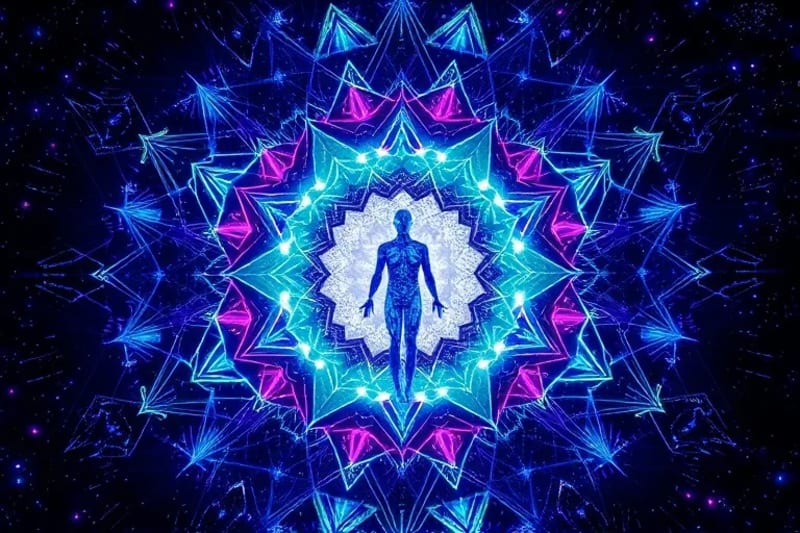 An abstract representation of digital and energetic pathways converging, symbolizing the inner journey facilitated by techno-shamanic tools.
- Virtual Reality (VR) and Augmented Reality (AR): These technologies create immersive environments that can simulate sacred spaces, guided meditations, or even visionary journeys. Users can explore digital landscapes designed to evoke specific emotional or spiritual responses, providing a safe and controlled setting for deep introspection. VR can be particularly effective in inducing a sense of presence and detachment from physical reality, akin to trance states.
- Biofeedback and Neurofeedback: These tools allow individuals to gain conscious control over physiological processes, such as heart rate, brainwave activity, or skin conductance. By visualizing these internal states, users can learn to regulate them, promoting relaxation, focus, or even altered states of consciousness. This can be a powerful method for enhancing meditation and self-healing. For more on self-regulation, consider exploring Astro-Economics Financial Markets: Predicting Planetary Cycles.
- Binaural Beats and Sound Therapy Apps: Digital soundscapes, including binaural beats and isochronic tones, are designed to entrain brainwave frequencies, guiding the listener into states of relaxation, meditation, or even deep sleep. These apps often combine specific frequencies with natural sounds or ambient music to create powerful auditory experiences conducive to spiritual work.
- AI-Powered Spiritual Guides and Chatbots: Artificial intelligence can offer personalized guidance, meditation prompts, and even interpret dream symbols based on user input and established spiritual texts. While not sentient, these AI guides can provide consistent, non-judgmental support for spiritual exploration and reflection.
- Online Communities and Platforms: Digital spaces allow individuals from around the world to connect, share experiences, and participate in collective rituals or meditations. These platforms foster a sense of belonging and mutual support, essential components of traditional shamanic communities.
The integration of these tools allows for a highly personalized and accessible approach to spiritual practice. They offer a controlled environment where individuals can experiment with different techniques and track their progress, making the spiritual journey more empirical and self-directed. This aligns with modern desires for self-empowerment and measurable outcomes in personal development.
Benefits and Transformative Potential of Techno-Shamanism
The adoption of techno-shamanic practices offers a multitude of benefits, making spiritual healing and self-discovery more accessible and impactful for a wider audience. These advantages address many of the barriers present in traditional spiritual paths, fostering a more inclusive and adaptable approach.
- Increased Accessibility: Digital tools remove geographical and financial barriers, allowing individuals from diverse backgrounds to access spiritual guidance and healing practices. This democratizes spiritual work, making it available to anyone with an internet connection.
- Personalization and Customization: Technology enables highly tailored experiences. AI algorithms can suggest personalized meditations, VR environments can be customized to individual preferences, and biofeedback sessions can adapt to real-time physiological responses, optimizing the spiritual journey for each user.
- Enhanced Immersion and Focus: VR and advanced soundscapes can create deeply immersive experiences that minimize external distractions, allowing for more profound states of concentration and altered consciousness. This can lead to deeper insights and more effective healing.
- Measurable Outcomes and Self-Tracking: Biofeedback and other data-driven tools provide quantifiable metrics of progress, allowing users to track their physiological and psychological states. This empirical feedback can be highly motivating and help individuals refine their practices.
- Community and Connection: Online platforms foster global communities of like-minded individuals, providing support, shared experiences, and opportunities for collective ritual. This can combat feelings of isolation and build a sense of belonging, which is crucial for spiritual well-being. For more on community and connection, explore Zodiac Myths Archetypes Modern Spiritual Self-Discovery Journey.
- Safety and Control: Unlike some traditional practices involving potent substances, digital tools offer a controlled environment for exploring altered states. Users can pause, stop, or adjust their experience at any time, ensuring a safer journey.
The transformative potential lies in its ability to integrate spiritual growth into modern life seamlessly. It provides a bridge for individuals to navigate the complexities of the digital age while staying connected to ancient wisdom and their inner spiritual core. This fusion can lead to greater emotional resilience, mental clarity, and a deeper sense of purpose.
 A symbolic still life showcasing the harmonious blend of traditional shamanic instruments and contemporary digital devices for spiritual exploration.
Navigating the Ethical Landscape and Challenges
While techno-shamanism offers exciting possibilities, it also presents a unique set of ethical considerations and challenges that must be addressed. As with any emerging field, careful navigation is required to ensure its responsible and beneficial development.
- Authenticity vs. Commercialization: There's a risk that spiritual practices could be commodified or diluted when translated into digital products. Ensuring the authenticity and integrity of the underlying spiritual principles is crucial to prevent mere superficial engagement.
- Digital Addiction and Disconnection: Paradoxically, excessive reliance on digital tools for spiritual work could lead to further digital addiction or a disconnection from the natural world and direct human interaction, which are vital for holistic well-being.
- Privacy and Data Security: Personal spiritual journeys, especially those involving biofeedback or AI guidance, generate sensitive data. Protecting user privacy and ensuring the secure handling of this information is paramount.
- Cultural Appropriation Concerns: While techno-shamanism aims to draw inspiration from universal principles, there's a risk of inadvertently appropriating specific indigenous practices without proper understanding or respect. Developers and practitioners must be mindful of cultural sensitivity.
- The Role of the Human Facilitator: While technology can guide, the role of experienced human facilitators or mentors remains critical. The depth of human empathy, intuition, and wisdom cannot be fully replicated by algorithms.
- Misinformation and Misuse: The open nature of digital platforms can also lead to the spread of misinformation or the misuse of tools for purposes contrary to genuine spiritual growth. Critical discernment is always necessary.
Addressing these challenges requires ongoing dialogue, ethical guidelines, and a commitment to responsible innovation. The goal is to harness technology's power while preserving the profound and sacred essence of spiritual exploration. This includes understanding the shadow aspects of technology, a concept also explored in Lilith Astrology Shadow Self Primal Feminine Empowerment.
The Future of Spiritual Practice: Integration and Beyond
The trajectory of techno-shamanism suggests a future where spiritual practice becomes even more integrated into our daily lives, facilitated by intelligent and intuitive technologies. We may see the development of highly sophisticated AI companions that learn and adapt to an individual's spiritual needs, offering real-time guidance and support. Immersive virtual retreats could become commonplace, allowing for deep spiritual experiences without the need for physical travel.
Furthermore, the convergence of fields like astro-genomics and spiritual healing could lead to personalized spiritual prescriptions based on an individual's genetic and energetic blueprints. Imagine an AI analyzing your Astro-Genomics: Unveiling Karmic Health Blueprints DNA Patterns to recommend specific sound frequencies or VR environments for optimal spiritual well-being. This level of personalization promises a revolution in how we approach spiritual health.
The ultimate vision for techno-shamanism is not to replace human connection or the natural world, but to augment our capacity for spiritual growth. It aims to create a symbiotic relationship between humanity, technology, and spirituality, fostering a more conscious, connected, and healed global community. As technology continues to advance, so too will the possibilities for exploring the vast landscapes of the human spirit.
This evolving field encourages us to reconsider what "spiritual" truly means in an increasingly digital world. It prompts us to ask how ancient wisdom can be preserved and amplified through new mediums, ensuring that the timeless quest for meaning continues to thrive. The journey of techno-shamanism is just beginning, promising a fascinating future for spiritual exploration.
Explore More Insights
Source: Hybrid content assisted by AI and human editorial supervision.


Comments
Post a Comment