
Zodiac Myths Archetypes Modern Spiritual Self-Discovery Journey
Zodiac Myths and Archetypes: A Modern Spiritual Journey of Self-Discovery
The celestial tapestry has captivated humanity for millennia, inspiring myths, legends, and profound systems of understanding the self and the cosmos. Among these, zodiac myths and archetypes stand out as enduring frameworks that continue to offer deep insights into human psychology, personality, and spiritual evolution. Far from being mere fortune-telling tools, the zodiac provides a rich symbolic language that, when explored with intention, can illuminate our inner landscape and guide us on a powerful journey of self-discovery in the modern world.

A lone figure embodies the quest for Tarot Quantum Mechanics Intersecting Divination Reality, blending ancient celestial wisdom with modern self-discovery.
This article delves into the profound connection between zodiac myths and archetypes, exploring their historical roots, psychological significance, and practical applications for contemporary spiritual growth. We will uncover how these ancient symbols can serve as powerful mirrors, reflecting our innate potentials, challenges, and unique paths to fulfillment. Understanding the archetypal energies at play within our birth charts and daily lives empowers us to navigate our personal journeys with greater awareness and purpose.
Table of Contents
- Historical Roots of Zodiacal Wisdom
- The Archetypal Framework: Beyond Horoscopes
- The Twelve Zodiacal Archetypes Explained
- Jungian Psychology and Zodiacal Archetypes
- Modern Application for Self-Discovery
- Integrating Shadow Aspects for Wholeness
- Conclusion: Your Ongoing Spiritual Journey
Historical Roots of Zodiacal Wisdom
The concept of the zodiac, a celestial belt divided into twelve sections, each associated with a constellation, originates from ancient civilizations. Early Mesopotamian cultures, particularly the Babylonians, were pioneers in observing and cataloging celestial movements, laying the groundwork for what would become astrology. They developed a sophisticated system for tracking planetary positions and correlating them with earthly events and human destinies.
The Greeks later adopted and refined these concepts, giving us many of the zodiac sign names and associated myths we recognize today. For instance, the myth of Aries, the Ram, is often linked to the Golden Fleece, symbolizing courage and new beginnings. Gemini, the Twins, reflects the duality of Castor and Pollux, embodying communication and intellectual curiosity. These narratives were not merely stories but served as mnemonic devices and cultural touchstones, embedding archetypal meanings within the fabric of society.
Over centuries, various cultures, including the Egyptians, Romans, and later medieval European scholars, contributed to the evolution of zodiacal astrology. It was considered a legitimate science, intertwined with astronomy, medicine, and philosophy. The zodiac was seen as a macrocosmic reflection of the microcosm – the human being – suggesting that the patterns in the heavens mirrored the patterns within individuals. This holistic view emphasized the interconnectedness of all things, a principle that resonates deeply with modern spiritual thought.
The Archetypal Framework: Beyond Horoscopes
While many modern interpretations of the zodiac focus on daily horoscopes, its true power lies in its archetypal framework. An archetype, as defined by psychologist Carl Jung, is a universal, archaic pattern and image that derives from the collective unconscious and is the psychic counterpart of instinct. These archetypes are not inherited ideas but rather inherited predispositions to respond to the world in certain ways.
Each zodiac sign represents a distinct archetype, embodying a unique set of qualities, motivations, and challenges. For example, Leo embodies the Archetype of the Ruler or Performer, characterized by creativity, leadership, and a desire for recognition. Scorpio, on the other hand, aligns with the Archetype of the Investigator or Transformer, driven by intensity, depth, and a need for profound change. Recognizing these archetypes within ourselves and others allows for a deeper, more nuanced understanding of human behavior.
Understanding the zodiac as an archetypal system moves us beyond simplistic predictions into a realm of profound psychological and spiritual inquiry. It invites us to explore the universal patterns that shape our individual experiences, providing a roadmap for personal growth and self-acceptance. This perspective transforms astrology from a deterministic system into a dynamic tool for conscious evolution.
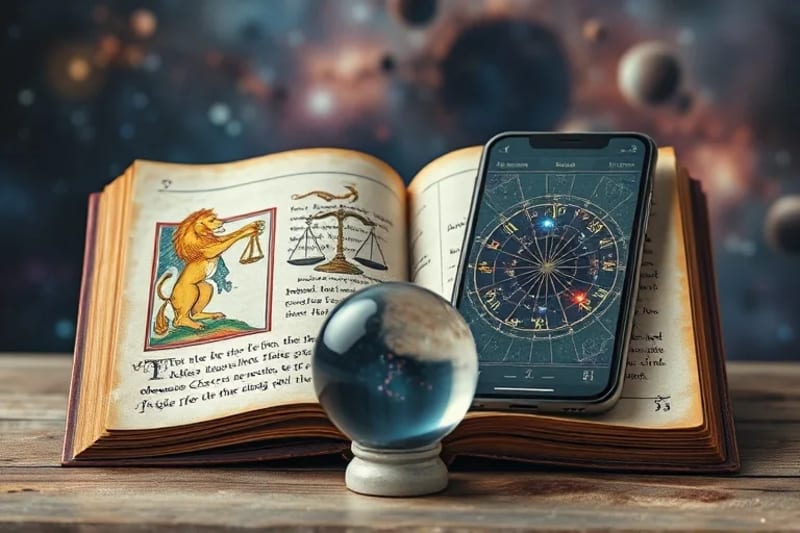
Ancient texts meet modern technology, illustrating the timeless relevance of for self-exploration.
The Twelve Zodiacal Archetypes Explained
Each of the twelve zodiac signs carries a unique archetypal energy, influencing our personality, relationships, and life path. While our Sun sign is often the most recognized, a complete natal chart reveals a complex interplay of all twelve archetypes through the placement of planets and houses. Here's a brief overview of the core essence of each:
- Aries (The Pioneer/Warrior): Initiator, courageous, energetic, impulsive. Driven by a need to lead and conquer.
- Taurus (The Builder/Sensualist): Grounded, stable, persistent, pleasure-seeking. Values security and material comfort.
- Gemini (The Communicator/Trickster): Adaptable, curious, intellectual, dualistic. Seeks knowledge and connection through communication.
- Cancer (The Nurturer/Mother): Emotional, protective, empathetic, home-loving. Deeply connected to family and feelings.
- Leo (The Performer/Ruler): Creative, confident, generous, dramatic. Desires recognition and self-expression.
- Virgo (The Analyst/Healer): Practical, analytical, service-oriented, perfectionistic. Seeks order and improvement.
- Libra (The Harmonizer/Diplomat): Balanced, just, social, artistic. Strives for fairness and partnership.
- Scorpio (The Transformer/Investigator): Intense, passionate, secretive, regenerative. Explores depth and seeks truth.
- Sagittarius (The Explorer/Philosopher): Optimistic, adventurous, philosophical, freedom-loving. Seeks wisdom and expansion.
- Capricorn (The Achiever/Father): Ambitious, disciplined, responsible, traditional. Driven by success and structure.
- Aquarius (The Innovator/Rebel): Independent, humanitarian, unconventional, intellectual. Seeks progress and collective well-being.
- Pisces (The Dreamer/Mystic): Compassionate, artistic, intuitive, escapist. Connected to the spiritual and collective unconscious.
These archetypes are not rigid boxes but fluid energies that manifest in various ways depending on individual circumstances and the overall natal chart configuration. Understanding them provides a rich vocabulary for describing the multifaceted nature of human experience.
Jungian Psychology and Zodiacal Archetypes
The work of Carl Jung provides a powerful lens through which to understand zodiacal archetypes. Jung's concept of the collective unconscious, a reservoir of universal experiences and images shared by all humanity, aligns perfectly with the timeless nature of these celestial symbols. He recognized that myths, fairy tales, and astrological symbols all tap into these deep, innate patterns of the psyche.
From a Jungian perspective, engaging with zodiacal archetypes is a form of active imagination, allowing us to connect with the symbolic language of our own unconscious. Each sign represents a facet of the human experience, a universal role or energy that we all embody to varying degrees. For instance, the Leo archetype speaks to our inner child, our need for creative expression and play, while the Capricorn archetype relates to our inner elder, our drive for responsibility and achievement.
By studying our natal chart through an archetypal lens, we can identify which archetypes are most prominent in our conscious personality (e.g., Sun, Moon, Ascendant signs) and which may be less developed or reside in our shadow. This process is crucial for individuation, Jung's term for the psychological process of integrating the conscious and unconscious, leading to a more whole and balanced self. This journey of is central to modern spiritual practice.
Modern Application for Self-Discovery
In our fast-paced, often disconnected modern world, zodiac myths and archetypes offer a profound pathway back to ourselves. They provide a language for understanding our unique wiring, helping us to embrace our strengths and navigate our challenges with greater compassion. Here are several ways to apply this ancient wisdom for contemporary self-discovery:
- Natal Chart Analysis: Beyond your Sun sign, delve into your full natal chart. Each planet (Sun, Moon, Mercury, Venus, Mars, Jupiter, Saturn, Uranus, Neptune, Pluto) is placed in a specific zodiac sign and house, revealing a complex interplay of archetypal energies. Professional astrological readings or self-study resources can unlock these layers of meaning.
- Journaling and Reflection: Regularly reflect on how the archetypal qualities of your prominent signs manifest in your daily life. For example, if you have a strong Aries influence, how does your pioneering spirit show up? Are you initiating new projects, or are you prone to impulsiveness? Journaling helps to integrate these insights.
- Meditation and Visualization: Use guided meditations or visualizations to connect with the archetypal energies. Imagine embodying the positive traits of a particular sign you wish to cultivate, or explore the symbolic imagery associated with your chart placements.
- Understanding Relationships: Apply archetypal understanding to your relationships. Recognizing the dominant archetypes in your loved ones can foster empathy and improve communication, helping you appreciate their unique perspectives and motivations.
- Career and Purpose: Explore how your zodiacal archetypes align with your career aspirations and life purpose. For instance, a strong Virgo influence might thrive in roles requiring precision and service, while a Sagittarius might seek careers involving travel, teaching, or philosophy.
By consciously engaging with these archetypal energies, we move beyond passive acceptance of our "fate" and become active participants in shaping our spiritual journey. The zodiac becomes a dynamic tool for personal empowerment and conscious creation.

Abstract art depicts the fluid and transformative journey of through zodiacal archetypes.
Integrating Shadow Aspects for Wholeness
A crucial aspect of any spiritual journey, and particularly one informed by archetypes, is the integration of the shadow. The shadow, another Jungian concept, refers to the unconscious aspects of the personality that the conscious ego does not identify with. These can be negative traits we suppress, or even positive qualities we fail to acknowledge.
Each zodiac archetype has a shadow side. For example, the confident Leo can become arrogant or attention-seeking in its shadow. The compassionate Pisces might become overly escapist or prone to self-pity. True self-discovery involves not only embracing the luminous qualities of our archetypes but also acknowledging and integrating their shadow manifestations. This process is not about eliminating these traits but understanding their origins and redirecting their energy in constructive ways.
For instance, if you identify with the shadow aspect of a Virgo archetype, perhaps excessive criticism or anxiety, the work involves recognizing these tendencies without judgment. Then, you can consciously choose to channel that analytical energy into constructive problem-solving or self-improvement, rather than self-sabotage. This integration leads to greater psychological wholeness and a more authentic expression of self.
As per the teachings of ancient wisdom traditions, "Know thyself, and thou shalt know the universe and God." The zodiac provides a profound map for this inner exploration, guiding us to understand the cosmic forces that shape our individual consciousness.
The journey of self-discovery through archetypes is a continuous process of unveiling layers of the self, leading to deeper wisdom and spiritual insight.
Engaging with the shadow aspects of our zodiacal archetypes requires courage and self-compassion. It is a powerful step towards liberation from unconscious patterns and a deeper connection to our authentic self. This holistic approach ensures that our spiritual journey is grounded in reality, embracing both the light and the dark within us.
Conclusion: Your Ongoing Spiritual Journey
Zodiac myths and archetypes are far more than astrological curiosities; they are a timeless spiritual technology for self-understanding and personal growth. By exploring the rich symbolism and psychological depth embedded within each sign, we gain invaluable insights into our core motivations, strengths, and areas for development. This journey is not about fitting into a predetermined mold but about recognizing the unique tapestry of archetypal energies that make us who we are.
Embracing the zodiac as a tool for modern spiritual self-discovery empowers us to live more consciously, authentically, and purposefully. It encourages us to integrate our shadow, celebrate our light, and continuously evolve. As we align with these universal patterns, we don't just learn about ourselves; we connect with the grander cosmic narrative, finding our place within the vast, intricate dance of the universe. Your spiritual journey, guided by the wisdom of the stars, is an ongoing adventure of profound transformation.
Fuente: Contenido híbrido asistido por IAs y supervisión editorial humana.


Comments
Post a Comment