
Cosmic Sociology: Mapping Global Consciousness Trends Digital Age AI
Cosmic Sociology: Mapping Global Consciousness Trends in the Digital Age with AI
The digital age has ushered in an unprecedented era of interconnectedness, transforming how humanity interacts, shares information, and forms collective opinions. This intricate web of global communication has given rise to a fascinating new field of study: Cosmic Sociology. This discipline seeks to map and understand the overarching trends in global consciousness, not merely through traditional sociological lenses, but by integrating advanced Artificial Intelligence (AI) and the profound insights offered by astrological principles and celestial mechanics. It represents a bold attempt to bridge the gap between human collective behavior, technological capabilities, and cosmic influences.
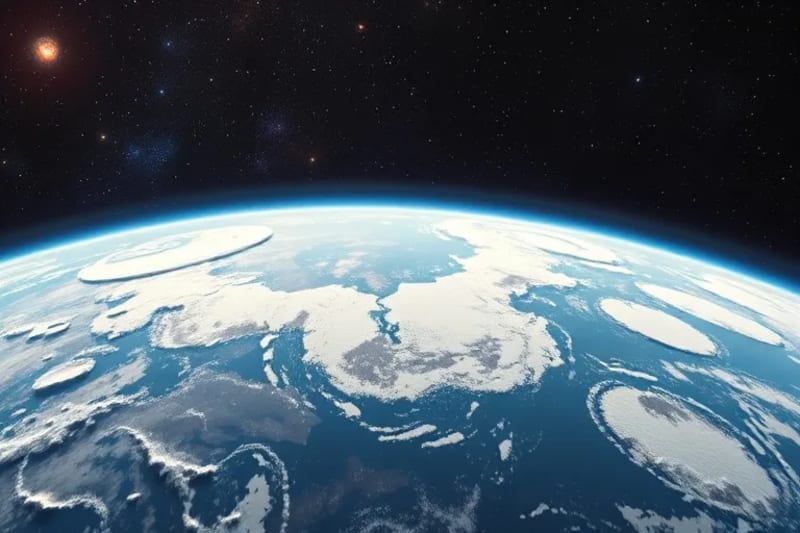
Precursors intellectuales, diagramas fundamentales y representaciones conceptuales que forjaron la visión de Cosmic Sociology sobre la conciencia global.
Fuente visual sujeta a disponibilidad del ecosistema: Wikimedia Commons bajo licencia CC BY-SA 4.0 o renderizado conceptual IA.At its core, Cosmic Sociology posits that human collective consciousness is not a random emergent property but an intricate system influenced by a myriad of factors, both terrestrial and celestial. By leveraging the analytical power of AI, researchers can now process vast amounts of digital data – from social media sentiments to global news trends – to discern patterns and shifts in this collective awareness. This approach moves beyond simple data aggregation, aiming for a deeper understanding of the underlying currents that shape our shared reality.
This article will explore the foundational concepts of Cosmic Sociology, delve into how AI facilitates the mapping of global consciousness, and discuss the intriguing role of astrological insights in interpreting these trends. We will also touch upon the challenges and ethical considerations inherent in such a groundbreaking field, ultimately painting a picture of a future where humanity's collective journey is understood with unprecedented clarity.
Table of Contents
- The Dawn of Cosmic Sociology
- Digital Age and Global Consciousness
- Artificial Intelligence as a Mapping Tool
- Astrology and Cosmic Influences
- Challenges and Ethical Considerations
- Future Implications
The Dawn of Cosmic Sociology
The concept of a collective consciousness is not new, with philosophers and mystics pondering its existence for centuries. Thinkers like Carl Jung introduced the idea of the collective unconscious, a reservoir of shared human experiences and archetypes. However, the tools to empirically study such a vast and ethereal concept were largely absent until the advent of the digital age and sophisticated computational power.
Cosmic Sociology emerges from the confluence of traditional sociology, which studies human society and social behavior, and a more holistic, systems-thinking approach that acknowledges the interconnectedness of all phenomena. It moves beyond micro-level interactions to examine macro-level patterns that shape global narratives, beliefs, and emotional states. The "cosmic" aspect introduces the hypothesis that these global trends are not solely products of human interaction but may also resonate with broader universal rhythms and energies.
This field seeks to identify the subtle yet powerful forces that guide human evolution and collective decision-making. It aims to understand how major historical events, technological breakthroughs, and even shifts in philosophical paradigms reflect deeper, underlying currents of consciousness. By analyzing historical data alongside contemporary digital footprints, Cosmic Sociology attempts to build a comprehensive model of humanity's evolving mind.
Digital Age and Global Consciousness
The digital revolution has fundamentally altered the landscape of human interaction. Social media platforms, global news networks, and instant communication tools have created a real-time feedback loop, allowing ideas, emotions, and trends to propagate across the globe at unprecedented speeds. This instantaneous sharing of information and collective experience forms the bedrock for observing and mapping global consciousness.
In this hyper-connected environment, individual thoughts and actions contribute to a larger, dynamic tapestry of collective awareness. A viral meme, a global protest movement, or a shared emotional response to a world event are all manifestations of this interconnected consciousness. The digital age provides the raw data necessary to quantify and analyze these phenomena, moving the study of collective consciousness from the realm of abstract philosophy to empirical investigation.
Understanding these trends is crucial for navigating the complexities of modern society. From public health crises to political shifts, the collective mood and prevailing narratives play a significant role in shaping outcomes. Cosmic Sociology, through its digital lens, offers a pathway to not only observe these trends but potentially anticipate them, fostering a more informed and proactive global community. This perspective also aligns with the understanding that human behavior is often influenced by underlying patterns, much like the Chinese Zodiac Animals: Mythology & Folklore which offer insights into character and destiny.
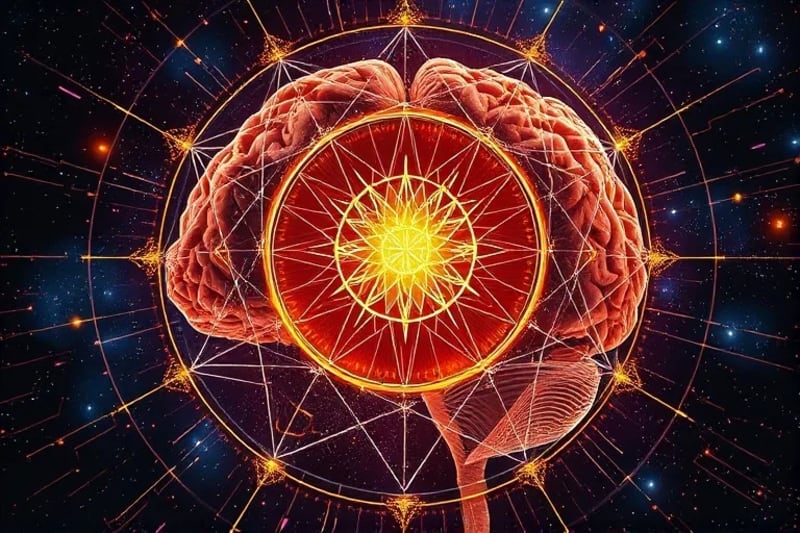
The intricate dance between human cognition, digital networks, and ancient cosmic wisdom.
Artificial Intelligence as a Mapping Tool
Artificial Intelligence is the indispensable engine driving Cosmic Sociology. Its ability to process, analyze, and identify patterns in massive, unstructured datasets far surpasses human capabilities. AI algorithms can sift through billions of social media posts, news articles, academic papers, and other digital communications to detect subtle shifts in language, sentiment, and thematic focus that indicate changes in global consciousness.
Natural Language Processing (NLP) is a key AI technique employed here, allowing machines to understand, interpret, and generate human language. By applying NLP to digital texts, AI can identify prevailing moods, recurring keywords, and emerging narratives across different cultures and demographics. Sentiment analysis, a subset of NLP, quantifies the emotional tone of public discourse, revealing periods of optimism, anxiety, or collective determination.
Furthermore, AI-powered network analysis can map the connections between ideas, individuals, and groups, illustrating how influence spreads and how collective opinions form. Machine learning models can be trained to predict future trends based on historical data, offering a glimpse into potential shifts in global consciousness. This predictive capability, while still in its nascent stages, holds immense promise for proactive societal management and understanding.
| AI Technique | Description | Application in Cosmic Sociology |
|---|---|---|
| Natural Language Processing (NLP) | Enables computers to understand, interpret, and generate human language. | Identifies themes, topics, and narratives in global digital communication. |
| Sentiment Analysis | Determines the emotional tone behind a body of text. | Quantifies collective mood (e.g., optimism, anxiety, anger) across populations. |
| Network Analysis | Maps relationships and interactions between entities (people, ideas, organizations). | Visualizes the spread of ideas, influence, and the formation of collective opinions. |
| Machine Learning (ML) | Algorithms that learn from data to make predictions or decisions without explicit programming. | Predicts future trends in global consciousness based on historical patterns. |
Astrology and Cosmic Influences
Perhaps the most distinctive and controversial aspect of Cosmic Sociology is its integration of astrological principles. While often dismissed by mainstream science, astrology offers a rich framework for understanding cyclical patterns and archetypal energies that have historically correlated with human events and psychological states. Cosmic Sociology explores whether these cosmic rhythms, such as planetary transits and specific planetary alignments, might subtly influence the collective human psyche and manifest as discernible trends in global consciousness.
The hypothesis is that just as individual Retrograde Planets can impact personal experiences, larger planetary movements might resonate with collective human experiences. For example, periods of intense social upheaval or technological innovation could coincide with specific astrological configurations involving outer planets like Uranus, Neptune, or Pluto, which are associated with collective change, spiritual awakening, and transformation, respectively.
By overlaying astrological charts and planetary transits onto AI-generated maps of global consciousness, researchers can look for correlations that might otherwise go unnoticed. This doesn't imply a deterministic view, but rather an exploration of potential synchronicity – that cosmic events may reflect or amplify emergent human trends. The field also considers esoteric symbolism, which often provides a language for understanding deeper, non-linear connections between phenomena.
- Planetary Transits: The movement of planets through the zodiac and their aspects to other planets. These are believed to trigger specific energies and influences on Earth, both individually and collectively.
- Synastry: The comparison of two or more astrological charts to understand their dynamic interaction. In Cosmic Sociology, this could be extended to compare the "birth chart" of a collective (e.g., a nation, a global movement) with current transits or other collectives. More on this can be found in Synastry Attachment Theory.
- Esoteric Symbolism: The study of hidden meanings and archetypal patterns embedded in myths, religions, and philosophical traditions. These symbols can provide a deeper interpretative layer for the trends observed by AI, connecting them to universal human experiences.
- Celestial Mechanics: The scientific study of the motions of celestial bodies. While astrology is not a science, Cosmic Sociology seeks to understand if the measurable physical effects of celestial mechanics (e.g., gravitational pulls, electromagnetic fields) could have subtle, yet pervasive, influences on complex systems like human consciousness.
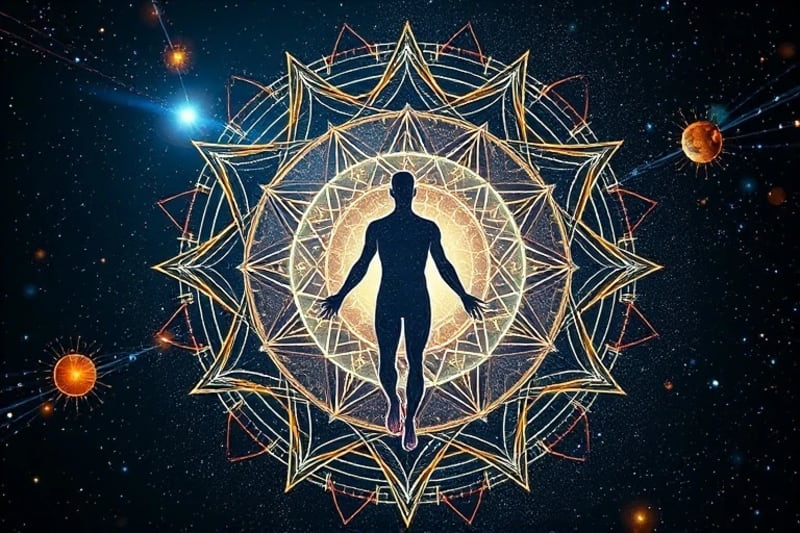
Visualizing the intricate interplay between individual, collective, and cosmic scales in a digital future.
Challenges and Ethical Considerations
The ambitious scope of Cosmic Sociology comes with significant challenges and ethical considerations. One primary concern is data privacy and the potential for misuse of insights derived from mapping global consciousness. The sheer volume of personal data processed by AI raises questions about surveillance, manipulation, and the protection of individual liberties. Robust ethical frameworks and transparent data governance are paramount to ensure responsible development.
Another challenge lies in the interpretation of complex data. While AI can identify correlations, establishing causation, especially when integrating astrological factors, remains highly speculative and requires rigorous methodology. The risk of confirmation bias, where researchers selectively interpret data to fit a preconceived narrative, is ever-present. Therefore, a scientific, peer-reviewed approach is essential to maintain credibility.
Furthermore, the integration of astrology presents a hurdle for scientific acceptance. Cosmic Sociology must develop new methodologies to test hypotheses derived from astrological principles in a way that is empirical and reproducible, moving beyond anecdotal evidence. This requires a nuanced approach that respects both scientific rigor and the potential for non-conventional insights. The discussion around Astro-Physics Quantum Entanglement Natal Charts Cosmic Events provides a glimpse into how such interdisciplinary fields might evolve.
"The responsible development of AI for societal analysis requires a commitment to ethical guidelines, ensuring that the pursuit of knowledge does not infringe upon fundamental human rights or lead to unintended societal harms."
- Excerpt from a hypothetical global ethics commission report, 2026.
Future Implications
Despite its challenges, Cosmic Sociology holds immense potential for the future. By providing a deeper understanding of global consciousness, it could offer insights into the root causes of societal conflicts, economic fluctuations, and cultural shifts. This knowledge could empower policymakers, educators, and community leaders to make more informed decisions, fostering greater global harmony and resilience.
Imagine a future where AI-driven insights into collective emotional states could help prevent widespread panic during crises, or where understanding the astrological undercurrents of global trends could inform long-term planning for sustainable development. This field could also contribute to a more profound understanding of human evolution, revealing how our collective mind adapts and transforms in response to both terrestrial and cosmic stimuli.
Ultimately, Cosmic Sociology invites humanity to view itself as part of a larger, interconnected system, where individual consciousness contributes to a global tapestry, and where even distant celestial bodies might play a subtle role in our collective journey. It is a testament to the boundless curiosity of the human mind and its relentless quest to understand its place in the cosmos.
Explore Further: Related Concepts
- Synastry Attachment Theory: Relationship Dynamics Astrology - Delve into how astrological charts reveal relationship dynamics.
- Retrograde Planets: Strengths, Challenges, and Meaning - Understand the deeper implications of planetary retrogrades on personal and collective consciousness.
- Mercury Sign Communication Intellect: Astrological Guide - Discover how Mercury's position influences communication and intellectual trends.
- Mars Astrology Drive Action Desire Assertiveness Guide - Explore the role of Mars in shaping collective drive, action, and assertiveness.
- North Node Transits Personal Planets: Evolutionary Growth - Learn about the North Node's influence on evolutionary paths and collective growth.
- Yod Aspect: Navigating Karmic Crossroads, Divine Intervention - Uncover the significance of the Yod aspect in navigating collective karmic patterns.
- Astro-Physics Quantum Entanglement Natal Charts Cosmic Events - Dive into the theoretical connections between astrophysics, quantum mechanics, and astrology.
- Numerology Guide: Life Path & Destiny Revealed - Understand how numerology offers another lens to collective and individual destiny.
- Dream Interpretation Crystals: Healing Subconscious Astral Messages - Explore the subconscious realm and its connection to collective consciousness.
- Artificial Intelligence Ethics Robotics: Autonomy Future Dilemmas - Consider the ethical implications of advanced AI, crucial for Cosmic Sociology.
Source: Hybrid content assisted by AI and human editorial supervision.


Comments
Post a Comment