
Guided Meditation Lunar Phases: Inner Harmony Wellness
For millennia, humanity has looked to the moon as a celestial guide, its rhythmic dance across the night sky influencing tides, agricultural cycles, and even human emotions. The concept of aligning one's inner world with these powerful lunar phases has gained significant traction, particularly within the realm of New Age spirituality and holistic wellness. Guided meditation, a practice that combines mindfulness with focused intention, offers a profound pathway to harness this ancient wisdom for emotional well-being and inner harmony.
This article explores the transformative potential of guided meditation tailored to the moon's various phases. It delves into how understanding and consciously working with these cosmic rhythms can help individuals navigate their emotional landscape, set intentions, release what no longer serves them, and cultivate a deeper sense of peace and purpose. By embracing the moon's cyclical nature, we can unlock a powerful tool for self-discovery and emotional resilience.
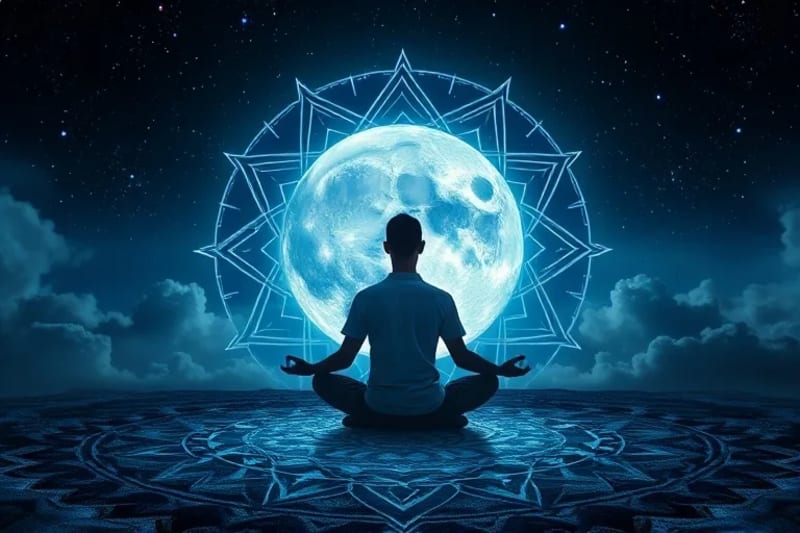 A serene moment of meditation under the luminous full moon, symbolizing inner peace and cosmic connection.
Understanding the Lunar-Emotional Connection
The moon, Earth's closest celestial neighbor, exerts a gravitational pull that visibly affects our oceans, creating the tides. It is a natural extension of this observation to consider its more subtle, yet equally profound, influence on living beings, particularly humans. While scientific research on the direct correlation between lunar phases and human emotions is still evolving, many ancient traditions and modern New Age practices attest to a deep energetic connection.
From a spiritual perspective, the moon is often associated with the feminine principle, intuition, emotions, the subconscious mind, and cyclical patterns. Its phases mirror life's natural ebb and flow: creation, growth, culmination, and release. When we consciously attune ourselves to these rhythms, we can gain a deeper understanding of our own emotional cycles and learn to work with them, rather than against them.
The Four Primary Lunar Phases and Their Meditative Focus
Each of the moon's four primary phases offers a unique energetic signature, providing an opportune time for specific meditative practices. By aligning our intentions and meditations with these phases, we can amplify their effects and foster a more harmonious emotional state.
- New Moon: Intention Setting and New Beginnings
The New Moon, when the sky is darkest, symbolizes a fresh start. It's a powerful time for introspection, planting seeds of intention, and envisioning what you wish to manifest in your life. Meditation during this phase focuses on clarity, setting goals, and inviting new opportunities. It's about quiet contemplation and defining your desires.
- Waxing Moon (Crescent to Full): Growth, Action, and Nurturing
As the moon grows from a sliver to a full orb, its energy supports growth, action, and building momentum. This phase is ideal for meditating on progress, nurturing your intentions, and taking inspired steps towards your goals. It's a time to cultivate courage, overcome obstacles, and feel the expansion of your potential. This period can also be linked to the nurturing aspects explored in Ceres in Houses & Aspects: Deeper Meanings of Nurturing & Grief, as you nurture your aspirations.
- Full Moon: Release, Culmination, and Illumination
The Full Moon is a peak of lunar energy, illuminating everything, including our subconscious. It's a potent time for release, letting go of what no longer serves you, and celebrating achievements. Meditations during this phase often involve forgiveness, emotional purging, and acknowledging your journey. It's about releasing old patterns, shadows, and anything that hinders your progress, allowing for greater wholeness and self-awareness, much like understanding the Psycho-Astrology Jungian Archetypes Shadow Self Wholeness.
- Waning Moon (Gibbous to New): Reflection, Gratitude, and Surrender
As the moon diminishes, its energy encourages reflection, gratitude, and surrender. This phase is perfect for reviewing your progress, expressing thanks, and releasing control. Meditations focus on inner wisdom, acceptance, and preparing for the next cycle. It's a time to integrate lessons learned and embrace the natural process of letting go.
Benefits of Integrating Lunar Phase Meditation
Incorporating guided meditation with lunar phases into your routine offers a myriad of benefits for emotional well-being and overall harmony. This practice extends beyond mere relaxation, fostering a deeper connection to self and the natural world.
 An abstract watercolor illustrating the dynamic yet harmonious flow of emotions, guided by lunar rhythms.
One of the most significant advantages is enhanced emotional balance. By acknowledging and working with the moon's energy, you learn to ride the waves of your emotions rather than being overwhelmed by them. The New Moon encourages setting positive intentions, while the Full Moon provides a powerful opportunity for emotional release, preventing pent-up feelings from accumulating.
Furthermore, this practice can significantly boost your intuition and inner wisdom. The moon's connection to the subconscious mind means that aligning with its phases can open channels to deeper insights and intuitive guidance. Many find that their dreams become more vivid and their inner voice clearer during specific lunar periods, leading to profound personal discoveries.
It also serves as an effective method for stress reduction and mental clarity. The structured nature of lunar meditation provides a consistent framework for mindfulness, helping to quiet the incessant chatter of the mind. This regular practice can reduce anxiety, improve focus, and cultivate a sense of calm amidst life's demands.
Finally, lunar phase meditation fosters a profound connection to nature and cosmic cycles. In an increasingly disconnected world, consciously engaging with the moon's rhythms helps us feel more grounded and part of a larger, interconnected universe. This connection can bring a sense of belonging and purpose, reminding us of our place within the grand cosmic dance, and helping us interpret Cosmic Omens: Interpreting Synchronicities, Esoteric Symbols Horoscope.
Practical Guide to Lunar Phase Meditation
Embarking on a guided lunar meditation journey is accessible to everyone, regardless of prior meditation experience. The key is consistency and an open heart. Here’s a step-by-step guide to get started:
- Identify the Current Lunar Phase:
Before you begin, know where the moon is in its cycle. Many apps and websites provide accurate lunar calendars. This knowledge will inform the intention and focus of your meditation.
- Create a Sacred Space:
Find a quiet, comfortable place where you won't be disturbed. You might light a candle, burn incense, or play soft, calming music. The goal is to create an environment conducive to introspection and peace.
- Set Your Intention:
Based on the lunar phase, set a clear intention for your meditation. For a New Moon, it might be "I intend to manifest abundance." For a Full Moon, "I release all fears that hold me back." Articulating your intention, perhaps through Vibrational Linguistics: Power Words, Mantras, Manifestation, amplifies its power.
- Begin with Centering Breaths:
Sit or lie comfortably. Close your eyes gently. Take several deep breaths, inhaling slowly through your nose, holding for a moment, and exhaling completely through your mouth. Feel your body relax with each breath.
- Engage in Guided Visualization:
Find a guided meditation specific to the lunar phase you are observing. Many free resources are available online. These meditations will typically lead you through visualizations and affirmations aligned with the energy of that particular moon phase. For example, a New Moon meditation might guide you to visualize planting seeds, while a Full Moon meditation might involve visualizing releasing energetic cords.
- Listen to Your Inner Guidance:
Allow any thoughts, feelings, or insights to arise without judgment. The meditation is a space for self-discovery. Trust the wisdom that emerges from within you.
- Journaling and Integration:
After your meditation, take a few moments to journal about your experience. What did you feel? What insights did you gain? How can you integrate these learnings into your daily life? This step is crucial for solidifying the benefits of your practice.
Deepening Your Practice and Sustaining Harmony
To truly harness the power of lunar phase meditation, consistency and a willingness to explore deeper aspects of your inner world are paramount. This is not merely a one-time activity but a continuous journey of self-alignment and emotional growth.
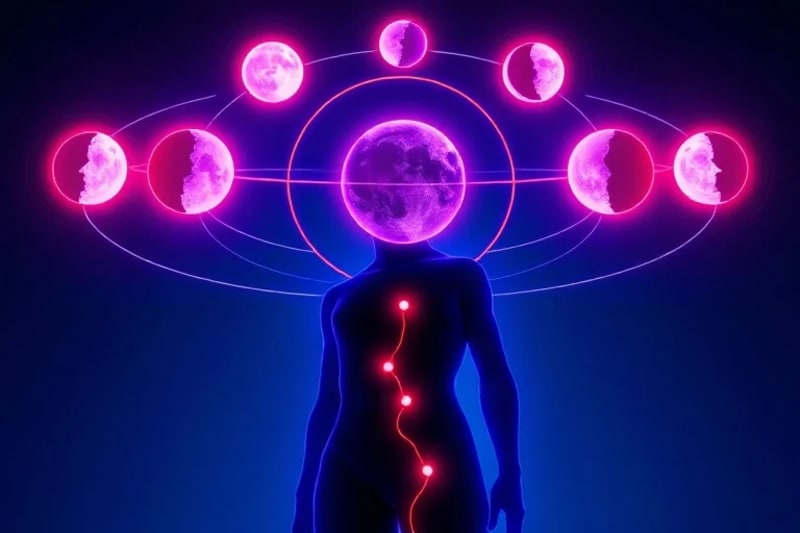 A conceptual visualization of human energy aligning with the subtle influences of lunar phases.
Consider creating a dedicated lunar journal where you track your emotional state, dreams, and insights during each phase. Over time, you may notice patterns emerging, revealing how your personal energy responds to the moon's cycle. This self-awareness is invaluable for proactive emotional management.
Beyond guided meditations, you can incorporate other lunar-aligned practices. For instance, during the New Moon, you might engage in a ritual of writing down your intentions and burying them or placing them on an altar. During the Full Moon, a releasing ceremony, such as writing down what you want to let go of and safely burning the paper, can be incredibly cathartic. These rituals enhance the meditative experience and solidify your connection to the lunar energy.
Engaging with a community that also practices lunar alignment can provide support and shared experiences. Online groups, local workshops, or even sharing with a trusted friend can deepen your understanding and commitment to the practice. Collective intention setting can be particularly powerful during New and Full Moon phases.
Ultimately, the goal is to cultivate a continuous state of inner harmony that resonates with the natural world. By consciously aligning your meditative practice with the moon's phases, you're not just observing the cosmos; you're becoming an active participant in its grand, unfolding rhythm, fostering a profound sense of well-being and purpose in your life.
Conclusion
Guided meditation for lunar phases offers a beautiful and accessible path to deeper emotional well-being and inner harmony. By understanding and intentionally engaging with the moon's cyclical energies, we can create a powerful framework for self-care, intention setting, and release. This ancient wisdom, combined with modern mindfulness practices, empowers us to navigate life's challenges with greater grace and to live in more profound alignment with both our inner selves and the cosmic rhythms that surround us. Embrace the moon's gentle guidance, and unlock a richer, more balanced emotional life.
Explore Further: Related Insights
- Chinese Zodiac Rooster: Traits, Compatibility, 2025 Forecast
- Ceres in Houses & Aspects: Deeper Meanings of Nurturing & Grief
- Psycho-Astrology Jungian Archetypes Shadow Self Wholeness
- Cosmic Omens: Interpreting Synchronicities, Esoteric Symbols Horoscope
- Vibrational Linguistics: Power Words, Mantras, Manifestation
Source: Hybrid content assisted by AI and human editorial supervision.


Comments
Post a Comment