
Astro-Archeology: Unearthing Ancient Celestial Alignments
Astro-archeology stands as a fascinating interdisciplinary field, bridging the ancient wisdom of our ancestors with modern scientific inquiry. It delves into the intricate ways past civilizations observed, understood, and integrated celestial phenomena into their monumental architecture, urban planning, and spiritual practices. This field challenges conventional historical narratives by revealing a profound and often sophisticated astronomical knowledge possessed by cultures long before the advent of modern telescopes or computational tools.
The study of astro-archeology is not merely about identifying alignments but about understanding the motivations, beliefs, and societal structures that led to their creation. It seeks to reconstruct the "celestial narratives" that guided ancient peoples, offering insights into their cosmology, religious rituals, agricultural cycles, and even their political power structures. By examining the precise orientations of temples, burial mounds, and cities towards specific astronomical events, researchers can unlock a deeper appreciation for the intellectual prowess and cultural richness of bygone eras.
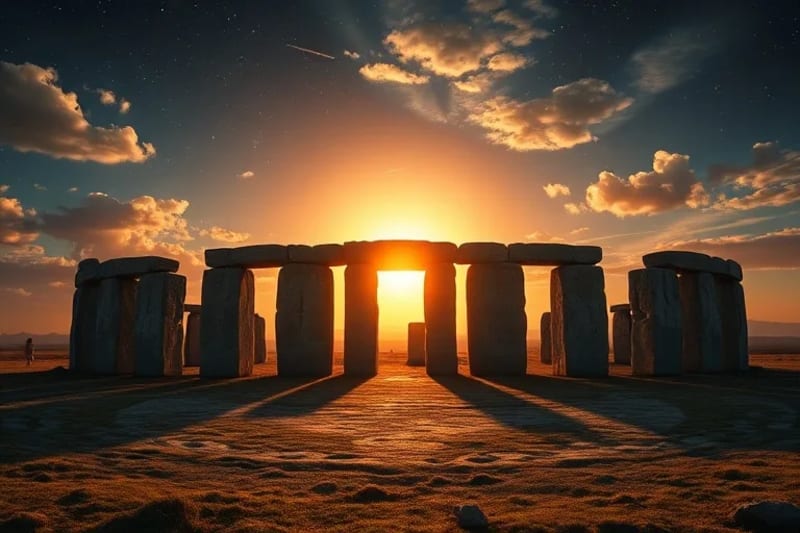 Precursors, fundamental diagrams, and conceptual representations that forged the vision of ancient civilizations regarding cosmic alignments.
Fuente visual sujeta a disponibilidad del ecosistema: Wikimedia Commons bajo licencia CC BY-SA 4.0 o renderizado conceptual IA.
This interdisciplinary approach combines astronomical calculations with archaeological fieldwork, anthropological studies, and historical records. It moves beyond simple observations to interpret the cultural context and meaning embedded within these celestial connections. From the precise solar alignments of the Egyptian pyramids to the complex lunar calendars encoded in Mayan temples, astro-archeology provides a unique lens through which to view the intellectual and spiritual landscapes of ancient humanity.
Table of Contents
- What is Astro-Archeology?
- Historical Roots and Key Discoveries
- Methodologies in Astro-Archeology
- Celestial Alignments and Cultural Significance
- Debates and Challenges in the Field
- The Future of Astro-Archeology
What is Astro-Archeology?
Astro-archeology, sometimes referred to as archaeoastronomy, is the scientific study of astronomical practices, celestial knowledge, and sky lore of ancient cultures. It examines the relationship between ancient structures, artifacts, and natural features with astronomical events. Unlike traditional astronomy, which focuses on the physics of celestial bodies, astro-archeology investigates how ancient societies perceived and interacted with the cosmos, integrating these observations into their daily lives and grand constructions.
The core premise of astro-archeology is that many ancient sites were deliberately oriented or designed to mark significant astronomical events. These events could include solstices, equinoxes, the rising and setting of specific stars or planets, or the cycles of the Moon. Such alignments were not random but reflected a sophisticated understanding of celestial mechanics and a deep connection to the rhythms of the natural world.
This field offers a unique perspective on human intellectual history, demonstrating that ancient peoples were keen observers and sophisticated thinkers. Their knowledge of the cosmos often served practical purposes, such as timing agricultural activities or navigation, but also held profound spiritual and social significance. Understanding these connections helps us to appreciate the holistic worldview of past civilizations, where the earthly and celestial realms were often seen as inseparable.
Historical Roots and Key Discoveries
The practice of observing celestial alignments in ancient structures has roots in various cultures across the globe. One of the most iconic examples is Stonehenge in England, where the Heel Stone perfectly aligns with the sunrise on the summer solstice. This precision suggests a deliberate design to mark this pivotal astronomical event, likely for ritualistic or calendrical purposes. Researchers have spent decades studying its complex alignments, revealing a sophisticated understanding of solar and lunar cycles.
In ancient Egypt, the Great Pyramid of Giza exemplifies remarkable astronomical precision. Its sides are almost perfectly aligned with the cardinal directions, and its internal passages point to specific stars that held significant religious meaning. The Sphinx, too, is thought to align with the rising sun on the spring equinox, further emphasizing the Egyptians' deep connection to celestial phenomena. These alignments were not merely architectural feats but were deeply intertwined with their cosmology and beliefs about the afterlife.
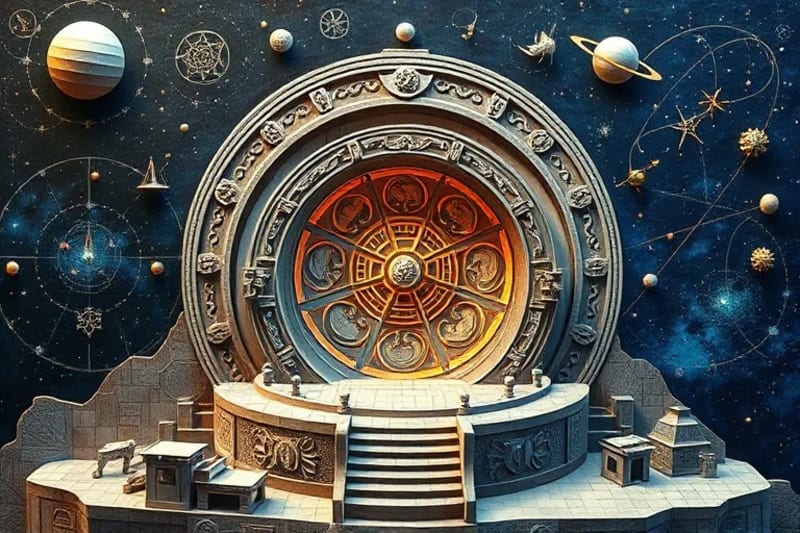 Ancient observatories often combined architectural beauty with precise astronomical charting, reflecting a deep cultural reverence for the cosmos.
Across the Atlantic, the Mayan civilization in Mesoamerica left behind a rich legacy of astro-archeological sites. Chichen Itza's El Castillo pyramid features a serpent shadow illusion during the equinoxes, created by the interplay of sunlight and architectural design. The Caracol observatory, with its numerous windows and alignments, demonstrates the Mayans' advanced knowledge of planetary movements, particularly Venus. Their complex calendar systems, derived from meticulous astronomical observations, were central to their religious ceremonies and agricultural cycles. These celestial insights often played a role in their understanding of Lunar Nodes and Vertex Points, navigating soul contracts and destiny.
Other notable examples include the Nazca Lines in Peru, some of which are believed to have astronomical significance, and the Big Horn Medicine Wheel in Wyoming, which aligns with the summer solstice sunrise and other significant stellar events. These diverse examples underscore the universality of human fascination with the cosmos and the varied ways different cultures integrated this fascination into their built environment and spiritual practices.
Methodologies in Astro-Archeology
The methodology of astro-archeology is inherently interdisciplinary, drawing on techniques from both archaeology and astronomy. It typically begins with archaeological surveys and excavations to understand the physical layout and context of ancient sites. This is followed by precise measurements of orientations and alignments of structures, passages, and markers within these sites. Modern tools like GPS, LiDAR, and photogrammetry are invaluable in achieving the necessary accuracy for these measurements.
Astronomical calculations are then applied to determine the exact positions of celestial bodies at specific historical dates. This involves using sophisticated software to reconstruct ancient sky patterns, taking into account phenomena like precession of the equinoxes, which subtly shifts the apparent positions of stars over millennia. Researchers compare the measured alignments of ancient structures with these reconstructed celestial events to identify potential correlations.
Beyond mere correlation, a critical aspect of astro-archeological methodology is the interpretation of cultural context. Anthropological and ethnographical studies of contemporary indigenous cultures, as well as historical texts and oral traditions, provide crucial insights into the beliefs and practices of ancient peoples. This helps to differentiate between accidental alignments and those that were intentional and culturally significant. For instance, understanding the symbolic importance of certain stars or constellations to a particular culture is vital for interpreting why a structure might be oriented towards them.
Statistical analysis is also employed to assess the probability of observed alignments occurring by chance. If an alignment is statistically significant, it strengthens the argument for intentional design. However, researchers must be cautious to avoid "patternicity," the tendency to see patterns where none exist. The field also benefits from advanced astrological techniques, such as those explored in Uranian Astrology, which unlocks midpoints and predictive harmonics, offering deeper insights into celestial influences.
Celestial Alignments and Cultural Significance
The celestial alignments found in ancient structures often served multiple, interconnected purposes, reflecting the holistic worldview of early civilizations. One of the most fundamental functions was calendrical. By marking solstices and equinoxes, ancient peoples could accurately track the changing seasons, which was crucial for agricultural planning. The timing of planting and harvesting, as well as the migration of animals, could be predicted with precision, ensuring the survival and prosperity of communities.
Beyond practical applications, celestial alignments held immense spiritual and ritualistic significance. Many cultures believed that the cosmos was a divine realm, and that celestial events were messages from gods or ancestors. Temples and sacred sites were often oriented to capture the first rays of the rising sun on a significant day, symbolizing renewal, rebirth, or divine presence. These events would be accompanied by elaborate ceremonies, reinforcing social cohesion and communal identity.
 Abstract representations of cosmic order and mathematical precision, reflecting the profound understanding of ancient civilizations.
Celestial alignments also played a role in social and political organization. Rulers and priests often derived their authority from their perceived connection to the divine cosmos and their ability to interpret celestial signs. The construction of monumental structures aligned with astronomical events could serve as a powerful display of their knowledge and power, legitimizing their rule. For example, the precise alignment of the Egyptian pyramids with cardinal directions and specific stars reinforced the pharaoh's divine status.
Furthermore, these alignments contributed to the creation of profound cultural narratives and mythologies. The stories of gods and heroes were often interwoven with the movements of celestial bodies, providing a framework for understanding the world and humanity's place within it. The study of Hermetic Principles and Quantum Manifestation offers a modern parallel to how ancient cultures sought to align their earthly existence with cosmic laws for transformation and abundance.
The integration of celestial observations into architecture and culture demonstrates a sophisticated worldview where the natural environment, human society, and the cosmos were perceived as an interconnected whole. This perspective contrasts sharply with modern compartmentalized thinking, offering valuable lessons about holistic living and the profound impact of our environment.
Debates and Challenges in the Field
Despite its compelling findings, astro-archeology is not without its debates and challenges. One of the primary points of contention revolves around the issue of intentionality versus coincidence. Given enough points and lines, it is statistically possible to find alignments in almost any random distribution of objects. Critics argue that some proposed alignments might be accidental, rather than deliberate design choices by ancient builders. To counter this, researchers employ rigorous statistical methods to determine the probability of an alignment occurring by chance, and they seek corroborating evidence from historical texts, folklore, and other archaeological findings.
Another challenge lies in the interpretation of cultural meaning. While an alignment might be statistically significant, understanding its exact purpose and symbolism to the ancient people can be difficult. Modern interpretations can be biased by contemporary perspectives, potentially misrepresenting the original cultural context. This highlights the importance of interdisciplinary collaboration, bringing together archaeologists, astronomers, anthropologists, and historians to provide a more nuanced and accurate understanding.
The preservation of ancient sites is also a significant concern. Erosion, natural disasters, and human interference can alter the original state of structures, making precise measurements and interpretations more challenging. Climate change, in particular, poses a growing threat to many vulnerable archaeological sites. Ethical considerations regarding the study and presentation of indigenous heritage are also paramount, requiring respectful engagement with descendant communities.
Furthermore, the field sometimes faces skepticism from mainstream archaeology and astronomy, which may view it as speculative or lacking sufficient empirical evidence. Overcoming this requires continuous refinement of methodologies, transparent reporting of findings, and a commitment to scientific rigor. The integration of advanced technologies and data analysis can help strengthen the credibility and impact of astro-archeological research.
The Future of Astro-Archeology
The future of astro-archeology is bright, driven by advancements in technology and an increasing appreciation for interdisciplinary research. New technologies like satellite imaging, drones, and advanced geophysical surveys are allowing researchers to discover and analyze sites in unprecedented detail, even in remote or previously inaccessible areas. These tools can reveal subtle alignments and patterns that would be impossible to detect from the ground.
Computational modeling and virtual reality are also transforming the field. Researchers can now create precise 3D models of ancient sites and simulate celestial events from specific historical vantage points. This allows for dynamic and interactive exploration of alignments, helping to visualize how light and shadow interacted with structures on significant dates. Such simulations can provide compelling evidence for intentional design and aid in public outreach and education.
The integration of artificial intelligence and machine learning holds significant promise for analyzing vast datasets of archaeological and astronomical information. AI algorithms could potentially identify subtle patterns and correlations that human researchers might overlook, accelerating the discovery of new astro-archeological sites and interpretations. This aligns with broader trends in Cosmic Sociology, where AI is mapping global consciousness trends, offering new ways to understand human interaction with the cosmos.
Furthermore, there is a growing emphasis on collaborative and community-engaged research. Working closely with indigenous communities and local populations can provide invaluable insights into traditional knowledge systems, oral histories, and spiritual beliefs that are crucial for interpreting celestial alignments. This approach not only enriches the research but also ensures that the study of ancient heritage is conducted respectfully and ethically.
As our understanding of the cosmos continues to expand, so too will our appreciation for the sophisticated astronomical knowledge of our ancestors. Astro-archeology will continue to reveal how deeply intertwined human culture and celestial phenomena have always been, offering profound lessons about our place in the universe and the enduring human quest for meaning.
In conclusion, astro-archeology is a dynamic and evolving field that offers a unique window into the minds and cultures of ancient civilizations. By meticulously studying the celestial alignments embedded in their monumental works, we gain not only a deeper understanding of their scientific prowess but also a richer appreciation for their spiritual and societal values. It reminds us that the quest to understand the cosmos is a timeless human endeavor, connecting us across millennia.
Explore Related Insights
- Electional Astrology
- Lunar Nodes & Vertex Points
- Automatic Writing
- Uranian Astrology
- Urban Geomancy
- Hermetic Principles
- Planetary Dignities
- Vibrational Linguistics
- Vocational Astrology
- 12th House Astrology
- Monkey's Business Acumen
- Cosmic Sociology AI
- Wood & Water Snake
- Snake Compatibility
- Sigil Magick
- Colombian Commercial Code
- Meaning of "Down"
- Colombia Foreign Companies
- Meditación Guiada
- Zodiaco Chino
- Geometría Sagrada
- Sacramentales Desierto
- Trinidad Digital
- Santos Patronos Digitales
Source: Hybrid content assisted by AI and human editorial supervision.


Comments
Post a Comment