
Scrying: Divination Through Reflective Surfaces | StarPluto
Scrying, an ancient and revered practice, stands as a profound method of divination that involves gazing into a reflective surface to receive visions, messages, or insights. This age-old art transcends cultural boundaries and historical epochs, having been employed by seers, mystics, and spiritual seekers across various civilizations. From the polished obsidian mirrors of ancient Mesoamerica to the crystal balls of European clairvoyants, the fundamental principle remains consistent: to quiet the conscious mind and allow the subconscious or higher self to perceive information through symbolic imagery.
The term "scrying" itself derives from the Old English word "descry," meaning "to make out" or "to reveal." It encompasses a wide array of techniques, each utilizing different mediums but sharing the common goal of accessing hidden knowledge or future possibilities. Unlike direct psychic impressions, scrying often involves a more meditative and interpretive process, where the practitioner acts as a conduit, translating the visual phenomena into meaningful guidance. This comprehensive guide delves into the intricate world of scrying, exploring its rich history, diverse methodologies, and practical applications for contemporary spiritual development.
Table of Contents
- Historical Roots of Scrying
- Diverse Methods of Scrying
- The Psychology and Esotericism Behind Scrying
- Preparing for a Scrying Session
- Step-by-Step Scrying Techniques
- Interpreting Your Scrying Visions
- Benefits and Potential Pitfalls
- Ethical Considerations in Scrying
- Integrating Scrying into Modern Spiritual Practice
Historical Roots of Scrying
The practice of scrying is as old as humanity's quest for understanding the unknown. Evidence of reflective divination dates back to ancient Egypt, where priests and priestesses would gaze into bowls of water, oil, or even blood to commune with deities and interpret divine messages. These practices were often interwoven with religious rituals and considered sacred acts, accessible only to a select few initiates.
In ancient Greece and Rome, scrying took various forms, including hydromancy (water gazing) and catoptromancy (mirror gazing). Oracles, such as those at Delphi, sometimes incorporated reflective elements into their prophetic practices. The Celts were known to use beryl stones and polished metals for similar purposes, believing these surfaces acted as gateways to the Otherworld. The famed Druids, spiritual leaders of Celtic society, likely employed such methods to gain insights into tribal affairs and natural phenomena.
A digital illustration of a crystal ball, a classic tool for divination, reflecting cosmic energies and ancient symbols, highlighting its mystical allure.
During the medieval period, scrying continued to flourish, often associated with alchemy and ceremonial magic. John Dee, a prominent mathematician, astronomer, and occultist in the court of Queen Elizabeth I, famously used a crystal ball and obsidian mirror for scrying, claiming to communicate with angels through his scryer, Edward Kelley. These accounts, documented in Dee's personal journals, provide some of the most detailed historical records of scrying practices.
The Renaissance saw a renewed interest in esoteric arts, and scrying became a tool for both genuine spiritual inquiry and charlatanism. Despite periods of persecution and skepticism, the practice persisted, evolving with new materials and interpretations. Today, scrying is experiencing a resurgence, with modern practitioners exploring its potential for self-reflection, spiritual growth, and intuitive development, moving beyond its historical reputation solely as a fortune-telling device.
Diverse Methods of Scrying
Scrying is not limited to a single method or tool; its versatility is one of its most fascinating aspects. Different cultures and practitioners have developed unique approaches, each leveraging specific reflective surfaces to facilitate visions. Understanding these diverse methods can help an aspiring scryer find the technique that resonates most with their personal energy and intuitive style.
- Crystallomancy (Crystal Gazing): Perhaps the most iconic form, this involves gazing into a crystal ball, usually made of quartz. The clarity and spherical shape of the crystal are believed to focus energy and allow images to form within its depths.
- Hydromancy (Water Gazing): One of the oldest forms, hydromancy uses a bowl of dark water, a natural pool, or even a glass of water. The subtle distortions and reflections on the water's surface are interpreted as messages.
- Catoptromancy (Mirror Gazing): This method employs a mirror, often one with a dark or smoky surface, such as obsidian. The mirror acts as a portal, reflecting not just the physical world but also the subtle energies beyond.
- Pyromancy (Fire Gazing): While not strictly reflective, fire gazing involves staring into flames (e.g., a candle, bonfire) to see shapes, figures, or symbols. The flickering, dynamic nature of fire can induce a trance-like state conducive to visions.
- Capnomancy (Smoke Gazing): Similar to pyromancy, this involves interpreting patterns in rising smoke, often from incense or a ritual fire. The ephemeral nature of smoke encourages fluid interpretation.
- Aeromancy (Cloud Gazing): A more natural and accessible form, aeromancy involves observing cloud formations and interpreting the shapes and movements as omens or messages.
- Selenomancy (Moon Gazing): Gazing at the moon's reflection on water or directly at the moon itself can be a powerful scrying method, especially for those attuned to lunar energies and cycles.
The Psychology and Esotericism Behind Scrying
The efficacy of scrying can be understood through both psychological and esoteric lenses. From a psychological perspective, scrying induces a mild trance state, similar to meditation or hypnagogia, the state between wakefulness and sleep. When the eyes are focused on a uniform, reflective surface, the brain's default mode network can quiet down, allowing subconscious thoughts, memories, and intuitive insights to surface.

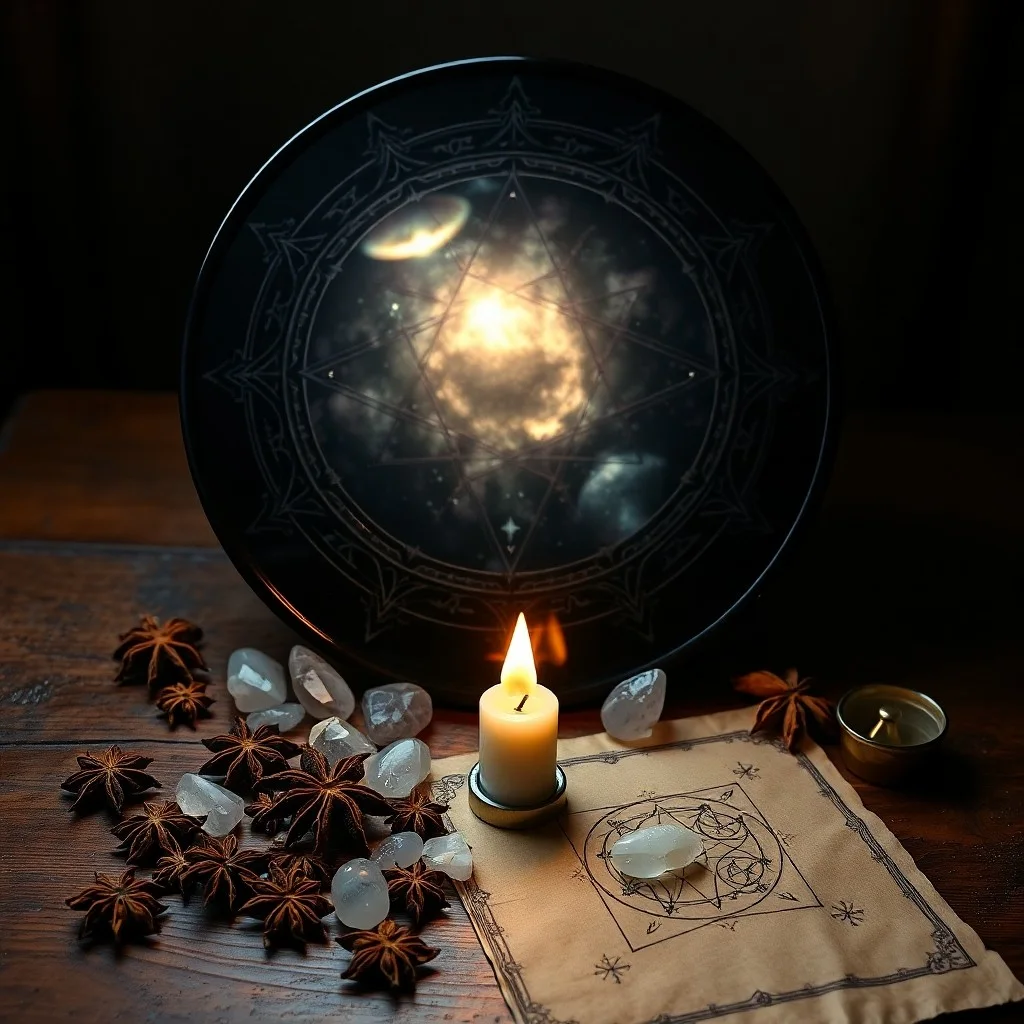
A cinematic still life featuring an esoteric tool, an obsidian mirror, bathed in candlelight, symbolizing deep introspection.
This phenomenon is often linked to pareidolia, where the mind perceives patterns or images in random stimuli. However, in scrying, this is not merely an illusion but a mechanism through which the subconscious communicates. Carl Jung's concept of the collective unconscious also offers an explanation, suggesting that scrying might tap into a universal reservoir of symbols and archetypes, allowing practitioners to access insights beyond their personal experience.
Esoterically, scrying is believed to open a channel to the astral plane or other non-physical dimensions. The reflective surface acts as a focal point, concentrating psychic energy and creating a "window" through which subtle energies and entities can be perceived. Many practitioners believe that spirits, guides, or even aspects of one's higher self can communicate through these visions. The choice of scrying tool is often seen as significant, with different materials (e.g., quartz, obsidian, water) having distinct energetic properties that influence the type and clarity of visions received.
Preparing for a Scrying Session
Effective scrying requires more than just a reflective surface; it demands careful preparation of both the environment and the self. Creating the right atmosphere and mindset can significantly enhance the clarity and depth of your visions. Here are key steps for preparation:
- Choose a Quiet Space: Select a location free from distractions, where you can remain undisturbed for at least 30 minutes to an hour. Dim lighting is often preferred, as it reduces external visual stimuli and helps the eyes adjust to the reflective surface.
- Cleanse Your Space and Tools: Energetic cleansing is crucial. You can smudge the area with sage or palo santo, use sound (e.g., singing bowl, chimes), or visualize white light purifying the space. Cleanse your scrying tool physically and energetically before each session.
- Set Your Intention: Before you begin, clearly define what you wish to gain from the session. Are you seeking guidance on a specific question? Are you looking for general insights or spiritual connection? A clear intention helps focus your energy.
- Ground and Center Yourself: Engage in a short meditation or deep breathing exercises to ground your energy and calm your mind. Visualize roots extending from your feet into the earth and a column of light connecting you to the cosmos.
- Protection: Always invoke spiritual protection before any divinatory work. This can involve visualizing a protective bubble around yourself, calling upon your spirit guides, or reciting a prayer or affirmation.
- Comfort: Ensure you are physically comfortable. Wear loose clothing, and sit in a position that you can maintain without discomfort for the duration of the session.
Step-by-Step Scrying Techniques
Once you've prepared your space and yourself, you can begin the actual scrying process. While specific nuances may vary depending on the chosen medium, the general steps remain consistent:
- Position Your Scrying Tool: Place your crystal ball, mirror, or bowl of water on a dark cloth or surface to minimize reflections and provide a uniform background. Ensure it's at a comfortable viewing distance, allowing you to gaze without strain.
- Adjust Lighting: Dim the lights in the room. A single candle placed behind or to the side of your scrying tool can provide subtle illumination without creating direct glare. The goal is to create a soft, diffused light that allows the surface to appear deep and inviting.
- Relax Your Gaze: Do not stare intently. Instead, relax your eyes and allow your gaze to soften, almost as if looking through the surface rather than at it. This "soft focus" helps induce the trance state.
- Breathe Deeply: Maintain a slow, steady, and deep breathing pattern. This further aids in relaxing the mind and body, deepening your meditative state.
- Observe Without Judgment: At first, you might see only your reflection or the surface itself. Be patient. Over time, the surface may appear to cloud, darken, or become smoky. Then, images, symbols, colors, or scenes may begin to form. Do not try to force them or analyze them immediately. Simply observe what appears.
- Allow Images to Develop: The visions might be fleeting or subtle. They can be clear pictures, abstract shapes, or even feelings and impressions. Allow them to unfold naturally. If your mind wanders, gently bring your focus back to the surface.
- Record Your Experience: Keep a journal handy. Immediately after your session, write down everything you saw, felt, or thought, no matter how insignificant it seemed at the time. Include details about colors, emotions, symbols, and any questions that arose.

An abstract watercolor representing water scrying, with gentle ripples and reflections, symbolizing the flow of intuition.
Interpreting Your Scrying Visions
Interpretation is arguably the most challenging, yet most rewarding, aspect of scrying. Unlike a direct answer, scrying visions often come in symbolic form, requiring careful contemplation and an understanding of personal and universal archetypes. Here are some guidelines for interpreting your experiences:
- Personal Associations: What do the images, colors, or symbols mean to you personally? Your subconscious often uses familiar imagery. A snake might represent transformation to one person, while to another, it might signify deceit.
- Universal Archetypes: Consider common symbolic meanings found in mythology, folklore, and dream analysis. For example, a bird often symbolizes freedom or messages, while a tree can represent growth or stability.
- Emotional Context: Pay attention to the emotions you felt during the vision. Did the image evoke fear, joy, peace, or confusion? The emotional tone provides crucial context for the message.
- Storytelling: If multiple images appear, try to weave them into a narrative. How do they connect? What story are they telling? This can reveal a broader message or a sequence of events.
- Don't Force It: If an interpretation doesn't immediately come, don't force it. Sometimes, insights arrive hours or days later, after your subconscious has had time to process the information.
- Journaling for Clarity: Regularly reviewing your scrying journal can help you identify recurring symbols or patterns, leading to deeper understanding over time.
It's important to approach interpretation with an open mind and a degree of skepticism. Not every fleeting image will hold profound meaning, and sometimes the mind simply creates patterns. The key is to discern between random visual noise and genuine intuitive insight through consistent practice and self-reflection.
Benefits and Potential Pitfalls
Scrying, when practiced responsibly, offers a multitude of benefits for personal and spiritual development. However, like any powerful esoteric practice, it also comes with potential pitfalls that practitioners should be aware of.
| Benefits of Scrying | Potential Pitfalls |
|---|---|
| Enhanced Intuition: Regular practice strengthens your intuitive faculties and ability to perceive subtle energies. | Misinterpretation: Symbolic visions can be ambiguous, leading to incorrect or misleading conclusions if not carefully analyzed. |
| Self-Discovery: Provides insights into your subconscious mind, hidden desires, fears, and potential. | Over-Reliance: Becoming overly dependent on scrying for every decision can hinder personal growth and decision-making skills. |
| Spiritual Connection: Can facilitate communication with spirit guides, higher self, or other spiritual entities. | Psychological Strain: Intense or disturbing visions, especially without proper grounding, can cause anxiety or confusion. |
| Problem Solving: Offers new perspectives on challenges, helping to uncover creative solutions. | Attracting Undesirable Energies: Without proper protection, opening psychic channels can potentially attract negative or mischievous entities. |
| Stress Reduction: The meditative aspect of scrying can be calming and help reduce mental clutter. | Hallucinations vs. Visions: Distinguishing genuine intuitive insights from mental projections or fatigue can be difficult for beginners. |
To mitigate these risks, it is essential to approach scrying with a balanced perspective, prioritizing self-care, grounding, and discernment. Always trust your inner guidance and do not let any external tool or practice override your own judgment.
Ethical Considerations in Scrying
As with any form of divination, ethical practice is paramount in scrying. Respect for oneself, others, and the spiritual realms should always guide your intentions and actions. Here are some key ethical considerations:
- Consent and Privacy: Never attempt to scry about another person without their explicit consent. This is a violation of their energetic boundaries and privacy. Focus on your own path and insights.
- Non-Harm: Ensure your intentions are always benevolent. Scrying should not be used to manipulate, harm, or interfere with the free will of others.
- Personal Responsibility: Remember that visions are guidance, not absolute decrees. You are always responsible for your choices and actions, regardless of what you perceive in a scrying session.
- Discernment: Not all information received through scrying is necessarily benevolent or accurate. Develop your discernment to filter out fear-based messages or projections from lower astral entities.
- Professional Boundaries: If you are scrying for clients, maintain clear professional boundaries. Do not offer medical, legal, or financial advice unless you are qualified in those respective fields. Present information as guidance, not as definitive solutions.
- Humility: Approach scrying with humility. Recognize that you are a channel, and the wisdom comes from a source greater than yourself. Avoid ego inflation or claiming absolute truth.
Adhering to these ethical guidelines ensures that your scrying practice remains a positive and constructive force in your life and the lives of those you may guide.
Integrating Scrying into Modern Spiritual Practice
In the contemporary spiritual landscape, scrying offers a unique pathway for deepening intuition and connecting with inner wisdom. Its adaptability allows it to be integrated into various modern practices, from daily meditation routines to more structured magical or esoteric work. For those seeking to enhance their psychic abilities, scrying provides a tangible focal point for developing clairvoyance and clairsentience.
Many practitioners combine scrying with other tools like Tarot or Oracle cards, using the visions from the reflective surface to add depth and nuance to card readings. It can also be a powerful adjunct to dream work, as the symbols encountered in scrying often mirror those found in dreams, providing a richer tapestry of subconscious communication. Furthermore, scrying can be used as a tool for creative inspiration, helping artists, writers, and musicians tap into a wellspring of imaginative ideas.
The key to successful integration is consistency and patience. Like any skill, scrying improves with regular practice. Starting with short, focused sessions and gradually increasing their duration can help build your capacity for receiving and interpreting visions. Embrace the journey of discovery, allowing the reflective surfaces to reveal the hidden depths of your intuition and the subtle energies of the universe.
Ultimately, scrying is a personal journey. There is no single "right" way to do it, and what works for one person may not work for another. Experiment with different tools, lighting conditions, and intentions. Trust your instincts and allow your own unique connection to the reflective surface to unfold. With dedication and an open heart, scrying can become a profound and transformative practice, illuminating pathways to greater self-awareness and spiritual insight.
Fuente: Contenido híbrido asistido por IAs y supervisión editorial humana.


Comments
Post a Comment