
Automatic Writing: Channeling Creative Expression | StarPluto
Automatic writing, often perceived as a mystical or esoteric practice, transcends its initial reputation to become a powerful tool for advanced creative expression. Beyond merely jotting down thoughts, this technique involves consciously surrendering control to access deeper layers of the subconscious mind, connecting with a "muse" or higher source of inspiration. It is a method for channeling raw, unfiltered ideas directly onto paper or screen, bypassing the critical ego and unlocking profound wells of creativity.

An ethereal quill pen hovers over an ancient journal, channeling cosmic inspiration into flowing script.
This advanced approach to automatic writing is not about predicting the future or communicating with spirits, but rather about cultivating a direct line to one's innate creative genius. It serves as a bridge between the conscious, analytical mind and the vast, imaginative realm of the unconscious. By learning to quiet the internal editor and embrace spontaneity, individuals can tap into unique perspectives, innovative concepts, and a distinctive voice that might otherwise remain dormant.
The practice is rooted in the understanding that creativity is not solely a product of conscious effort but also a flow state accessible through specific mental and spiritual disciplines. This guide explores the principles, techniques, and benefits of advanced automatic writing, offering a pathway for artists, writers, and innovators to channel their deepest inspirations and elevate their creative output.
Table of Contents
- Historical Roots and Evolution
- Core Principles of Channeling Creative Flow
- Preparation: Setting the Stage for Inspiration
- Advanced Automatic Writing Techniques
- Benefits for Enhanced Creative Expression
- Overcoming Common Challenges
- Integrating and Refining the Channeled Output
- Ethical Considerations and Discernment
- Conclusion: The Path to Unfettered Creativity
Historical Roots and Evolution
The concept of automatic writing, or psychography, has a rich and varied history, dating back centuries across different cultures and spiritual traditions. Its earliest forms were often intertwined with spiritualism and mediumship, where practitioners believed they were channeling messages from deceased spirits or divine entities. This spiritualist interpretation gained significant traction in the 19th century, with figures like Hélène Smith claiming to write in Martian languages or receive communications from other planes of existence.
However, the practice evolved beyond purely spiritual contexts. In the early 20th century, automatic writing found a new home within the Surrealist movement, championed by artists and writers such as André Breton. For Surrealists, it was a method to tap into the unconscious mind, bypassing rational thought to unlock pure psychic automatism. They sought to liberate creativity from the constraints of logic and morality, believing that the unconscious held the key to true artistic expression. This marked a significant shift, moving automatic writing from a spiritual conduit to a psychological tool for artistic innovation.
Carl Jung's concept of the collective unconscious further provided a psychological framework for understanding how individuals might access universal symbols, archetypes, and narratives through such practices. While not directly endorsing automatic writing as a primary therapeutic technique, Jungian psychology offers insights into the deep, shared reservoir of human experience that creative channeling might tap into. Today, advanced automatic writing integrates these historical perspectives, focusing on accessing an individual's unique creative potential rather than external entities, though the underlying principle of surrendering conscious control remains central.
Core Principles of Channeling Creative Flow
At its heart, advanced automatic writing operates on several core principles that facilitate the channeling of creative flow. Understanding these principles is crucial for effective practice and maximizing its potential. The primary goal is to bypass the conscious, analytical mind, which often acts as a censor or critic, hindering the free flow of ideas.
- Surrender and Non-Judgment: The most fundamental principle is to release the need for control and judgment. This means writing continuously without stopping to edit, correct, or even think about what is being written. The focus is on the act of writing itself, allowing words to emerge without conscious interference.
- Accessing the Subconscious: Automatic writing serves as a direct conduit to the subconscious mind, a vast repository of memories, ideas, emotions, and creative impulses. By quieting the conscious mind, practitioners can tap into this deeper reservoir, retrieving insights and narratives that are otherwise inaccessible.
- Connecting with the Muse/Higher Self: Many practitioners conceptualize the source of inspiration as a "muse," a "higher self," or even a "universal consciousness." This is not necessarily a literal entity but rather a metaphor for an expanded state of awareness where creative ideas reside. The practice aims to establish a clear channel to this source.
- Flow State Induction: The continuous, uninhibited nature of automatic writing helps induce a psychological "flow state." In this state, one becomes fully immersed in the activity, experiencing heightened focus, enjoyment, and a distorted sense of time. This optimal state is highly conducive to creative breakthroughs.
- Intuitive Guidance: The process encourages reliance on intuition over logic. Ideas, images, and phrases often appear spontaneously, guided by an inner knowing rather than deliberate construction. This intuitive guidance can lead to novel connections and unexpected creative directions.
By embracing these principles, automatic writing transforms from a simple exercise into a profound meditative and creative discipline. It teaches the practitioner to trust their inner voice and to recognize that true inspiration often arises from a place beyond ordinary conscious thought.
Preparation: Setting the Stage for Inspiration
Effective automatic writing, especially at an advanced level, requires careful preparation of both the external environment and the internal mindset. Creating a conducive atmosphere helps to quiet distractions and open the mind to deeper creative currents. This preparation phase is as important as the writing itself, as it lays the groundwork for a successful channeling experience.
- Choose a Quiet, Sacred Space: Select a location where you will not be disturbed. This could be a specific corner of a room, a quiet park, or any place that feels peaceful and inspiring. Consider making it a "sacred" space by tidying it, perhaps lighting a candle, or playing soft instrumental music.
- Minimize Distractions: Turn off phones, close unnecessary tabs on your computer, and inform others not to interrupt you. The goal is to eliminate external stimuli that could pull your conscious mind away from the task.
- Comfortable Tools: Whether you prefer pen and paper or a keyboard, ensure your tools are comfortable and ready. A smooth-flowing pen and a fresh notebook can enhance the tactile experience. For digital writing, a distraction-free writing app can be beneficial.
- Mindset and Intention Setting: Before you begin, take a few moments to center yourself. This can involve deep breathing, a short meditation, or progressive muscle relaxation. Clearly state your intention for the session. Are you seeking inspiration for a specific project, exploring a particular theme, or simply opening yourself to general creative flow?
- Grounding and Protection: If you are sensitive to energies, consider a brief grounding exercise. Visualize roots extending from your feet into the earth, or imagine a protective light surrounding you. This helps to ensure that the channeled information feels clear and beneficial.
By consciously preparing your space and mind, you signal to your subconscious that you are ready to receive. This intentionality enhances the depth and clarity of the creative material that emerges.
Advanced Automatic Writing Techniques
Moving beyond basic free-writing, advanced automatic writing incorporates specific techniques designed to deepen the connection to the muse and unlock more profound creative insights. These methods focus on sustained focus, intentional surrender, and diverse applications for various creative pursuits.
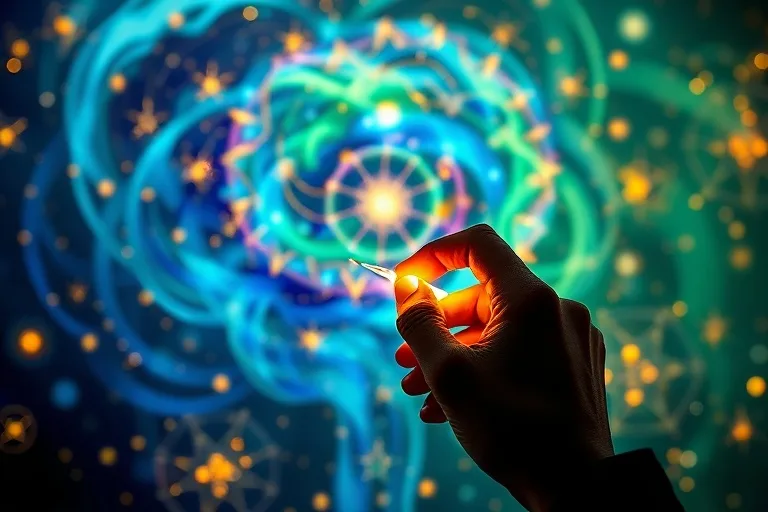
An abstract digital painting depicts a mind in a flow state, with a hand writing luminous symbols.
- Targeted Intentional Channeling: Instead of general free-writing, set a specific creative question or theme before you begin. For example, "What is the core message of my novel's protagonist?" or "How can I express joy through this painting?" Hold this intention lightly, then let the words flow.
- Deep Meditative Immersion: Combine automatic writing with deeper meditative states. Practice a longer meditation session (15-30 minutes) before picking up your pen. Focus on reaching a theta or alpha brainwave state, which is more receptive to intuitive information.
- Non-Linear and Stream-of-Consciousness: Embrace writing that doesn't follow conventional narrative structures. Allow for sudden shifts in topic, fragmented sentences, or even nonsensical phrases. The goal is to capture the raw stream of consciousness, which often contains hidden gems.
- Sensory and Emotional Prompts: Use sensory details or strong emotions as starting points. Instead of a logical prompt, try "Write about the feeling of deep longing" or "Describe the scent of an ancient forest." This can bypass intellectualization and tap directly into evocative imagery.
- Dialogue with the Muse: Frame your writing session as a dialogue. Start by asking your muse or higher self a question, then write the response that comes to mind. This can be particularly effective for overcoming creative blocks or seeking guidance on artistic direction.
- Timed Sprints and Sustained Flow: Practice writing for extended, uninterrupted periods (e.g., 30-60 minutes). The longer you write without stopping, the more likely you are to break through initial resistance and access a deeper, more consistent flow.
- Visual Automatic Writing: For visual artists, this can involve automatic drawing or sketching. Allow your hand to move freely across the page without conscious direction, letting shapes, lines, and colors emerge spontaneously. This can generate ideas for compositions, characters, or abstract concepts.
These advanced techniques require patience and consistent practice. The more you engage with them, the more adept you will become at channeling powerful and original creative content.
Benefits for Enhanced Creative Expression
The consistent practice of advanced automatic writing offers a multitude of benefits for anyone seeking to enhance their creative expression. It acts as a catalyst, transforming potential into tangible output and fostering a more dynamic relationship with one's artistic process.
| Benefit | Description |
|---|---|
| Breaks Creative Blocks | By bypassing the internal critic and conscious overthinking, automatic writing helps to dislodge mental obstacles and reignite the flow of ideas. It provides a direct route around writer's block or artistic stagnation. |
| Accesses Novel Ideas | The subconscious mind is a vast reservoir of unique connections and unconventional thoughts. This practice allows access to these fresh perspectives, leading to original plots, characters, melodies, or visual concepts. |
| Develops Unique Voice | When writing without conscious censorship, an individual's authentic voice naturally emerges. This unfiltered expression helps artists discover and refine their distinctive style and tone. |
| Increases Flow State Frequency | Regular practice trains the mind to enter a "flow state" more readily. This means experiencing deeper immersion, heightened productivity, and greater enjoyment during creative tasks, even outside of automatic writing sessions. |
| Enhances Intuition | Relying on spontaneous thought strengthens intuitive faculties. Artists learn to trust their gut feelings and inner guidance, which is invaluable for making creative decisions. |
| Reduces Self-Criticism | The non-judgmental nature of the practice helps to diminish the power of the inner critic. This fosters a more compassionate and experimental approach to creation, reducing fear of failure. |
These benefits extend across various creative disciplines, from writing and music composition to visual arts and problem-solving. Automatic writing provides a reliable method for consistently accessing and cultivating one's creative potential.
Overcoming Common Challenges
While advanced automatic writing offers immense potential, practitioners often encounter challenges that can hinder their progress. Recognizing and addressing these obstacles is key to maintaining a consistent and fruitful practice. The journey to unfettered creative channeling is rarely without its bumps.
- Skepticism and Doubt: Many beginners struggle with skepticism, wondering if they are truly channeling or just making things up. The key is to suspend disbelief during the writing process. Treat every word as valid input, reserving judgment for the editing phase. Over time, the unique quality of the channeled material often speaks for itself.
- Internal Critic Interference: The inner critic is a formidable opponent. It tries to stop you, tell you your writing is bad, or question the validity of the process. Acknowledge these thoughts, but gently redirect your focus back to continuous writing. Visualize the critic as a separate entity that you are temporarily ignoring.
- Distractions and Lack of Focus: In a world full of stimuli, maintaining focus can be difficult. Revisit your preparation steps: ensure a quiet environment, turn off notifications, and use grounding techniques. Regular meditation can significantly improve your ability to concentrate during sessions.
- Fear of the Unknown/Uncomfortable Content: Sometimes, channeled material can be unexpected, emotionally charged, or even unsettling. It might reveal hidden fears, unresolved issues, or uncomfortable truths. Approach this material with curiosity and self-compassion. Remember that it's an opportunity for self-discovery and integration, not something to be feared.
- Interpreting Ambiguous Output: The raw output of automatic writing can sometimes be fragmented, symbolic, or seemingly nonsensical. Don't expect immediate clarity. Treat it like a dream: journal about it, reflect on it, and look for recurring themes or surprising connections. The meaning often reveals itself with time and further engagement.
- Physical Discomfort: Prolonged writing can lead to hand cramps, eye strain, or back pain. Ensure you have ergonomic tools and take short breaks if needed. The goal is sustained flow, not physical endurance at the cost of comfort.
Persistence and a compassionate attitude towards oneself are paramount in navigating these challenges. Each obstacle overcome deepens the connection to your creative source.
Integrating and Refining the Channeled Output
The raw material generated through automatic writing is often a diamond in the rough: brilliant but unpolished. The true artistry lies in the subsequent process of integration and refinement. This stage transforms spontaneous bursts of inspiration into coherent, impactful creative works. It's where the conscious mind, once bypassed, re-engages as a skilled artisan.

Macro photography captures an ancient parchment scroll with self-forming, shimmering script.
- Review with Fresh Eyes: After a session, step away from the material for a while. Return to it with a rested mind, approaching it as if you are reading someone else's work. This detachment helps in identifying key themes, powerful phrases, and surprising insights without attachment to the original process.
- Highlight Key Passages: Go through the text and highlight anything that stands out: a striking image, a profound statement, a unique turn of phrase, or a compelling character idea. These are the seeds for your refined work.
- Identify Recurring Themes and Symbols: Pay attention to any patterns, recurring words, symbols, or emotions. These often point to deeper meanings or central concepts that your muse is trying to convey. Consider how these elements might weave into your larger creative project.
- Structure and Organize: If the output is fragmented, begin to organize it. Group similar ideas, create outlines, or map out narrative arcs. For visual artists, this might involve categorizing sketches or color palettes. The goal is to bring order to the initial chaos.
- Conscious Editing and Crafting: This is where your conscious skills as a writer, artist, or creator come into play. Refine sentences, strengthen metaphors, develop characters, and sculpt the raw material into a polished piece. This stage is about applying technique and knowledge to the inspired content.
- Experiment and Play: Don't be afraid to experiment with the channeled material. Rewrite it in different styles, combine elements in unexpected ways, or use it as a springboard for further creative exploration. The initial output is a starting point, not an endpoint.
The interplay between the unconscious channeling and conscious crafting is what makes advanced automatic writing so powerful. It provides an inexhaustible source of original content, which can then be shaped into masterpieces.
Ethical Considerations and Discernment
As with any practice that delves into the deeper aspects of the mind or consciousness, advanced automatic writing comes with ethical considerations and the need for discernment. While the focus here is on creative expression rather than spiritual mediumship, it is still important to approach the practice with responsibility and a clear understanding of its boundaries.
- Source of Inspiration: Be mindful of the perceived source of your inspiration. While we refer to a "muse" or "higher self," it's crucial to understand that this is primarily an internal process accessing your own deep subconscious. Attributing all creative output to external entities can sometimes lead to a diminished sense of personal agency and responsibility for one's work.
- Discernment of Content: Not all channeled material will be profound or even useful. Some might be random thoughts, anxieties, or echoes of daily life. Practice discernment in evaluating the content. Does it resonate with your highest creative intentions? Does it feel authentic and inspiring? Discard or set aside anything that feels negative, confusing, or unhelpful.
- Mental and Emotional Well-being: If you find the content consistently disturbing, overwhelming, or if the practice exacerbates existing mental health challenges, it is advisable to pause and seek professional guidance. Automatic writing should be a tool for empowerment and creativity, not a source of distress.
- Plagiarism and Originality: While automatic writing taps into universal themes, ensure that the final refined output is genuinely your own interpretation and expression. Be aware of unconscious plagiarism, especially if you consume a lot of media. The goal is to find your unique voice, not to inadvertently reproduce others'.
- Maintaining Grounding: Practices that open channels to the subconscious can sometimes leave individuals feeling ungrounded. Always incorporate grounding exercises before and after your sessions. This helps to integrate the experience and maintain a healthy connection to your physical reality.
Approaching automatic writing with a balanced perspective – embracing its potential while exercising caution and self-awareness – ensures a safe and creatively enriching experience. It's a journey of self-discovery as much as it is a creative endeavor.
The practice of automatic writing, as described by André Breton in his 1924 Surrealist Manifesto, was a means to "express the actual functioning of thought... in the absence of any control exercised by reason, exempt from any aesthetic or moral concern."
This definition highlights the core principle of bypassing conscious censorship to access raw, unfiltered mental processes for artistic creation.
Conclusion: The Path to Unfettered Creativity
Advanced automatic writing is far more than a simple exercise; it is a profound methodology for unlocking and sustaining creative expression. By consciously engaging with the subconscious, cultivating a receptive mindset, and employing targeted techniques, artists and creators can forge a direct and powerful connection to their inner muse. This practice offers a unique pathway to overcome creative blocks, generate novel ideas, and develop an authentic artistic voice that resonates deeply.
The journey involves both the surrender of conscious control during the channeling phase and the meticulous application of craft during the integration and refinement stage. It is a dynamic interplay between intuition and intellect, allowing for a continuous flow of original content. Embracing the challenges with patience and discernment, practitioners can transform raw inspiration into polished works that truly reflect their unique creative essence. Ultimately, advanced automatic writing empowers individuals to tap into an inexhaustible wellspring of creativity, leading to a more vibrant, authentic, and unfettered artistic life.
Source: Hybrid content assisted by AIs and human editorial supervision.


Comments
Post a Comment