
Chinese Zodiac Compatibility: Elemental Harmony Weak Pairings Guide
The intricate system of the Chinese Zodiac offers profound insights into personality traits, life paths, and, significantly, interpersonal compatibility. Unlike Western astrology, which focuses on planetary positions, Chinese astrology is deeply rooted in a 12-year cycle of animal signs, each imbued with specific characteristics and, crucially, an associated element. Understanding these elements is paramount when navigating relationship dynamics, especially when faced with what are often termed "weak pairings."
This guide delves into the foundational principles of Chinese Zodiac compatibility, with a particular emphasis on elemental harmony. We will explore how the Five Elements interact and how these interactions influence the inherent strengths and challenges within relationships. Our goal is to provide practical strategies for individuals in "weak pairings" to foster understanding, balance, and lasting connection, transforming potential discord into opportunities for growth.

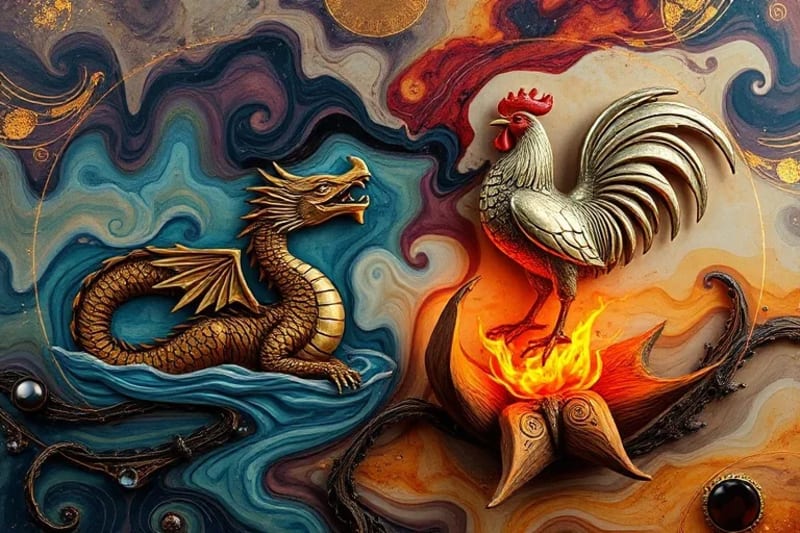
Depicting the subtle interplay of elemental forces and human connection, symbolizing the journey towards balanced relationships within the Chinese Zodiac.
Understanding Chinese Zodiac Compatibility Foundations
Chinese Zodiac compatibility is a multifaceted system that considers various factors beyond just the animal signs. While the twelve animal signs form the primary layer, deeper analysis incorporates the Five Elements (Wood, Fire, Earth, Metal, Water), Yin and Yang polarities, and even the fixed directions associated with each sign. These layers combine to create a nuanced picture of how two individuals might interact.
The animal signs themselves are grouped into compatibility triangles, also known as "Trine Allies" or "Allied Groups," which represent signs that naturally complement each other and share similar outlooks. For instance, the Rat, Dragon, and Monkey form one such group, often finding effortless understanding. Conversely, certain signs are considered "Clash" or "Opposite" signs, indicating inherent friction or challenges, such as the Horse and Rat. However, these clashes are not destiny; they merely highlight areas requiring more conscious effort and understanding.
Beyond the animal signs, the elemental aspect adds another critical dimension. Each zodiac year, and thus each animal sign born in that year, is also assigned one of the five elements. This means that two people born under the same animal sign but in different years will have different elemental attributes, leading to distinct personality nuances and compatibility dynamics. This elemental layer often holds the key to resolving or mitigating challenges in otherwise difficult pairings.
The Five Elements and Their Interactions
The Five Elements—Wood, Fire, Earth, Metal, and Water—are fundamental to Chinese philosophy and cosmology. They represent different phases of energy, characteristics, and natural phenomena, constantly interacting in cycles of creation (Sheng Cycle) and destruction (Ke Cycle). Understanding these cycles is crucial for assessing elemental harmony in relationships.
The Sheng Cycle (Generating Cycle) describes how elements nourish and support each other:
- Wood feeds Fire: Wood provides fuel for fire.
- Fire creates Earth: Fire turns wood into ash, which becomes earth.
- Earth bears Metal: Metal ores are found within the earth.
- Metal collects Water: Metal can hold water, or dew collects on metal.
- Water nourishes Wood: Water helps trees grow.
The Ke Cycle (Controlling or Overcoming Cycle) describes how elements restrain or control each other, preventing any single element from becoming dominant:
- Wood controls Earth: Tree roots penetrate and hold the earth.
- Earth absorbs Water: Earth dams or contains water.
- Water extinguishes Fire: Water puts out fire.
- Fire melts Metal: Fire can transform metal.
- Metal cuts Wood: Metal tools cut wood.
These cycles provide a framework for understanding how the elemental energies of two individuals might interact. A harmonious pairing often involves elements in a generating cycle, while a challenging pairing might involve elements in a controlling cycle or a severe imbalance. For a deeper dive into how ancient systems decode personality, one might also explore Chinese Face Reading, which offers complementary insights into destiny and character.
| Element | Characteristics | Sheng Cycle (Generates) | Ke Cycle (Controls) |
|---|---|---|---|
| Wood | Growth, creativity, flexibility, assertiveness | Fire | Earth |
| Fire | Passion, energy, leadership, impulsiveness | Earth | Metal |
| Earth | Stability, practicality, nurturing, stubbornness | Metal | Water |
| Metal | Structure, discipline, integrity, rigidity | Water | Wood |
| Water | Intuition, adaptability, empathy, secrecy | Wood | Fire |
Identifying "Weak Pairings" in Chinese Astrology
"Weak pairings" in Chinese Zodiac compatibility are typically those where the inherent characteristics of the animal signs or their associated elements create friction or misunderstanding. These are not necessarily "bad" pairings, but rather relationships that require more conscious effort, communication, and adaptation to thrive. Common indicators of a weak pairing include:
- Clash Signs: Direct oppositions in the zodiac cycle (e.g., Rat and Horse, Ox and Goat, Tiger and Monkey, Rabbit and Rooster, Dragon and Dog, Snake and Pig). These pairings often experience fundamental differences in values and approaches.
- Controlling Elements: When one partner's dominant element is in the Ke (Controlling) cycle of the other's element. For example, a Fire person with a Metal person (Fire melts Metal) may lead to the Fire person dominating or overwhelming the Metal person.
- Excessive Same Element: While some similarity can be good, too much of the same element can lead to stagnation or an amplification of negative traits. Two strong Fire individuals might clash in a battle of wills, or two Water individuals might become overly emotional and indecisive.
- Missing Elements: A severe lack of a particular element in a pairing can create an imbalance, leading to deficiencies in certain areas of the relationship. For instance, a pairing without strong Earth energy might lack stability or practicality.
A classic example of a challenging pairing is the Snake Tiger Compatibility, where the secretive, intuitive Snake can clash with the adventurous, impulsive Tiger. Understanding the elemental attributes of each partner can shed light on the underlying dynamics of these interactions. For instance, if the Snake is Water and the Tiger is Wood, the Water Snake might nourish the Wood Tiger, creating a more supportive dynamic despite the animal sign clash. Conversely, a Metal Snake and a Fire Tiger would represent a more challenging elemental interaction, as Fire melts Metal, potentially leading to power struggles.

An artistic interpretation of elemental forces finding equilibrium, illustrating the potential for balance even in diverse energetic compositions.
Strategies for Harmonizing Elemental Imbalances
The beauty of Chinese astrology is that it offers solutions and pathways to harmony, even for "weak pairings." The key lies in consciously working with the elemental energies to create balance. This isn't about changing who you are, but rather understanding your inherent elemental nature and how it interacts with your partner's, then finding ways to support or mitigate these interactions.
Here are several strategies for harmonizing elemental imbalances:
- Introduce a Mediating Element: If two elements are in a controlling cycle, introduce a third element that can mediate. For example, if Fire controls Metal, introducing Earth can help, as Fire creates Earth, and Earth bears Metal. This means finding activities or shared interests that embody the Earth element's stability and nurturing qualities.
- Embrace the Generating Cycle: Focus on activities and behaviors that align with the Sheng (Generating) cycle. If one partner is Wood and the other is Fire, the Wood partner can consciously support the Fire partner's passions and energy, while the Fire partner can appreciate the Wood partner's growth and creativity.
- Strengthen Weak Elements: Identify elements that are weak or missing in the combined pairing and consciously cultivate them. If a relationship lacks Earth energy, focus on building stability, practical planning, and nurturing aspects. This might involve shared domestic responsibilities or financial planning.
- Conscious Communication: Understanding elemental tendencies can improve communication. A Water person's emotional depth might overwhelm a Fire person's directness. Recognizing these differences allows for more empathetic and effective dialogue.
- Environmental Adjustments: Incorporate elemental representations into your shared living space. For a Metal-Wood clash, introducing Water elements (a small fountain, blue decor) can mediate, as Metal generates Water, and Water nourishes Wood.
Practical Application: Enhancing Weak Pairings
Applying these elemental strategies requires self-awareness and a willingness to understand your partner's inherent nature. It's not about changing your core personality but about adjusting your approach and finding common ground. Consider the example of a Fire person and a Metal person. The Fire person might be passionate and dynamic, while the Metal person is structured and disciplined. Fire melts Metal, which can lead to the Metal person feeling overwhelmed or stifled.
To harmonize this, they could introduce Earth energy into their relationship. This might involve:
- Shared Practical Goals: Working together on a home improvement project (Earth's stability).
- Nurturing Activities: Gardening, cooking together, or creating a cozy home environment (Earth's nurturing aspect).
- Establishing Routines: Creating predictable structures that both can rely on, providing a sense of security (Earth's reliability).
By consciously engaging in Earth-aligned activities, the Fire person's energy finds a grounding outlet, and the Metal person feels more supported and less "melted." This approach transforms potential conflict into a constructive partnership. Delving into deeper patterns and ancestral influences, concepts like Astro-Genomics can also offer profound insights into the underlying blueprints that shape our relationships.
A conceptual diorama illustrating the intricate connection and mediation between diverse elemental energies, representing how harmony can be achieved.
Beyond Elements: Other Factors in Compatibility
While elemental harmony is a powerful tool for enhancing compatibility, it is part of a larger tapestry. Other factors in Chinese astrology, and indeed in any relationship, also play significant roles. These include:
- Yin and Yang Balance: Each animal sign and element has a Yin or Yang polarity. A balanced relationship often benefits from a mix of Yin (receptive, intuitive) and Yang (active, assertive) energies, preventing one partner from dominating or both being too passive.
- Shared Values and Goals: Beyond astrological charts, fundamental alignment in life values, aspirations, and communication styles is crucial. Astrology can highlight tendencies, but conscious effort builds the bridge.
- Communication Styles: Understanding how each partner prefers to communicate and resolve conflict is vital. Some may be direct, others indirect; some may need space, others immediate resolution.
- Personal Growth: Any relationship, especially a "weak pairing," is an opportunity for personal growth. Challenges can push individuals to develop patience, empathy, and adaptability.
It is important to remember that astrological compatibility is a guide, not a rigid decree. It provides a framework for understanding potential dynamics, but human free will and conscious effort are the ultimate determinants of a relationship's success. Different astrological systems, such as Mesoamerican Astrology, also offer unique perspectives on cosmic cycles and human destiny, reminding us of the diverse ways cultures have sought to understand connection.
Conclusion: Cultivating Lasting Relationships
Navigating "weak pairings" in Chinese Zodiac compatibility, particularly through the lens of elemental harmony, offers a powerful path to deeper, more resilient relationships. By understanding the intricate dance of Wood, Fire, Earth, Metal, and Water, couples can identify areas of potential friction and proactively implement strategies for balance and mutual support. This approach moves beyond fatalistic interpretations of compatibility, empowering individuals to actively shape their relational destiny.
Ultimately, every relationship, regardless of its astrological blueprint, thrives on respect, open communication, and a shared commitment to growth. The wisdom of the Chinese Zodiac and its elemental cycles provides invaluable tools for this journey, guiding us towards creating harmonious connections that are not only enduring but also deeply enriching.
Explore More Wisdom
- Pisces Awakening
- Geomancy Wisdom
- Karmic Nodes
- Psycho-Astrology
- Moon Astrology
- Modern Spirituality
- Biometric Divination
- Advanced Planetary Aspects Natal Chart Mastery Growth
- Gemini Decans
- Astrological Aspects
- Metal Goat Zodiac
- Vegetarian Diets
- Colombian Commerce Code
- Warren Buffett Lessons
- Uranus Return
- Karmic Tarot
- Zodiac Mantras
- Divine Mercy Theology
- Guardian Angels
- Holy Mary
Source: Hybrid content assisted by AI and human editorial supervision.


Comments
Post a Comment