
Geomancy Divination Earth Wisdom Personal Guidance | StarPluto
Geomancy, an ancient and profound form of divination, offers a unique pathway to understanding personal questions and seeking spiritual guidance through the wisdom of the Earth. Rooted in various cultures across the globe, this practice involves interpreting patterns formed by random marks on the ground, sand, or paper. It serves as a sophisticated system for gaining insights into complex situations, revealing hidden influences, and guiding individuals toward informed decisions. Unlike some other divination methods that rely on celestial bodies or cards, geomancy directly engages with terrestrial energies and the subconscious mind.
At its core, geomancy, derived from the Greek words "geo" (earth) and "manteia" (divination), posits that the Earth itself holds a vast reservoir of knowledge. By creating seemingly random patterns, practitioners tap into this universal consciousness, allowing the Earth's subtle energies to manifest in symbolic forms. This article delves into the rich history, fundamental principles, practical applications, and ethical considerations surrounding geomancy, providing a comprehensive guide to this often-misunderstood esoteric art.
Table of Contents
- Historical Roots of Geomancy
- The Principles of Geomancy
- The Sixteen Geomantic Figures
- Casting and Interpreting the Geomantic Chart
- Advanced Interpretation Techniques
- Practical Applications of Geomancy
- Ethical Considerations and Best Practices
- Geomancy vs. Other Divination Methods
- Modern Revival and Accessibility
- Conclusion: Embracing Earth's Wisdom
Historical Roots of Geomancy
The origins of geomancy are shrouded in antiquity, with evidence suggesting its practice in various forms across diverse civilizations. Early forms of earth divination can be traced back to ancient Egypt, Mesopotamia, and particularly the Arabian Peninsula. Arabic geomancy, known as "ilm al-raml" (the science of sand), is widely considered the most direct ancestor of the system that later flourished in Europe.
During the medieval period, geomancy made its way into Europe through translations of Arabic texts, gaining significant popularity among scholars, mystics, and even royalty. Latin translations, such as the works of Gerard of Cremona in the 12th century, introduced the intricate system of geomantic figures and charts to the Western world. Prominent figures like Henry Cornelius Agrippa and John Dee later contributed to its theoretical framework and practice, solidifying its place within Western esotericism.
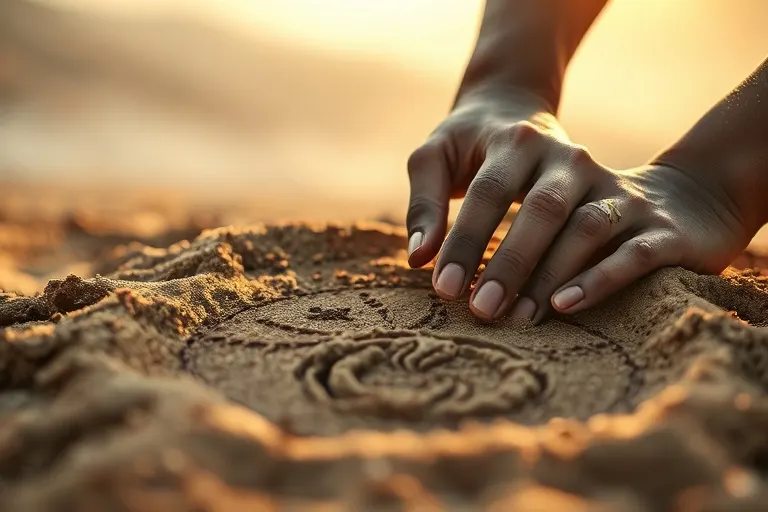
A practitioner's hands delicately etching geomantic patterns into the sand, connecting with ancient terrestrial wisdom under the soft glow of dawn.
While the specific methods and interpretations varied slightly across cultures, the core principle remained consistent: the belief that patterns derived from the earth could reveal answers to human questions. From predicting crop yields to advising on military strategies and personal matters, geomancy served as a versatile tool for navigating the uncertainties of life. Its enduring presence across centuries highlights its perceived efficacy and profound connection to human intuition and the natural world.
The Principles of Geomancy
Geomancy operates on several foundational principles that distinguish it from other divinatory arts. Central to its philosophy is the idea that the Earth is a living, sentient entity, constantly interacting with and responding to the energies of its inhabitants. The act of casting figures is not merely random but an intuitive process that allows the practitioner to attune to these telluric currents.
- Earth as a Medium: The physical act of making marks on the earth or a similar surface symbolizes a direct communication channel with the planetary consciousness. It is believed that the subconscious mind, when focused on a question, influences the seemingly random distribution of dots.
- Binary System: All geomantic figures are composed of four lines, each containing either one or two points. This binary structure (odd or even, active or passive) is fundamental to its mathematical and symbolic logic. This simplicity allows for a vast array of complex interpretations.
- Elemental and Planetary Associations: Each geomantic figure is associated with specific elements (Fire, Earth, Air, Water) and planets (Sun, Moon, Mercury, Venus, Mars, Jupiter, Saturn). These associations enrich the interpretive layers, linking the terrestrial patterns to broader cosmic influences.
- Resonance and Synchronicity: Geomancy relies heavily on the principle of synchronicity, where meaningful coincidences occur without a direct causal link. The patterns formed are seen as reflections of the querent's inner state and the external circumstances surrounding their question.
The practitioner's state of mind, clarity of intention, and connection to the Earth are crucial for an accurate reading. Geomancy is not about predicting a fixed future but rather about revealing the current energetic landscape and potential outcomes based on present conditions and choices. It empowers individuals by offering a deeper understanding of their situation and guiding them towards optimal paths.
The Sixteen Geomantic Figures
The heart of geomancy lies in its sixteen unique figures, each representing a distinct archetype, personality, or energetic influence. These figures are generated from a series of random marks and form the building blocks of any geomantic reading. Each figure is composed of four lines, with each line having either one (odd) or two (even) points.
A delicate watercolor rendering of various geomantic figures, each representing a unique energy, gracefully hovering above a stylized planetary sphere.
The process of generating a figure typically involves making a series of random dots or lines in four rows. The number of dots in each row is then counted, and if the sum is odd, it's represented by a single point; if even, by two points. This results in a four-line binary code that corresponds to one of the sixteen figures. Here is a table summarizing the figures and their basic meanings:
| Figure Name | Latin Name | Points (Head, Neck, Body, Foot) | General Meaning |
|---|---|---|---|
| Via | The Way | 1, 1, 1, 1 | Movement, travel, beginnings, uncertainty, journey. |
| Populus | The People | 2, 2, 2, 2 | Crowds, community, multitude, stability, indecision. |
| Conjunctio | Conjunction | 2, 1, 1, 2 | Union, partnership, joining, agreement, negotiation. |
| Carcer | Prison | 1, 2, 2, 1 | Restriction, delay, confinement, obstacles, introspection. |
| Acquisitio | Acquisition | 2, 1, 2, 2 | Gain, profit, acquisition, success, good fortune. |
| Amissio | Loss | 2, 2, 1, 2 | Loss, spending, defeat, giving away, sacrifice. |
| Laetitia | Joy | 2, 1, 1, 1 | Joy, health, happiness, swift success, growth. |
| Tristitia | Sadness | 1, 1, 2, 2 | Sorrow, melancholy, illness, difficulty, endings. |
| Albus | White | 1, 2, 1, 1 | Purity, wisdom, peace, good beginnings, clarity. |
| Rubeus | Red | 1, 1, 2, 1 | Passion, anger, danger, impulsiveness, destruction. |
| Fortuna Major | Greater Fortune | 2, 2, 1, 1 | Great success, good luck, protection, strong foundations. |
| Fortuna Minor | Lesser Fortune | 1, 1, 2, 1 | Minor success, temporary gain, small challenges. |
| Puella | Girl | 1, 2, 1, 2 | Beauty, femininity, relationships, harmony, pleasure. |
| Puer | Boy | 1, 1, 1, 2 | Masculinity, aggression, passion, courage, recklessness. |
| Caput Draconis | Dragon's Head | 1, 2, 2, 2 | Beginnings, entry, good fortune, growth, prosperity. |
| Cauda Draconis | Dragon's Tail | 2, 2, 2, 1 | Endings, exit, bad fortune, decline, completion. |
Understanding these figures is the first step towards deciphering the geomantic chart. Each figure carries a complex interplay of elemental, planetary, and archetypal energies, which are then further nuanced by their placement within the chart.
Casting and Interpreting the Geomantic Chart
Once the sixteen figures are understood, the next crucial step is to cast and interpret the geomantic chart, often referred to as the Shield Chart or House Chart. This process involves generating four "Mother" figures, from which all subsequent figures are derived through a systematic process of addition (based on the odd/even points).
- Generating the Mothers: The practitioner makes four sets of random marks (e.g., 16 lines of dots). Each set is reduced to a four-line figure, becoming the four Mothers (M1, M2, M3, M4).
- Deriving the Daughters: The four Daughters (D1, D2, D3, D4) are created by taking the first line of each Mother to form D1, the second line of each Mother for D2, and so on.
- Forming the Nieces: The four Nieces (N1, N2, N3, N4) are generated by combining the Mothers in pairs (M1+M2=N1, M3+M4=N2, D1+D2=N3, D3+D4=N4). The combination involves adding the points of corresponding lines, then reducing to odd/even.
- The Witnesses and Judge: The two Witnesses (Left Witness = N1+N2, Right Witness = N3+N4) are formed by combining the Nieces. Finally, the Judge (Left Witness + Right Witness) provides the ultimate synthesis of the reading, offering a definitive answer to the question.
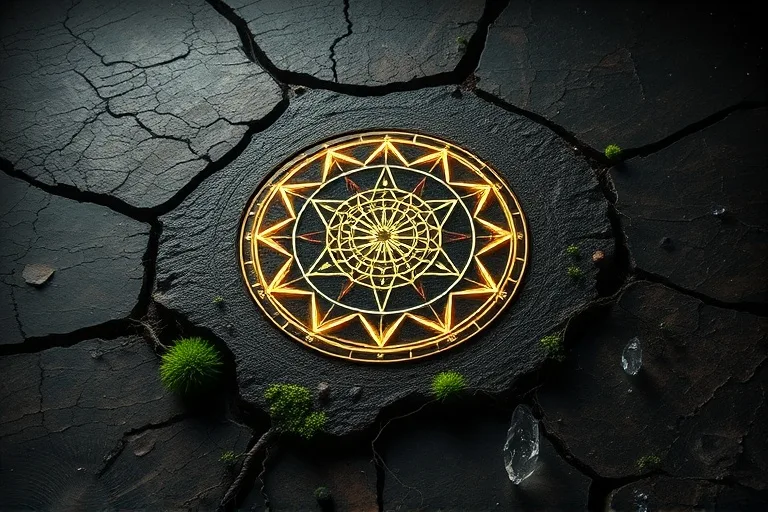
A striking 3D rendition of a geomantic shield chart, intricately formed from the very essence of the earth, radiating ancient wisdom and guiding principles.
The fifteen figures (four Mothers, four Daughters, four Nieces, two Witnesses, and one Judge) are then placed into a chart that often mirrors the twelve astrological houses. Each house represents a different area of life (e.g., self, finances, communication, home, relationships, health, etc.). The figure residing in a particular house reveals insights into that specific life domain concerning the querent's question.
For instance, if the figure Acquisitio (Gain) appears in the second house (finances), it strongly suggests financial prosperity related to the query. Conversely, Amissio (Loss) in the same house would indicate potential financial setbacks. The interplay between figures in different houses, and their elemental and planetary associations, creates a rich tapestry of interpretation.
Advanced Interpretation Techniques
Beyond the basic meanings of individual figures and their house placements, advanced geomantic interpretation involves several sophisticated techniques that add depth and nuance to a reading. These methods allow practitioners to synthesize information, identify underlying themes, and provide more comprehensive guidance.
- Aspects and Conjunctions: Similar to astrology, geomantic figures can form "aspects" with each other based on their positions in the chart. For example, two figures in opposition might indicate conflict or duality, while a trine could suggest harmony and ease. Conjunctions (figures in adjacent houses) also reveal direct influences.
- The Part of Fortune: In geomancy, the "Part of Fortune" is a derived figure that indicates the area of greatest potential for success or happiness regarding the question. Its placement and the figure it represents are crucial for understanding the ultimate positive outcome.
- Reconciliation and Progression: Some advanced practitioners use techniques to "reconcile" conflicting figures or to "progress" the chart over time, offering insights into how a situation might evolve. This can involve casting additional figures or re-evaluating the chart after a period.
- Elemental Balance: Analyzing the overall elemental balance of the figures in the chart (how many Fire, Earth, Air, Water figures are present) can reveal whether the situation is dominated by action, stability, intellect, or emotion, respectively. An imbalance might suggest areas needing attention.
- Planetary Rulerships: Each geomantic figure is ruled by a specific planet. Understanding these planetary associations and their astrological significations (e.g., Mars for action, Venus for relationships) adds another layer of interpretive depth, linking the terrestrial symbols to cosmic archetypes.
Mastering these techniques requires extensive study and practice, but they transform a basic reading into a profound exploration of the querent's situation. The goal is always to weave together these various threads of meaning into a coherent narrative that addresses the initial question with clarity and actionable insights.
Practical Applications of Geomancy
Geomancy is a highly versatile divinatory art, capable of addressing a wide array of personal questions and providing guidance across various life domains. Its practical applications are numerous, making it a valuable tool for self-discovery and decision-making.
- Personal Guidance: Individuals often consult geomancy for clarity on personal dilemmas, such as career choices, relationship issues, or spiritual paths. It can illuminate hidden motivations, potential obstacles, and optimal courses of action.
- Decision-Making: When faced with significant decisions, geomancy can offer a unique perspective by revealing the underlying energies and potential outcomes associated with different choices. It helps in understanding the "flow" of a situation.
- Relationship Insights: Geomancy can be used to analyze the dynamics of relationships, whether romantic, familial, or professional. It can highlight areas of harmony, conflict, and growth potential between individuals.
- Timing and Auspicious Moments: By observing the figures and their planetary associations, practitioners can gain insights into the most auspicious times to initiate projects, travel, or make important life changes.
- Locational Analysis: In its most ancient form, geomancy was used to assess the energetic quality of land for building, farming, or settlement. While less common today, modern geomancy can still offer insights into the energy of a home or workplace.
- Self-Reflection and Growth: Beyond direct answers, geomancy serves as a powerful tool for self-reflection. The archetypal meanings of the figures can prompt deeper introspection, helping individuals understand their own patterns and challenges.
The beauty of geomancy lies in its ability to provide concrete, actionable advice derived from a symbolic language. It encourages querents to engage actively with the insights provided, empowering them to make conscious choices rather than passively accepting a predetermined fate.
Ethical Considerations and Best Practices
As with any form of divination, ethical considerations and best practices are paramount in geomancy to ensure responsible and beneficial use of this powerful tool. Respect for the querent, the practice, and the Earth's wisdom is fundamental.
- Clear Intention and Question: The querent should formulate a clear, specific, and open-ended question. Vague or leading questions can result in ambiguous readings. The practitioner should guide the querent in refining their inquiry.
- Confidentiality: All readings and personal information shared during a geomantic consultation must be treated with the utmost confidentiality. Trust is essential for an effective reading.
- Empowerment, Not Dependence: A geomancer's role is to offer insights and guidance, empowering the querent to make their own decisions. The practice should never foster dependence or dictate actions.
- Non-Judgmental Approach: The practitioner must maintain a neutral, non-judgmental stance, interpreting the figures objectively without imposing personal biases or moral judgments on the querent's situation.
- Boundaries and Scope: Geomancy is not a substitute for professional advice (e.g., medical, legal, financial). Practitioners should clearly state the limitations of their readings and advise querents to seek appropriate professional help when necessary.
- Respect for the Earth: Given its connection to earth energies, a geomancer should approach the practice with reverence for the natural world. This can include preparing the space, offering gratitude, or performing the casting outdoors.
Adhering to these ethical guidelines ensures that geomancy remains a tool for positive growth and self-discovery, fostering a respectful and beneficial interaction between the querent, the practitioner, and the ancient wisdom it channels.
Geomancy vs. Other Divination Methods
While geomancy shares the overarching goal of providing insight and guidance with other divination methods, it possesses unique characteristics that set it apart. Understanding these differences can help individuals choose the practice that best resonates with their needs.
| Feature | Geomancy | Astrology | Tarot |
|---|---|---|---|
| Primary Medium | Earth patterns (dots/lines) | Celestial bodies' positions | Symbolic cards |
| Source of Wisdom | Telluric (Earth's) energies, subconscious | Cosmic energies, planetary archetypes | Collective unconscious, archetypal symbolism |
| System Complexity | Binary figures, systematic chart derivation | Complex calculations, planetary aspects, houses | Intuitive interpretation of card symbolism, spreads |
| Focus | Direct answers to specific questions, current energies | Personality traits, life cycles, long-term trends | Psychological insights, spiritual guidance, potential paths |
| Historical Context | Ancient Arabic, medieval European | Ancient Babylonian, Hellenistic, Vedic | Medieval Europe, Renaissance, modern esoteric revival |
While astrology provides a broad blueprint of one's personality and life path, and Tarot offers psychological insights and narrative guidance, geomancy excels in providing clear, direct answers to specific, immediate questions. Its systematic derivation of figures from random input lends it a unique blend of intuitive flow and logical structure. Many practitioners find that combining geomancy with other methods can offer an even richer and more comprehensive perspective.
Modern Revival and Accessibility
After centuries of relative obscurity compared to astrology or Tarot, geomancy is experiencing a significant revival in modern esoteric circles. This resurgence is fueled by a growing interest in ancient wisdom traditions and a desire for diverse divinatory tools. Contemporary geomancers are making the practice more accessible through various means.
- Online Resources: Numerous websites, forums, and digital tools now offer tutorials, figure generators, and interpretive guides, allowing newcomers to learn and practice geomancy from anywhere.
- Workshops and Courses: Esoteric schools and independent practitioners offer workshops and online courses, providing structured learning paths for those interested in mastering the art.
- Books and Publications: A new wave of books is being published, reinterpreting ancient texts and offering modern perspectives on geomantic theory and practice, making the knowledge more digestible.
- Integration with Other Practices: Modern geomancers often integrate the practice with other forms of divination or spiritual work, creating hybrid systems that offer a holistic approach to guidance.
The accessibility of geomancy today means that anyone with a curious mind and a desire to connect with the Earth's wisdom can begin to explore its profound insights. Whether drawing dots in the sand, on paper, or using digital tools, the core connection to intuition and telluric energies remains the same, offering a powerful avenue for personal and spiritual growth.
Conclusion: Embracing Earth's Wisdom
Geomancy stands as a testament to humanity's enduring quest for understanding and guidance, offering a unique and deeply grounded approach to divination. From its ancient roots in the sands of Arabia to its sophisticated development in medieval Europe and its modern revival, this practice continues to resonate with those seeking clarity and wisdom.
By interpreting the symbolic language of the Earth through its sixteen figures and intricate chart structures, geomancy provides a powerful lens through which to view personal questions, navigate challenges, and make informed decisions. It is not merely a predictive tool but a pathway to deeper self-awareness and a stronger connection to the natural world. Embracing geomancy means opening oneself to the profound, often subtle, wisdom that the Earth continuously offers, guiding us on our journey with grounded insight and spiritual clarity.
Source: Hybrid content assisted by AIs and human editorial supervision.


Comments
Post a Comment