
Psycho-Astrology Jungian Archetypes Shadow Wholeness
Psycho-astrology represents a profound interdisciplinary field that bridges the ancient wisdom of astrology with the depth psychological insights of Carl Jung. This synergistic approach offers a unique lens through which to understand the intricate workings of the human psyche, particularly in the context of self-discovery and personal growth. By analyzing the birth chart, practitioners can identify archetypal patterns and unconscious dynamics that shape an individual's personality and life experiences, providing a roadmap for psychological integration.
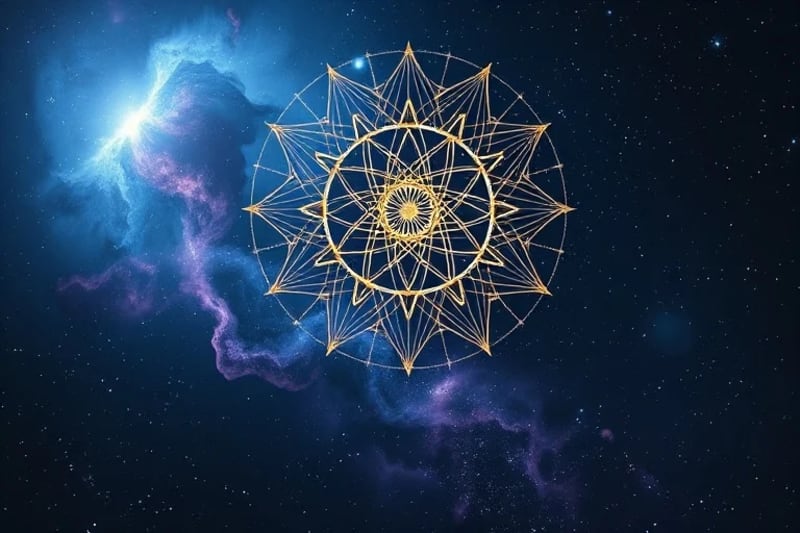 Precursors intellectuales, diagramas fundamentales y representaciones conceptuales que forjaron la visión de Carl Jung sobre la psique y su conexión con el cosmos.
Fuente visual sujeta a disponibilidad del ecosistema: Wikimedia Commons bajo licencia CC BY-SA 4.0 o renderizado conceptual IA.
Central to this exploration is the concept of the "Shadow," a Jungian archetype representing the unconscious aspects of the personality that the conscious ego does not identify with. These aspects, often perceived as negative or undesirable, are repressed and remain hidden until brought to consciousness. Integrating the Shadow is a critical step towards achieving psychological wholeness, a state of inner balance and self-acceptance that Jung termed "individuation." This article delves into the mechanisms of psycho-astrology and Jungian archetypes, offering a comprehensive guide to understanding and integrating the Shadow for profound self-discovery.
Table of Contents
- The Symbiotic Relationship Between Astrology and Depth Psychology
- Mapping the Psyche: Astrological Correlates of Jungian Archetypes
- Unveiling the Shadow: Astrological Indicators of Repressed Aspects
- The Integration Process: Astrological Guidance for Shadow Work
- Pathways to Wholeness: Individuation Through Psycho-Astrology
- Advanced Planetary Dynamics and Archetypal Expression
- Contemporary Applications and Ethical Considerations
- Conclusion: Embracing the Full Spectrum of Self
The Symbiotic Relationship Between Astrology and Depth Psychology
Astrology, often misunderstood as mere fortune-telling, is fundamentally a symbolic language that describes the archetypal energies at play within the human experience. The birth chart, a snapshot of the cosmos at the moment of an individual's birth, serves as a unique psychological blueprint. Each planet, zodiac sign, house, and astrological aspect represents a specific psychological function, drive, or area of life, revealing inherent potentials and challenges.
Carl Jung, the founder of analytical psychology, recognized the profound connection between astrological symbolism and the collective unconscious. He viewed archetypes as universal, archaic patterns and images that derive from the collective unconscious and are the psychic counterpart of instinct. Jung famously stated, "Astrology represents the sum of all the psychological knowledge of antiquity." This acknowledgment underscores the potential of astrology to illuminate the very archetypes that structure our inner and outer worlds.
Psycho-astrology, therefore, uses the birth chart not as a deterministic prophecy, but as a diagnostic tool to uncover the dynamic interplay of these archetypal forces within an individual's psyche. It helps to identify unconscious complexes, developmental patterns, and areas where psychological integration is most needed. This approach moves beyond superficial interpretations, diving deep into the symbolic narrative of the chart to reveal the soul's journey.
Mapping the Psyche: Astrological Correlates of Jungian Archetypes
Jungian archetypes provide a framework for understanding universal human experiences and behaviors. When overlaid with astrological symbolism, these archetypes gain specific, personalized expressions. Here’s how some key Jungian archetypes manifest in the birth chart:
- The Self: Represented by the entire birth chart, particularly the Sun, Moon, and Ascendant, symbolizing the totality of the psyche, the center of personality, and the drive towards wholeness. The Sun signifies the conscious ego and core identity, while the Moon reflects the unconscious, emotional core, and instinctual self.
- The Persona: Often linked to the Ascendant (Rising Sign) and the 1st House, which govern how we present ourselves to the world and the mask we wear in social interactions. It's the public image, often a compromise between our true self and societal expectations.
- The Shadow: This archetype is more complex and diffuse in the chart, often indicated by Pluto, the 12th House, challenging aspects (squares, oppositions), and planets in detriment or fall. It represents the repressed, disowned parts of ourselves.
- The Anima/Animus: The inner feminine (Anima in men) and inner masculine (Animus in women) are often seen through Venus and Mars, and the opposing signs/houses. These archetypes influence our relationships, projections, and understanding of the opposite gender within ourselves.
- The Hero/Heroine: Mars and the Sun often symbolize the heroic journey, the drive to overcome obstacles, and the assertion of will. The house placement and aspects to these planets reveal the arena and style of this heroic quest.
Understanding these correlations allows for a deeper, more nuanced interpretation of individual psychological dynamics, moving beyond simple trait descriptions to explore the underlying archetypal motivations.
Unveiling the Shadow: Astrological Indicators of Repressed Aspects
The Shadow is not inherently evil; it simply contains everything that the conscious ego has deemed unacceptable or too difficult to integrate. Astrologically, several placements and dynamics can point to the presence and nature of the Shadow:
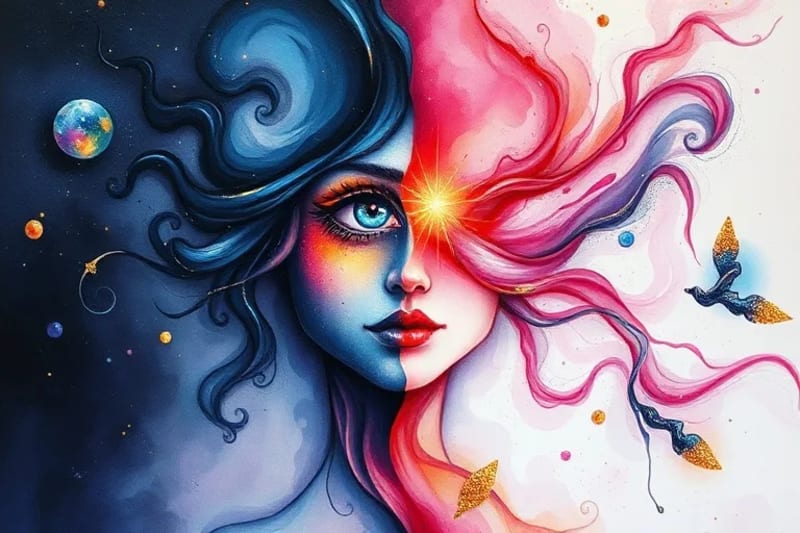 A visual representation of the shadow's emergence and integration into the conscious self, a key step in psychological development.
- Pluto: This distant planet is perhaps the most direct astrological correlate to the Shadow. Its sign, house, and aspects reveal areas of power dynamics, control, transformation, and where deep-seated, often unconscious, material resides. Pluto's placement can indicate where we project our own disowned power or fears onto others.
- The 12th House: Traditionally associated with hidden enemies, self-undoing, and the unconscious, the 12th House is a potent indicator of the Shadow. Planets placed here, along with the sign on its cusp, can represent repressed talents, fears, or behaviors that operate outside conscious awareness.
- Challenging Aspects (Squares and Oppositions): These aspects between planets highlight areas of internal tension, conflict, and unresolved psychological material. They often point to archetypal energies that are difficult to reconcile, leading to repression and the formation of Shadow aspects. For instance, a Sun-Pluto square might indicate a struggle with personal power and control, with the shadow manifesting as manipulative tendencies or a fear of one's own strength.
- Planets in Detriment or Fall: When a planet is in a sign where its energy is naturally challenged or weakened, it can lead to maladaptive expressions or repression of that planetary function. These placements can highlight areas where individuals feel inadequate or where their natural expression is inhibited, contributing to Shadow formation.
- South Node: While primarily related to past life patterns, the South Node can also indicate ingrained habits, comfort zones, and unexamined aspects of self that need to be transcended or integrated for growth.
Recognizing these indicators in a birth chart is the first crucial step towards bringing unconscious material into conscious awareness, paving the way for integration.
The Integration Process: Astrological Guidance for Shadow Work
Shadow integration is not about eliminating the negative aspects of oneself, but rather acknowledging, understanding, and ultimately incorporating them into the conscious personality. This process reduces projections onto others and frees up psychic energy previously expended on repression. Astrology offers valuable insights into navigating this often challenging journey, providing a framework for healing body planetary patterns.
- Awareness and Acknowledgment: The initial step involves identifying the astrological placements that signify Shadow material. This means looking at Pluto's house and aspects, 12th house planets, and challenging aspects. Journaling, dream analysis, and self-reflection are crucial tools here.
- Confrontation and Acceptance: Once identified, the individual must consciously confront these disowned parts. This can be uncomfortable, as it often involves facing aspects of ourselves we deem undesirable. However, acceptance is key; these parts are not to be judged but understood as components of the whole self.
- Integration and Expression: The final stage involves finding healthy ways to integrate and express these Shadow aspects. For example, if Pluto in the 8th house indicates repressed power dynamics or a fear of intimacy, integration might involve consciously exploring healthy expressions of power, setting boundaries, or engaging in deep, transformative relationships with awareness. Saturn astrology, with its emphasis on structure and discipline, can provide the necessary framework for consistent shadow work.
Therapeutic modalities like active imagination, sandplay, and art therapy can be highly effective in working with these unconscious astrological themes. The goal is to transform potential weaknesses into sources of strength and wisdom.
Pathways to Wholeness: Individuation Through Psycho-Astrology
Individuation, in Jungian terms, is the lifelong psychological process of integrating the conscious and unconscious, ultimately leading to a more complete and harmonious personality. It is the journey towards becoming one's authentic self, distinct from the collective and societal expectations. Psycho-astrology serves as an invaluable guide on this path.
By consciously engaging with the archetypal energies revealed in the birth chart, individuals can actively participate in their own psychological development. For example, understanding the dynamics of one's Chiron placement (the Wounded Healer) can lead to transforming personal wounds into sources of wisdom and compassion. Similarly, working with the North Node's direction encourages moving towards one's evolutionary purpose, integrating lessons from the past while embracing future growth.
 An abstract rendering of the integrated self, representing the culmination of shadow work and the journey towards psychological wholeness.
The process of individuation is not linear; it involves cycles of confrontation, integration, and transformation. The birth chart provides a consistent framework for understanding these cycles, particularly through planetary transits and progressions, which activate different archetypal energies at various life stages. This allows individuals to anticipate periods of intense inner work and leverage cosmic timing for deeper self-discovery.
Advanced Planetary Dynamics and Archetypal Expression
Beyond the basic planetary placements, a deeper dive into planetary dynamics reveals more intricate archetypal expressions. Understanding the concept of planetary rulerships, exaltations, detriments, and falls provides further nuance to how archetypal energies are expressed or repressed. For instance, a Venus in Aries (detriment) might struggle with expressing affection directly or feel their desires are constantly challenged, potentially leading to a shadow of aggressive pursuit or passive-aggressive behavior in relationships.
Furthermore, the study of minor astrological aspects, such as quincunxes or semi-sextiles, can unveil subtle psychological adjustments and areas of unconscious tension that contribute to the Shadow. These aspects often require conscious effort to integrate, as their energies are not as overtly confrontational as squares or oppositions, but rather demand adaptation and re-evaluation. The interplay of these complex configurations paints a rich tapestry of the individual's inner landscape, guiding the psycho-astrologer towards precise areas for intervention and self-exploration.
The outer planets—Uranus, Neptune, and Pluto—are particularly significant in revealing collective and transpersonal archetypes that impact the individual psyche. Uranus, the Awakener, can signify the archetype of the Rebel or the Innovator, and its challenging aspects might point to a shadow of disruptive behavior or an inability to conform. Neptune, the Dreamer, relates to the Mystic or the Victim, and its difficult placements can indicate a shadow of delusion, escapism, or self-deception. Pluto, as discussed, embodies the archetype of the Transformer or the Destroyer, and its shadow can manifest as power struggles, obsessive tendencies, or a fear of profound change.
Contemporary Applications and Ethical Considerations
In modern practice, psycho-astrology is often integrated into therapeutic settings, providing a symbolic language for clients to understand their psychological patterns. It's used by therapists, coaches, and spiritual counselors to facilitate deeper self-awareness and personal growth. The ethical application of psycho-astrology emphasizes empowerment, guiding individuals to take responsibility for their inner landscape rather than passively accepting fate.
Practitioners must maintain a non-deterministic stance, viewing the birth chart as a map of potential rather than a fixed destiny. The focus is always on conscious choice and the individual's capacity to transform and evolve. This approach aligns perfectly with Jung's emphasis on individuation as an active, conscious process. It also highlights the importance of professional training and ethical guidelines to ensure that interpretations are constructive and supportive, avoiding fear-mongering or oversimplification.
The integration of psycho-astrology with other modalities, such as mindfulness practices, cognitive-behavioral therapy (CBT), or even somatic experiencing, can create a holistic framework for healing and self-discovery. By understanding the archetypal energies at play, individuals can develop targeted strategies for managing stress, improving relationships, and unlocking their full potential. This interdisciplinary approach enriches both the astrological and psychological fields, offering a more comprehensive understanding of the human condition.
Conclusion: Embracing the Full Spectrum of Self
Psycho-astrology, through its integration of Jungian archetypes and the symbolic language of the birth chart, offers a powerful pathway to self-discovery and psychological wholeness. By consciously engaging with the Shadow, individuals can reclaim disowned aspects of themselves, transforming potential liabilities into profound strengths. This journey of integration is not always easy, but it is deeply rewarding, leading to greater authenticity, self-acceptance, and a richer, more meaningful life.
The birth chart serves as a timeless guide, illuminating the archetypal forces that shape our inner world and providing a dynamic map for navigating the complex terrain of the psyche. Embracing the full spectrum of self—both light and shadow—is the essence of individuation, allowing us to live more consciously and authentically, aligned with our deepest purpose and potential.
Further Exploration
Deepen your understanding of astrological and psychological concepts with these related articles:
- Psycho-Astrology Jungian Archetypes Shadow Self Wholeness
- Bio-Astral Projection: Conscious Interdimensional Journeys
- Growth Hacking: Strategic Savings and Personal Finance Psychology
- Quantum Predictions: Manifestation and Planetary Transits
- Saint Michael Archangel: Liturgy, Catholic Exorcism, Divine Protection
Source: Hybrid content assisted by AI and human editorial supervision.


Comments
Post a Comment