
Astrological Electional Timing Auspicious Dates Life Events Guide
Electional astrology, often regarded as one of the most intricate and practical branches of astrological study, is the art and science of selecting the most auspicious moment to initiate any significant undertaking. Unlike natal astrology, which interprets the cosmic blueprint of an individual's birth, or horary astrology, which answers specific questions, electional astrology is proactive. Its primary objective is to identify a precise window in time when the planetary energies are most harmoniously aligned to support the desired outcome of an event, thereby maximizing its potential for success and minimizing inherent challenges.
This ancient discipline, rooted in Hellenistic, Persian, and medieval traditions, operates on the fundamental premise that "as above, so below." By carefully observing the celestial configurations at the exact moment an event begins, astrologers aim to imbue that endeavor with a cosmic signature conducive to its flourishing. From launching a business to getting married, signing a contract, or even undergoing surgery, electional timing seeks to harness the most favorable planetary influences to ensure a positive trajectory. Understanding its principles requires a deep grasp of astrological fundamentals, including planetary dignities, aspects, house meanings, and the intricate dance of transits.
The practice of electional astrology is not merely about avoiding bad days; it is about actively seeking the best possible cosmic conditions. It is a testament to the belief that timing is not just a factor, but a foundational element in the success or failure of human endeavors.
Historically, rulers and commoners alike consulted astrologers to elect the best times for coronations, battles, journeys, and even planting crops, highlighting its pervasive influence across various cultures and epochs.
Table of Contents
- Introduction to Electional Astrology
- Key Principles of Auspicious Timing
- Methodology for Electing a Chart
- Common Applications in Life Events
- Advanced Considerations and Techniques
- Challenges and Limitations in Practice
- Ethical Considerations and Free Will
- Conclusion: Mastering Cosmic Timing
Introduction to Electional Astrology
Electional astrology is a specialized branch of astrology focused on identifying the most favorable moment to begin an activity or enterprise. The core idea is that the astrological chart cast for the inception of an event will describe its nature, development, and ultimate outcome. By carefully selecting a moment when planetary influences are strong and harmonious, one can "elect" a chart that supports the desired goals, much like planting a seed at the optimal time for growth.
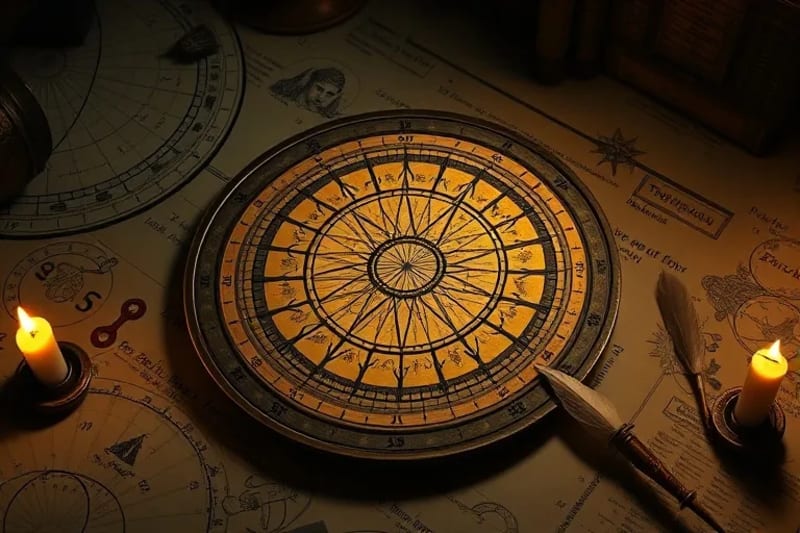
Precursors intellectuales, diagramas fundamentales y representaciones conceptuales que forjaron la visión de los astrólogos sobre el arte de la elección temporal.
Fuente visual sujeta a disponibilidad del ecosistema: Wikimedia Commons bajo licencia CC BY-SA 4.0 o renderizado conceptual IA.
The historical roots of electional astrology are deeply embedded in ancient civilizations, where celestial observations were integral to decision-making. From Mesopotamia to Egypt, Greece, and Rome, astrologers advised on matters of state, war, agriculture, and personal affairs. This tradition was further refined during the medieval Islamic Golden Age and later in Renaissance Europe, where texts like Guido Bonatti's Liber Astronomiae provided comprehensive guidelines for electing favorable moments.
The underlying philosophy suggests that while free will exists, operating within favorable cosmic currents can significantly enhance one's efforts. It's not about passively waiting for destiny but actively aligning one's intentions with the most supportive energetic environment. This proactive approach distinguishes it from other astrological branches, offering a powerful tool for strategic life planning and manifestation.
Key Principles of Auspicious Timing
The efficacy of electional astrology hinges on several fundamental principles that guide the selection of a propitious moment. These principles are meticulously applied to construct an electional chart that mirrors the desired qualities and outcomes for the event in question. A thorough understanding of these elements is crucial for any serious practitioner.
- Strong Ascendant and its Ruler: The Ascendant (rising sign) and its planetary ruler are paramount. They represent the event itself and its vitality. The Ascendant should ideally be a sign that is strong for the nature of the event (e.g., a fixed sign for stability, a cardinal sign for initiation). Its ruler should be well-dignified (in its domicile or exaltation), free from affliction (not retrograde, combust, or cadent), and making harmonious aspects, especially to the significator of the event.
- Planetary Strength and Dignity: All planets involved in the election should be as strong as possible. This includes being in their own signs (domicile), exaltation, or mutual reception. Avoid planets in detriment or fall, as these indicate weakness and difficulty. The faster-moving planets (Moon, Mercury, Venus, Mars) are particularly critical due to their immediate influence.
- Benefic Placement: The benefics (Jupiter and Venus) should be well-placed, ideally angular (in houses 1, 4, 7, 10) or succedent (2, 5, 8, 11), and making positive aspects. They bring good fortune, ease, and expansion to the event. Conversely, malefic planets (Mars and Saturn) should be cadent (3, 6, 9, 12) or otherwise debilitated, or at least making no harsh aspects to the Ascendant or its ruler.
- Moon's Condition: The Moon is often considered the most crucial planet in electional astrology. It signifies the flow and unfolding of the event. The Moon should be strong (not in detriment or fall), free from malefic aspects, and ideally applying to a benefic or the ruler of the Ascendant. Avoid the Moon being void-of-course, combust, or in the Via Combusta (late Libra to early Scorpio), as these conditions often lead to lack of results or complications.
- Avoid Retrograde Planets: Generally, planets that are retrograde should be avoided, especially if they signify the event or its ruler. Retrograde motion can indicate delays, reversals, or a need to redo things. For example, Mercury retrograde is typically avoided for signing contracts or launching communication-based projects.
- House Rulerships and Aspects: The house relevant to the event (e.g., 7th house for marriage, 10th house for career launch) should have its ruler strong and well-aspected. Harmonious aspects (trines, sextiles) between the Ascendant ruler, the Moon, and the significator of the event are highly desirable, promoting ease and cooperation. Square and opposition aspects, especially from malefics, are generally avoided.
These principles are not applied in isolation but are carefully weighed against each other. Sometimes, a perfect chart is unattainable, and the astrologer must prioritize the most critical factors for the specific event. For instance, for a legal matter, a strong Jupiter might be more important than a perfect Venus. The interplay of these elements creates a complex but highly informative cosmic snapshot.
Methodology for Electing a Chart
The process of electing an auspicious chart is a systematic endeavor that combines astrological knowledge with practical considerations. It typically involves several steps, moving from broad considerations to increasingly precise timing. This methodical approach ensures that all significant astrological factors are accounted for.
A conceptual cosmic clock, symbolizing the intricate dance of planetary energies and the precise timing required for astrological elections.
The first step involves clearly defining the purpose of the event. What is its core intention? For example, for a marriage, the goal is a lasting, harmonious partnership. For a business launch, it's financial success and growth. This clarity helps identify the primary houses and planets that will signify the event in the electional chart. For instance, the 7th house rules partnerships, while the 10th house governs career and public standing.
Next, the astrologer considers the client's natal chart. While the electional chart stands on its own, its interaction with the client's birth chart can provide additional layers of insight. Favorable transits or progressions to the natal chart during the elected time can further strengthen the event's potential. This synthesis ensures that the chosen time is not only good in general but also specifically beneficial for the individual involved.
The core of the methodology lies in the iterative process of casting and analyzing potential charts. Starting with a broad time frame (e.g., a specific week or month), the astrologer filters out unfavorable periods, such as those with significant retrograde planets, void-of-course Moon periods, or challenging planetary aspects. The goal is to narrow down the options to a few promising days or hours.
Once a potential date and time are identified, a detailed chart is cast. The astrologer then meticulously examines the Ascendant, its ruler, the Moon's condition, the placement and aspects of the relevant planetary significators, and the overall strength of the benefics and malefics. The aim is to ensure that the chart is robust, with minimal afflictions and strong support for the event's purpose. This often involves adjusting the time by a few minutes to shift the Ascendant or perfect an aspect, a process that can be quite delicate and precise, as discussed in Cosmic Consciousness Celestial Mechanics Quantum Astrology Mapping.
Finally, the chosen time should be practical and feasible for the client. An astrologically perfect moment that is impossible to execute is of no use. Therefore, a balance must be struck between astrological ideals and real-world constraints, making the process both an art and a science.
Common Applications in Life Events
Electional astrology finds practical application across a vast array of major life events, offering a strategic advantage in initiating endeavors with cosmic support. The specific astrological requirements vary depending on the nature of the event, but the underlying goal remains consistent: to select a moment that best reflects and supports the desired outcome.
- Weddings and Partnerships: For marriages, the 7th house (partnerships), its ruler, and Venus (love, harmony) are crucial. A strong, well-aspected Venus and Moon are highly desirable, with the Ascendant often in a fertile or fixed sign for longevity. The Moon should ideally be applying to a benefic or the ruler of the 7th. For deeper insights into relationship dynamics, one might explore Advanced Synastry: Deep Relationship Dynamics Composite Charts.
- Business Launches and Career Moves: The 10th house (career, public image), 2nd house (finances), and their rulers are key. Jupiter (expansion, fortune) and Mercury (commerce, communication) should be strong and well-placed. A strong Sun for leadership and vitality is also beneficial. For career-specific guidance, Vocational Astrology: Find Soul-Aligned Career Path Birth Chart offers complementary perspectives.
- Signing Contracts and Legal Matters: Mercury (contracts, agreements) and the 7th house (legal opponents, agreements) are central. Mercury should be direct, well-dignified, and making harmonious aspects. The Ascendant ruler should be stronger than the 7th house ruler for favorable outcomes in negotiations.
- Medical Procedures and Surgeries: The 6th house (health, illness) and 8th house (surgery, healing) are important. Mars (surgery, sharp instruments) should be well-placed but not afflicting the Ascendant or its ruler. The Moon should be strong, applying to a benefic, and not in the part of the body being operated on. A strong Jupiter can indicate protection and successful recovery.
- Travel and Journeys: The 3rd house (short trips) and 9th house (long journeys) are significant. Mercury (travel, communication) and Jupiter (expansion, safe passage) should be strong. Avoid Mercury retrograde for travel, especially if it involves communication or logistics.
- Purchasing Property or Assets: The 4th house (home, property) and 2nd house (assets) are paramount. The Moon, ruler of the 4th, and Venus (value) should be well-placed and strong. A fixed Ascendant can lend stability to the acquisition.
Each of these applications requires a tailored approach, considering the specific nuances and desired outcomes. The astrologer's expertise lies in prioritizing the most critical factors for each unique event, ensuring the elected chart provides the strongest possible foundation.
Advanced Considerations and Techniques
Beyond the foundational principles, advanced electional astrology incorporates more subtle and complex techniques to refine the timing and enhance the chart's potency. These considerations often require a deeper understanding of traditional astrological concepts and intricate calculations.

An abstract representation of planetary energies converging, symbolizing the precise and harmonious alignment sought in electional astrology.
One such advanced technique involves the use of fixed stars. Certain fixed stars, when conjunct the Ascendant, Midheaven, or a significant planet in an electional chart, can imbue the event with extraordinary power, fortune, or notoriety, depending on the star's nature. For instance, a benefic fixed star like Regulus on the Ascendant might promise great success and leadership.
Another critical element is the consideration of antiscia and contra-antiscia. These are points of equal light or shadow, reflecting planetary positions across the solstitial axis. A planet's antiscion or contra-antiscion can act as a hidden conjunction or opposition, subtly influencing the chart. A benefic planet's antiscion conjunct a key point in the electional chart can provide unseen support.
The Part of Fortune and other Arabic Parts can also be integrated. The Part of Fortune, in particular, indicates where ease and material success can be found. Its placement and aspects in an electional chart can highlight areas of potential prosperity or fortunate outcomes for the event. Its strong placement in the house relevant to the event is often sought.
Furthermore, understanding the lunar phases and their implications is paramount. Initiating an event during a waxing Moon (from New Moon to Full Moon) is generally preferred for growth and expansion, while a waning Moon (from Full Moon to New Moon) is better for completion, release, or winding down. The New Moon itself is excellent for new beginnings, and the Full Moon for culmination. The Mindful Lunar Phase Horoscopes: Daily Emotional Guidance can offer further context on lunar influences.
Finally, the concept of planetary hours and days adds another layer of precision. Each day of the week is ruled by a planet (e.g., Sunday by the Sun, Monday by the Moon), and each hour of the day is also assigned a planetary ruler. Aligning the event with the appropriate planetary hour and day can amplify the desired energies, providing a micro-level refinement to the macro-level chart election.
Challenges and Limitations in Practice
Despite its profound utility, electional astrology is not without its challenges and limitations. The pursuit of a "perfect" chart can be elusive, and practical constraints often necessitate compromises. Recognizing these limitations is crucial for both astrologers and clients to maintain realistic expectations.
One of the most significant challenges is the sheer complexity of finding a truly ideal moment. With numerous planetary positions, aspects, dignities, and house placements to consider, a chart free of all afflictions is rare. Astrologers often have to prioritize certain factors over others, making difficult judgment calls based on the specific goals of the election. For instance, avoiding all retrograde planets might be impossible during certain periods, requiring a decision on which retrograde is least detrimental.
The phenomenon of a void-of-course Moon is a frequent hurdle. When the Moon makes no major Ptolemaic aspects before changing signs, it is considered void-of-course. Events initiated during this period are often said to "come to nothing" or fail to produce the desired results. While short, these periods occur frequently, limiting available windows for action.
Furthermore, real-world constraints such as scheduling conflicts, availability of venues or key personnel, and personal preferences can severely restrict the astrologer's options. A client might have a very narrow timeframe for their event, forcing the astrologer to work within less-than-ideal conditions and select the "least bad" option rather than the "best."
The geographical location of the event also plays a role, as the Ascendant and Midheaven change with longitude and latitude. An electional chart cast for one city will be different for another, adding another layer of complexity, especially for events with participants in multiple locations.
Finally, it is important to remember that electional astrology is a tool to enhance potential, not a guarantee of success. While it provides a favorable cosmic environment, the outcome still depends on the effort, skill, and free will of the individuals involved. A well-elected chart cannot compensate for poor planning, lack of effort, or fundamental flaws in the endeavor itself.
Ethical Considerations and Free Will
The practice of electional astrology inherently raises important ethical questions, particularly concerning the interplay between astrological determinism and human free will. As a discipline that seeks to optimize outcomes by manipulating timing, it can sometimes be perceived as attempting to circumvent natural processes or even destiny.
A primary ethical consideration is the balance between astrological guidance and personal responsibility. While electional astrology offers a framework for choosing favorable moments, it should not absolve individuals of their own agency and effort. The astrologer's role is to provide informed recommendations, not to dictate decisions or promise infallible results. Clients must understand that the elected chart provides a supportive foundation, but their actions and choices remain paramount.
Another ethical dilemma arises when an astrologer is asked to elect a time for an event that could be considered harmful or unethical. For example, should an astrologer provide timing for a manipulative business deal or a divorce initiated with malicious intent? Most ethical guidelines within the astrological community emphasize using these tools for constructive and beneficial purposes, aligning with the highest good of all involved. The principle of "do no harm" is as relevant here as in other professional fields.
Furthermore, the concept of free will is central to modern astrological philosophy. Electional astrology does not suggest that destiny is fixed, but rather that certain moments are more conducive to specific types of actions. It is akin to a gardener planting seeds during the optimal season; the gardener still chooses what to plant and how to tend to it, but the timing enhances the likelihood of a bountiful harvest. The cosmos offers opportunities and challenges, and electional timing helps navigate these currents more effectively.
Astrologers also have an ethical responsibility to clearly communicate the limitations of electional timing. It is not magic, nor does it guarantee absolute success. Unexpected events can still occur, and external factors beyond astrological influence can always play a role. Transparency about these aspects fosters trust and realistic expectations, reinforcing the idea that astrology is a tool for self-awareness and strategic planning, not a substitute for conscious choice.
Conclusion: Mastering Cosmic Timing
The art of astrological electional timing stands as a sophisticated and invaluable discipline within the broader field of astrology. It offers a powerful methodology for individuals and organizations to align their significant undertakings with the most favorable cosmic energies, thereby enhancing the potential for success, harmony, and desired outcomes. From ancient civilizations to contemporary practitioners, the belief in the power of auspicious timing has endured, evolving into a nuanced system of planetary analysis.
Mastering electional astrology requires a deep understanding of planetary dignities, aspects, house rulerships, and lunar cycles, coupled with the ability to synthesize these complex factors into a cohesive and practical recommendation. While challenges such as void-of-course Moon periods and real-world constraints exist, the strategic application of these principles can significantly mitigate risks and amplify positive results for a wide range of life events.
Ultimately, electional astrology serves not as a deterministic force, but as a profound tool for conscious creation and strategic planning. It empowers individuals to engage actively with the cosmic rhythms, making informed choices that resonate with the natural flow of the universe. By honoring both the celestial influences and personal agency, one can truly master the art of cosmic timing, laying a stronger foundation for a fulfilling and successful life.
Explore Further Insights
- Dream Interpretation Guide
- Dream Incubation Starlight
- Cosmic Consciousness
- Color Therapy Healing
- Mindful Lunar Phase Horoscopes
- Vocational Astrology
- Chinese Zodiac Career
- Astrocartography Career Love
- Astrology Art Literature
- IC Ruler Aspects
- Medical Astrology Basics
- Ceres Aspects
- Cosmic Sociology AI
- Spiritual Awakening Natal Chart
- Advanced Synastry
Source: Hybrid content assisted by AI and human editorial supervision.


Comments
Post a Comment