
Cosmic Sociology Digital Age Global Consciousness AI
Cosmic Sociology and the Digital Age: Mapping Global Consciousness and AI Trends
The convergence of cosmic sociology, the digital age, global consciousness, and artificial intelligence represents a new frontier in understanding human existence and its place in the universe. Cosmic sociology, a nascent field, posits that human societies are not isolated entities but are intrinsically linked to cosmic rhythms and universal principles. This perspective challenges traditional sociological paradigms by expanding the scope of analysis beyond Earth-bound phenomena to encompass celestial influences and universal interconnectedness.
In an era defined by rapid technological advancement and unprecedented global connectivity, the digital age acts as a powerful amplifier for these cosmic and collective dynamics. It facilitates the emergence of a more unified global consciousness, where ideas, emotions, and information traverse geographical boundaries almost instantaneously. Simultaneously, the rise of artificial intelligence introduces a new layer of complexity, offering tools to analyze vast datasets of human behavior and cosmic patterns, while also raising profound questions about the nature of intelligence, consciousness, and our future evolution.
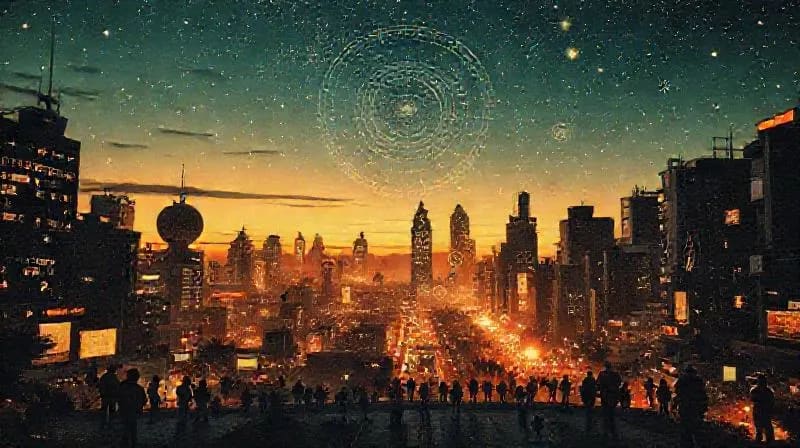
A futuristic cityscape reflecting the intricate dance between cosmic influences and digital networks, symbolizing the dawn of a globally conscious era.
Source: Hybrid content assisted by AI and human editorial supervision.This article delves into how these seemingly disparate domains intertwine, exploring the theoretical underpinnings of cosmic sociology, the digital age's role in fostering collective awareness, the astrological and sociological dimensions of global consciousness, and the transformative impact of AI. We will examine the ethical implications, future trajectories, and the potential for integrating ancient wisdom with modern technological paradigms to navigate the challenges and opportunities of our increasingly connected universe.
Table of Contents
- The Dawn of Cosmic Sociology
- Digital Age: A Catalyst for Collective Awareness
- Global Consciousness: Astrological and Sociological Perspectives
- Artificial Intelligence: Reshaping Human-Cosmic Interaction
- Ethical Implications and Future Trajectories
- Integrating Ancient Wisdom with Modern Technology
- Challenges and Opportunities in a Connected Universe
The Dawn of Cosmic Sociology
Cosmic sociology emerges from a recognition that human societies are not merely products of terrestrial forces but are also influenced by broader cosmic dynamics. This interdisciplinary field seeks to understand the relationship between celestial events, planetary cycles, and human collective behavior and societal structures. It draws upon insights from traditional astrology, modern astrophysics, quantum physics, and established sociological theories to construct a holistic view of human civilization within a universal context.
Historically, ancient civilizations often integrated celestial observations into their societal organization, spiritual practices, and even agricultural calendars. These early forms of cosmic awareness laid the groundwork for understanding humanity's place in a grander cosmic order. Cosmic sociology revives and formalizes this perspective, using scientific methodologies to explore correlations and causal links between cosmic phenomena and terrestrial social patterns, from large-scale historical trends to subtle shifts in collective mood.
Key tenets of cosmic sociology include the concept of universal interconnectedness, suggesting that all phenomena, from the smallest subatomic particle to the largest galaxy, are part of an intricate web of relationships. It also emphasizes cyclical patterns, mirroring the predictable movements of celestial bodies with observable societal ebbs and flows. This framework encourages a macro-level analysis of human history and future possibilities, moving beyond anthropocentric views.
Digital Age: A Catalyst for Collective Awareness
The digital age, characterized by the internet, social media, and ubiquitous digital communication, has fundamentally transformed how humans interact and perceive the world. This technological revolution has created an unprecedented infrastructure for the rapid dissemination of information, ideas, and emotions across the globe. It acts as a powerful catalyst for the development of collective awareness, enabling individuals from diverse backgrounds to connect, share, and collaborate on a scale previously unimaginable.
Social media platforms, for instance, have become virtual public squares where global conversations unfold, shaping public opinion and mobilizing collective action. This interconnectedness allows for a real-time reflection of global sentiment, creating a kind of collective nervous system for humanity. The immediate feedback loops and viral spread of content contribute to a shared experience, even if geographically dispersed, fostering a sense of global community and shared destiny. This phenomenon aligns with the principles of cosmic sociology, demonstrating how interconnected systems can influence collective consciousness.
Moreover, the digital age provides tools for individuals to explore and engage with spiritual, astrological, and philosophical concepts that transcend local cultures. Online communities dedicated to astrology, mindfulness, and personal development flourish, creating spaces for shared learning and growth. This digital infrastructure not only connects people but also connects ideas, allowing for a broader understanding of human potential and our relationship with the cosmos. The capacity for mindfulness in planetary transits becomes more accessible as information spreads globally.
Global Consciousness: Astrological and Sociological Perspectives
Global consciousness refers to the idea that humanity, as a collective, possesses a shared field of awareness, influenced by both internal societal dynamics and external cosmic forces. From an astrological perspective, this concept is deeply rooted in the study of planetary transits and their impact on collective psychology and historical events. Major planetary alignments, such as those involving outer planets like Uranus, Neptune, and Pluto, are often correlated with significant shifts in global paradigms, technological revolutions, and collective spiritual awakenings.
Sociologically, global consciousness can be understood through theories of collective effervescence, shared cultural narratives, and the emergence of a global civil society. The digital age greatly accelerates this process, as information and cultural trends propagate globally, creating common reference points and shared experiences. Events like global pandemics or climate change discussions highlight how humanity increasingly perceives itself as a single, interconnected entity facing common challenges, fostering a sense of shared fate and responsibility.
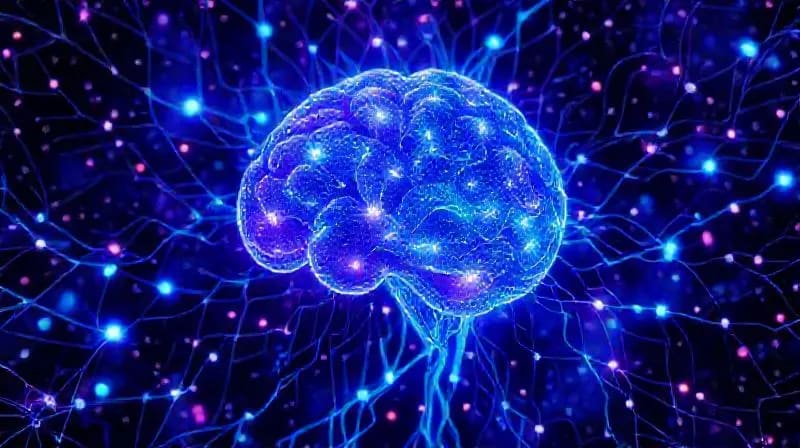
An abstract visualization depicting the intricate fusion of AI neural networks and human consciousness, forming a vast, interconnected digital cosmos.
Source: Hybrid content assisted by AI and human editorial supervision.The interplay between these astrological and sociological forces suggests a dynamic, evolving global consciousness. Astrological insights can offer a framework for understanding the timing and nature of collective shifts, while sociological analysis provides the empirical data of how these shifts manifest in human behavior and societal structures. This dual perspective enriches our understanding of collective human evolution and the broader cosmic influences at play. Individuals can also examine their secondary progressions for soul evolution to understand their personal journey within this collective shift.
| Aspect | Astrological Perspective | Sociological Perspective |
|---|---|---|
| Primary Influences | Planetary transits, alignments, cosmic cycles. | Social interaction, cultural norms, media, economic forces. |
| Mechanism of Change | Energetic shifts, archetypal activations, collective unconscious. | Information diffusion, social movements, technological innovation. |
| Manifestation | Major historical events, shifts in collective values, spiritual awakenings. | Global trends, shared public opinion, international cooperation/conflict. |
| Tools for Analysis | Ephemerides, natal charts, predictive astrology. | Surveys, statistical analysis, ethnographic studies, media analysis. |
| Key Concepts | Ages, Great Conjunctions, outer planet cycles. | Collective consciousness, global village, social construction of reality. |
Artificial Intelligence: Reshaping Human-Cosmic Interaction
Artificial intelligence stands as a pivotal technology in the unfolding narrative of cosmic sociology and global consciousness. AI's capacity for processing vast amounts of data, identifying complex patterns, and making predictions offers unprecedented opportunities to explore the intricate connections between human societies and cosmic phenomena. From analyzing astrological charts with greater precision to modeling the spread of global trends, AI can reveal insights that human cognition alone might miss.
For cosmic sociology, AI could be instrumental in correlating planetary movements with historical events, social unrest, or periods of innovation. By sifting through centuries of astrological data alongside historical records, AI might uncover previously unseen patterns, providing empirical validation or new hypotheses for cosmic influences on human affairs. This analytical power extends to understanding global consciousness, as AI can monitor real-time sentiment across digital platforms, mapping the ebb and flow of collective mood and attention.
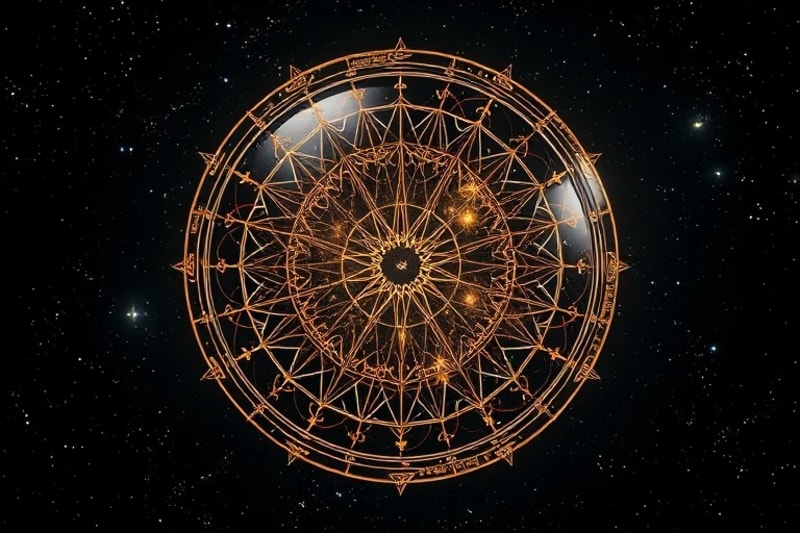
A conceptual 3D rendering of a celestial globe, interwoven with digital data streams and astrological symbols, representing the interconnectedness of cosmic and digital trends.
Source: Hybrid content assisted by AI and human editorial supervision.However, AI's role also raises critical questions. If AI can accurately predict collective behavior based on cosmic and digital data, what does this imply for human free will and agency? The potential for AI to influence global consciousness through targeted information dissemination or even by generating compelling narratives is a significant ethical concern. As we explore the Law of Attraction principles for conscious creation, AI's role in shaping collective thought becomes even more pertinent.
Ethical Implications and Future Trajectories
The convergence of cosmic sociology, digital technology, global consciousness, and AI presents a complex web of ethical considerations and potential future trajectories. One primary concern is data privacy and sovereignty in an increasingly interconnected world. As AI systems collect and analyze vast amounts of personal and collective data to map global consciousness, safeguarding individual rights and preventing misuse becomes paramount. Algorithmic bias, inherent in the data AI is trained on, could also perpetuate or amplify existing societal inequalities, impacting how cosmic influences are interpreted or how global trends are understood.
The future trajectories are bifurcated: a utopian vision where AI assists humanity in achieving a higher, more harmonious global consciousness, or a dystopian one where AI is used for control and manipulation. In the optimistic scenario, AI could facilitate global problem-solving by identifying optimal solutions for climate change, resource allocation, or conflict resolution, guided by a deeper understanding of cosmic rhythms and collective human needs. It could help us understand the legal frameworks for space law and asteroid mining, extending our societal structures beyond Earth.
Conversely, the misuse of AI in shaping global narratives or exploiting collective psychological vulnerabilities poses a significant threat. The ability to predict and potentially influence mass behavior could undermine democratic processes and individual autonomy. Therefore, establishing robust ethical guidelines, transparent AI development, and international regulatory frameworks are crucial to ensure that these powerful technologies serve humanity's best interests in its cosmic evolution.
Integrating Ancient Wisdom with Modern Technology
A key aspect of navigating this new era is the conscious integration of ancient wisdom traditions with modern technological advancements. Cosmic sociology, by its very nature, bridges these two realms. Ancient astrological systems, indigenous cosmologies, and spiritual philosophies offer profound insights into human nature, collective cycles, and our relationship with the universe. The digital age provides unprecedented tools to study, preserve, and disseminate this wisdom globally, making it accessible to a wider audience.
For example, AI can be employed to digitize and analyze ancient texts, cross-referencing astrological predictions with historical events on a massive scale, potentially uncovering new interpretations or validating long-held beliefs. Virtual reality and augmented reality can create immersive experiences for learning about celestial mechanics or meditating on cosmic principles. These technologies can make abstract cosmic concepts tangible and experiential, fostering a deeper connection to the universal whole.
The challenge lies in ensuring that technology serves as an enhancement, not a replacement, for direct human experience and intuitive understanding. The goal is to create a synergy where ancient wisdom provides the ethical and philosophical framework, while modern technology offers the analytical power and outreach capabilities. This integration can lead to a more balanced and informed global consciousness, one that respects both empirical data and spiritual insight.
Challenges and Opportunities in a Connected Universe
The journey into cosmic sociology within the digital age presents both formidable challenges and unparalleled opportunities. One significant challenge is the "digital divide," where unequal access to technology exacerbates existing inequalities, potentially creating fragmented rather than unified global consciousness. Misinformation and disinformation, amplified by digital platforms, also pose a threat to genuine collective understanding, requiring critical digital literacy and robust ethical frameworks.
Maintaining individual autonomy and critical thinking in an environment saturated with information and potentially influenced by AI algorithms is another crucial task. As global consciousness becomes more integrated, there is a risk of homogenization, where unique cultural and individual perspectives might be overshadowed by dominant narratives. Fostering diversity of thought and promoting inclusive digital spaces are essential for a healthy, evolving global mind.
However, the opportunities are equally vast. A truly interconnected global consciousness, informed by cosmic insights and empowered by ethical AI, could unlock unprecedented potentials for human flourishing. This includes enhanced global cooperation on pressing issues, a deeper scientific understanding of the universe, and a collective shift towards more sustainable and compassionate ways of living. The digital age offers the infrastructure to build a planetary civilization that is not only technologically advanced but also spiritually aware and cosmically aligned, fostering a new era of collective wisdom and innovation.
Related Topics and Further Exploration
- 10th House Astrology: Career, Public Image, Destiny
- Advanced Crystal Grids: Sacred Geometry Manifestation Power
- 5th House Astrology: Creativity, Romance, Children Guide
- Chrono-Astrology Ancestral Echoes Personal Time Cycles Precision
- Bio-Energetic Art: Channeling Positive Energy for Healing Spaces
- Medical Astrology: Chronic Disease Predispositions, Planetary Debilities
- Ancestral Veneration Natal Chart: Lineage Blessings Healing Karmic
- Planetary Transits Spiritual Integration: Cosmic Self-Transformation Guide
- Virgo Scorpio Compatibility: Planetary Aspects for Deep Intimacy & Transformation
- Sheep (Goat) Zodiac: 2024 Forecast, Love, Career, Health
- Astrocartography: Best Places to Live with Your Birth Chart
- Therapies for Chronic Pain: Integrative Approach and Relief
- Freemium Models: Monetization and Sustainable Growth Strategies
- Vedic Ayurvedic Astrology: Diet Lifestyle Dosha Grahas
- Chinese Horoscope: Innovative Leadership, Business Strategies
- Conscious Eating: Astrological Nutrition for Your Sign
- Santos Patronos Siglo XXI: Adicción Digital Desinformación
- Urgent Marian Messages: Overcoming Global Crises
- Sacred Relics: Faith, Miracles, Science, and Authenticity
Source: Hybrid content assisted by AI and human editorial supervision.


Comments
Post a Comment