
Techno-Shamanism Digital Healing Modern Spirituality
Techno-shamanism represents a fascinating and evolving intersection of ancient spiritual practices and modern technological advancements. It is a contemporary spiritual movement that seeks to bridge the wisdom of ancestral rituals, often associated with shamanic traditions, with the tools and concepts of the digital age. This emergent field explores how technology, from virtual reality to biofeedback devices and digital art, can be utilized to facilitate altered states of consciousness, promote healing, foster community, and deepen spiritual connection.
In an increasingly secular and technologically driven world, many individuals seek meaning and spiritual experiences outside traditional religious frameworks. Techno-shamanism offers a path for those who resonate with both the ancient call of the spirit and the innovative potential of technology. It acknowledges that while the methods may evolve, the fundamental human need for connection, healing, and understanding one's place in the cosmos remains constant.
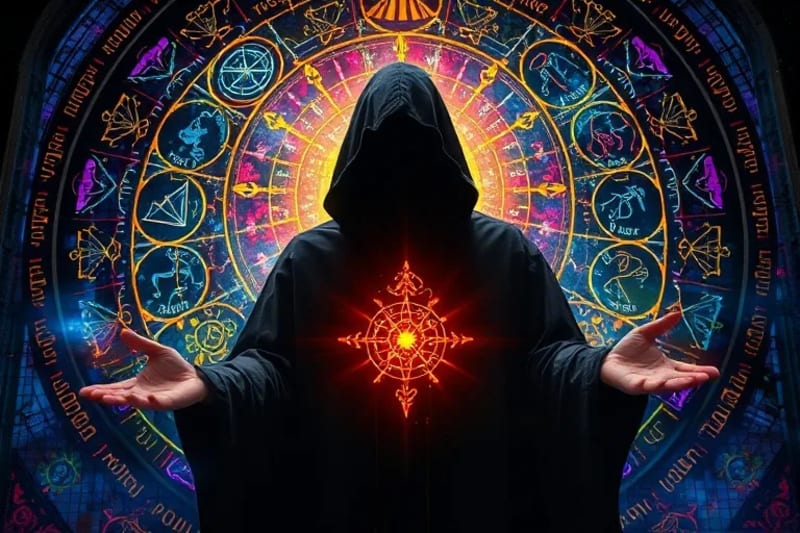 A mystical figure embodies the fusion of ancient spiritual symbols and modern digital streams, illustrating the core concept of techno-shamanism.
Fuente visual sujeta a disponibilidad del ecosistema: Wikimedia Commons bajo licencia CC BY-SA 4.0 o renderizado conceptual IA.
A mystical figure embodies the fusion of ancient spiritual symbols and modern digital streams, illustrating the core concept of techno-shamanism.
Fuente visual sujeta a disponibilidad del ecosistema: Wikimedia Commons bajo licencia CC BY-SA 4.0 o renderizado conceptual IA.
The term "techno-shamanism" itself suggests a synthesis: "techno" referring to technology and "shamanism" to ancient spiritual practices involving a practitioner who acts as a mediator between the human and spirit worlds. This modern interpretation doesn't necessarily involve literal spirit journeys in the traditional sense, but rather uses technological interfaces to explore inner landscapes, achieve altered states, and engage with collective consciousness.
Table of Contents
- The Ancient Roots of Shamanism
- Shamanism in the Digital Age: A Transformation
- Tools and Practices of Techno-Shamanism
- Digital Healing and Spiritual Wellbeing
- Community, Ethics, and the Future
The Ancient Roots of Shamanism
To understand techno-shamanism, it's essential to first grasp the foundational principles of traditional shamanism. Shamanism is one of humanity's oldest spiritual practices, dating back tens of thousands of years, found in diverse cultures across the globe. Shamans traditionally serve as healers, diviners, and spiritual guides, entering altered states of consciousness to communicate with the spirit world, retrieve lost souls, and bring back healing or guidance for their communities.
These practices often involve rhythmic drumming, chanting, dance, fasting, and the use of entheogenic plants, all aimed at inducing non-ordinary states of reality. The core belief is that the visible world is permeated by invisible forces and spirits, and that balance between these realms is crucial for individual and communal well-being. The shaman's role is to restore this balance, often by identifying and addressing spiritual imbalances or intrusions.
Key elements of traditional shamanism include:
- Altered States of Consciousness: Central to shamanic work, achieved through various techniques to access non-ordinary realities.
- Spirit Communication: Interaction with helping spirits, ancestors, and nature spirits for guidance and healing.
- Healing: Addressing physical, emotional, and spiritual ailments by restoring harmony and removing negative influences.
- Community Role: Shamans often serve as central figures in their communities, providing spiritual leadership and support.
- Nature Connection: A deep reverence for and connection to the natural world, viewing all life as interconnected and sacred.
Shamanism in the Digital Age: A Transformation
The emergence of techno-shamanism reflects a contemporary adaptation of these ancient principles to a world saturated with technology. It's not about replacing traditional practices but rather augmenting them or finding new avenues for their expression. The digital realm, often perceived as separate from nature and spirit, is re-envisioned as a new landscape for spiritual exploration.
Proponents argue that just as ancient shamans used natural tools and substances to navigate inner and outer worlds, modern seekers can use technology to achieve similar ends. The internet, virtual reality, and biofeedback devices can create immersive environments, generate specific sensory inputs, and even facilitate collective experiences that mirror aspects of traditional shamanic journeys. This approach acknowledges that the human mind is highly adaptable and can find meaning and spiritual resonance through various mediums.
This transformation is driven by several factors:
- Accessibility: Technology can make spiritual tools and experiences more accessible to a wider audience, transcending geographical barriers.
- Novelty: The allure of new technologies offers fresh perspectives and approaches to spiritual development.
- Individualization: Digital tools can be personalized to suit individual needs and preferences, offering tailored spiritual paths.
- Integration: A desire to integrate spiritual practice into everyday modern life, where technology is often ubiquitous.
 Abstract digital art visualizes healing frequencies and energetic purification, a key aspect of digital healing.
Tools and Practices of Techno-Shamanism
Techno-shamanism employs a diverse array of digital tools and practices, often drawing inspiration from scientific understanding of the brain and consciousness. These tools are used to induce meditative states, enhance sensory perception, and create immersive spiritual experiences. For example, some practitioners utilize binaural beats or isochronic tones, which are auditory illusions designed to entrain brainwaves to specific frequencies associated with relaxation, meditation, or altered states. This concept is closely related to sound healing and vibrational therapy, which explores the therapeutic effects of specific frequencies.
Virtual reality (VR) and augmented reality (AR) are also becoming powerful mediums. VR can transport users to meticulously crafted digital landscapes, from serene natural environments to abstract, psychedelic realms, simulating visionary experiences. These environments can be designed to facilitate introspection, guided meditations, or even collective spiritual journeys. AR, on the other hand, overlays digital information onto the real world, potentially enhancing mundane environments with spiritual symbols or interactive energetic fields.
Other tools include:
- Biofeedback and Neurofeedback Devices: These technologies monitor physiological responses (like heart rate, skin conductance, brainwaves) and provide real-time feedback, allowing individuals to learn to consciously regulate their internal states. This can be used to achieve deeper meditative states or manage stress.
- Digital Art and Generative Music: Algorithms can create ever-evolving visual and auditory experiences that are designed to be mesmerizing and consciousness-altering, similar to the role of mandalas or sacred music in traditional practices.
- Online Communities and Forums: The internet itself acts as a vast network, allowing individuals to connect with like-minded seekers, share experiences, and co-create digital rituals, fostering a sense of global spiritual community. This echoes the communal aspect of traditional shamanism, albeit in a virtual space.
- Wearable Technology: Devices that track sleep patterns, heart rate variability, and other biometric data can provide insights into one's energetic state, potentially informing personalized spiritual practices or aura cleansing techniques.
Digital Healing and Spiritual Wellbeing
The application of techno-shamanism extends significantly into the realm of healing and spiritual wellbeing. By leveraging technology, practitioners aim to address modern ailments such as stress, anxiety, digital overload, and spiritual disconnection. The immersive and interactive nature of digital tools can provide a safe and controlled environment for individuals to explore their inner selves, process emotions, and cultivate mindfulness.
For instance, VR therapy is already being used in clinical settings to treat phobias, PTSD, and chronic pain, by creating exposure therapies or distracting environments. In a techno-shamanic context, VR could be used to facilitate "journeying" to symbolic inner landscapes to confront personal challenges or retrieve fragmented aspects of the self, much like a shamanic soul retrieval. The controlled nature of these digital environments allows for a tailored and often gentler approach to profound psychological and spiritual work.
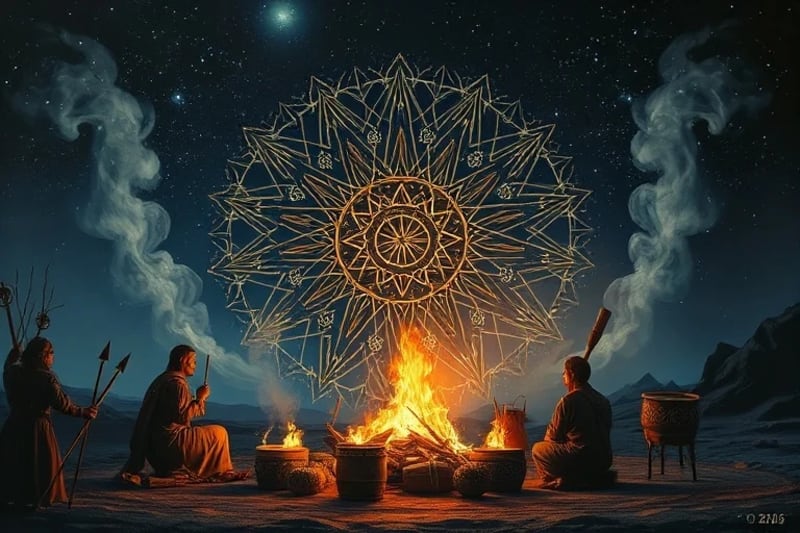 An oil painting depicts a traditional shamanic ritual, subtly infused with digital patterns, symbolizing the modern reinterpretation of ancient practices.
Moreover, the ability to collect and analyze personal data through wearables and apps can empower individuals to gain deeper insights into their energetic patterns and emotional states. This self-awareness is a cornerstone of spiritual growth, allowing for more informed choices about lifestyle, diet, and spiritual practices. The integration of data-driven insights with intuitive spiritual guidance forms a holistic approach to wellbeing.
The goal is not to replace human connection or traditional wisdom but to augment it, offering new avenues for self-discovery and healing. This approach can be particularly appealing to younger generations who are digitally native and may find traditional spiritual paths less accessible or relevant. By meeting individuals where they are, techno-shamanism opens doors to spiritual exploration for a broader audience.
Community, Ethics, and the Future
One of the significant aspects of techno-shamanism is its potential to foster new forms of community. Online platforms, virtual gatherings, and collaborative digital art projects can create spaces for shared spiritual experiences, discussions, and mutual support. These virtual communities can transcend geographical boundaries, allowing individuals from diverse backgrounds to connect based on shared spiritual interests, contributing to a global spiritual awakening. For those interested in broader cosmic connections and synchronicities, these digital spaces can be invaluable.
However, the integration of technology into spiritual practices also raises important ethical considerations. Questions surrounding data privacy, the potential for digital addiction, the commercialization of spiritual experiences, and the risk of spiritual bypassing (using technology to avoid genuine inner work) must be carefully addressed. Practitioners and participants must maintain a critical awareness of the tools they use and ensure that technology serves as an aid to spiritual growth, rather than a distraction or a substitute for authentic experience.
The future of techno-shamanism is likely to involve even more sophisticated integrations of AI, neuroscience, and immersive technologies. As AI becomes more advanced, it could potentially act as a personalized spiritual guide, offering tailored meditations, insights, or even generating dynamic spiritual environments based on individual needs. This raises fascinating questions about the nature of consciousness and the role of artificial intelligence in spiritual development, a topic explored further in discussions about AI astrology and its ethical implications.
Ultimately, techno-shamanism is a testament to humanity's enduring quest for meaning and connection. It represents a dynamic and evolving response to the challenges and opportunities of the modern world, demonstrating that ancient wisdom can find new expression through cutting-edge technology. By thoughtfully integrating these two seemingly disparate realms, individuals can forge unique paths toward healing, self-discovery, and a deeper understanding of the interconnected web of existence.
The digital realm, far from being a sterile, disconnected space, can be seen as a new frontier for spiritual exploration, offering novel ways to access altered states of consciousness and foster collective healing. This perspective invites us to reconsider the boundaries between the sacred and the technological.
As we navigate the complexities of the 21st century, the synthesis of ancient wisdom and modern innovation provides a powerful framework for personal and planetary transformation.
The journey of techno-shamanism is one of continuous exploration, blending the timeless with the timely, and inviting us to imagine a future where technology serves as a conscious ally in our spiritual evolution.
Explore More Spiritual Insights
Source: Hybrid content assisted by AI and human editorial supervision.


Comments
Post a Comment