
Dream Interpretation: Subconscious Messages, Symbolism Unlocked
Dream Interpretation: Unlocking Subconscious Messages and Symbolism
Dream interpretation is an ancient practice that seeks to understand the meanings behind the images, stories, and sensations experienced during sleep. For centuries, cultures across the globe have viewed dreams not merely as random neural firings but as profound messages from the subconscious mind, divine entities, or even glimpses into future events. This intricate field combines elements of psychology, spirituality, and cultural studies, offering a unique pathway to self-discovery and personal growth.
Understanding our dreams can provide invaluable insights into our waking lives, revealing hidden fears, desires, unresolved conflicts, and creative potentials. By learning to decipher the symbolic language of dreams, individuals can gain a deeper understanding of their inner world, leading to greater emotional intelligence and more informed decision-making. This guide explores the historical context, psychological theories, common symbols, and practical techniques for engaging with your dream life.
 A conceptual visualization of the subconscious mind and the symbolic keys to its understanding.
Table of Contents
- Historical Roots of Dream Interpretation
- Psychological Theories of Dreaming
- Common Dream Symbols and Their Meanings
- Scientific Perspectives on Dreams
- Techniques for Dream Recall and Analysis
- Benefits of Dream Interpretation
- Modern Applications and Misconceptions
Historical Roots of Dream Interpretation
The practice of interpreting dreams dates back to ancient civilizations, where dreams were often considered divine communications or omens. In ancient Egypt, priests acted as dream interpreters, and dream books were commonplace, detailing the meanings of various dream symbols. Similarly, Mesopotamian cultures, particularly the Babylonians and Assyrians, meticulously recorded and analyzed dreams, believing they held prophetic significance. The Bible also contains numerous accounts of dreams playing pivotal roles in the lives of prophets and kings.
Greek and Roman civilizations also placed great importance on dreams, often consulting oracles or seeking guidance from dream interpreters. The philosopher Aristotle, while acknowledging the physiological basis of dreams, also suggested they could reflect the dreamer's mental and physical state. Throughout the Middle Ages, dreams continued to be seen through a spiritual lens, often interpreted as messages from God or the devil, depending on their content.
The Renaissance brought a renewed interest in humanism and the individual, but it wasn't until the late 19th and early 20th centuries that dream interpretation began to be systematically explored within a psychological framework. This shift marked a significant turning point, moving the focus from external, divine sources to the internal workings of the human mind.
Psychological Theories of Dreaming
Modern dream interpretation owes much to the pioneering work of psychologists like Sigmund Freud and Carl Jung. Freud, often considered the father of psychoanalysis, posited that dreams are "the royal road to the unconscious." He believed that dreams serve as a disguised fulfillment of repressed wishes, often sexual or aggressive in nature. Freud distinguished between the "manifest content" (the dream as remembered) and the "latent content" (the underlying, hidden meaning), which he sought to uncover through symbolic analysis and free association.
Carl Jung, a student of Freud who later broke away, developed his own influential theory of dreams. Jung agreed that dreams reveal unconscious material but emphasized the concept of the "collective unconscious" – a reservoir of universal symbols and archetypes shared by all humanity. For Jung, dreams were not just about repressed desires but also about individuation, spiritual growth, and integrating different aspects of the self. He believed that dream symbols were not always disguises but rather attempts by the unconscious to communicate directly. Exploring the deeper layers of one's psyche through dream analysis can be akin to understanding one's personal cosmic blueprint, revealing innate patterns and potentials.
Other psychological approaches include the Activation-Synthesis Theory, which suggests dreams are merely the brain's attempt to make sense of random neural activity during REM sleep, and the Problem-Solving Theory, which views dreams as a way for the mind to work through daily challenges and emotions without the constraints of waking reality. Each theory offers a valuable lens through which to view the complex phenomenon of dreaming.
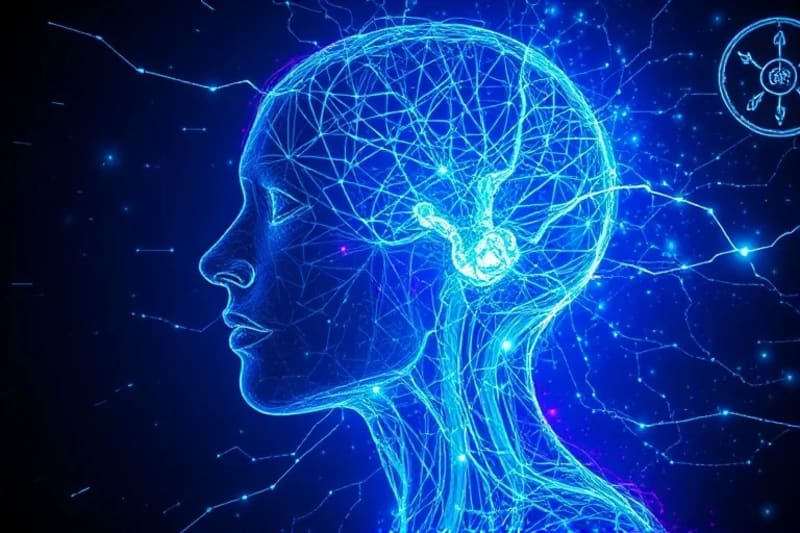 An artistic rendering of the complex neural activity underlying our dreams and subconscious processes.
Common Dream Symbols and Their Meanings
While dream interpretation is highly personal and contextual, certain symbols appear frequently across cultures and individuals. Understanding these common archetypes can provide a starting point for personal analysis. It is crucial to remember that the meaning of a symbol can vary greatly depending on the dreamer's personal associations, cultural background, and the specific context of the dream. For a more comprehensive exploration of such symbols, a detailed guide to esoteric symbolism can be immensely helpful.
- Water: Often symbolizes emotions, the unconscious, or the flow of life. Calm water might suggest emotional peace, while turbulent water could indicate emotional turmoil.
- Animals: Can represent instincts, primal urges, or specific personality traits. A lion might symbolize courage, a snake transformation or hidden fears, and a bird freedom.
- Houses: Frequently represent the self or different aspects of the psyche. Different rooms can correspond to different areas of your life or personality.
- Falling: A common dream, often associated with feelings of insecurity, loss of control, or fear of failure in waking life.
- Flying: Typically symbolizes freedom, liberation, a sense of control, or overcoming obstacles.
- Teeth: Often linked to power, confidence, or vulnerability. Losing teeth might suggest feelings of helplessness or anxiety about communication.
- Chasing/Being Chased: Can represent avoidance of a problem or fear of confrontation. The identity of the chaser or the reason for the chase can provide further clues.
- Roads/Journeys: Symbolize life paths, transitions, or the direction one is taking. The condition of the road (smooth, bumpy, winding) can reflect the journey's ease or difficulty.
Interpreting these symbols requires introspection and an understanding of your current life circumstances. What feelings did the symbol evoke in the dream? How does it relate to your waking experiences?
Scientific Perspectives on Dreams
While psychological and spiritual interpretations delve into the meaning of dreams, neuroscience offers insights into their physiological basis. Dreams primarily occur during Rapid Eye Movement (REM) sleep, a stage characterized by increased brain activity, muscle paralysis, and rapid eye movements. During REM sleep, the brain's limbic system, responsible for emotions, is highly active, which explains the often intense emotional content of dreams.
The prefrontal cortex, associated with logical reasoning and decision-making, is less active during REM sleep, which may account for the often bizarre and illogical nature of dreams. Scientists hypothesize that dreams play a crucial role in memory consolidation, emotional regulation, and learning. They may also serve as a "threat simulation" mechanism, allowing the brain to practice responses to dangerous situations in a safe environment.
Research into brain imaging during sleep has shown that different areas of the brain light up depending on the dream content, further supporting the idea that dreams are complex cognitive processes. While science can explain *how* we dream, the *why* and the *meaning* often remain subjects of philosophical and psychological inquiry, making dream interpretation a bridge between the objective and subjective worlds. The act of dreaming itself can be seen as a form of nurturing one's inner artist, allowing the mind to create narratives and imagery without conscious constraints.
 A symbolic representation of the tools used for documenting and reflecting upon dream experiences.
Techniques for Dream Recall and Analysis
To interpret dreams effectively, the first step is to improve dream recall. Many people struggle to remember their dreams, but with consistent practice, this skill can be developed. Here are some effective techniques:
- Keep a Dream Journal: Place a notebook and pen by your bedside. As soon as you wake up, before even getting out of bed, write down everything you remember about your dream, no matter how fragmented. Include details, emotions, colors, and any recurring themes.
- Set an Intention: Before going to sleep, tell yourself that you want to remember your dreams. This simple act of intention can significantly improve recall.
- Avoid Alarms: Waking up abruptly can disrupt dream memory. If possible, allow yourself to wake naturally or use a gentle alarm.
- Re-enter the Dream: If you wake up and only remember a fragment, close your eyes and try to "re-enter" the dream state. Often, more details will emerge.
- Look for Patterns: Over time, review your dream journal for recurring symbols, themes, or emotions. These patterns are often highly significant.
- Free Association: For each symbol or event in your dream, write down the first thoughts, feelings, or memories that come to mind. This technique, popularized by Freud, helps connect dream content to personal experiences.
- Amplify Symbols: As suggested by Jung, choose a significant dream image and imagine it vividly. What does it feel like? What does it want to tell you? This can be a form of biofeedback for intuition, allowing deeper insights to surface.
Consistency is key. The more you engage with your dreams, the more fluent you will become in their unique language.
Benefits of Dream Interpretation
Engaging in dream interpretation offers a multitude of psychological and emotional benefits, extending far beyond simple curiosity. It provides a powerful tool for self-exploration and personal development.
- Increased Self-Awareness: Dreams can reveal aspects of your personality, motivations, and hidden feelings that you may not be consciously aware of. This deeper understanding fosters greater self-awareness.
- Emotional Processing: Dreams often serve as a nocturnal therapy session, allowing the mind to process emotions, traumas, and experiences from waking life in a safe, symbolic space.
- Problem-Solving: Many people report finding solutions to waking problems or gaining new perspectives on challenges through their dreams. The unconscious mind can work on issues without the usual conscious biases.
- Creativity and Inspiration: Dreams are a wellspring of creativity, offering novel ideas, artistic inspiration, and unique perspectives. Many artists, writers, and scientists have credited dreams for breakthroughs.
- Personal Growth: By understanding and integrating the messages from your dreams, you can facilitate personal growth, overcome obstacles, and move towards greater psychological wholeness.
- Reduced Stress and Anxiety: Addressing unresolved issues that manifest in dreams can lead to a reduction in waking anxiety and stress, promoting a greater sense of peace.
The journey into dream interpretation is a continuous process of learning and discovery, enriching your understanding of yourself and the world around you.
Modern Applications and Misconceptions
In contemporary society, dream interpretation continues to be a valuable tool, both in therapeutic settings and for personal exploration. Many therapists incorporate dream analysis into their practice to help clients uncover unconscious conflicts, understand their emotional landscape, and foster personal insight. Beyond therapy, individuals use dream work for creative inspiration, spiritual guidance, and enhancing their overall well-being.
However, it is important to address common misconceptions. One prevalent myth is that dream dictionaries provide definitive, universal meanings for symbols. While they can offer starting points, true dream interpretation is highly subjective and requires personal reflection. Another misconception is that all dreams are prophetic; while some may contain insights into potential future outcomes, most dreams reflect internal states and past experiences rather than literal predictions.
The key to effective dream interpretation lies in approaching it with an open mind, a willingness to explore your inner world, and an understanding that your dreams are uniquely yours. They are a personalized dialogue from your subconscious, offering guidance and wisdom tailored specifically to your life journey. Embracing this dialogue can lead to profound self-discovery and a richer, more integrated experience of life.
The American Academy of Sleep Medicine (AASM) recognizes the significant role of dreams in mental health, noting that understanding dream content can contribute to psychological well-being and aid in the treatment of certain sleep disorders or mental health conditions.
While not directly endorsing specific interpretive methods, the AASM emphasizes the brain's complex activity during sleep and the potential for dreams to reflect and process daily experiences and emotions.
In conclusion, dream interpretation is a powerful practice that bridges the gap between our conscious and unconscious minds. By paying attention to our dreams, we gain access to a wealth of information about our inner landscape, helping us navigate life's challenges, foster creativity, and achieve greater self-understanding. It is a journey into the self, guided by the mysterious and profound language of the night.
Explore More Esoteric Wisdom
- Saturn Astrology: Discipline & Karma
- Advanced Harmonic Astrology
- Biogeometry Sacred Space Design
- Astro-Linguistics Sigil Magic
- Relationship Red Flags Synastry
- 7th House Astrology: Partnerships
- Sound Frequencies DNA Repair
- Rooster Chinese Zodiac Traits
- Vedic & Western Astrology
- Sacred Geometry: Universal Codes
Source: Hybrid content assisted by AI and human editorial supervision.


Comments
Post a Comment