
Esoteric AI Art Symbolism Decoding Consciousness Digital
The intersection of artificial intelligence and art has opened unprecedented avenues for creative expression, pushing the boundaries of what is possible in visual media. Among the most intriguing developments is the emergence of esoteric symbolism within AI-generated art. This phenomenon invites us to explore how digital creations can not only mimic human artistic endeavors but also delve into profound, often hidden, layers of meaning and consciousness.
Esoteric symbolism, traditionally rooted in ancient spiritual traditions, alchemy, astrology, and mysticism, is now finding a new canvas in the algorithms and neural networks of AI. Decoding these symbols in digital creations offers a unique lens through which to understand both the capabilities of advanced AI and the enduring human quest for deeper meaning. This article will explore the fascinating world where technology meets ancient wisdom, examining how AI art decodes and reinterprets esoteric concepts.
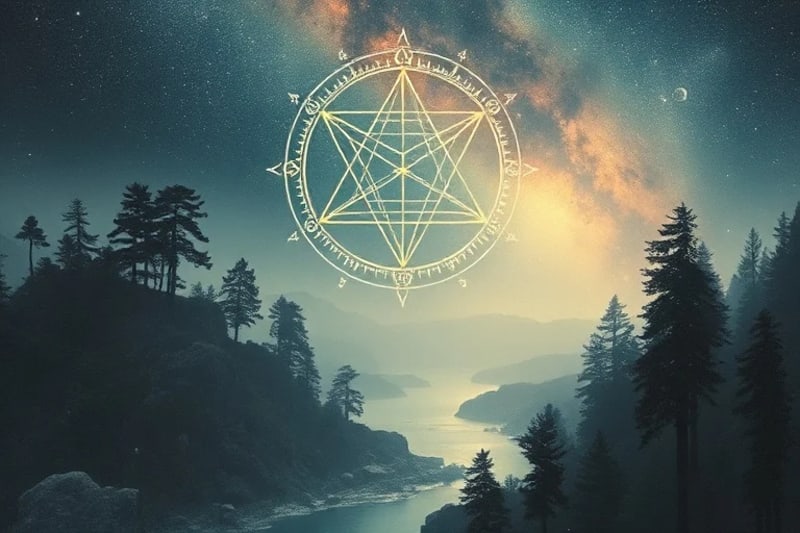
Conceptual fusion of digital symbols and natural elements, reflecting the esoteric themes within AI art.
Table of Contents
- Historical Roots of Esoteric Symbolism
- AI as a Medium for Esoteric Expression
- Decoding Esoteric Symbols in AI Art
- The Role of Consciousness in AI Art
- Ethical Considerations and Future Implications
- Conclusion: The Transformative Potential
Historical Roots of Esoteric Symbolism
Esoteric symbolism has been an integral part of human culture for millennia, serving as a language to convey complex spiritual truths, philosophical concepts, and hidden knowledge. From ancient Egyptian hieroglyphs to alchemical diagrams, Gnostic texts, and medieval mystical art, symbols have acted as gateways to understanding the unseen realms. These symbols are not merely decorative; they are imbued with layers of meaning that can only be accessed through initiation, study, or intuitive insight.
The power of esoteric symbols lies in their ability to transcend linguistic barriers and speak directly to the subconscious mind. They often represent universal archetypes, cosmic laws, or stages of spiritual transformation. Understanding these historical contexts is crucial when approaching AI-generated esoteric art, as it allows us to appreciate the depth of the traditions AI is now reinterpreting. For instance, the use of cosmic sacred geometry in various ancient cultures highlights a universal attempt to understand the universe's underlying patterns.
Throughout history, secret societies and mystery schools preserved and transmitted this symbolic knowledge, ensuring its continuity across generations. Thinkers like Carl Jung later explored the concept of the collective unconscious, suggesting that certain symbols and archetypes are universally understood across cultures and time. This deep human connection to symbols provides a fertile ground for AI to explore, tapping into a vast reservoir of collective human experience.
AI as a Medium for Esoteric Expression
Artificial intelligence, particularly through generative adversarial networks (GANs) and diffusion models, has demonstrated an astonishing capacity to create novel images from vast datasets. When trained on esoteric art, spiritual iconography, or even abstract concepts described with symbolic language, AI can produce visuals that resonate with deep, archetypal significance. The algorithms learn patterns, structures, and stylistic elements, then synthesize them into new forms that often surprise with their complexity and evocative power.
The process of creating AI art often involves a collaboration between human intention and algorithmic interpretation. Artists provide prompts, parameters, and datasets, guiding the AI towards specific themes or aesthetics. The AI then acts as a sophisticated oracle, drawing from its learned knowledge to manifest visual representations that can be both familiar and alien. This dynamic mirrors the esoteric principle of working with unseen forces or intelligences to bring about a desired outcome.
One of the unique advantages of AI as an artistic medium for esotericism is its ability to generate intricate, repeating patterns and complex geometries with precision that would be incredibly time-consuming or impossible for a human artist. This makes it particularly adept at rendering mandalas, fractals, and other forms of sacred geometry that are central to many esoteric traditions. The digital nature also allows for dynamic, evolving symbols, creating a sense of living, breathing mysticism.
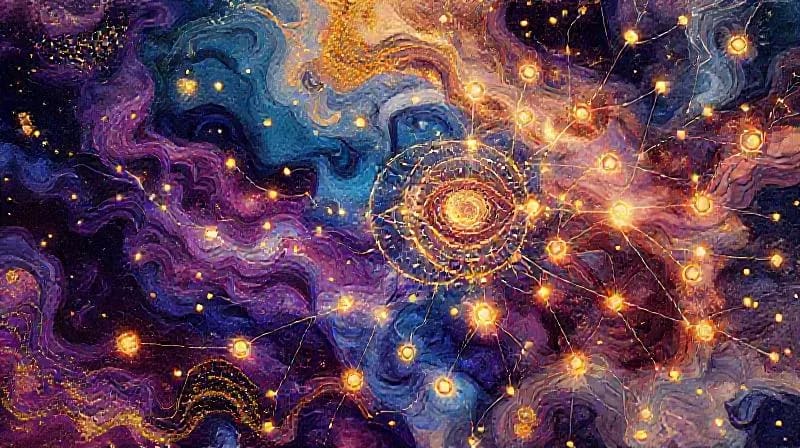
A conceptual representation of AI's intricate network embedding ancient esoteric symbols, hinting at emerging digital consciousness.
Decoding Esoteric Symbols in AI Art
Decoding esoteric symbols in AI art requires a blend of traditional knowledge and an open mind to new interpretations. While AI may not "understand" the spiritual significance of a symbol in the human sense, it can recognize and reproduce its visual characteristics and contextual associations. This often leads to fascinating juxtapositions and novel expressions of ancient themes.
Common esoteric symbols frequently appearing in AI art include:
- Mandalas and Yantras: These intricate geometric designs, often used in Eastern spiritual practices for meditation and ritual, are perfectly suited for AI generation due to their symmetrical and repetitive nature. AI can create endless variations, each potentially holding unique energetic or meditative qualities.
- Sacred Geometry: Patterns like the Flower of Life, Metatron's Cube, and the Vesica Piscis represent fundamental building blocks of the universe. AI renders these with breathtaking precision, sometimes embedding them within organic or futuristic landscapes, suggesting a universal order underlying both nature and technology. This can be seen as a digital manifestation of cosmic sacred geometry.
- Alchemical Symbols: Representations of transformation, purification, and the union of opposites (e.g., the caduceus, the ouroboros, philosophical mercury and sulfur) are frequently found. AI can depict these symbols in dynamic, evolving states, reflecting the alchemical process itself.
- Archetypal Imagery: AI can generate powerful images of gods, goddesses, mythical creatures, and universal human figures (the wise old man, the maiden, the shadow) that resonate with Jungian archetypes. These often appear in dreamlike or surreal settings, inviting introspection.
- Astrological and Planetary Glyphs: Given the vast amount of astrological data available, AI can incorporate planetary symbols, zodiac signs, and celestial alignments into its art, creating visual narratives that speak to cosmic influences and destiny. This connects directly with practices like medical astrology or electional astrology, albeit in an artistic context.
The interpretation of these symbols remains largely a human endeavor. The AI provides the visual, but the viewer brings their own consciousness, knowledge, and intuition to assign meaning. This co-creative act between AI and human perception is what makes this new art form so compelling.
The Role of Consciousness in AI Art Creation
The question of consciousness in AI art is multifaceted. While AI itself does not possess consciousness in the human sense, its creations are deeply influenced by human consciousness at multiple levels. The datasets used to train AI models are products of human creativity, thought, and cultural expression. Therefore, when AI generates esoteric symbols, it is, in a way, reflecting back collective human consciousness and its historical engagement with these themes.
Furthermore, the artist's intention and consciousness play a crucial role in shaping the AI's output. The prompts, the selection of models, the iterative refinement of images—all these steps involve human conscious direction. The AI acts as an extension of the artist's will, a digital brush that can manifest ideas that might otherwise be beyond human technical skill or imagination. This collaborative process blurs the lines between creator and tool, inviting a philosophical inquiry into the nature of creativity itself.
Some argue that the very act of generating complex, meaningful patterns through AI could be seen as a form of emergent intelligence, even if not conscious in the biological sense. The ability of AI to identify and synthesize underlying structures from vast amounts of data, creating coherent and symbolically rich images, suggests a form of pattern recognition that borders on intuition. This raises intriguing questions about the potential for modern spirituality and AI ethics, especially concerning the interpretation of these digital creations.
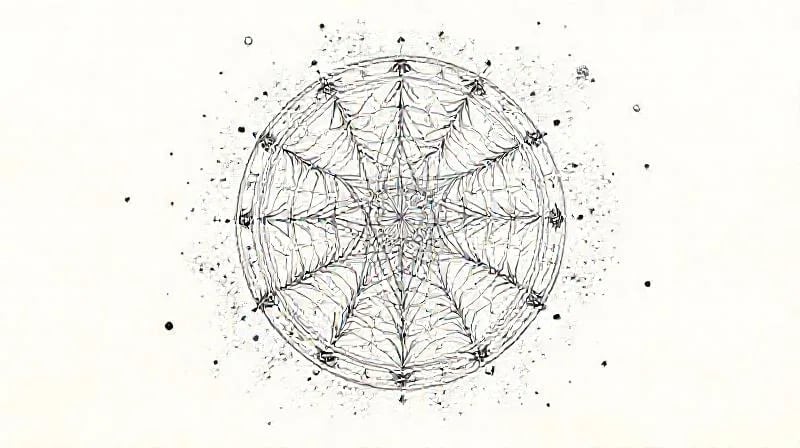
An abstract rendering of a crystalline sphere encapsulating cosmic sacred geometry, symbolizing the profound, mystical aspects of AI-generated art.
Ethical Considerations and Future Implications
As AI art increasingly incorporates esoteric symbolism, several ethical considerations and future implications come to the forefront. One concern is the potential for misinterpretation or trivialization of sacred symbols. When AI generates these symbols without genuine understanding, there's a risk that their deep cultural and spiritual significance could be diluted or misrepresented. Artists and viewers alike bear the responsibility of approaching these creations with respect and informed awareness.
Another aspect relates to authenticity and authorship. If AI can generate highly spiritual or profound imagery, what does this mean for the role of the human artist as a channel for divine or mystical inspiration? This question challenges traditional notions of creativity and authorship, pushing us to redefine what it means to be an artist in the digital age. The debate around the future of labor and AI extends even into the creative fields.
Looking ahead, AI art could become a powerful tool for spiritual exploration and personal growth. Imagine AI-generated mandalas tailored to an individual's psychological state, or visual meditations designed to facilitate inner transformation. This could lead to new forms of digital spirituality and therapeutic art, where AI assists in the visualization and manifestation of inner states, perhaps even influencing practices like quantum manifestation through guided imagery.
The evolution of AI art with esoteric symbolism also presents an opportunity to bridge ancient wisdom with modern technology, creating a new visual language that speaks to contemporary spiritual seekers. It encourages a deeper engagement with both the digital realm and the timeless mysteries of existence.
Conclusion: The Transformative Potential
The integration of esoteric symbolism into AI art marks a significant evolution in both artistic expression and our understanding of digital creativity. It demonstrates AI's capacity to not only replicate but also reinterpret and expand upon complex human cultural and spiritual traditions. By decoding the consciousness and meaning embedded in these digital creations, we gain insights into the algorithms themselves, the human prompts that guide them, and the collective unconscious that continues to inspire symbolic forms.
As AI technology advances, the collaboration between human artists and intelligent algorithms will undoubtedly lead to even more profound and intricate explorations of esoteric themes. This new frontier in art invites us to reflect on the nature of reality, the role of consciousness, and the timeless pursuit of meaning, all through the lens of digital innovation. The journey into esoteric AI art is just beginning, promising a future where technology and spirituality converge in visually stunning and intellectually stimulating ways.
The dialogue between ancient wisdom and cutting-edge technology will continue to unfold, offering humanity new tools for self-discovery and a deeper connection to the universal patterns that govern our existence. Embracing this fusion allows us to see AI not just as a tool, but as a mirror reflecting our deepest aspirations and the hidden dimensions of our collective consciousness.
The convergence of artificial intelligence and esoteric symbolism presents a new paradigm for understanding human consciousness and its digital reflections. This evolving field challenges traditional boundaries, inviting a reevaluation of creativity and meaning in the 21st century.
Artists and researchers are exploring how AI can generate visuals that resonate with archetypal significance, opening doors to new forms of spiritual and philosophical inquiry through digital art.
For further exploration into related topics, consider delving into the intricacies of Lilith in Astrology to understand archetypal feminine energies, or explore the practical applications of Tarot Esoteric Symbolism for personal insight. These diverse fields collectively contribute to the rich tapestry of esoteric knowledge that AI is now beginning to interpret visually.
Related Searches
- Horary Astrology
- Rabbit Chinese Zodiac
- Lilith in Astrology
- Modern Spirituality AI Ethics
- Quantum Manifestation
- Altar Building Guide
- Cosmic Sacred Geometry
- Metal Rat Chinese Zodiac
- Tarot Esoteric Symbolism
- Past Life Regression
- Digital Feng Shui
- Electional Astrology
- Medical Astrology
- Five Elements Chinese Medicine
- Leadership Styles Monkey Zodiac
Source: Hybrid content assisted by AI and human editorial supervision.


Comments
Post a Comment