
Celestial Mechanics Mundane Astrology: Interpreting Global Trends
Celestial mechanics, the branch of astronomy dealing with the motions of celestial bodies, provides the foundational framework upon which mundane astrology is built. This intricate discipline meticulously calculates the precise positions and trajectories of planets, stars, and other cosmic entities. Without an accurate understanding of these physical movements, the interpretive art of astrology, particularly in its mundane application, would lack its empirical basis and predictive potential.
Mundane astrology, in turn, applies these celestial calculations to interpret global trends, geopolitical events, economic shifts, and societal transformations. It seeks to understand the "cosmic language" embedded in planetary cycles and configurations, translating these astronomical phenomena into insights about collective human experience. This field moves beyond individual natal charts to analyze the birth charts of nations, major historical events, and even the ingress of planets into new signs, offering a unique perspective on the forces shaping our world.
Table of Contents
- The Foundations of Celestial Mechanics
- Mundane Astrology: A Macro Perspective
- Planetary Cycles and Global Events
- Interpreting the Cosmic Language
- Modern Applications and Ethical Considerations
- Conclusion: Synthesis of Cosmic and Terrestrial
The Foundations of Celestial Mechanics
Celestial mechanics is a sophisticated scientific discipline that traces its roots back to ancient observations and mathematical models. It gained significant momentum with the contributions of figures like Johannes Kepler, who formulated his three laws of planetary motion, and Isaac Newton, whose law of universal gravitation provided the underlying physical explanation for these movements. These foundational principles allow for the precise prediction of celestial phenomena, including planetary positions, eclipses, and conjunctions.
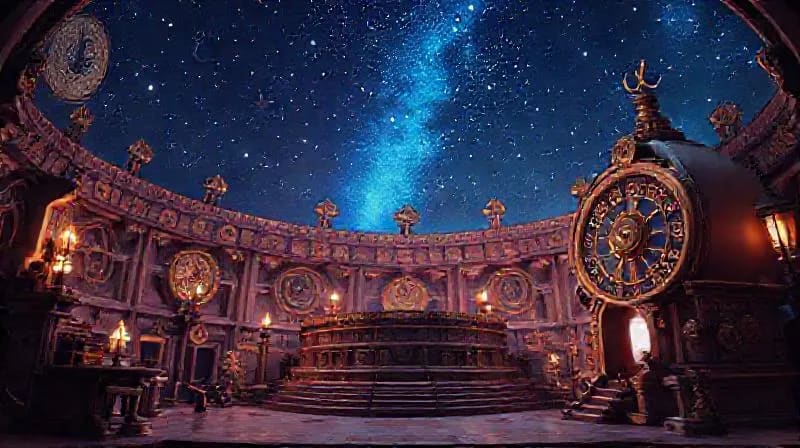 Precursors intellectuales, diagramas fundamentales y representaciones conceptuales que forjaron la visión de la comprensión cósmica y sus aplicaciones.
Fuente visual sujeta a disponibilidad del ecosistema: Wikimedia Commons bajo licencia CC BY-SA 4.0 o renderizado conceptual IA.
Key concepts within celestial mechanics include orbital parameters, such as eccentricity and inclination, which describe the shape and tilt of planetary paths. Understanding these parameters is crucial for accurately mapping the zodiacal positions of planets at any given moment. Furthermore, phenomena like retrograde motion, where a planet appears to move backward from Earth's perspective, are purely mechanical. Astrologers interpret these apparent reversals as periods of introspection or re-evaluation, but their basis is entirely rooted in the relative orbital speeds of Earth and the other planets.
The calculation of astrological aspects, which are specific angular relationships between celestial bodies (e.g., conjunctions, squares, trines), also relies heavily on celestial mechanics. These angles are not arbitrary but are derived from the precise geometric positions of planets in the 360-degree zodiacal circle. The accuracy of an astrological interpretation, therefore, directly correlates with the precision of the underlying astronomical calculations.
Mundane Astrology: A Macro Perspective
Mundane astrology shifts the focus from the individual to the collective, examining the astrological influences on nations, cities, and global events. Its origins can be traced back to ancient Mesopotamia, Egypt, and China, where astrologers advised rulers on matters of war, peace, and agricultural cycles. These early practitioners meticulously observed celestial patterns, correlating them with earthly occurrences to discern omens and predict future trends.
One of the primary tools in mundane astrology is the "ingress chart," typically cast for the moment the Sun enters the cardinal signs (Aries, Cancer, Libra, Capricorn). These charts are believed to indicate the general trends and atmosphere for the quarter or year ahead for a specific region or nation. For instance, an Aries ingress chart might highlight themes of initiation, conflict, or new beginnings, while a Capricorn ingress could point to issues of structure, authority, or economic shifts.
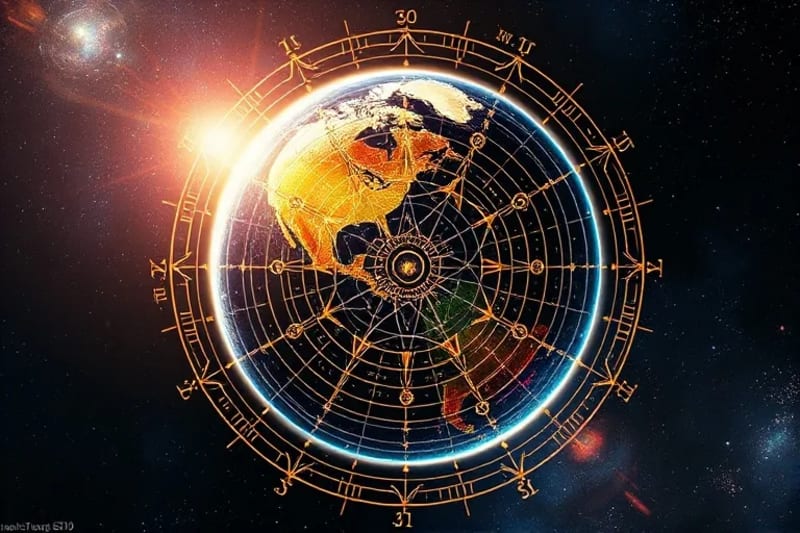 A conceptual visualization of planetary influences mapping onto global events and societal consciousness.
Another critical technique involves analyzing the charts of nations, often cast for the moment of their founding or the declaration of independence. By studying the advanced natal chart of a country, astrologers can gain insights into its national character, strengths, weaknesses, and potential destiny. Transits and progressions to these national charts are then used to forecast periods of prosperity, challenge, or significant change. This macro-level analysis offers a unique lens through which to view historical patterns and future possibilities.
Mundane astrology also pays close attention to major planetary conjunctions, especially those involving the outer planets (Jupiter, Saturn, Uranus, Neptune, Pluto), as these signify longer-term societal shifts. Eclipses, both solar and lunar, are considered powerful harbingers of change, often preceding significant political events, natural disasters, or shifts in public sentiment. The precise timing and location of these celestial phenomena are entirely determined by celestial mechanics, highlighting the inseparable link between the two fields.
Planetary Cycles and Global Events
The rhythmic dance of the planets through the zodiac creates distinct cycles that mundane astrologers correlate with various global phenomena. These cycles range from shorter, more frequent ones involving inner planets to vast, generational cycles of the outer planets. Understanding these periodicities is fundamental to interpreting the cosmic language of global trends.
- Jupiter-Saturn Conjunctions: Occurring approximately every 20 years, these "Great Conjunctions" are historically linked to significant political, economic, and social realignments. They mark the beginning of new socio-economic eras and often coincide with shifts in power structures or dominant ideologies. The element in which these conjunctions occur (e.g., Earth, Air, Fire, Water) also indicates the nature of these shifts.
- Uranus Cycles (84 years): Uranus is associated with revolution, innovation, and sudden change. Its transits and aspects often correlate with technological breakthroughs, social uprisings, and paradigm shifts. For instance, Uranus transiting through a particular sign can indicate a period of disruption and redefinition in areas associated with that sign.
- Neptune Cycles (165 years): Neptune governs spirituality, idealism, illusion, and dissolution. Its long cycle often coincides with major religious movements, artistic flourishing, or periods of widespread confusion, deception, and the erosion of old boundaries.
- Pluto Cycles (248 years): Pluto is the planet of transformation, death, and rebirth. Its extremely long cycle signifies profound, often cataclysmic, societal transformations, power struggles, and the deep restructuring of collective consciousness. Pluto's transits can mark the end of an era and the beginning of a completely new one.
The interplay of these cycles, especially when multiple outer planets form significant aspects, can indicate periods of intense global activity. For example, the astro-economics field often studies these cycles to predict financial market trends and economic shifts. Major economic depressions or booms frequently align with specific planetary configurations, particularly those involving Jupiter, Saturn, and Pluto.
Eclipses, as mentioned earlier, are particularly potent in mundane astrology. A solar eclipse, representing a new beginning, can signify the rise or fall of leaders, significant policy changes, or major natural events in the regions it is visible. Lunar eclipses, marking a culmination, often bring hidden issues to light, leading to public revelations or emotional climaxes in collective affairs.
Interpreting the Cosmic Language
Interpreting the cosmic language requires a deep understanding of astrological symbolism combined with a keen awareness of current global affairs. Each planet, zodiac sign, and astrological house carries specific meanings that are then applied to the collective context. For instance, Mars might symbolize military action or aggression in a mundane chart, while Venus could represent diplomacy, arts, or economic harmony.
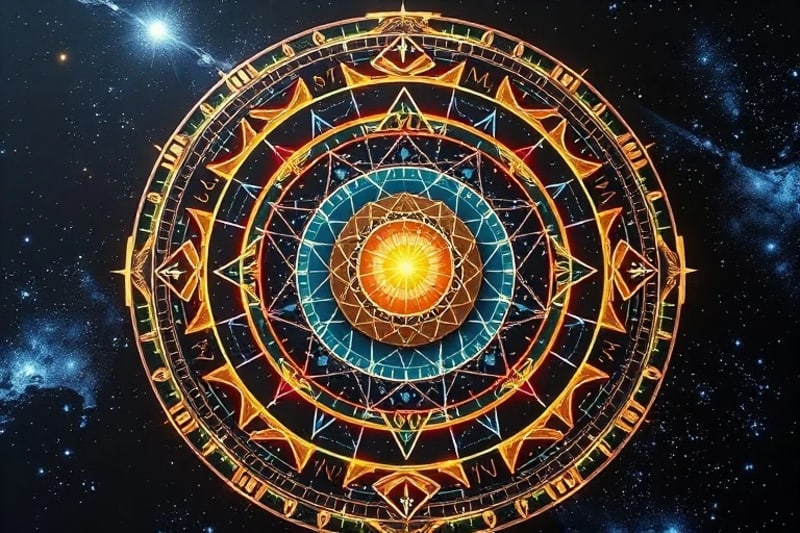 A visual metaphor for the underlying mechanics and symbolic interpretations that form the cosmic language.
The twelve zodiac signs represent different archetypal energies and societal functions. For example, Capricorn zodiac sign is often associated with government, corporations, and established structures, while Aquarius might signify humanitarian movements, technological advancements, or social reform. When planets transit through these signs, they activate these specific themes on a global scale. The houses, which represent areas of life, are interpreted in a national or global context. The 10th house, for example, could represent the head of state or the ruling government, while the 7th house might symbolize foreign relations or open enemies.
Translating astronomical data into astrological insights involves a systematic process. First, precise ephemerides (tables of planetary positions) are consulted, derived from celestial mechanics. Then, these positions are plotted onto a chart for a specific location and time, such as the capital city of a nation at a significant moment. Finally, the astrologer interprets the resulting planetary configurations, aspects, and house placements in the context of mundane events, drawing upon historical precedents and symbolic associations.
It is important to note that mundane astrology offers insights into potential trends and probabilities rather than deterministic predictions. The cosmic language suggests prevailing energies and influences, but human agency and collective choices always play a significant role in how these energies manifest. This nuanced approach acknowledges the complexity of global events and avoids overly simplistic interpretations.
Modern Applications and Ethical Considerations
In the modern era, mundane astrology continues to be a tool for understanding complex global dynamics. Analysts use it to explore long-term economic cycles, anticipate periods of social unrest, or even to contextualize the rise and fall of political ideologies. While not a mainstream scientific discipline, its insights can offer a complementary perspective to traditional geopolitical or economic analyses. For instance, the study of cosmic sociology often integrates astrological principles to understand collective consciousness.
The ethical considerations in mundane astrology are paramount. Given its focus on collective events, there is a responsibility to avoid fear-mongering or promoting fatalistic views. Astrologers must emphasize that planetary influences represent tendencies and opportunities for growth or challenge, rather than unavoidable destinies. The goal is to provide context and potential insights, empowering individuals and societies to navigate evolving circumstances with greater awareness.
Furthermore, the practice requires rigorous research and a commitment to verifiable data. Astrologers often cross-reference their interpretations with historical records, economic indicators, and sociological studies to build a more robust understanding. This interdisciplinary approach strengthens the validity of mundane astrological observations, moving it beyond mere speculation. The integration of celestial mechanics ensures that the astrological framework remains grounded in observable astronomical facts.
Conclusion: Synthesis of Cosmic and Terrestrial
The synergy between celestial mechanics and mundane astrology offers a profound method for interpreting global trends and understanding the cosmic language that influences our collective experience. Celestial mechanics provides the precise, quantifiable data of planetary movements, ensuring that astrological interpretations are based on accurate astronomical realities. Mundane astrology then takes this data and imbues it with symbolic meaning, creating a framework for understanding the macro-level forces at play in human society.
From the grand cycles of outer planets dictating generational shifts to the immediate impact of eclipses on political landscapes, the celestial clock continues to tick, marking the rhythms of our world. By diligently studying both the scientific precision of planetary motion and the rich symbolism of astrological interpretation, we can gain a deeper appreciation for the intricate connection between the cosmos and our terrestrial existence. This holistic approach allows for a more informed perspective on the challenges and opportunities that lie ahead for humanity.
Related Searches
Source: Hybrid content assisted by AI and human editorial supervision.


Comments
Post a Comment