
Astro-Archeology Ancient Celestial Narratives Civilizations
Astro-archeology, a fascinating interdisciplinary field, stands at the crossroads of astronomy, archeology, and cultural anthropology. It delves into the profound ways ancient civilizations observed, interpreted, and integrated celestial phenomena into their monumental architecture, urban planning, religious practices, and societal structures. This discipline moves beyond mere curiosity about ancient stargazing, seeking to uncover sophisticated astronomical knowledge and its deep impact on human history and worldview.
The study of astro-archeology reveals that the cosmos was not just a distant spectacle but an active participant in the daily lives and spiritual beliefs of our ancestors. From the alignment of megalithic structures to the intricate calendrical systems of Mesoamerica, celestial narratives were etched into the very fabric of ancient societies. Understanding these connections offers invaluable insights into their scientific acumen, spiritual cosmology, and their perception of humanity's place within the vast universe.
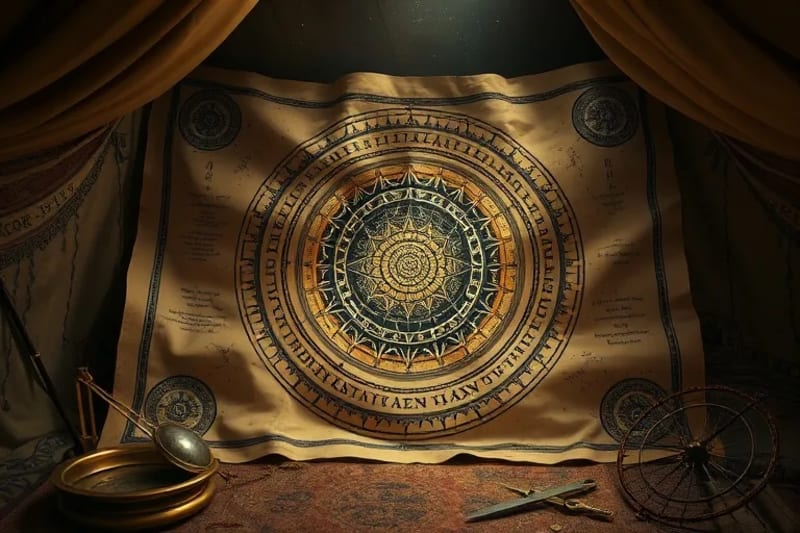
An ancient scroll, illuminated, reveals celestial charts and astronomical instruments, symbolizing the profound connection between ancient civilizations and the cosmos.
This article will delve into the methodologies, key discoveries, and theoretical underpinnings of astro-archeology, exploring how it enriches our understanding of human civilization's intricate relationship with the celestial sphere. We will examine various examples from across the globe, highlighting the universal human impulse to find meaning and order in the patterns of the stars and planets.
Table of Contents
- The Genesis of Astro-Archeology: Historical Roots and Evolution
- Methodologies and Techniques in Astro-Archeological Research
- Iconic Case Studies: Celestial Alignments Across Civilizations
- Cosmology and Symbolism: Decoding Ancient Worldviews
- The Role of Calendars and Timekeeping
- Challenges and Future Directions in Astro-Archeology
- Conclusion: Reconnecting with Our Cosmic Heritage
The Genesis of Astro-Archeology: Historical Roots and Evolution
The formal discipline of astro-archeology, though its roots stretch back to early antiquarian observations, gained significant traction in the mid-20th century. Pioneers like Alexander Thom meticulously surveyed megalithic sites, particularly in Britain, documenting precise alignments with solstices, equinoxes, and lunar standstills. His rigorous statistical analysis provided compelling evidence that these ancient structures were not randomly placed but deliberately oriented towards significant celestial events.
Before Thom, scholars such as Norman Lockyer had already speculated about astronomical alignments at Stonehenge in the late 19th century. However, it was the application of modern surveying techniques and statistical methods that transformed these speculations into a recognized scientific inquiry. The field has since expanded globally, examining sites from the pyramids of Egypt to the observatories of the Maya, revealing a universal human fascination with the cosmos.
The evolution of astro-archeology has also seen a shift from purely functional interpretations (e.g., temples as observatories) to more holistic understandings that incorporate cultural, religious, and social contexts. It acknowledges that ancient astronomy was often intertwined with mythology, ritual, and power structures, making it a crucial lens through which to view ancient worldviews and esoteric symbolism. This broader perspective helps avoid anachronistic interpretations, recognizing that ancient science was often embedded within a spiritual framework.
Methodologies and Techniques in Astro-Archeological Research
Astro-archeological research employs a diverse toolkit, blending traditional archeological methods with advanced astronomical calculations and computational modeling. The primary goal is to identify and interpret intentional astronomical alignments or representations within ancient sites and artifacts.
- Site Survey and Measurement: Precise measurements of architectural orientations, sightlines, and structural features are critical. This often involves using GPS, total stations, and laser scanners to create highly accurate 3D models of sites.
- Astronomical Calculations: Researchers use specialized software to reconstruct the ancient sky at specific dates and locations. This allows them to determine the positions of the sun, moon, stars, and planets as they would have appeared thousands of years ago, comparing these with observed alignments.
- Statistical Analysis: To differentiate intentional alignments from random occurrences, statistical methods are employed. This helps determine the probability that a particular alignment is deliberate rather than coincidental.
- Iconographic and Textual Analysis: Examination of ancient art, carvings, and written records (where available) provides crucial contextual information. Myths, religious texts, and calendrical inscriptions often describe celestial events and their significance, aiding in interpretation.
- Ethnoastronomy: Studying contemporary indigenous cultures that maintain traditional astronomical knowledge can offer analogues and insights into how ancient societies might have perceived and utilized the sky.
The interdisciplinary nature of this field requires collaboration between archeologists, astronomers, historians, and anthropologists. This ensures that interpretations are grounded in both scientific rigor and cultural sensitivity, avoiding oversimplification or misattribution of ancient knowledge.
Iconic Case Studies: Celestial Alignments Across Civilizations
The global landscape is dotted with remarkable examples of astro-archeological sites, each telling a unique story of humanity's cosmic connection.
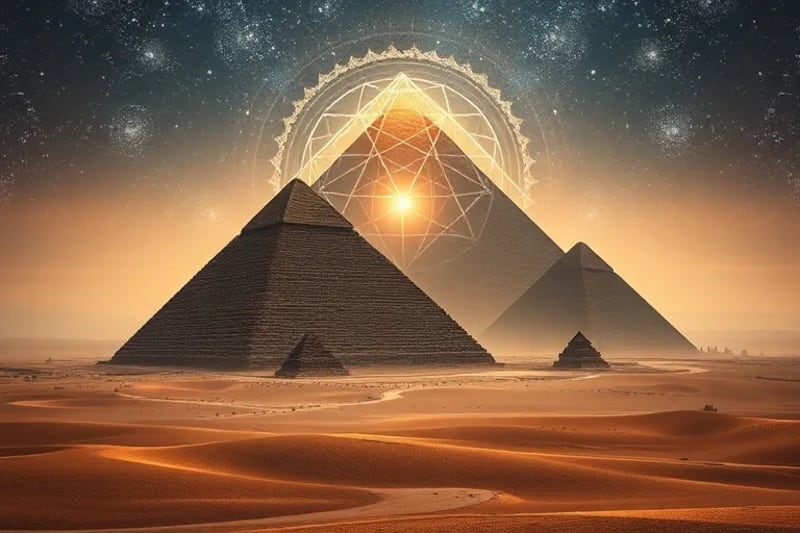
An abstract digital painting illustrates the precise cosmic alignment of the Giza pyramids with the Orion constellation.
Stonehenge, England: Perhaps the most famous astro-archeological site, Stonehenge's primary axis aligns precisely with the sunrise of the summer solstice and the sunset of the winter solstice. This alignment suggests its use as a sophisticated calendrical device, marking seasonal changes crucial for agriculture and ritual. Further studies indicate alignments with lunar standstills, revealing a more complex understanding of lunar cycles than previously imagined.
The Pyramids of Giza, Egypt: The three main pyramids of the Giza complex are thought to align with the stars of Orion's Belt, a constellation associated with Osiris, the god of rebirth, in ancient Egyptian mythology. The causeways and temples also show alignments with the rising sun and other celestial bodies, reflecting a deep cosmological connection between the earthly pharaoh and the divine cosmos. The annual flooding of the Nile, crucial for agriculture, was also linked to the heliacal rising of Sirius, the brightest star in the night sky.
Maya Observatories, Mesoamerica: The Maya civilization developed incredibly precise astronomical calendars and observatories. Structures like El Caracol at Chichen Itza are meticulously aligned to track the movements of Venus, which held immense astrological and ritualistic significance. Their complex calendrical systems, including the Long Count calendar, were based on sophisticated observations of the sun, moon, and planets, demonstrating an advanced understanding of celestial mechanics and elemental astrology.
Newgrange, Ireland: This Neolithic passage tomb, older than Stonehenge and the Giza pyramids, features a remarkable roof-box that allows the rays of the rising sun to penetrate the main chamber only on the winter solstice. This precise alignment illuminates a central basin, likely for ritualistic purposes, symbolizing rebirth and the cyclical nature of life and death, deeply tied to the shortest day of the year.
Gobekli Tepe, Turkey: This ancient site, predating agriculture, features massive stone pillars carved with animal motifs. While still under extensive study, some researchers propose that certain arrangements and carvings may reflect early astronomical observations, possibly related to meteor showers or specific star patterns, hinting at a very early human engagement with celestial events.
Cosmology and Symbolism: Decoding Ancient Worldviews
Beyond mere alignment, astro-archeology seeks to understand the deeper cosmological and symbolic meanings embedded in ancient celestial narratives. For many ancient cultures, the sky was not just a clock or a calendar but a living entity, a divine realm influencing earthly affairs. The movements of celestial bodies were often personified as gods and goddesses, their cycles mirroring human existence, death, and rebirth.
The symbolism of constellations, planets, and celestial phenomena permeated ancient art, mythology, and religious rituals. For instance, the Milky Way was often seen as a cosmic river or a path for souls in the afterlife. Eclipses, comets, and meteor showers were frequently interpreted as omens, portents of significant events, or messages from the divine. This rich tapestry of cosmic symbolism provided a framework for understanding the universe and humanity's place within it.

A 3D render depicts a Mayan calendar stone intricately intertwined with contemporary astronomical data visualizations, bridging ancient and modern cosmic understanding.
The study of urban geomancy and lunar mansions further illustrates how ancient peoples sought to harmonize their built environment with cosmic energies. Cities were often laid out according to celestial principles, with temples and sacred spaces positioned to capture specific celestial events, thereby imbuing the landscape with sacred power and connecting the human realm to the divine order.
The Role of Calendars and Timekeeping
One of the most practical and profound applications of ancient astronomical knowledge was the development of sophisticated calendars. These calendars were essential for managing agricultural cycles, organizing religious festivals, and structuring societal life. The ability to predict seasonal changes, solstices, and equinoxes was critical for survival and prosperity.
Ancient calendars were often lunisolar, attempting to reconcile the cycles of the moon with the solar year. The Maya, for example, developed multiple interlocking calendars, including the 260-day Tzolkin (sacred calendar) and the 365-day Haab' (civil calendar), which combined to form a 52-year calendar round. Their Long Count calendar allowed them to track vast spans of time, reflecting a deep understanding of cosmic cycles and the passage of ages.
The precision of these ancient calendars, often achieved without advanced optical instruments, speaks volumes about the dedication and observational skills of ancient astronomers. Their systems were not just tools for timekeeping but also frameworks for understanding destiny, prophecy, and the cyclical nature of existence. The study of these calendars provides a window into their mathematical prowess and their philosophical approach to time itself.
Challenges and Future Directions in Astro-Archeology
Despite its compelling findings, astro-archeology faces several challenges. One significant hurdle is distinguishing between intentional astronomical alignments and coincidental ones. Rigorous statistical analysis is crucial here, but sometimes the evidence remains open to interpretation. Another challenge is the destruction or alteration of ancient sites over millennia, making precise measurements difficult or impossible.
Interpreting the cultural and symbolic meanings behind alignments also requires careful consideration, avoiding the imposition of modern scientific or spiritual frameworks onto ancient cultures. Researchers must rely on a combination of archeological context, ethnographic parallels, and textual evidence to build plausible interpretations.
Future directions in astro-archeology include leveraging advanced technologies like Lidar (Light Detection and Ranging) and satellite imagery to discover new sites and map existing ones with unprecedented accuracy. The integration of virtual reality and augmented reality can also help researchers and the public visualize ancient skies and experience alignments as they would have been seen by ancient peoples. Furthermore, a deeper collaboration with indigenous communities can unlock traditional knowledge that has been passed down through generations, offering invaluable insights into ancient sky lore.
Conclusion: Reconnecting with Our Cosmic Heritage
Astro-archeology offers a powerful reminder of humanity's enduring fascination with the cosmos. It reveals that our ancestors were not merely primitive observers but sophisticated astronomers who meticulously tracked celestial movements and integrated this knowledge into every aspect of their lives. Their structures stand as enduring testaments to their ingenuity, their spiritual depth, and their profound connection to the universe.
By unearthing these ancient celestial narratives, we gain a richer understanding of human intellectual development, cultural diversity, and the universal quest for meaning. Astro-archeology helps us reconnect with a shared cosmic heritage, reminding us that the stars above have always guided and inspired humanity, shaping our civilizations in ways we are only just beginning to fully comprehend.
Explore Further Insights
- Lucid Dreaming: Control Your Dream World
- Composite Chart Midpoints
- Medical Astrology Explained
- Vibrational Linguistics & Hermetic Principles
- Tiger Zodiac Elements: Decoding Influences
- Four Elements Astrology
- Planetary Aspects & Inner Child Healing
- Urban Geomancy & Lunar Mansions
- Taurus Zodiac Sign: Traits & Compatibility
- Tarot Reading & Esoteric Symbolism
- Tarot Archetypes & Universal Truths
- Chinese Zodiac 2025: Wood Snake Forecast
- Astro Genomics & Karmic Blueprints
- Snake Horoscope 2015
- Color Therapy & Vibrational Frequencies
- Economic Inequality & Global Health
- Augmented Reality in Education
- Chronobiology & Female Hormonal Health
- Guided Astral Meditation
- Ecopsychology & Spiritual Healing
- Midpoints in Astrology
- Sacramentals for Home Protection
- Scapular of Our Lady of Carmel
Source: Hybrid content assisted by AI and human editorial supervision.


Comments
Post a Comment