
Composite Chart Midpoints: Unlocking Relationship Purpose | StarPluto
In the intricate universe of astrological relationship analysis, the composite chart stands as a powerful tool, revealing the essence and purpose of a connection as a separate entity. While synastry examines the interaction between two individual charts, the composite chart literally creates a "third chart" for the relationship itself, calculated by finding the mathematical midpoint between every planet and house cusp of two natal charts. This unique approach allows astrologers to delve into the shared destiny, challenges, and core dynamics that define a partnership.
Within this composite chart, the interpretation of midpoints takes on an even deeper significance. Midpoints, generally defined as the halfway point between two planetary energies, become particularly potent when applied to the composite structure. They illuminate the precise energetic intersections that form the very fabric of the relationship's purpose, revealing its strengths, potential pitfalls, and the evolutionary path it is destined to walk together. Understanding these composite chart midpoints can unlock profound insights into what truly drives a relationship, far beyond superficial compatibility.
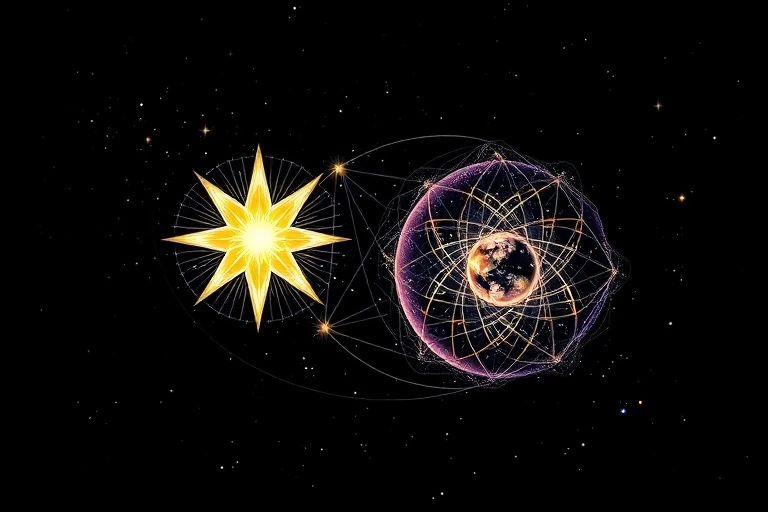
A conceptual digital illustration depicting the intricate energetic connections within a composite chart, highlighting the profound bond between two individuals.
Table of Contents
- What Are Composite Charts?
- The Power of Midpoints in Astrology
- Interpreting Composite Chart Midpoints
- Key Composite Midpoints and Their Meanings
- Methodology for Deeper Analysis
- Practical Applications and Insights
- Limitations and Nuances
What Are Composite Charts?
A composite chart is a highly advanced astrological technique used to analyze the dynamics of a relationship as a singular entity. Unlike synastry, which overlays two individual charts to see how they interact, the composite chart is derived by calculating the exact midpoint between each planet (Sun, Moon, Mercury, Venus, Mars, Jupiter, Saturn, Uranus, Neptune, Pluto) and house cusp in two partners' natal charts. For example, if one person's Sun is at 10° Aries and the other's is at 10° Libra, their composite Sun would be at 10° Cancer (the midpoint between these two opposing points).
This resulting chart represents the "soul" or "purpose" of the relationship itself. It describes the energy that two people create together, how they operate as a unit, and what the relationship is designed to achieve in the world. It’s the chart of the relationship's identity, its emotional core, its communication style, its values, its drive, and its overall trajectory. The houses and aspects within the composite chart reveal the areas of life where the relationship will experience growth, challenges, and fulfillment.
The Power of Midpoints in Astrology
Midpoints in astrology are sensitive points that represent the blending of two planetary energies. They are calculated as the exact halfway point between any two celestial bodies or angles in a chart. When a third planet or angle aspects this midpoint, it "triggers" or "activates" the combined energy of the two original planets, bringing their themes into conscious expression.
For instance, a Mars/Saturn midpoint can signify a point of disciplined action or frustration, depending on how it's aspected. In natal charts, midpoints reveal hidden talents, psychological complexes, or specific life themes. In synastry, they can show how one person's planet activates a midpoint in the other's chart, creating specific dynamics. However, in the composite chart, midpoints become even more critical, as they describe the inherent, shared energies of the relationship itself, rather than just how two individuals interact.

A cinematic still life of a vintage compass and an antique key on an old map, symbolizing the journey and discovery of a relationship's core purpose.
Interpreting Composite Chart Midpoints
Interpreting midpoints in a composite chart involves several layers of analysis. Each midpoint represents a specific blend of energies that is inherent to the relationship. The key is to understand what these blended energies signify and how they are expressed through the chart's houses, signs, and aspects.
- The Planets Involved: Identify the core themes of the two planets forming the midpoint. For example, Sun represents identity, Moon represents emotions. A Sun/Moon midpoint combines these.
- The Sign of the Midpoint: The zodiac sign where the midpoint falls describes the style or manner in which these combined energies are expressed within the relationship.
- The House of the Midpoint: The house placement indicates the area of life where the relationship will most prominently experience or manifest the midpoint's energy.
- Aspects to the Midpoint: Any planet or angle in the composite chart that forms a hard (conjunction, square, opposition) or soft (trine, sextile) aspect to a midpoint will significantly influence its expression. Hard aspects often bring challenges or dynamic energy, while soft aspects indicate ease or support.
The interpretation should always focus on the relationship as a separate entity, not just the individuals within it. It's about the "we" consciousness and the shared journey. For a deeper understanding of individual planetary influences, consider exploring topics like Tarot Quantum Mechanics Intersecting Divination Reality.
Key Composite Midpoints and Their Meanings
Certain midpoints are particularly insightful in a composite chart, offering a roadmap to the relationship's core purpose and dynamics. Here are some of the most significant:
| Composite Midpoint | Core Meaning in Relationship | Potential Expressions |
|---|---|---|
| Sun/Moon | The heart and soul of the relationship; its fundamental identity and emotional core. Represents the shared purpose and how they feel about being together. | Strong emotional bond, shared life direction, intuitive understanding, or core conflicts if challenged. |
| Venus/Mars | The relationship's passion, attraction, desire, and how love is expressed and pursued. Indicates sexual chemistry and shared values in action. | Intense romantic and sexual attraction, creative collaboration, shared artistic pursuits, or passionate arguments. |
| Jupiter/Saturn | The balance between expansion and contraction, optimism and realism, growth and structure. Reveals the relationship's long-term potential and challenges. | Steady growth, shared responsibilities, overcoming obstacles, or periods of stagnation and frustration. |
| Uranus/Neptune | The relationship's connection to collective ideals, spirituality, humanitarianism, and potential for unconventionality or illusion. | Shared spiritual path, revolutionary ideals, artistic inspiration, or confusion and unrealistic expectations. |
| Ascendant/Descendant | How the relationship presents itself to the world and how it interacts with others. The "face" of the partnership. | Public image, social interactions, how others perceive the couple, or challenges in external presentation. |
| MC/IC | The balance between the relationship's public achievements and its private, foundational roots. Shared ambitions vs. shared home life. | Shared career goals, building a strong family foundation, balancing public and private life, or conflicts between these spheres. |
| North Node/South Node | The karmic purpose and evolutionary path of the relationship. What the couple is meant to learn and evolve towards together. | A strong sense of destiny, shared spiritual growth, overcoming past life patterns, or feeling stuck in old relationship habits. |
Methodology for Deeper Analysis
To fully unlock the potential insights from composite chart midpoints, a comprehensive approach is necessary. It's not enough to simply identify a midpoint; its context within the entire composite chart is crucial. Advanced astrological techniques provide additional layers of understanding:
- Aspects to Midpoints: Pay close attention to any planets or angles in the composite chart that form a conjunction, opposition, square, trine, or sextile to a midpoint. A planet aspecting a midpoint will "color" its expression. For example, a composite Mars conjunct the Sun/Moon midpoint might indicate a relationship characterized by passionate action and drive, but also potential conflict.
- House Placement of Midpoints: The house where a midpoint falls indicates the specific life arena where its energies will primarily manifest. A Venus/Mars midpoint in the 7th house (relationships) suggests a focus on partnership dynamics, while in the 10th house (career/public image), it might point to a powerful professional collaboration.
- Signs of Midpoints: The zodiac sign of a midpoint describes the qualitative nature of its expression. A Jupiter/Saturn midpoint in a fire sign (Aries, Leo, Sagittarius) might manifest as dynamic, enthusiastic growth tempered by disciplined action, whereas in a water sign (Cancer, Scorpio, Pisces), it could indicate growth through emotional depth and sensitivity, with a need for emotional boundaries.
- Transits and Progressions to Composite Midpoints: Just as transits and progressions activate natal charts, they also activate composite charts. When a significant transit or progression hits a composite midpoint, it can trigger major events, shifts, or periods of intense focus related to that midpoint's themes within the relationship. This is a powerful predictive tool for relationship evolution.
- Comparison with Natal Charts: While the composite chart is a separate entity, understanding how its midpoints relate back to the individual natal charts can provide further depth. For instance, if a composite Sun/Moon midpoint is strongly aspected by one partner's natal Saturn, it might indicate that this partner brings a sense of responsibility or restriction to the core emotional identity of the relationship.
For those interested in the broader context of astrological aspects, exploring resources on Astrological Aspects: Conjunctions, Oppositions, Trines Explained can be highly beneficial.
A striking 3D isometric render of a glowing double helix, symbolizing the intricate and intertwined destinies that form the core purpose of a relationship.
Practical Applications and Insights
The insights gained from composite chart midpoints are not merely academic; they offer tangible benefits for understanding and nurturing relationships. By identifying the core purpose and dynamics, couples can navigate their journey with greater awareness and intention.
- Understanding Relationship Purpose: A strong Sun/Moon midpoint in the 11th house, for example, might indicate a relationship whose purpose is to contribute to community or shared ideals, rather than just personal comfort.
- Navigating Challenges: If a composite Saturn/Pluto midpoint is prominent, it might signify a relationship destined to undergo profound transformations and face significant power struggles or karmic lessons, requiring immense resilience. Awareness of this can help partners approach difficulties with a constructive mindset.
- Leveraging Strengths: A well-aspected Venus/Jupiter midpoint could highlight a relationship rich in joy, abundance, and shared values, encouraging the couple to lean into these positive energies for mutual growth and happiness.
- Improving Communication: The Mercury midpoints, especially with the Sun or Moon, can reveal the underlying communication style of the relationship. Difficult aspects might point to areas where conscious effort is needed to foster clear and empathetic dialogue.
- Enhancing Intimacy: Venus and Mars midpoints, particularly when aspected by outer planets, can shed light on the depth and evolution of intimacy, from passionate beginnings to spiritual union.
These insights can be particularly useful when combined with other astrological tools, such as Advanced Synastry: Intercepted Signs, Houses, to form a holistic view of the relationship's potential.
Limitations and Nuances
While composite chart midpoints offer unparalleled depth in relationship astrology, it's crucial to acknowledge their limitations and interpret them with nuance. Astrology provides a map, not a rigid destiny. Free will and conscious effort remain paramount in shaping any relationship.
- Not a Substitute for Individual Growth: A composite chart describes the relationship, but the health of the relationship is still dependent on the individual growth and maturity of each partner. Personal challenges revealed in natal charts will always influence how partners engage with the composite energies.
- The Importance of Synastry: Composite charts and synastry are complementary. Synastry shows the "chemistry" and immediate interactions, while the composite reveals the "purpose" and overarching theme. Both are necessary for a complete picture.
- Orb Considerations: When calculating and interpreting midpoints, the orb (the degree of separation allowed for an aspect) is critical. Smaller orbs (e.g., 1-2 degrees) indicate stronger, more direct influence, while wider orbs may be less significant.
- The Role of Outer Planets: Midpoints involving outer planets (Uranus, Neptune, Pluto) often speak to generational themes, collective influences, and deeper, sometimes unconscious, forces at play within the relationship. Their effects can be more subtle but profoundly transformative.
- Subjectivity in Interpretation: Astrological interpretation is an art as much as a science. Different astrologers may emphasize different midpoints or aspects, and personal experience always plays a role in how insights are applied.
Ultimately, composite chart midpoints serve as a powerful lens through which to view the profound connection between two souls. They offer guidance, reveal hidden potentials, and illuminate the shared journey, encouraging partners to consciously co-create a relationship that aligns with its highest purpose. For more on karmic connections, consider reading about Karmic Astrology: North Node and South Node Explained.
Fuente: Contenido híbrido asistido por IAs y supervisión editorial humana.


Comments
Post a Comment