
Psycho-Astrology Jungian Archetypes Shadow Wholeness Integration
Psycho-astrology represents a fascinating intersection where the ancient wisdom of astrology meets the profound insights of modern psychology, particularly the analytical psychology pioneered by Carl Jung. This interdisciplinary approach offers a unique lens through which to understand the complex tapestry of the human psyche, moving beyond simple predictive interpretations to delve into the deeper, often unconscious, motivations and patterns that shape our lives. By examining the natal chart through a psychological framework, individuals can unlock profound truths about their inner world, their inherent potentials, and the challenges they are destined to face.

Precursors intellectuales, diagramas fundamentales y representaciones conceptuales que forjaron la visión de Carl Jung sobre la integración de la psique y la astrología.
Fuente visual sujeta a disponibilidad del ecosistema: Wikimedia Commons bajo licencia CC BY-SA 4.0 o renderizado conceptual IA.
At its core, psycho-astrology seeks to understand the 'why' behind our astrological configurations, exploring how planetary placements and aspects correspond to psychological complexes, archetypes, and the journey of individuation. It offers a powerful tool for self-discovery, enabling individuals to recognize and integrate disowned parts of themselves, ultimately fostering greater wholeness and authenticity. This approach is not about fatalism but about empowerment, providing a roadmap for conscious evolution and personal growth.
This article will explore the foundational principles of psycho-astrology, focusing on Carl Jung's concepts of archetypes and the shadow self, and how these manifest within the natal chart. We will delve into methods for integrating these psychological elements to achieve a more complete and harmonious sense of self, guiding you on a journey towards profound inner understanding.
Table of Contents
- Jungian Archetypes and Astrological Correspondences
- The Shadow Self in the Natal Chart
- Integrating the Shadow for Wholeness
- The Journey Towards Individuation
- Practical Applications of Psycho-Astrology
- Conclusion: Embracing Your Cosmic Psychology
Jungian Archetypes and Astrological Correspondences
Carl Jung introduced the concept of archetypes as universal, archaic patterns and images that derive from the collective unconscious and are the psychic counterpart of instinct. These archetypes are not inherited ideas, but rather inherited predispositions to respond to the world in certain ways. In psycho-astrology, each planet, sign, and house can be seen as embodying specific archetypal energies. Understanding these correspondences allows for a richer, more nuanced interpretation of the natal chart.
For instance, the Sun in a natal chart often represents the Hero archetype, symbolizing the individual's core identity, purpose, and quest for self-realization. The Moon, on the other hand, frequently aligns with the Mother or Nurturer archetype, reflecting our emotional needs, security, and unconscious patterns inherited from early caregivers. Mars can embody the Warrior or Destroyer, representing our drive, assertiveness, and capacity for conflict, while Venus resonates with the Lover or Artist, governing our values, relationships, and aesthetic sensibilities.
The outer planets, such as Uranus, Neptune, and Pluto, often correspond to more transpersonal archetypes that influence generations and collective shifts. Uranus might represent the Rebel or Innovator, Neptune the Mystic or Dreamer, and Pluto the Transformer or Underworld King. By identifying which archetypes are strongly emphasized or challenged in a birth chart, individuals can gain insight into their inherent psychological dynamics and life themes. This deeper understanding can be particularly useful when exploring topics like 9th House Astrology: Philosophy, Travel, and Higher Learning, as it reveals the archetypal quest for meaning and expansion.
Jung also emphasized the Persona, the social mask we present to the world, and the Anima/Animus, the unconscious feminine/masculine qualities within us. These, too, find their reflections in the astrological chart, often through the Ascendant (Persona) and the interplay of masculine and feminine planets (Anima/Animus). Recognizing these archetypal patterns is the first step toward conscious engagement with our inner landscape.
The Shadow Self in the Natal Chart
Perhaps one of Jung's most potent contributions to psychology is the concept of the Shadow. The Shadow comprises the repressed, disowned, and unconscious aspects of the personality – everything we deem unacceptable about ourselves and push into the dark corners of our psyche. It's not inherently evil, but rather contains both our primitive instincts and our undeveloped potentials. In psycho-astrology, the natal chart provides a precise map of where the Shadow might reside and how it manifests.
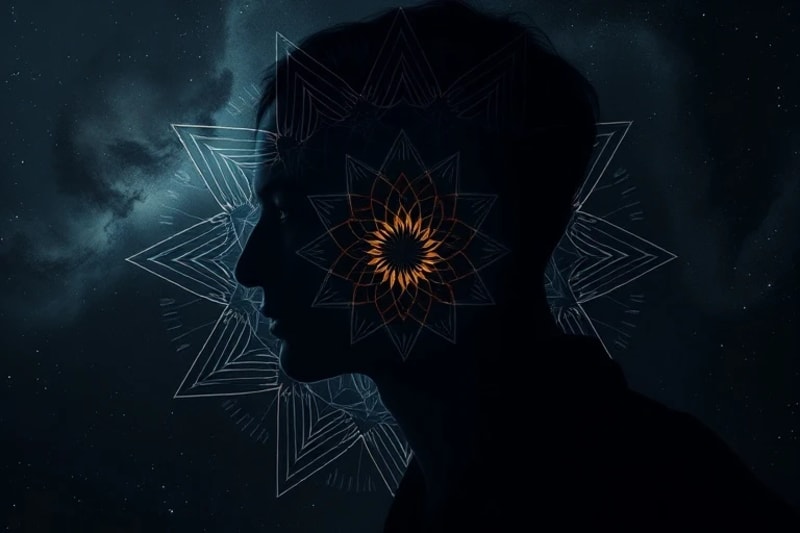
The Shadow Self: A conceptual representation of hidden psychological aspects.
Challenging planetary aspects, such as squares and oppositions, often highlight areas where the Shadow is most active. For example, a square between the Sun and Pluto might indicate a struggle with power, control, or deep-seated fears that have been pushed into the unconscious. Similarly, planets in the 12th house, or those making difficult aspects to the Moon or personal planets, can reveal hidden emotional wounds or suppressed desires. These are the parts of ourselves that we project onto others, judging them for qualities we secretly possess or deny within ourselves.
Identifying the Shadow in the natal chart involves looking at the signs, houses, and aspects that feel uncomfortable, challenging, or evoke strong reactions. It's often where we find our 'blind spots' – qualities that others see in us but we refuse to acknowledge. For example, someone with a strong Aries placement might deny their aggressive tendencies, projecting them onto others, while someone with a prominent Libra might repress their need for confrontation, leading to passive-aggressive behaviors. Understanding these dynamics is crucial for personal development and can be illuminated through practices like Reiki Healing: Universal Life Force Energy Explained, which can help bring unconscious patterns to the surface for release.
The Shadow also contains our undeveloped positive qualities. For instance, a repressed artistic talent or a desire for leadership might be part of the Shadow if societal or familial pressures led us to believe these were undesirable. The goal is not to eliminate the Shadow, but to bring it into conscious awareness, understand its origins, and integrate its energies constructively.
Integrating the Shadow for Wholeness
The process of Shadow integration is central to achieving psychological wholeness, or what Jung termed 'individuation.' This involves confronting, accepting, and ultimately assimilating the disowned aspects of the self. In psycho-astrology, this means consciously working with the challenging energies revealed in the natal chart rather than allowing them to operate unconsciously and dictate our behavior.
Strategies for Shadow integration include:
- Awareness and Acknowledgment: The first step is to recognize and acknowledge the existence of the Shadow. This might involve journaling about strong emotional reactions, analyzing recurring dreams, or observing what qualities in others trigger intense judgment or admiration in us.
- Projection Analysis: Pay attention to what you dislike most in others. Often, these are reflections of your own unacknowledged Shadow traits. Conversely, what you admire most can point to your 'golden shadow' – positive potentials you haven't fully embraced.
- Active Imagination: Jungian techniques like active imagination can help. This involves engaging in a dialogue with your Shadow, giving it a voice, and understanding its needs and fears. This can be done through meditation, visualization, or creative expression.
- Astrological Remediation: Understanding the planetary energies involved in challenging aspects can guide specific actions. For example, if Mars (aggression) is in a difficult aspect, channeling that energy into constructive physical activity or assertive communication (rather than passive aggression) can be a form of integration. This aligns with the principles of Astrological Remedies: Balancing Planetary Energies for Well-being.
Wholeness Integration: The symbolic unification of fragmented aspects of the self.
Integration does not mean becoming perfect or eliminating negative traits. Instead, it means consciously owning all parts of yourself, both light and dark, and choosing how to express them. When the Shadow is integrated, its raw energy can be transformed into creative power, resilience, and authentic self-expression. It removes the need for constant vigilance against our 'bad' parts, freeing up immense psychological energy.
The Journey Towards Individuation
Individuation, for Jung, is the lifelong psychological process of differentiating the self from both the collective unconscious and the personal unconscious, leading to the development of a unique, integrated personality. It is the process of becoming a 'whole' person, distinct from others and fully actualized in one's own potential. Psycho-astrology serves as an invaluable guide on this journey, providing a symbolic map of the individuation process.
The natal chart can illustrate the various stages and challenges of individuation. For example, the progression of the Sun through the houses and signs over a lifetime, or the timing of major planetary transits and progressions, often correlates with key developmental milestones and initiations in the individuation process. These astrological markers can highlight periods of profound self-discovery, crisis, and transformation, urging the individual to confront their unconscious material and grow.
The nodal axis (North and South Nodes) is particularly significant in this context, representing the karmic path and the soul's evolutionary direction. The South Node points to past patterns and comfort zones, while the North Node indicates the lessons to be learned and the qualities to be developed for growth and individuation. By consciously aligning with the North Node's path, individuals actively engage in their unique journey towards wholeness, moving beyond inherited or conditioned behaviors.
The ultimate aim of individuation is not ego inflation, but rather the realization of the Self – the totality of the psyche, encompassing both conscious and unconscious elements. The Self is often represented by the Mandala, a symbolic image of wholeness and cosmic order. Through psycho-astrology, individuals can gain clarity on their personal Mandala, understanding the interplay of their inner archetypes and the path to their unique expression of the Self.
Practical Applications of Psycho-Astrology
The practical applications of psycho-astrology extend far beyond mere self-reflection, offering tangible benefits for personal development, relationship dynamics, and career choices. By integrating Jungian concepts with astrological analysis, individuals can make more informed decisions and navigate life's complexities with greater awareness.
Some key applications include:
- Enhanced Self-Awareness: Gaining a deeper understanding of one's core motivations, fears, and potentials as mapped by the natal chart and archetypal patterns.
- Improved Relationships: Recognizing how one's own Shadow and archetypal projections impact interactions with others. Understanding the astrological charts of partners through a psychological lens can illuminate relationship dynamics, as explored in Planetary Dignities Synastry Relationship Dynamics Growth.
- Career and Purpose Alignment: Identifying innate talents and passions that align with one's archetypal calling, leading to more fulfilling career paths.
- Crisis Navigation: Using astrological transits and progressions to anticipate periods of psychological challenge and prepare for inner work, transforming crises into opportunities for growth.
- Therapeutic Insight: For therapists and counselors, psycho-astrology can provide a powerful diagnostic tool, offering quick insights into a client's core issues and potential areas for exploration.
The integration of these two powerful disciplines creates a holistic framework for understanding the human experience. It moves beyond superficial interpretations, inviting us into a profound dialogue with our soul's blueprint and the universal patterns that govern our existence. This journey of self-discovery is continuous, offering endless opportunities for growth and deeper connection to our authentic selves.
Conclusion: Embracing Your Cosmic Psychology
Psycho-astrology, with its integration of Jungian archetypes and the shadow self into natal chart analysis, offers a transformative path to self-understanding and wholeness. It is a profound methodology that encourages individuals to look beyond the surface of their astrological placements and delve into the rich, symbolic language of the psyche. By acknowledging and integrating our shadow aspects, and by consciously engaging with our archetypal patterns, we embark on the essential journey of individuation.
This approach empowers us to not only understand our inherent strengths and challenges but also to actively participate in our psychological evolution. It provides a framework for transforming unconscious patterns into conscious choices, leading to a more authentic, integrated, and fulfilling life. Embracing psycho-astrology means embracing the entirety of who you are, both light and shadow, and recognizing your unique place within the cosmic tapestry.
The journey towards wholeness is a continuous process of self-discovery and integration. Through the combined wisdom of astrology and Jungian psychology, we gain invaluable tools to navigate this journey, ultimately fostering a deeper connection to our true selves and our purpose in the world. As we integrate our cosmic psychology, we unlock our full potential and contribute to the collective evolution of consciousness.
Explore Further Insights
- Horary Astrology: Answering Specific Questions with Stars
- Cosmic Sociology: Global Consciousness Trends Celestial Mechanics
- Conscious Coupling: Law Attraction Soulmate Synastry Guide
- Ancestral Veneration Natal Chart: Lineage Blessings Healing Karmic
- Numeric Dreams Decoding: Numerology Subconscious Messages
- Numerología Cristales: Sintonizando Vibraciones Manifestación
Source: Hybrid content assisted by AI and human editorial supervision.


Comments
Post a Comment