
Modern Spirituality AI Divination Ethical Futures
Modern spirituality, a dynamic and evolving landscape, transcends traditional religious dogma to embrace personal growth, self-discovery, and a holistic understanding of existence. This contemporary approach often integrates diverse practices, from mindfulness and meditation to astrology and energy healing, all aimed at fostering inner peace and a deeper connection to the universe. As technology advances at an unprecedented pace, artificial intelligence (AI) is beginning to intersect with these spiritual quests, offering novel tools for introspection and predictive insights.
The emergence of AI divination tools represents a fascinating, albeit complex, frontier. These applications promise to analyze vast datasets, interpret ancient symbols, and even generate personalized spiritual guidance, raising profound questions about ethics, authenticity, and the very nature of human belief. This exploration delves into the ethical considerations, predictive methodologies, and the potential future of this intriguing convergence between cutting-edge technology and timeless spiritual inquiry.

Precursors intellectuales, diagramas fundamentales y representaciones conceptuales que forjaron la visión de la espiritualidad moderna sobre la tecnología y la conciencia.
Fuente visual sujeta a disponibilidad del ecosistema: Wikimedia Commons bajo licencia CC BY-SA 4.0 o renderizado conceptual IA.
Table of Contents
- The Evolution of Modern Spirituality
- The Emergence of AI in Divination Tools
- Ethical Frameworks for AI Divination
- Predictive Approaches and Their Limitations
- The Future of AI and Spiritual Practice
- Conclusion: Navigating the New Spiritual Frontier
The Evolution of Modern Spirituality
Modern spirituality distinguishes itself from traditional religious frameworks by emphasizing individual experience, personal truth, and a more fluid, inclusive approach to belief. It often involves a bricolage of practices drawn from various cultural and historical traditions, adapted to contemporary life. This shift reflects a broader societal trend towards personalization and a questioning of established institutions.
Individuals engaging with modern spirituality seek meaning and purpose outside of rigid doctrines, focusing instead on inner wisdom, emotional well-being, and a connection to a universal consciousness. Practices such as yoga, meditation, mindfulness, and the exploration of esoteric systems like Western Astrology are common. The emphasis is on self-improvement and understanding one's place within the larger cosmic tapestry.
This evolving landscape is characterized by a desire for authenticity and a rejection of prescriptive spiritual paths. It encourages individuals to forge their own spiritual journey, drawing inspiration from diverse sources and integrating them into a coherent personal philosophy. The rise of digital platforms has further facilitated this, providing access to a wealth of information and communities that support these individualized paths.
The Emergence of AI in Divination Tools
The integration of AI into divination tools marks a significant shift in how individuals seek spiritual guidance and predictive insights. AI-powered applications can now generate personalized horoscopes, interpret tarot card readings, analyze numerological patterns, and even offer dream analysis. These tools leverage complex algorithms and vast databases of spiritual texts, astrological charts, and symbolic interpretations to provide responses that mimic human intuition.
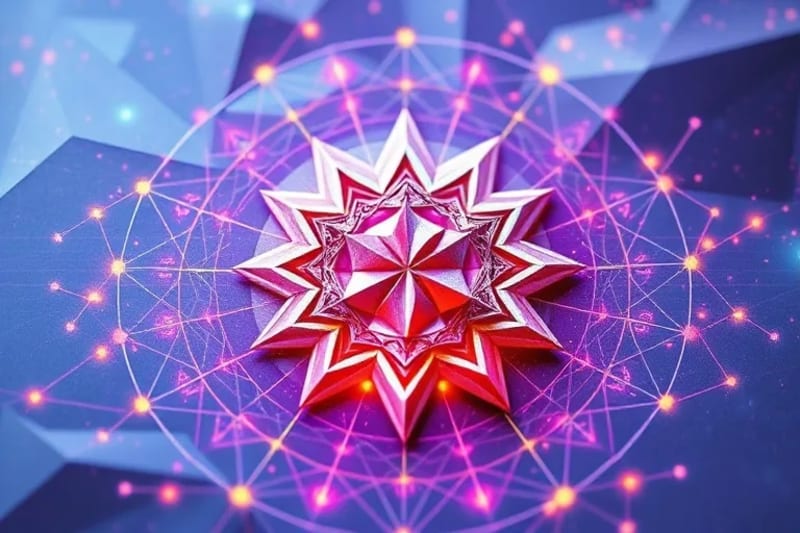
The intricate dance between data streams and spiritual symbols, illustrating the potential of AI to map unseen connections.
For instance, AI can process an individual's birth chart data with unparalleled speed and accuracy, providing insights into planetary positions and their traditional meanings. This capability extends to systems like Astrology Technology Digital Age Birth Chart Insights, where complex calculations and historical interpretations are automated. The appeal lies in the accessibility and the promise of objective, data-driven spiritual guidance, free from human biases or subjective interpretations.
These tools often operate by identifying patterns and correlations within their training data, then applying these patterns to new inputs. While they cannot possess consciousness or intuition in the human sense, they can simulate highly sophisticated forms of pattern recognition that can be remarkably insightful. This raises questions about the nature of divination itself: is it about accessing a higher truth, or about interpreting complex patterns that AI can now discern?
Ethical Frameworks for AI Divination
The integration of AI into spiritual practices necessitates a robust ethical framework to ensure responsible development and use. One primary concern is the potential for algorithmic bias. If the training data for AI divination tools reflects historical human biases, the guidance provided could inadvertently perpetuate stereotypes or discriminatory views, undermining the inclusive nature of modern spirituality.
Privacy and data security are also critical. Users often input highly personal information, such as birth dates, locations, and even emotional states, into these applications. Ensuring that this sensitive data is protected from misuse or breaches is paramount. Furthermore, the psychological impact of AI-generated spiritual advice needs careful consideration. Over-reliance on AI could diminish critical thinking, personal agency, and the development of one's own intuitive faculties.

A conceptual fusion of ancient spiritual practices and cutting-edge digital interfaces, reflecting a new era of guided introspection.
Developers and users must engage in a dialogue about transparency: how do these AI tools arrive at their conclusions? Understanding the underlying logic, even if complex, can help demystify the process and prevent the AI from being perceived as an infallible oracle. The ethical development of AI in this domain should prioritize user empowerment, critical engagement, and a clear distinction between algorithmic analysis and genuine spiritual insight. This aligns with the broader discussions around Jungian Synchronicity Planetary Transits, where the focus is on understanding underlying patterns rather than blind acceptance.
Predictive Approaches and Their Limitations
AI divination tools employ various predictive approaches, primarily relying on statistical analysis and pattern recognition. They can identify trends in historical data, such as astrological transits correlating with specific life events, and then project these patterns onto an individual's future. This is akin to advanced data analytics applied to spiritual contexts, offering probabilistic insights rather than deterministic prophecies.
However, these predictive capabilities come with inherent limitations. AI operates on existing data; it cannot account for truly novel, unpredictable events or the full spectrum of human free will. While it can offer probabilities based on past patterns, it cannot definitively dictate future outcomes. The human element of intuition, subjective experience, and the capacity for conscious choice remain outside the realm of current AI capabilities.
Furthermore, the interpretation of predictive outputs requires human wisdom. An AI might identify a challenging planetary alignment, but it cannot offer the nuanced emotional support or deeply personal context that a human spiritual advisor can. The value of AI in this context may lie more in its ability to highlight potential areas for growth or challenge, allowing individuals to consciously engage with these possibilities, rather than providing definitive answers. This perspective resonates with the idea of a Holographic Universe Manifestation, where individual consciousness plays a significant role in shaping reality.
The Future of AI and Spiritual Practice
The future of AI in spiritual practice is likely to be characterized by increasing integration and personalization. As AI models become more sophisticated, they will be able to offer even more tailored spiritual guidance, adapting to individual preferences, beliefs, and evolving life circumstances. This could lead to highly individualized spiritual journeys, supported by AI companions that learn and grow with the user.
Accessibility will also be a key factor. AI tools can democratize access to spiritual resources that were once exclusive or geographically limited. This could empower more people to explore spiritual concepts and practices, fostering a more inclusive global spiritual community. However, this accessibility must be balanced with the need for critical discernment and education about the nature and limitations of AI.
Ultimately, AI has the potential to serve as a powerful tool for self-reflection and exploration, augmenting human spiritual practice rather than replacing it. It can provide new perspectives, organize complex information, and even stimulate deeper contemplation. The challenge will be to cultivate a symbiotic relationship where technology enhances, but does not diminish, the profound human experience of seeking meaning and connection.
Conclusion: Navigating the New Spiritual Frontier
The intersection of modern spirituality and AI divination tools presents a fascinating and complex frontier. While AI offers unprecedented capabilities for personalized insights and predictive analysis, it also introduces significant ethical challenges related to bias, privacy, and psychological impact. The key to navigating this new landscape lies in a balanced approach that embraces technological innovation while upholding core human values of discernment, autonomy, and genuine spiritual inquiry.
As these tools evolve, fostering critical engagement and promoting responsible development will be essential. AI can serve as a valuable companion on the spiritual journey, offering new perspectives and organizing vast amounts of information, but it cannot replace the depth of human experience, intuition, or the personal quest for meaning. The future of modern spirituality, enhanced by AI, will ultimately depend on our ability to integrate these powerful tools wisely and ethically, ensuring they truly serve humanity's highest spiritual aspirations.
Explore Further: Related Insights
- ◈ Gemini Horoscope 2024: Communication, Adaptability, Opportunity
- ◈ Zi Wei Dou Shu Purple Star Astrology Basics Comprehensive Guide
- ◈ Sabian Symbols Astrology: Esoteric Meanings Degrees
- ◈ Tarot Sacred Geometry Universal Truths Divination
- ◈ Lilith Synastry: Decoding Power, Desires, Shadow Integration
- ◈ Numerología Angelical Avanzada: Códigos Personales
- ◈ Santísima Trinidad Vida Diaria Oración Contemplación
Source: Hybrid content assisted by AI and human editorial supervision.


Comments
Post a Comment