
Hellenistic Astrology: Ancient Techniques & Modern Interpretations | StarPluto
Hellenistic astrology, a sophisticated system developed in the Hellenistic period (roughly 330 BCE to 600 CE) in the Mediterranean region, represents the foundational bedrock of Western astrological thought. This ancient practice, which flourished in Alexandria, Egypt, synthesized Babylonian celestial observations with Greek philosophical traditions, laying the groundwork for many concepts still used today. Its recent resurgence among modern astrologers offers a profound opportunity to reconnect with the rich historical and philosophical roots of this interpretive art.
Unlike some contemporary approaches, Hellenistic astrology is characterized by a deterministic yet nuanced framework, emphasizing specific techniques for understanding destiny, character, and timing. It provides a structured methodology for chart analysis that can offer deep insights into an individual's life path, challenges, and potential. This article will explore its core principles and techniques, demonstrating their enduring relevance for modern interpretation.

An ancient papyrus scroll unfurls, revealing a meticulously drawn astrological chart, surrounded by an array of Greek astronomical instruments, bathed in an ethereal glow. This visual encapsulates the historical depth and mystical allure of Hellenistic astrology.
The Resurgence of Hellenistic Astrology
For centuries, much of the foundational knowledge of Hellenistic astrology was lost or fragmented, preserved only in rare manuscripts and translations. However, thanks to dedicated scholars and translators in recent decades, these ancient texts have been meticulously recovered and made accessible to a wider audience. This academic effort has sparked a significant revival, allowing contemporary astrologers to delve into the original techniques and philosophical underpinnings of Western astrology.
The renewed interest stems from a desire for greater depth, precision, and a more deterministic framework than some modern psychological approaches offer. Practitioners are discovering that these older methods provide powerful tools for understanding life events, timing, and the inherent potentials and challenges within a birth chart. The emphasis on objective outcomes and specific predictive techniques resonates strongly with those seeking tangible insights.
Foundational Concepts of Hellenistic Astrology
At its heart, Hellenistic astrology operates on a geocentric model, where the Earth is considered the center of the cosmos. The celestial bodies—the Sun, Moon, and the five visible planets (Mercury, Venus, Mars, Jupiter, Saturn)—are the primary actors, each carrying specific significations. These bodies move through the twelve zodiacal signs, which are fixed divisions of the ecliptic, and are placed within twelve houses, representing different areas of life.
A key distinction from later traditions is the emphasis on the tropical zodiac, which aligns with the seasons, rather than the sidereal zodiac, which aligns with fixed stars. This choice underscores the Hellenistic focus on earthly experience and the cycles of nature. The interaction between planets, signs, and houses forms a complex web of influences that is systematically deciphered through various interpretive techniques.
The Significance of Whole Sign Houses
One of the most fundamental and widely adopted techniques from Hellenistic astrology is the Tarot Quantum Mechanics Intersecting Divination Reality. In this system, the entire zodiac sign containing the Ascendant (the rising sign) is designated as the 1st house. Each subsequent sign then corresponds to the next house in sequential order. For example, if your Ascendant is in Aries, then Aries is your 1st house, Taurus is your 2nd, Gemini your 3rd, and so on.
This method offers a straightforward and robust framework for interpreting the houses, which represent distinct areas of life such as self, finances, communication, family, and relationships. It simplifies chart delineation by ensuring that all planets within a sign are considered to be in the same house, providing a clear and consistent interpretive lens. This contrasts with quadrant house systems, which can split signs across multiple houses.
Planets and Their Essential Dignities
In Hellenistic astrology, the strength and influence of a planet are largely determined by its essential dignities and debilities. These concepts describe how comfortable or uncomfortable a planet is in a particular zodiac sign, influencing its ability to express its natural significations. A planet in dignity is strong and well-placed, capable of delivering its promises effectively, while a planet in debility (fall or detriment) struggles to manifest its positive qualities.
Rulership (Domicile): The sign where a planet is most at home and powerful (e.g., Mars in Aries).
Exaltation: A sign where a planet is highly honored and expresses its qualities with great strength (e.g., Sun in Aries).
Detriment: The sign opposite its domicile, where a planet is weakened and struggles (e.g., Mars in Libra).
Fall: The sign opposite its exaltation, where a planet is significantly debilitated (e.g., Sun in Libra).
Understanding these dignities is crucial for assessing a planet's capacity to act in a chart. A well-dignified planet can bring ease and success in its areas of influence, while a debilitated planet may indicate challenges or require more effort to achieve its potential. This system provides a clear hierarchy of planetary strength, offering nuanced insights into an individual's inherent advantages and disadvantages.

An evocative oil painting captures a collection of antique bronze and brass astrological instruments, meticulously arranged on a dark, plush velvet cloth. These tools symbolize the precision and historical depth of ancient celestial studies.
The Role of Aspects in Hellenistic Interpretation
Aspects are angular relationships between planets in a chart, indicating how they interact and influence each other. Hellenistic astrology primarily utilizes the Ptolemaic aspects: conjunction (0°), opposition (180°), trine (120°), square (90°), and sextile (60°). These aspects are understood not just as geometric angles but as relationships of "seeing" or "not seeing" between signs, which carry inherent qualities of harmony or tension.
Crucially, Hellenistic astrologers often emphasize aspects by sign, meaning that if two planets are in signs that form an aspect (e.g., Aries and Leo for a trine), they are considered to be in aspect even if their exact degree is not perfect. This approach prioritizes the inherent relationship between the signs over precise orb measurements, offering a broader and more symbolic interpretation of planetary interactions. For more on planetary aspects, consider reading about Astrological Aspects: Conjunctions, Oppositions, Trines Explained.
Unveiling the Power of Lots (Parts)
One of the most distinctive and powerful techniques of Hellenistic astrology is the use of "Lots" or "Parts." These are calculated points in the chart derived from the positions of two planets and the Ascendant, representing specific areas of life or themes. The most famous is the Tarot Quantum Mechanics Intersecting Divination Reality, which often indicates areas of material well-being, body, and general prosperity.
However, Hellenistic texts describe dozens of Lots, each pertaining to a different facet of human experience, such as the Lot of Spirit (action, purpose, soul), the Lot of Eros (desire, attraction), the Lot of Necessity (compulsion, fate), and many more. The placement of these Lots by sign and house, and the planets aspecting them, provide incredibly detailed insights into specific life circumstances and potentials. Their interpretation adds layers of nuance to a chart reading, revealing hidden dynamics and areas of focus.
Sect and Planetary Joys: Chart Dynamics
Sect is a fundamental concept that divides charts into "day charts" (Sun above the horizon) and "night charts" (Sun below the horizon). This distinction determines which planets are naturally more benefic or malefic. In a day chart, the Sun, Jupiter, and Saturn are in sect, while in a night chart, the Moon, Venus, and Mars are in sect. Planets in sect are generally considered to operate more beneficently, while those out of sect may present more challenges.
Closely related to sect are the "Planetary Joys." Each of the seven traditional planets is said to "rejoice" in a specific house, where it feels most comfortable and can express its nature optimally. For instance, Venus rejoices in the 5th house (joy, creativity, children), and Jupiter in the 11th house (friends, hopes). A planet placed in its house of joy is considered to be stronger and more positive in its influence, regardless of its sign placement. This concept adds another layer of interpretive depth, highlighting areas where a planet's energy is naturally supported and expressed with ease.
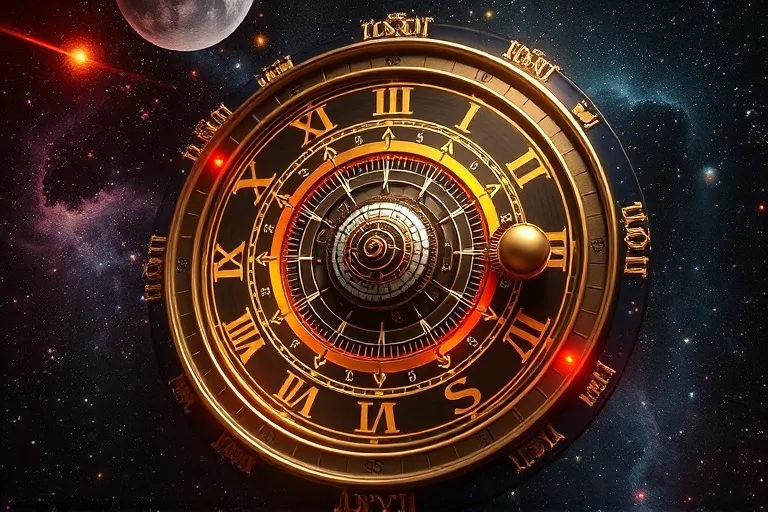
A captivating 3D digital illustration depicts a cosmic clock, its intricate gears and celestial bodies moving in harmony, symbolizing the complex and precise mechanics of "time lord" techniques in Hellenistic astrology. The deep blues and golds evoke an ancient, mystical atmosphere.
Time Lord Techniques: Profections and Zodiacal Releasing
Perhaps the most sophisticated and powerful aspect of Hellenistic astrology lies in its "Time Lord" techniques, which are methods for predicting when certain potentials in the birth chart will activate. These techniques allow astrologers to identify specific periods in a person's life when particular planets or houses become prominent, indicating shifts in focus, opportunities, or challenges.
Two prominent Time Lord techniques are Profections and Zodiacal Releasing:
Annual Profections: This technique involves advancing the Ascendant (and thus the entire chart) one house per year. The house that the Ascendant falls into for a given year becomes the "profected house," and its ruling planet becomes the "Lord of the Year." This planet and house highlight the main themes and concerns for that particular year. For example, if your Ascendant is in Aries, your 1st house, then at age 24, your 1st house would be profected to the 1st house again (24 mod 12 = 0, or 12th house, then 1st). The ruler of that house (Mars) would be the Lord of the Year, indicating a focus on self, initiation, and personal endeavors.
Zodiacal Releasing (ZRL): A highly intricate and precise Time Lord system, Zodiacal Releasing uses the Lot of Fortune and the Lot of Spirit to delineate periods of peak activity, major life changes, and significant events. It divides a person's life into "periods" and "sub-periods" ruled by different zodiac signs and their planetary rulers. ZRL can pinpoint when major career shifts, relationship milestones, or health crises are likely to occur, offering a detailed chronological map of one's life. This technique is particularly valued for its ability to predict periods of "loosing of the bond," indicating significant transitions or turning points.
These techniques move beyond static chart interpretation, providing a dynamic understanding of how the birth chart unfolds over time. They offer a powerful framework for understanding life's chapters and preparing for upcoming influences. Further exploration into Karmic Astrology: Past Life Connections Natal Chart can provide additional context on life's unfolding patterns.
Hellenistic vs. Modern Astrology: Key Differences
While modern astrology has evolved significantly, often incorporating psychological and spiritual dimensions, Hellenistic astrology maintains several key distinctions:
| Feature | Hellenistic Astrology | Modern Astrology (General) |
|---|---|---|
| House System | Primarily Whole Sign Houses. | Various quadrant systems (Placidus, Koch, Regiomontanus). |
| Planets Used | Seven traditional planets (Sun, Moon, Mercury, Venus, Mars, Jupiter, Saturn). | Includes outer planets (Uranus, Neptune, Pluto) and sometimes asteroids. |
| Focus | Deterministic, predictive, emphasis on objective life events and timing. | Psychological, evolutionary, focus on inner growth and potential. |
| Aspects | Ptolemaic aspects by sign, with less emphasis on tight orbs. | Ptolemaic and minor aspects by degree, with tight orbs. |
| Techniques | Lots, Sect, Planetary Joys, Time Lords (Profections, ZRL). | Transits, Progressions, Solar Arc Directions (often without Time Lords). |
While both systems offer valuable insights, Hellenistic astrology provides a distinct lens through which to view the birth chart, often yielding more concrete and time-specific interpretations. Its structured approach can complement modern psychological readings by grounding them in a framework of fated events and periods. For a deeper dive into planetary influences, explore Planets in Astrology: Understanding Your Natal Chart.
Applying Ancient Wisdom to Contemporary Life
The revival of Hellenistic astrology is not merely an academic exercise; it offers practical applications for individuals navigating the complexities of modern life. By understanding the specific periods activated by Time Lords, individuals can better anticipate challenges, seize opportunities, and align their actions with cosmic timing. This can be particularly useful for career decisions, relationship planning, and personal development.
Moreover, the emphasis on essential dignities and debilities provides a clear understanding of one's inherent strengths and weaknesses, fostering self-acceptance and strategic personal growth. The Lots offer insights into specific areas of life that may bring fortune or require greater effort, guiding individuals towards a more conscious and informed existence. Hellenistic astrology thus serves as a powerful tool for self-discovery and navigating the intricate tapestry of fate and free will.
Embracing these ancient techniques allows us to connect with a rich heritage of astrological knowledge, enriching our understanding of ourselves and the world around us. It reminds us that while the stars may incline, they do not compel, offering a framework for navigating life with greater awareness and purpose. For more general astrological insights, you might find value in exploring Horoscope Birth Chart: Understanding Your Natal Map.
Source: Hybrid content assisted by AIs and human editorial supervision.


Comments
Post a Comment