
Guided Meditation Lunar Phases Emotional Well-being Harmony Practice
The moon, our closest celestial neighbor, has captivated humanity for millennia, influencing tides, cycles, and emotions. Its rhythmic dance through various phases offers a profound framework for personal growth and spiritual alignment. Guided meditation, when attuned to these lunar cycles, becomes a powerful tool for enhancing emotional well-being, fostering inner harmony, and unlocking deeper self-awareness. This practice invites individuals to synchronize their inner world with the cosmic rhythm, leveraging each lunar phase for specific energetic and emotional work.
Understanding the unique energetic signature of each moon phase allows us to tailor our meditative practices, making them more potent and purposeful. From the introspective New Moon to the expansive Full Moon, each stage presents an opportunity for reflection, intention-setting, release, and integration. By consciously engaging with these cycles, practitioners can navigate life's challenges with greater grace, cultivate emotional resilience, and align with their authentic self. This guide explores how to harness the moon's energy through guided meditation, offering practical approaches for emotional balance and spiritual harmony.
Table of Contents
- Understanding Lunar Phases and Their Meditative Potential
- New Moon: Setting Intentions and New Beginnings
- Waxing Moon: Cultivating Growth and Manifestation
- Full Moon: Release, Illumination, and Gratitude
- Waning Moon: Reflection, Letting Go, and Integration
- Integrating Lunar Meditations into Daily Life
Understanding Lunar Phases and Their Meditative Potential
The lunar cycle, spanning approximately 29.5 days, is a continuous flow of waxing and waning energy, each phase carrying distinct symbolism and energetic qualities. From an astrological perspective, the moon governs our emotions, intuition, and subconscious mind, making its phases particularly relevant for practices aimed at emotional well-being. By observing and aligning with these natural rhythms, we can tap into a deeper reservoir of inner wisdom and emotional intelligence.
Each phase offers a unique opportunity for introspection and action. The New Moon symbolizes new beginnings and planting seeds, while the Waxing Moon is about growth and development. The Full Moon represents culmination and illumination, and the Waning Moon encourages release and surrender. Recognizing these energetic shifts allows us to approach our meditation with a clearer purpose, enhancing the effectiveness of our practice and fostering a more profound connection to our inner landscape.
 A serene figure meditating under the luminous glow of the full moon, symbolizing the deep connection between lunar cycles and inner reflection.
Scientific studies, particularly in chronobiology, have begun to explore the subtle influences of lunar cycles on biological rhythms, sleep patterns, and mood, although more research is needed to fully understand these connections. However, anecdotal evidence and ancient wisdom traditions consistently highlight the moon's impact on human experience. Integrating guided meditation with these phases is not merely a spiritual practice but a holistic approach to self-care, promoting a sense of balance and harmony in a world often characterized by constant demands.
The power of guided meditation lies in its ability to focus the mind and direct energy. When combined with the specific energies of the lunar phases, this focus becomes amplified. For instance, meditating during the New Moon with an intention for a new project can imbue that intention with the moon's fresh, generative energy. Similarly, a Full Moon meditation centered on releasing old patterns can be particularly effective due to the moon's powerful illuminating and culminating force. This conscious alignment creates a synergistic effect, enhancing personal transformation.
New Moon: Setting Intentions and New Beginnings
The New Moon, often invisible in the night sky, is a potent time for introspection, planting seeds of intention, and initiating new cycles. Its dark canvas invites us to look inward, to clarify our desires, and to envision the future we wish to create. This phase is energetically aligned with fresh starts and represents a blank slate upon which we can draw our aspirations. A guided meditation during the New Moon focuses on clarity, vision, and the courageous act of beginning anew.
A typical New Moon meditation might involve visualizing your desires as already fulfilled, feeling the emotions associated with their realization, and verbally affirming your intentions. This practice helps to impress your goals upon your subconscious mind, setting the energetic wheels in motion. It's an excellent time to identify areas for personal growth and to commit to new habits or projects. Consider what you truly wish to cultivate in your life over the coming month or lunar cycle.
- Preparation: Find a quiet space. Light a candle or diffuse essential oils if desired. Have a journal nearby to record insights.
- Intention Setting: During meditation, focus on one or two clear intentions. Make them specific, positive, and present-tense.
- Visualization: Imagine your intentions manifesting. See yourself living your desired reality. Feel the joy and satisfaction.
- Affirmation: Conclude with a powerful affirmation, such as "I am open to receiving all the good this new cycle brings."
This deliberate act of intention-setting, supported by the New Moon's energy, can significantly influence the trajectory of your personal journey. It's a foundational practice for anyone looking to intentionally shape their reality and foster emotional well-being through conscious creation. For those interested in understanding how their personal karmic journey unfolds, exploring concepts like the North Node Houses can provide deeper insights into their soul's evolutionary path and how to align intentions with destiny.
Waxing Moon: Cultivating Growth and Manifestation
As the moon begins to grow from a sliver to a half-moon and beyond, we enter the Waxing phase. This period is characterized by increasing light and energy, making it an ideal time for nurturing the intentions set during the New Moon. It's a phase of action, development, and building momentum towards our goals. Guided meditations during the Waxing Moon focus on cultivating growth, overcoming obstacles, and strengthening our resolve.
Meditation during the Waxing Moon can involve visualizing the steps you are taking towards your goals, affirming your capabilities, and releasing any self-doubt or procrastination. It's about actively engaging with the process of manifestation and trusting that your efforts are leading you closer to your desired outcome. This phase encourages perseverance and a steady commitment to your path, much like a plant steadily growing towards the sun.
 An abstract watercolor representing the gentle flow and release of emotions, fostering a sense of inner calm and well-being.
To practice Waxing Moon meditation, you might focus on gratitude for the progress already made, no matter how small. Acknowledge your efforts and celebrate each step forward. This positive reinforcement strengthens your belief in your ability to manifest. Incorporating practices like those described in a Planetary Hours: Daily Manifestation & Rituals Guide can further enhance your daily efforts, aligning specific actions with planetary energies for optimal results.
This period is also ideal for addressing any internal resistance or perceived limitations. Use meditation to explore the roots of these blockages and to visualize yourself effortlessly moving past them. The increasing light of the moon symbolizes the illumination of your path and the growing strength within you to achieve your aspirations. It's a powerful time to build confidence and maintain a positive outlook on your journey.
Full Moon: Release, Illumination, and Gratitude
The Full Moon, radiant and luminous, represents the peak of the lunar cycle. It's a time of culmination, illumination, and heightened emotions. During this phase, what was hidden often comes to light, making it a powerful time for self-awareness, release, and expressing gratitude for what has manifested. The Full Moon's energy can be intense, and guided meditation helps to channel this intensity constructively, promoting emotional clearing and spiritual insight.
Full Moon meditations often focus on releasing what no longer serves us – old habits, limiting beliefs, emotional baggage, or relationships that have run their course. It's a time to acknowledge what has come to fruition since the New Moon and to let go of anything that prevents further growth. Visualize yourself shedding layers, like the moon shedding its shadow, and embracing a lighter, more authentic self. This process of release is crucial for maintaining emotional well-being and creating space for new experiences.
- Release Ritual: Write down everything you wish to release on a piece of paper. During meditation, visualize these items dissolving or being carried away by the moonlight.
- Gratitude Practice: Reflect on all the blessings and manifestations in your life. Feel deep gratitude for your journey and experiences.
- Forgiveness: Extend forgiveness to yourself and others, recognizing that release often requires letting go of past hurts.
- Celebration: Acknowledge your achievements and progress. Celebrate the culmination of your efforts.
The Full Moon's bright light illuminates both our triumphs and our shadows, offering an opportunity for profound self-acceptance and healing. It's a powerful time for emotional catharsis and for re-evaluating your path. Engaging in practices that connect you to your deeper self, such as Ancestral Healing Shamanic Practices, can further support this process of release and integration, helping to clear long-standing patterns and connect with your roots.
Waning Moon: Reflection, Letting Go, and Integration
Following the Full Moon, the moon begins to wane, gradually decreasing in light until it disappears again at the New Moon. This phase is about introspection, winding down, and preparing for the next cycle. It's a time for reflection, letting go of what has been released, and integrating the lessons learned. The Waning Moon encourages us to conserve energy, rest, and prepare for renewal.
Guided meditations during the Waning Moon focus on processing emotions, assimilating experiences, and gently releasing any lingering attachments. It's a period for quiet contemplation and self-nurturing. As the moon's light diminishes, so too can our external activity, allowing for deeper internal work. This phase is essential for preventing burnout and ensuring that we enter the next New Moon cycle feeling refreshed and ready.
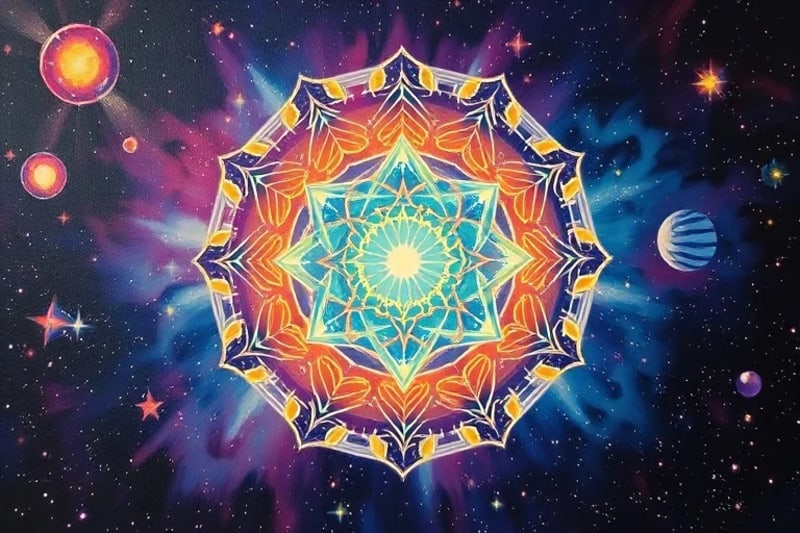 A vibrant 3D rendered mandala symbolizing universal harmony and the intricate balance within the cosmos, reflecting inner peace.
During Waning Moon meditations, you might review the events of the past month, identifying patterns, successes, and areas for improvement. It's a time to be gentle with yourself, acknowledging that growth is not always linear. Focus on self-compassion and acceptance. This reflection helps to consolidate wisdom and prepare for future cycles of growth. Understanding your personal cycles and growth patterns can be further illuminated by studying Solar Returns, which offer insights into annual themes and self-discovery.
This phase is also an opportunity to practice detachment and non-attachment. Let go of expectations and outcomes, trusting that the universe is unfolding as it should. The Waning Moon reminds us that cycles are natural and necessary, and that periods of rest and release are just as vital as periods of intense activity. Embrace the quietude and allow yourself to simply be, without striving or pushing.
Integrating Lunar Meditations into Daily Life
To truly benefit from lunar phase guided meditations, consistency and integration into daily life are key. While specific meditations can be performed on the exact day of each phase, the energy of each phase extends for several days, allowing flexibility in your practice. The goal is not rigid adherence but a mindful awareness of the moon's influence and a conscious effort to align with its rhythm.
Start by tracking the moon phases using an app or calendar. This simple act of awareness can significantly deepen your connection to the lunar cycle. Dedicate a few minutes each day, or at least around the key phases, to your guided meditation practice. Even short, focused sessions can yield profound benefits for emotional well-being and harmony. Over time, you may find that your own energy levels and emotional states naturally begin to ebb and flow with the moon.
Consider creating a sacred space for your practice, even if it's just a quiet corner in your home. This dedicated area can help signal to your mind that it's time to shift into a meditative state. Incorporate elements that resonate with you, such as crystals, candles, or natural objects. The consistency of a ritual can enhance the power of your intentions and releases, fostering a deeper sense of connection and purpose.
Beyond formal meditation, integrate lunar awareness into your daily activities. For example, during the Waxing Moon, take active steps towards your goals. During the Waning Moon, prioritize rest and decluttering. By consciously aligning your actions with the moon's energy, you create a more harmonious flow in your life, reducing resistance and enhancing your overall sense of well-being. This holistic approach transforms lunar meditation from a mere practice into a way of life, promoting continuous emotional balance and spiritual growth.
The journey of guided meditation with lunar phases is a continuous exploration of self and cosmos. It offers a gentle yet powerful path to emotional well-being, inviting us to embrace the natural cycles of life, growth, release, and renewal. By honoring the moon's wisdom, we cultivate a deeper understanding of our inner landscape and foster a profound sense of harmony within ourselves and with the universe.
Explore Further Insights
Source: Hybrid content assisted by AI and human editorial supervision.


Comments
Post a Comment