
Scrying Art Divination Reflective Surfaces: Ancient Practice Guide | StarPluto
The art of scrying, an ancient practice of divination, involves gazing into a reflective surface to perceive visions, insights, or messages from the subconscious or spiritual realms. This captivating method has been employed across cultures and centuries, offering a window into the unknown and a means of gaining clarity on complex situations. From polished stones and water basins to modern mirrors, the tools of scrying are as varied as the interpretations derived from them. It is a practice deeply rooted in human curiosity about the future and the unseen forces that shape our lives.
Diving into the world of scrying requires not only specific tools but also a particular mindset and a cultivated ability to interpret subtle visual cues. Unlike fortune-telling, which often relies on fixed systems, scrying is a more intuitive and personal journey, where the scryer acts as a conduit for information that manifests symbolically. This guide will explore the fascinating history, diverse techniques, and practical steps involved in mastering this esoteric art, ensuring a comprehensive understanding for both beginners and seasoned practitioners.
What is Scrying? An Ancient Divinatory Art
Scrying, often referred to as "seeing" or "peeping," is a form of divination that involves looking into a suitable medium in the belief that it will reveal meaningful messages, visions, or insights. The term "scrying" itself is derived from the Old English word "descry," meaning "to make out" or "to reveal." This practice is not about predicting a fixed future but rather about accessing information that can offer guidance, clarify situations, or reveal hidden truths about oneself or the world.

The Tarot Quantum Mechanics Intersecting Divination Reality is one of the most iconic tools used in the ancient art of scrying, offering a focal point for deep contemplation and visionary insights.
The core principle behind scrying is that the reflective surface acts as a portal or a focal point, allowing the scryer to enter an altered state of consciousness. In this state, the mind is believed to be more receptive to subtle energies, symbolic imagery, and intuitive flashes. The visions perceived can range from clear pictures and symbols to abstract patterns, colors, or even feelings and auditory messages. The interpretation of these phenomena is crucial to the scrying process, making it a blend of passive observation and active mental engagement.
Modern understanding often links scrying to psychological concepts such as pareidolia, where the mind perceives patterns in random stimuli, and autohypnosis, a self-induced trance state. However, many practitioners believe it taps into genuine psychic abilities or allows communication with spiritual entities. Regardless of the underlying mechanism, scrying remains a powerful tool for self-reflection, problem-solving, and spiritual exploration, providing unique perspectives that might otherwise remain hidden.
Historical Roots and Cultural Significance
Scrying is not a new age phenomenon; its origins stretch back thousands of years, with evidence found in diverse cultures across the globe. Ancient Egyptians used polished mirrors and dark pools of water for divination, believing they could communicate with deities and receive guidance. The Mayans and Aztecs also practiced scrying with obsidian mirrors, which were considered sacred objects capable of revealing truths and connecting with the spirit world. These mirrors were not merely tools but were imbued with spiritual power and often used in ceremonial contexts.
In ancient Greece and Rome, various forms of hydromancy (water scrying) were common, where priests and oracles would gaze into bowls of water or natural springs. The Celtic people were known for their use of beryl crystals and dark, reflective pools. During the Middle Ages and Renaissance in Europe, scrying, particularly with crystal balls, gained prominence among alchemists, magicians, and mystics. One of the most famous scryers was John Dee, an Elizabethan mathematician and astrologer, who used a crystal ball and obsidian mirror with his assistant Edward Kelley to communicate with angels.
The widespread presence of scrying in different historical periods and geographical locations underscores its universal appeal and perceived efficacy. It reflects a fundamental human desire to understand the unknown, seek divine guidance, and gain an advantage in life by peering beyond the veil of ordinary perception. While sometimes associated with sorcery or superstition, scrying has consistently been viewed by its practitioners as a legitimate path to spiritual insight and wisdom.
Diverse Forms of Scrying: Tools and Techniques
The beauty of scrying lies in its adaptability, as various reflective surfaces can be utilized. Each medium offers a slightly different experience and energetic quality. Understanding these different forms can help a practitioner choose the best tool for their personal journey.
- Crystallomancy (Crystal Gazing): This is perhaps the most well-known form, involving gazing into a crystal ball, usually made of quartz, obsidian, or beryl. The clarity and depth of the crystal are believed to facilitate visions.
- Hydromancy (Water Scrying): One of the oldest forms, hydromancy uses still water in a bowl, a natural pool, or even a glass of water. The reflections and distortions on the water's surface become the canvas for visions.
- Catoptromancy (Mirror Scrying): This involves gazing into a mirror, often a specially prepared black mirror (made by painting the back of a glass mirror black) or a polished obsidian mirror. The darkness of the mirror is thought to absorb light and reduce distractions, enhancing the scrying experience.
- Pyromancy (Fire Scrying): While less common as direct scrying, gazing into flames (from a candle, bonfire, or fireplace) can induce a trance-like state and reveal images.
- Aeromancy (Cloud Scrying): Observing patterns and shapes in clouds, though less structured, can also be a form of scrying, relying on the scryer's ability to find meaning in transient forms.
- Onychomancy (Nail Scrying): An ancient practice where the scryer gazes at their own polished fingernails or those of a subject, sometimes coated with oil or ink, to see reflections and visions.
Each of these methods requires patience and a willingness to let the mind wander. The choice of medium often comes down to personal preference and what resonates most with the individual scryer. Some find the depth of a crystal ball most conducive, while others prefer the fluid nature of water or the starkness of a black mirror. Experimentation is key to discovering one's optimal scrying tool.

A offers a deep, dark surface ideal for focusing the mind and inviting visions during scrying sessions.
Preparing for a Scrying Session: Setting the Stage
Successful scrying is not just about the tool; it's significantly influenced by the scryer's mental and physical state, as well as the environment. Proper preparation enhances receptivity and minimizes distractions, creating an optimal setting for insights to emerge.
- Choose a Quiet Environment: Select a space where you will not be disturbed. Silence is preferred, but soft, ambient music can also help some individuals relax.
- Dim Lighting: Scrying is best performed in subdued lighting. Candlelight is traditional and can create a mystical atmosphere, but indirect, soft electric light also works. The goal is to eliminate harsh reflections and glare on your scrying surface.
- Cleanse Your Space and Tools: Before starting, cleanse your scrying tool and the area. This can be done through smudging with sage, passing the tool through incense smoke, or simply wiping it down with a clean cloth while focusing on purifying intentions.
- Personal Preparation: Take time to relax your body and mind. Meditation, deep breathing exercises, or a warm bath can help. Clear your mind of daily worries and set a clear intention for your scrying session.
- Formulate a Question: While not strictly necessary for general insights, having a specific question or area of focus can help direct your scrying. Frame your question clearly and positively.
The atmosphere you create should be one of calm, reverence, and focus. This intentional preparation helps shift your consciousness from the mundane to a more receptive state, making it easier to perceive the subtle visions that scrying can offer. Remember that consistency in practice, even short sessions, can significantly improve your ability to enter this state and interpret what you see.
The Scrying Process: Step-by-Step Guide
Once your environment and mind are prepared, you can begin the actual scrying process. This is a journey of patience and gentle observation, not forced visualization. Here's a general step-by-step guide:
- Position Yourself: Sit comfortably in front of your scrying tool. Ensure the lighting is dim and there are no direct reflections or glare on the surface. Your gaze should be relaxed, not strained.
- Relax and Breathe: Take several deep breaths to further relax your body and quiet your mind. Allow your thoughts to drift away without judgment.
- Gaze Softly: Fix your gaze on the center of your scrying surface. Do not stare intently; instead, let your eyes soften and unfocus slightly. You are looking through the surface, not at it.
- Enter a Trance State: As you continue to gaze, you might notice the surface appearing to cloud, shimmer, or darken. This is a sign that your mind is entering a receptive, trance-like state. Resist the urge to blink or adjust your vision too much.
- Observe Visions: Images, colors, symbols, or patterns may begin to form within the surface. They might be fleeting or more persistent. Do not try to force them or analyze them immediately. Simply observe what appears, allowing the visions to unfold naturally.
- Maintain Passivity: The key is to remain passive and receptive. If you try too hard to "see" something specific, you might break the trance. Let the images come to you.
- Record Your Experience: As the session concludes, or immediately after, record everything you saw, felt, or heard in a journal. Even seemingly insignificant details can become meaningful upon reflection.
The first few attempts at scrying might yield little or nothing, which is perfectly normal. It takes practice to develop the necessary focus and receptivity. Patience and persistence are vital for cultivating the art of scrying.
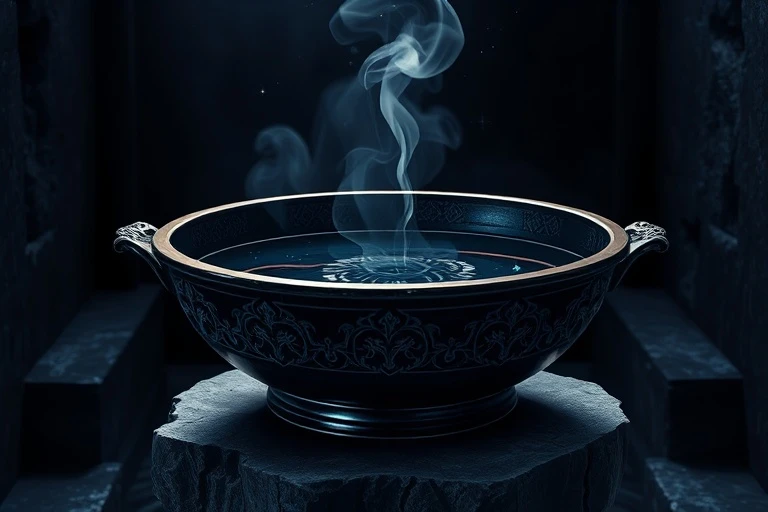
A serves as a powerful medium for scrying, reflecting subtle energies and facilitating intuitive insights.
Interpreting Scrying Visions and Symbols
The most challenging, yet rewarding, aspect of scrying is interpreting the visions. Unlike a clear message, scrying often presents symbolic imagery that requires careful consideration and personal reflection. There is no universal dictionary for scrying symbols; their meaning is often subjective and deeply personal to the scryer.
- Symbolic Association: Consider what the images or symbols mean to you personally. What emotions or ideas do they evoke? A tree might symbolize growth to one person, stability to another, or a family lineage to a third.
- Context is Key: Relate the visions back to your initial question or intention. How do the symbols connect to the situation you are seeking guidance on?
- Emotional Response: Pay attention to your emotional reactions during and after the scrying session. Feelings of peace, unease, excitement, or warning can be as informative as the visual imagery.
- Journaling: Keeping a detailed scrying journal is invaluable. Over time, you'll begin to notice recurring symbols or patterns in your interpretations, helping you build your personal symbolic language.
- Trust Your Intuition: Ultimately, the interpretation comes from within. Trust your gut feelings and initial impressions. Sometimes, the meaning may not be immediately clear but will reveal itself over time.
It is also helpful to consult resources on universal symbolism, dream interpretation, and archetypes. However, always filter this information through your personal lens. The more you practice and reflect on your experiences, the more adept you will become at deciphering the messages your scrying tool reveals. Remember, the goal is not to find a definitive answer but to gain deeper insight and perspective.
Ethical Considerations and Safe Scrying Practices
Like any divinatory practice, scrying comes with ethical considerations and best practices to ensure safety and positive outcomes. Responsible scrying is about seeking guidance and understanding, not about manipulating others or delving into harmful territories.
- Respect Boundaries: Never attempt to scry for information about others without their explicit consent. This is a violation of privacy and ethical boundaries.
- Maintain Objectivity: Be aware of your own biases and desires. It's easy to project what you want to see onto the scrying surface. Strive for neutrality and allow the true messages to emerge.
- Protect Your Energy: Before and after scrying, engage in protective measures such as visualization of a protective light, grounding exercises, or calling upon spiritual guides for protection. This helps prevent unwanted energetic attachments.
- Avoid Over-Scrying: Excessive scrying can lead to mental fatigue, confusion, or an over-reliance on external guidance. Practice moderation and allow time for integration of insights.
- Discernment: Not all visions are positive or helpful. Develop your discernment to filter out fear-based or misleading imagery. If a vision feels negative or unsettling, acknowledge it, but do not dwell on it. Re-center yourself and cleanse your space.
- Empowerment, Not Dependence: Scrying should empower you to make informed decisions, not create dependence on the tool or the visions. The ultimate power lies within you.
By adhering to these ethical guidelines, practitioners can ensure that their scrying journey remains a positive, enriching, and safe experience, fostering personal growth and spiritual awareness.
Modern Applications and Personal Growth
In the contemporary world, scrying continues to be a relevant and valuable practice. While its historical context often involved grand prophecies and communication with spirits, modern scrying is frequently utilized for personal development, creative inspiration, and intuitive guidance in everyday life.
Many individuals use scrying as a tool for self-reflection and accessing their subconscious mind. By gazing into a reflective surface, one can tap into inner wisdom, explore hidden desires, and confront fears in a safe, symbolic manner. This can be particularly useful for artists, writers, and creative professionals seeking inspiration or breakthroughs in their work. The abstract nature of scrying visions can spark new ideas and perspectives.
Furthermore, scrying can be integrated into meditative practices, deepening the experience of mindfulness and connection to the spiritual self. It offers a tangible focal point for those who struggle with traditional meditation techniques, providing a visual anchor for the mind. As a form of intuitive development, regular scrying practice can sharpen one's psychic senses, making it easier to perceive subtle energies and receive intuitive hits in daily life.
The accessibility of scrying tools, from simple bowls of water to readily available mirrors, makes it an approachable practice for anyone interested in exploring their inner landscape and the mysteries of the universe. It serves as a reminder that profound insights can often be found by simply looking within, using the world's reflective surfaces as mirrors to the soul.
In conclusion, the art of scrying is a timeless practice that bridges the gap between the mundane and the mystical. By understanding its history, diverse forms, and ethical considerations, practitioners can embark on a journey of self-discovery and intuitive enlightenment. Whether for guidance, inspiration, or spiritual connection, scrying offers a unique and powerful pathway to unlocking hidden wisdom.
Source: Hybrid content assisted by AIs and human editorial supervision.


Comments
Post a Comment