
Urban Geomancy: Aligning City Dwellings for Well-being
Urban geomancy represents a fascinating intersection of ancient wisdom and modern urban planning, seeking to harmonize the energetic flow of cities with the well-being of their inhabitants. This practice, rooted in the principles of traditional geomancy, adapts its core tenets to the unique challenges and opportunities presented by contemporary metropolitan environments. It posits that the layout, design, and even the materials of urban structures can profoundly influence the physical, emotional, and spiritual health of those who live and work within them.
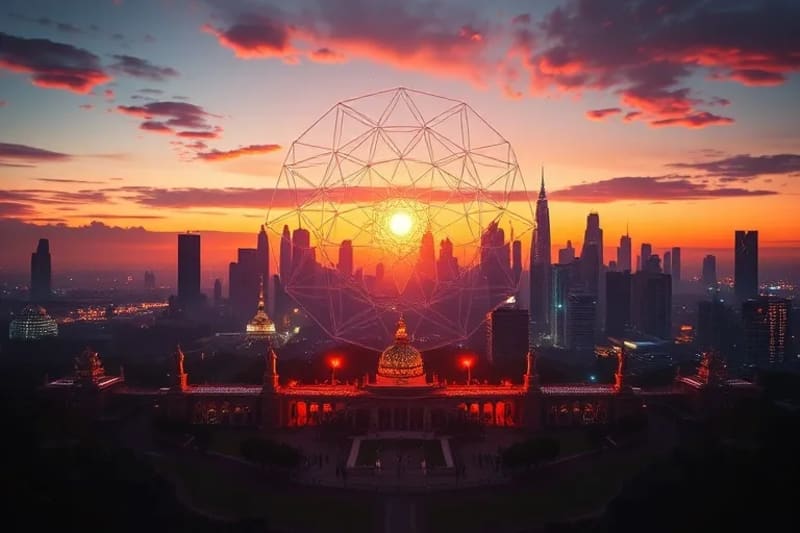
Unlike its rural counterpart, which often focuses on natural landscapes and their inherent energies, urban geomancy must contend with man-made structures, dense populations, and complex infrastructure. The goal remains the same: to identify, understand, and optimize the subtle energy currents that permeate our surroundings. By doing so, practitioners believe it is possible to create urban spaces that are not only functional and aesthetically pleasing but also energetically supportive and conducive to a higher quality of life.
Table of Contents
- Historical Roots and Evolution of Geomancy
- Core Principles of Urban Geomancy
- Applying Geomancy in Modern Urban Planning
- Benefits and Challenges of Urban Geomancy
- Integrating Geomancy into Future Urban Development
Historical Roots and Evolution of Geomancy
Geomancy, meaning "earth divination," is an ancient practice found in various cultures worldwide, from the Chinese Feng Shui to the European tradition of dowsing and sacred site alignment. Historically, it involved selecting auspicious locations for settlements, temples, and burial grounds based on the perceived flow of telluric energies, often referred to as "dragon currents" or "ley lines." These practices were not merely superstitious but were often based on keen observations of natural patterns, water sources, and geological formations.
The evolution of geomancy into an urban context began as cities grew and expanded, necessitating new ways to maintain energetic balance within man-made environments. Early urban planners, particularly in ancient China, meticulously applied Feng Shui principles to city layouts, ensuring that streets, buildings, and waterways were positioned to optimize the flow of "Qi" (life force energy). This historical precedent provides a rich foundation for contemporary urban geomancy, demonstrating that the principles can be adapted to complex, human-altered landscapes.
Today, urban geomancy seeks to revive these ancient understandings, translating them into a language and methodology applicable to 21st-century cities. It draws upon diverse fields such as environmental psychology, architecture, and even quantum physics to provide a holistic framework for urban development. The goal is to move beyond purely functional design to create spaces that actively support human vitality and spiritual connection.
Core Principles of Urban Geomancy
At its heart, urban geomancy operates on several fundamental principles that guide the assessment and design of city environments. These principles are often interconnected, forming a comprehensive system for understanding the energetic landscape.
- Ley Lines and Energy Grids: The concept of ley lines, or invisible energetic pathways across the Earth's surface, is central. In urban settings, geomancers observe how these lines interact with buildings, roads, and infrastructure. Identifying and understanding these natural energy conduits is crucial for determining optimal placements and orientations.
- Sacred Geometry: The use of universal patterns and proportions, such as the golden ratio and fractal designs, is believed to resonate with cosmic energies. Integrating sacred geometry into urban architecture and public spaces can create harmonious environments that uplift the human spirit.
- Five Elements Theory (from Feng Shui): This principle categorizes natural phenomena and human activities into five elements—Wood, Fire, Earth, Metal, and Water—each with specific qualities and interactions. Balancing these elements in urban design, through materials, colors, and shapes, is thought to promote energetic equilibrium.
- Chi Flow (Qi): The concept of life force energy, or Chi, is vital. Urban geomancy aims to ensure smooth and balanced Chi flow throughout the city, avoiding stagnant or aggressive energy pockets. This involves careful consideration of building shapes, street layouts, and the placement of open spaces.
- Dowsing and Intuitive Perception: Many geomancers utilize dowsing rods or pendulums, along with intuitive perception, to detect subtle energy fields and anomalies within the urban landscape. This allows for a more nuanced understanding of specific site energies that might not be apparent through conventional analysis.
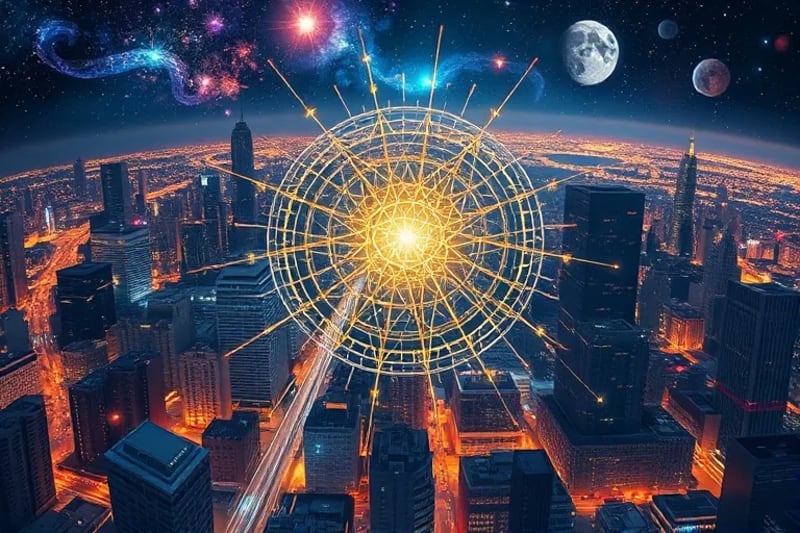
These principles, when applied thoughtfully, provide a framework for designing cities that are not just structures of steel and concrete, but living, breathing organisms that support the vitality of their inhabitants. Understanding these cosmic energies can also be enhanced by exploring planetary rulerships and zodiac myths, which offer deeper insights into esoteric archetypes and self-discovery.
Applying Geomancy in Modern Urban Planning
The practical application of urban geomancy involves a multi-faceted approach, integrating its principles into various stages of urban development. From macro-level city planning to micro-level building design, geomantic considerations can guide decisions that impact energetic harmony.
| Aspect of Urban Planning | Geomantic Application | Intended Outcome |
|---|---|---|
| City Layout & Zoning | Aligning major roads and districts with natural energy flows; creating green corridors along ley lines. | Optimized energy distribution, reduced urban stress, enhanced community vitality. |
| Building Orientation & Design | Orienting buildings to capture beneficial energies (e.g., sunlight, wind patterns) and mitigate negative influences. Incorporating sacred geometry in facades and interior layouts. | Improved indoor air quality, natural light, positive psychological impact, enhanced productivity. |
| Material Selection | Choosing natural, locally sourced materials that resonate positively with the environment; avoiding materials that block or distort energy. | Reduced electromagnetic pollution, healthier living spaces, ecological sustainability. |
| Green Spaces & Water Features | Strategic placement of parks, gardens, and water bodies to enhance Chi flow and create energetic focal points. | Improved air quality, calming effects, natural energy purification, community gathering points. |
| Infrastructure Placement | Considering the energetic impact of power lines, communication towers, and transportation networks. | Minimizing energetic disruptions, creating more harmonious urban infrastructure. |
One of the most accessible forms of urban geomancy in practice is Feng Shui, which is widely used in office and home design. Understanding how to align your environment can significantly impact personal and professional success. For instance, applying career success Feng Shui principles to office zodiac alignment can create a more conducive atmosphere for productivity and advancement. Similarly, techniques for energy protection can be applied to shield one's aura from negative influences in bustling urban environments.
Benefits and Challenges of Urban Geomancy
The potential benefits of integrating urban geomancy are far-reaching, impacting individuals, communities, and the environment. However, its implementation also faces significant challenges in a world often driven by conventional planning paradigms.
- Enhanced Well-being: By creating energetically balanced spaces, urban geomancy aims to reduce stress, improve mental clarity, and foster a greater sense of peace and belonging among residents. This can lead to better physical health outcomes and increased overall happiness.
- Increased Productivity and Creativity: Harmonious environments are believed to stimulate cognitive functions, leading to more innovative thinking and higher levels of productivity in workplaces and educational institutions.
- Community Cohesion: Thoughtfully designed public spaces, aligned with geomantic principles, can become vibrant hubs that encourage social interaction and strengthen community bonds.
- Environmental Harmony: Geomancy often promotes sustainable practices, such as the use of natural materials and the integration of green infrastructure, leading to a more symbiotic relationship between the built environment and nature.
Despite these compelling advantages, urban geomancy encounters obstacles. The primary challenge is the lack of widespread scientific recognition and empirical evidence that meets conventional academic standards. This often leads to skepticism from traditional urban planners, architects, and policymakers. Additionally, retrofitting existing cities to incorporate geomantic principles can be incredibly complex and costly, given the established infrastructure and property ownership patterns.
Another hurdle is the subjective nature of energetic perception. While some individuals are highly sensitive to subtle energies, others may not perceive them at all, making it difficult to establish universal guidelines. Overcoming these challenges requires a bridge between ancient wisdom and modern scientific inquiry, fostering interdisciplinary collaboration and innovative research methodologies.
Integrating Geomancy into Future Urban Development
For urban geomancy to gain broader acceptance and implementation, a concerted effort is needed to demonstrate its tangible benefits and integrate its principles into mainstream urban planning. This involves several key strategies:
- Pilot Projects and Case Studies: Developing well-documented pilot projects that showcase the positive impact of geomantically designed spaces on resident well-being, health metrics, and social cohesion.
- Interdisciplinary Research: Encouraging collaboration between geomancers, architects, urban planners, environmental scientists, and public health researchers to explore the measurable effects of energetic alignment.
- Education and Awareness: Raising public awareness about the principles of urban geomancy and its potential benefits through educational programs, workshops, and accessible literature.
- Policy Integration: Advocating for the inclusion of geomantic considerations in urban development policies and building codes, perhaps as part of broader sustainability or well-being initiatives.
- Technological Advancements: Utilizing advanced mapping, sensor technologies, and AI to identify and visualize energetic patterns, making geomantic analysis more objective and accessible.
The future of urban living hinges on creating environments that not only support human life but also enhance it. Urban geomancy offers a unique perspective on achieving this goal by emphasizing the subtle, yet profound, influence of cosmic and telluric energies on our daily lives. As cities continue to grow and evolve, the wisdom of aligning our dwellings with these natural forces may prove to be an invaluable tool for fostering healthier, happier, and more harmonious urban communities.
Embracing urban geomancy means looking beyond the visible, acknowledging the unseen forces that shape our experiences, and consciously designing our cities to resonate with the deeper rhythms of the Earth and cosmos. This holistic approach promises a future where urban spaces are not just places to live, but vibrant ecosystems that nurture the soul.
Explore Further: Related Insights
Source: Hybrid content assisted by AI and human editorial supervision.


Comments
Post a Comment