
Cosmic Sociology AI Global Consciousness Evolution Digital
The confluence of cosmic sociology and artificial intelligence (AI) marks a pivotal moment in humanity's quest to understand itself and its place in the universe. Cosmic sociology, an emergent field, extends traditional sociological inquiry beyond Earth, considering the implications of universal laws and potential extraterrestrial life on societal structures and consciousness. Simultaneously, AI offers unprecedented tools to analyze the vast, complex data generated by human interactions, allowing us to map the intricate evolution of global consciousness in the digital age.
This interdisciplinary approach seeks to transcend conventional boundaries, exploring how our collective thoughts, beliefs, and behaviors are shaped by both terrestrial and potentially cosmic influences. By leveraging AI, researchers can identify patterns and trends in human consciousness that were previously imperceptible, providing a more holistic understanding of our shared reality. The digital age, with its ubiquitous connectivity and data proliferation, serves as a rich laboratory for this grand endeavor.
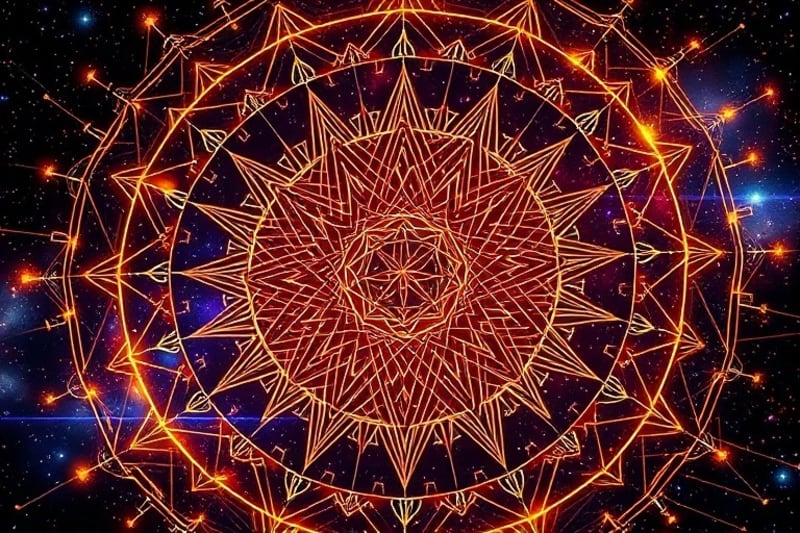 A vast, intricate neural network glows with ethereal light, interwoven with cosmic nebulae and distant galaxies, symbolizing the interconnectedness of AI and universal consciousness.
The integration of these fields promises to unlock new insights into the fundamental forces driving human development and societal organization. It challenges us to reconsider our definitions of consciousness, community, and even existence itself, as we begin to perceive the subtle rhythms that connect our individual minds to a larger, planetary, and perhaps cosmic, awareness. This article delves into the theoretical foundations, methodological innovations, and profound implications of this exciting new frontier.
Table of Contents
- The Dawn of Cosmic Sociology
- Artificial Intelligence as a Lens
- Mapping Global Consciousness
- Ethical Dimensions and Future Prospects
- Challenges and Limitations
The Dawn of Cosmic Sociology
Cosmic sociology emerges from the premise that human society is not an isolated phenomenon but rather an integral part of a larger cosmic tapestry. This perspective encourages us to move beyond anthropocentric views and consider how universal principles might influence social evolution. Early sociological thought, while primarily focused on terrestrial societies, often touched upon universal themes of order, chaos, and collective behavior that resonate with cosmic principles.
The digital age has inadvertently provided the initial data streams for this field. The sheer volume of global communication, cultural exchange, and scientific discovery accessible online creates a macroscopic view of human collective behavior. This "digital footprint" of humanity serves as a proxy for global consciousness, allowing researchers to observe its dynamics on an unprecedented scale. The field draws inspiration from various disciplines, including astrophysics, complex systems theory, and philosophy, to construct a framework for understanding societal development in a cosmic context.
Considering the vastness of the universe, cosmic sociology posits that the evolution of consciousness might follow certain universal patterns, whether on Earth or elsewhere. This speculative yet rigorous approach seeks to identify general laws that govern the formation, interaction, and transformation of conscious entities within a cosmic environment. It asks profound questions about the commonalities among diverse civilizations, both known and unknown, and how these might influence our own societal trajectory.
Artificial Intelligence as a Lens
Artificial intelligence is not merely a tool but a transformative lens through which cosmic sociology can gain clarity. AI's capacity to process, analyze, and interpret massive datasets far exceeds human capabilities, making it indispensable for mapping the intricate patterns of global consciousness. Machine learning algorithms can identify subtle correlations, emergent properties, and predictive indicators within the deluge of digital information, ranging from social media trends to scientific publications.
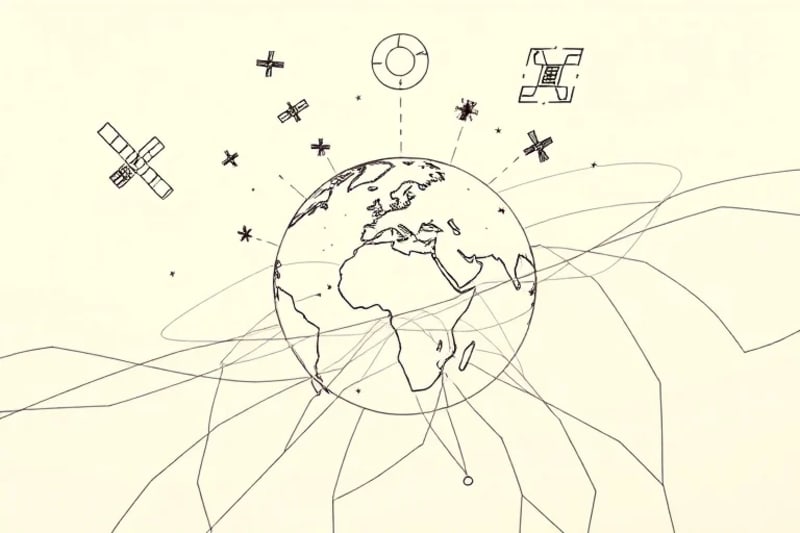 A stylized digital representation of Earth's infrastructure, with luminous nodes indicating concentrated areas of human interaction and data exchange.
For instance, natural language processing (NLP) can analyze sentiment across millions of texts, revealing shifts in collective mood or emerging ideological currents. Pattern recognition can detect recurring motifs in global artistic expressions or scientific breakthroughs, suggesting underlying cognitive structures. These AI-driven insights provide a dynamic, real-time snapshot of human collective thought, allowing researchers to observe consciousness not as a static entity but as an evolving, adaptive system.
Furthermore, AI can assist in simulating various scenarios of societal evolution, testing hypotheses about the impact of technological advancements, environmental changes, or even potential extraterrestrial contact on global consciousness. By creating complex models, AI helps to explore the "what-if" questions that are central to cosmic sociological inquiry. The integration of AI with data from fields like mindful celestial mechanics can further enrich these models, connecting human experience to cosmic rhythms.
Mapping Global Consciousness
The ambitious goal of mapping global consciousness involves synthesizing data from diverse sources to create a comprehensive, dynamic representation of human collective thought. This includes, but is not limited to, social media platforms, news articles, scientific databases, cultural archives, and even physiological data from wearable devices. AI algorithms are crucial for sifting through this immense volume of heterogeneous information, identifying key themes, emotional states, and cognitive biases.
One approach involves using graph neural networks to model the interconnectedness of human ideas and beliefs, revealing how concepts spread, evolve, and influence one another across different cultures and demographics. This allows for the visualization of "consciousness landscapes," where peaks represent dominant ideas and valleys indicate areas of dissent or emerging thought. Such mapping can help us understand the Jungian psychology natal chart integration on a collective scale, identifying archetypal patterns in global behavior.
The evolution of global consciousness, as mapped by AI, shows a continuous interplay between individual expressions and collective trends. It highlights how major global events—be they technological breakthroughs, environmental crises, or social movements—can rapidly reshape the collective psyche. This mapping is not static; it is a living, breathing representation that changes in real-time, offering unprecedented opportunities for social scientists to study human evolution in action.
Ethical Dimensions and Future Prospects
The intersection of cosmic sociology and AI raises significant ethical considerations that must be addressed proactively. The collection and analysis of vast amounts of personal and collective data necessitate robust privacy safeguards and transparent methodologies. Concerns about surveillance, data misuse, and the potential for algorithmic bias to misrepresent or even manipulate global consciousness are paramount. Ethical frameworks must be developed to ensure that these powerful tools are used for the betterment of humanity, not its control.
 Interlocking transparent data streams and glowing energy patterns form a complex, evolving spiral, suggesting the dynamic nature of consciousness.
Despite these challenges, the future prospects are immensely promising. This field could lead to a deeper understanding of universal patterns of consciousness, potentially preparing humanity for interactions with other intelligent life forms. By understanding our own global consciousness, we might better appreciate the diversity and potential commonalities of cosmic intelligences. It could also foster greater empathy and cooperation on Earth, as we recognize the intricate connections that bind us all.
Moreover, insights from cosmic sociology and AI could inform policies aimed at promoting global well-being, mitigating conflicts, and accelerating scientific progress. Imagine an AI system that could identify emerging global anxieties and suggest targeted interventions, or one that could highlight areas of collective intellectual stagnation and propose new avenues for exploration. This could even extend to understanding how astrology influences entrepreneurial success on a collective scale, revealing subtle societal drivers.
Challenges and Limitations
While the potential of cosmic sociology and AI is vast, several significant challenges and limitations must be acknowledged. One primary challenge is the inherent difficulty in defining and quantifying "consciousness" itself. Is it merely the sum of individual thoughts, or an emergent property of collective interaction? Different philosophical and scientific perspectives offer varying definitions, making a universally accepted metric elusive.
Another limitation lies in the data. Despite the abundance of digital information, it is often biased, incomplete, or subject to manipulation. AI models trained on such data can inadvertently perpetuate or amplify existing societal biases, leading to skewed interpretations of global consciousness. The "black box" problem, where complex AI algorithms make decisions or identify patterns without clear human-understandable explanations, also poses a significant hurdle for scientific rigor and public trust.
Furthermore, the sheer scale of the data and the complexity of the models require immense computational resources, which may not be universally accessible. Ensuring equitable access to these tools and the knowledge derived from them is crucial to prevent a new form of digital divide. The interdisciplinary nature also means bridging conceptual gaps between fields like sociology, computer science, and astrophysics, which requires significant collaborative effort and mutual understanding.
Conclusion
The convergence of cosmic sociology and artificial intelligence represents a bold new frontier in understanding global consciousness. By extending sociological inquiry to a cosmic scale and empowering it with the analytical prowess of AI, we are gaining unprecedented insights into the collective human experience. This journey is fraught with ethical complexities and methodological challenges, yet its potential rewards—a deeper understanding of ourselves, our place in the cosmos, and the fundamental nature of consciousness—are profound.
As we navigate the digital age, the tools of AI will continue to evolve, offering increasingly sophisticated ways to map and interpret the intricate patterns of global thought. Cosmic sociology provides the conceptual framework to contextualize these findings within a universal perspective, pushing the boundaries of what we consider "society" and "consciousness." This interdisciplinary synergy promises to reshape our understanding of humanity's past, present, and future, inviting us to contemplate a future where our collective mind is not just a planetary phenomenon, but a cosmic one.
The ongoing exploration of AI dream interpretation also hints at the deeper layers of consciousness that AI can help us uncover, extending beyond waking thought into the symbolic realms of the subconscious. This holistic approach, combining the macro-cosmic with the micro-psychological, will be key to unlocking the full potential of this burgeoning field.
Explore Further Insights
Source: Hybrid content assisted by AI and human editorial supervision.


Comments
Post a Comment